Please note that the full access to this content needs a "Year at the table" subscription: please sign up.
Master the art of the perfect quiche foundation...
This recipe is a protected and only available for paid members. To obtain the full step by step recipe and detailed ingredients list, please sign up.
Preview the recipe
Pâte à Pâté
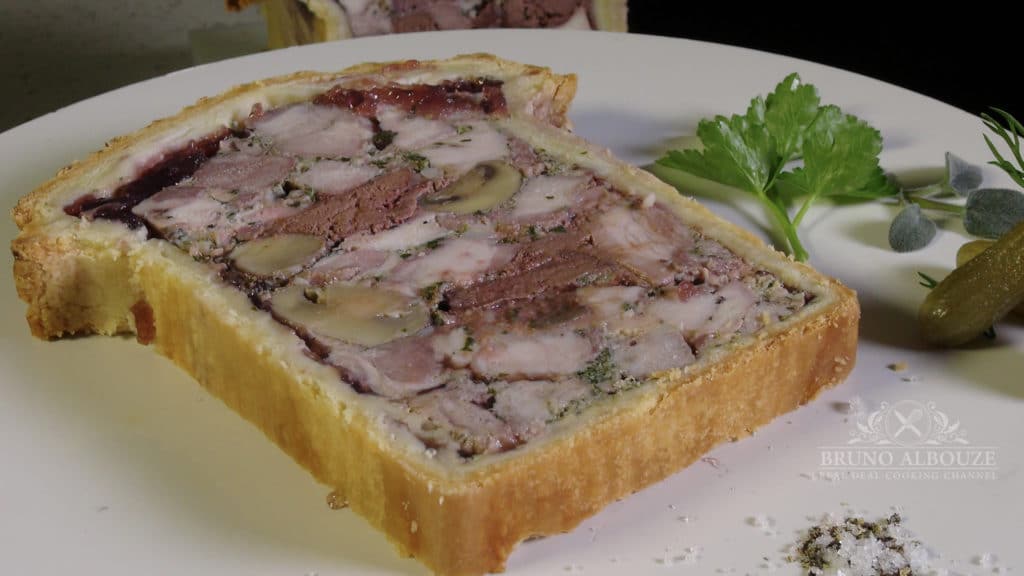
- This crust is in fact the one used in pâté en croûte — a dough known as pâte à pâté — which lines the mold to form a sturdy, traditional shell. Although leftover pie dough could be used for savory applications, quiche dough not only offers superior flakiness due to the addition of starch, but also results in a more stable crust.

Quiche Crust
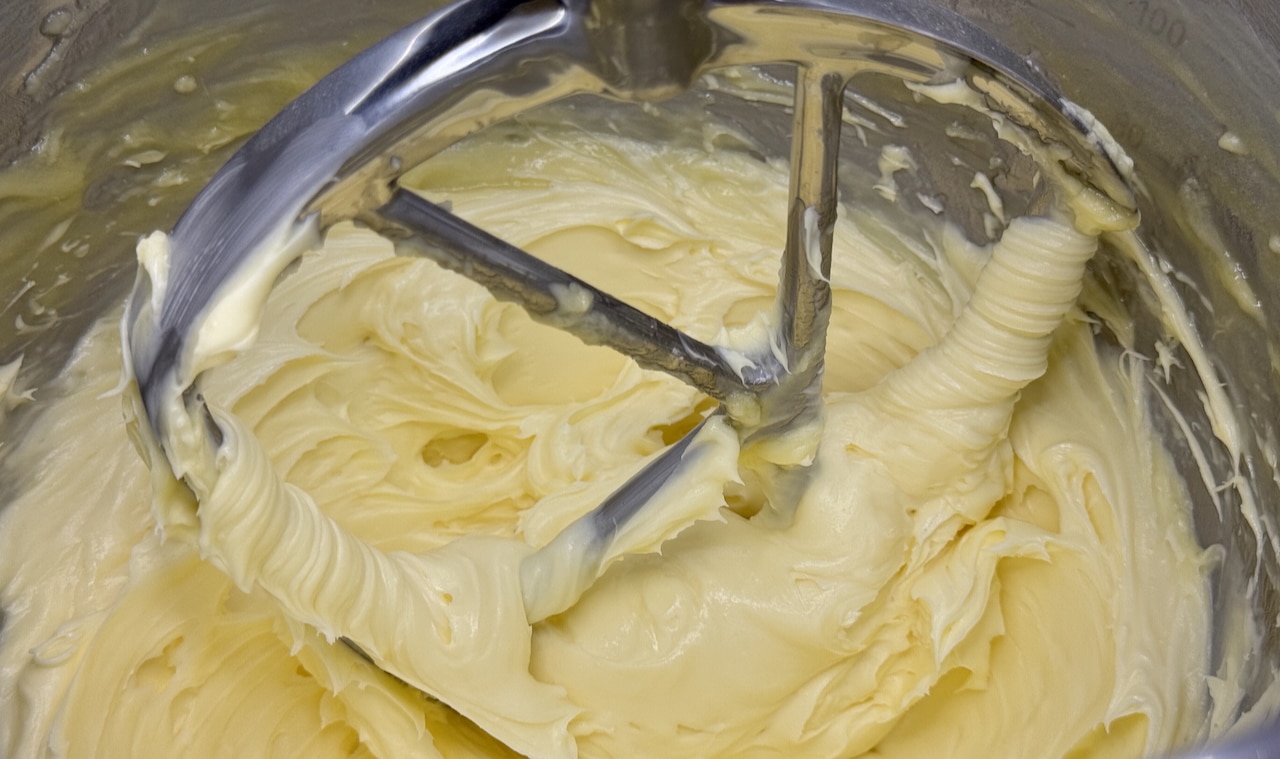
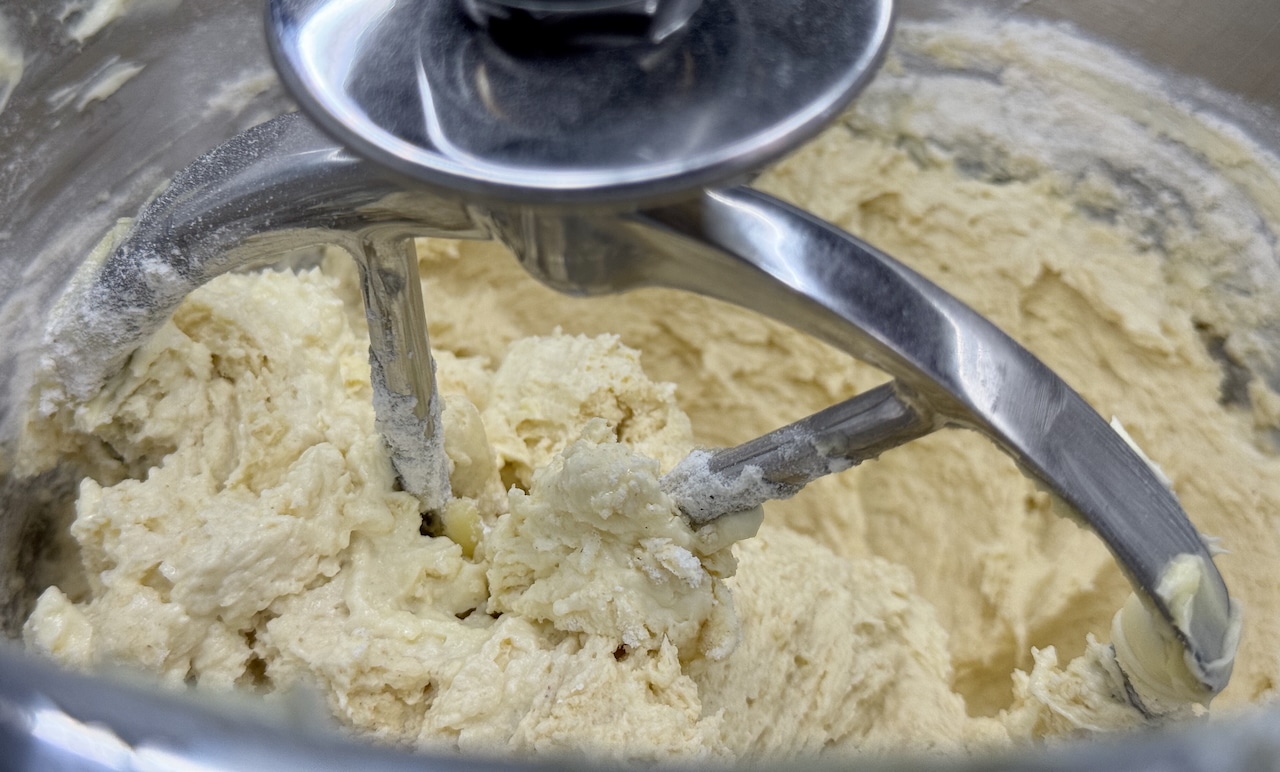
- Microwave the butter for a few seconds to soften, but do not let it melt. In the bowl of a stand mixer fitted with a paddle attachment, beat the softened butter with the salt and corn starch until smooth. Scrape the sides of the bowl and paddle every so often to ease the ingredients incorporation. Using an immersion blender, mix together the eggs, water, and vinegar. Add the liquid to the butter-starch batter in two additions, mixing until incorporated after each.
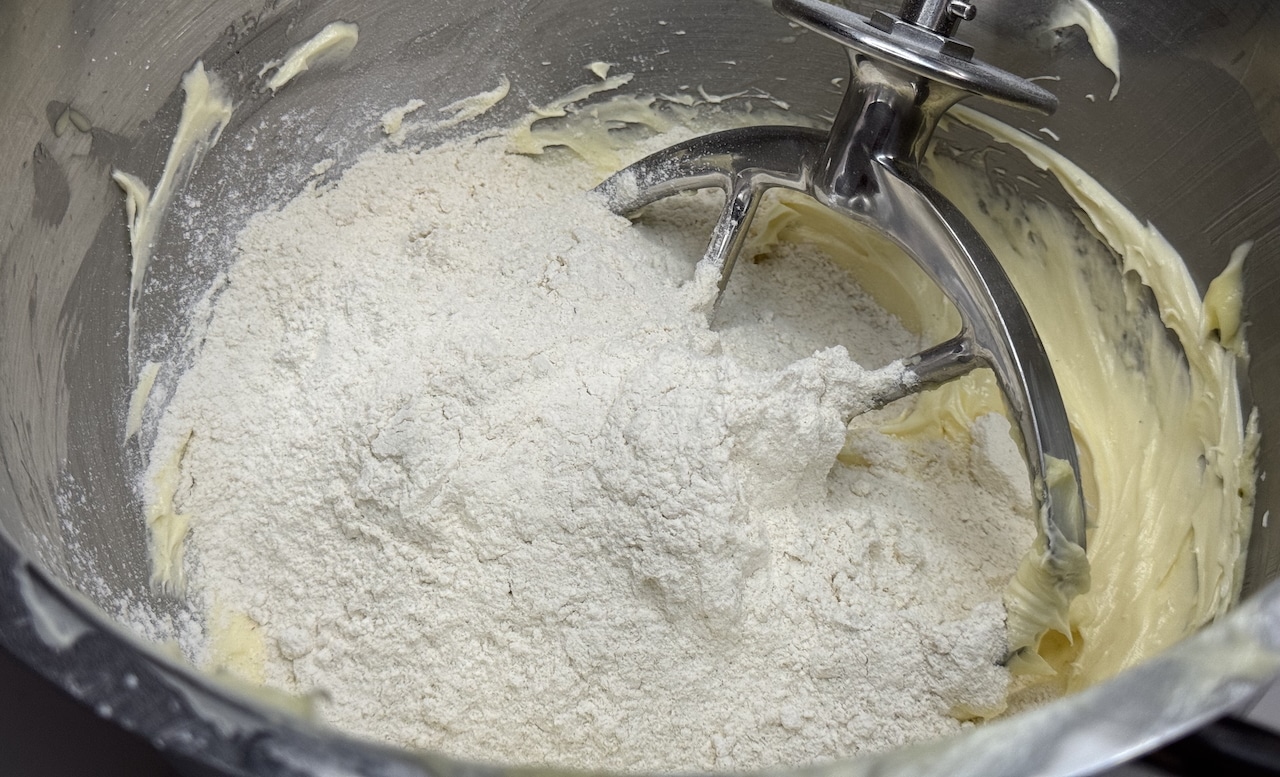
- Add the flour in two additions, mixing on low speed just until combined. Avoid over mixing to prevent unwanted effects such as shrinkage.
- Divide dough into 4 equal portions (340g). Each portion is enough to line a mold/ring 9–12 inches in diameter. Store each dough in a small freezer bags, flatten it chasing air out before sealing it. Refrigerate until firm for at least 2 hours. The freshly made quiche dough can also be rolled out between two sheets of parchment paper and stored as-is in the refrigerator. Give it a brief re-roll before shaping it into your quiche pan.


Shaping Quiche Shell
- Butter the cake ring generously.
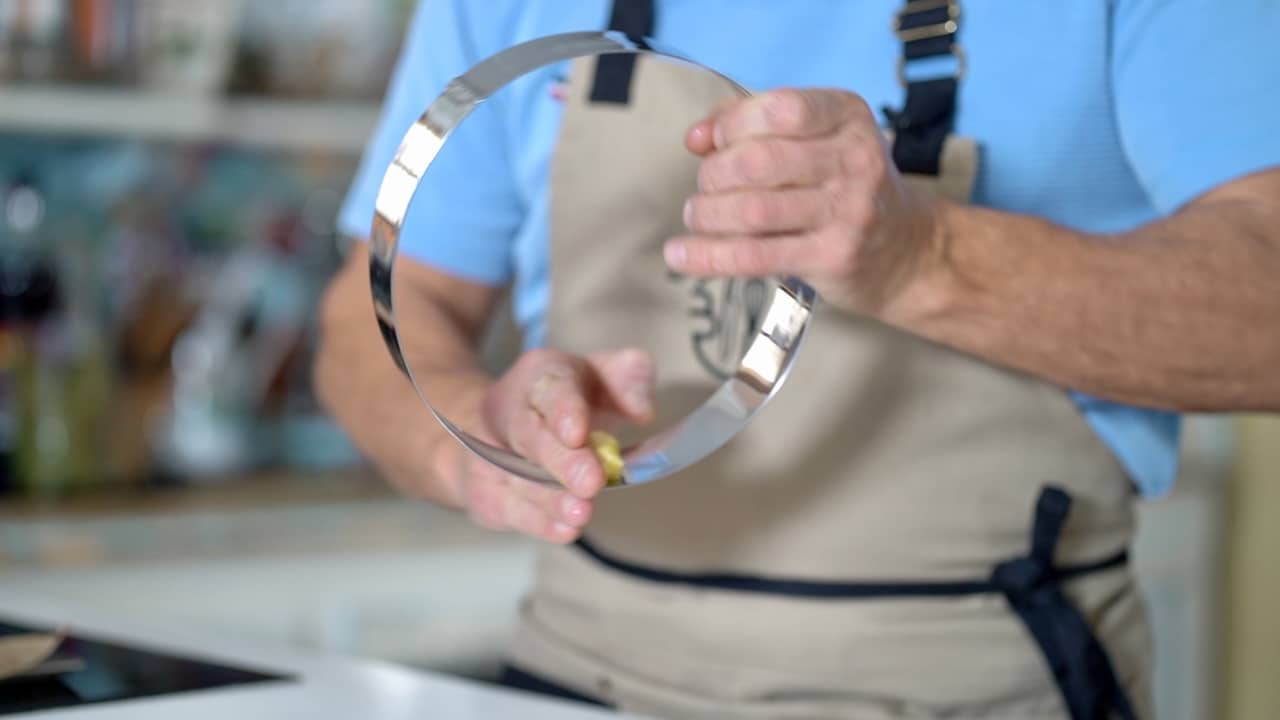
- Lightly flour your work surface and rolling pin. Gently knead the chilled dough just until it becomes pliable enough to roll. If it cracks, let it warm up slightly at room temperature; avoid overworking it. Roll the dough from the center outward, rotating it a quarter turn frequently to maintain an even circle and prevent sticking.
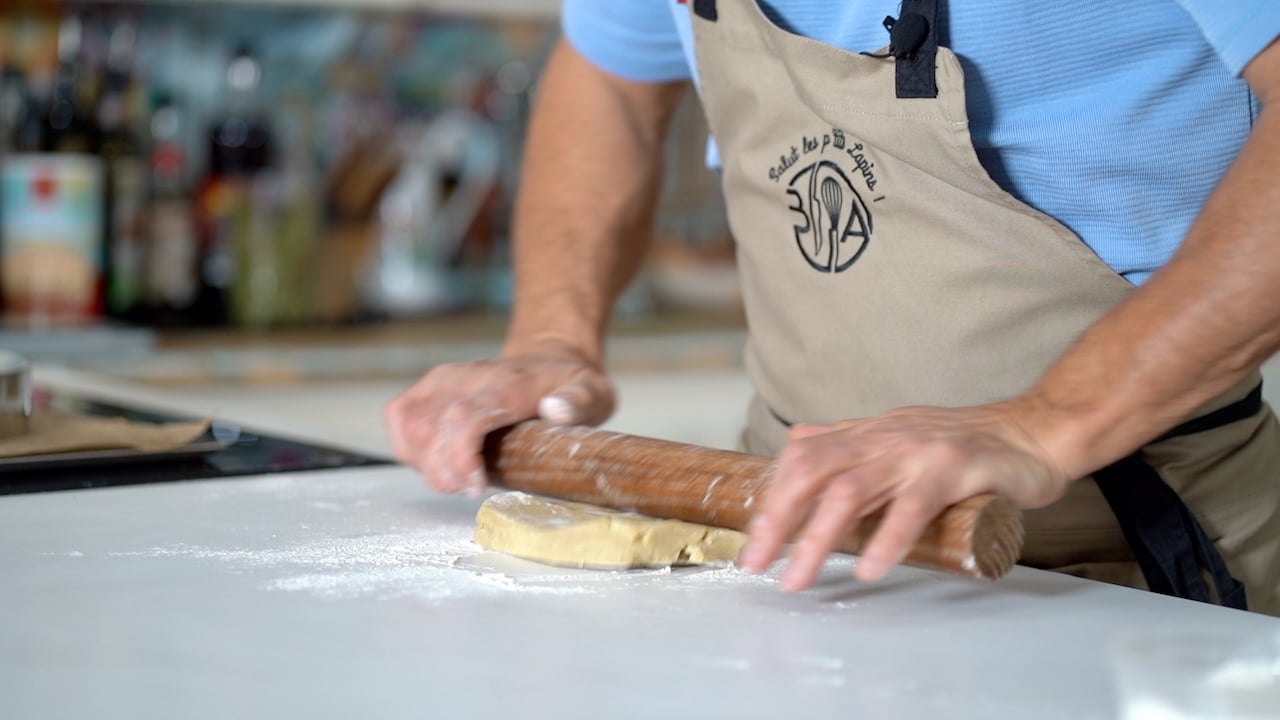
- Roll into a circle 2-inches/5cm wider than your cake ring diameter. Aim for a uniform 1/8-inch (3mm) thickness.
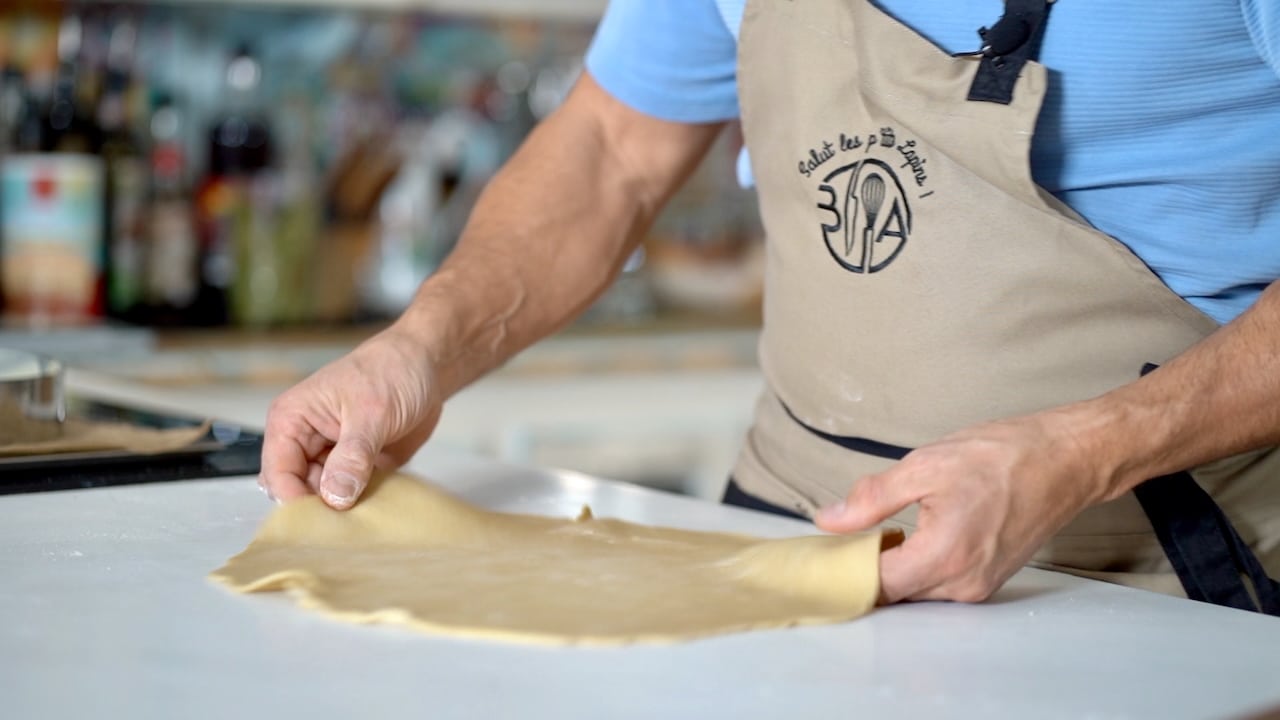
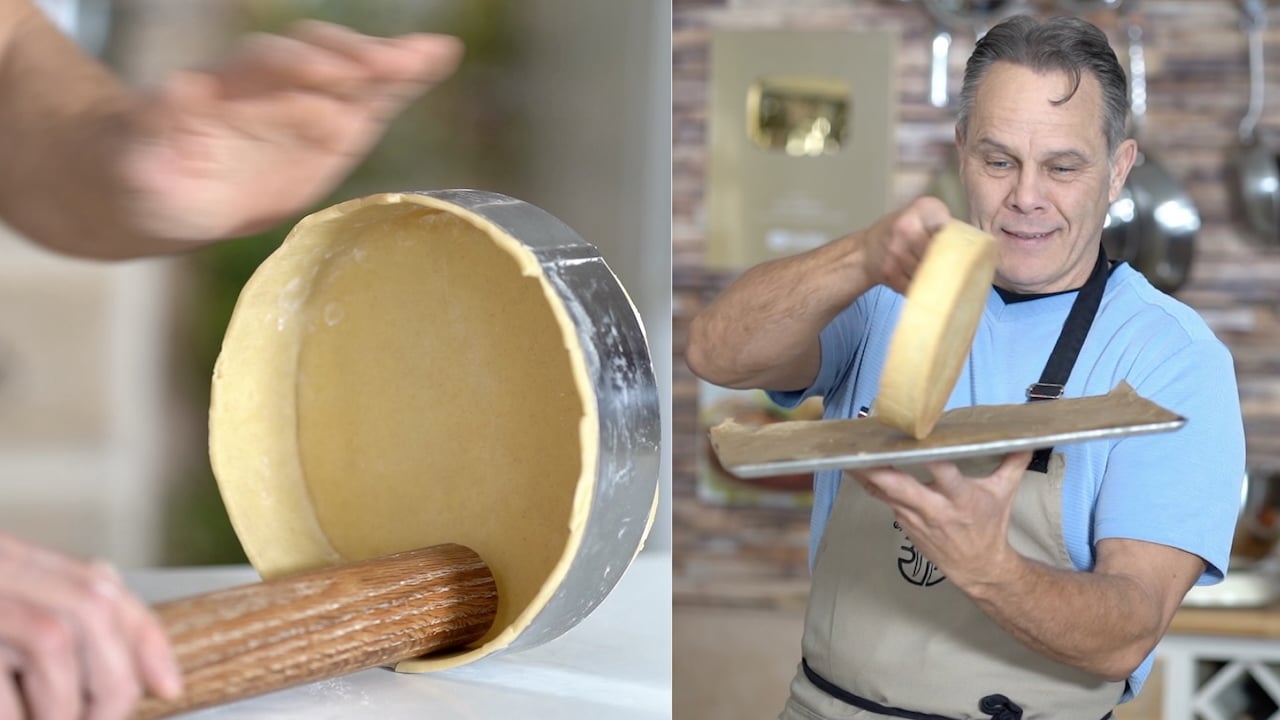
- Gently roll the dough around your rolling pin, then unroll it over the cake ring. Let the dough slump naturally into the corners and sides. Do not stretch it. Stretching causes guaranteed shrinkage during baking. Gently press the dough into the sides and the bottom edge using your thumbs or a small piece of excess dough.
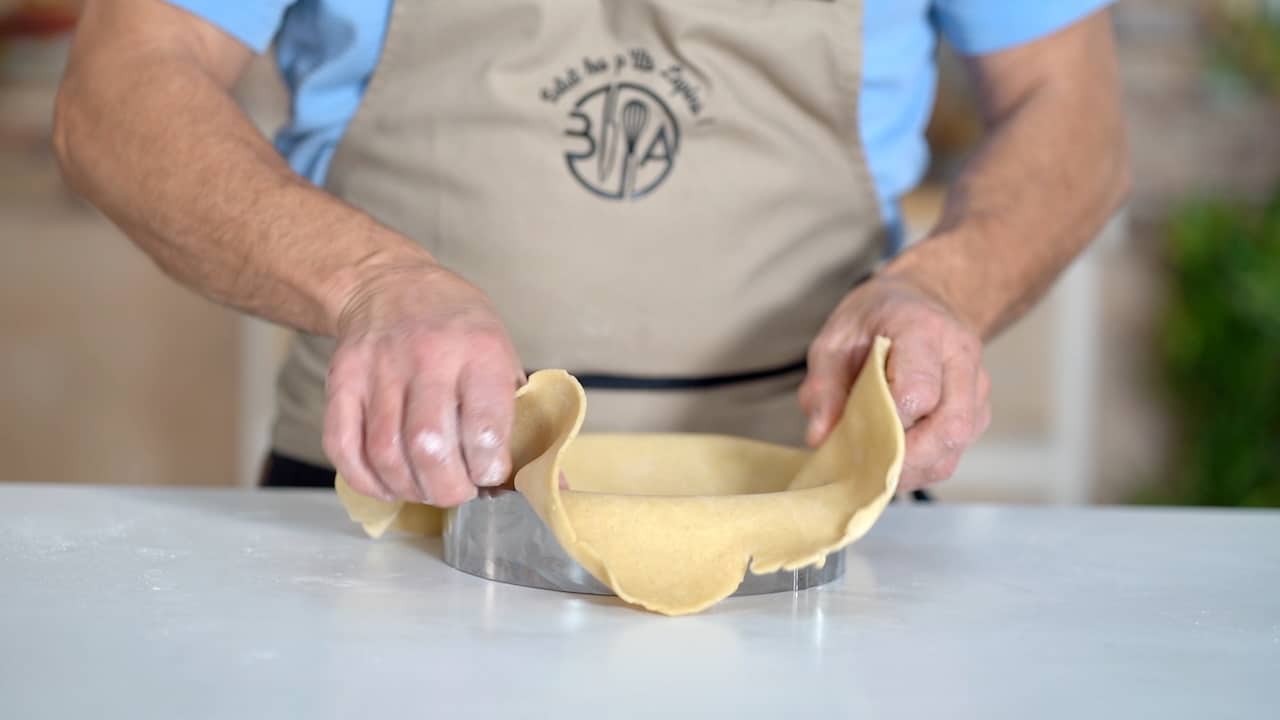
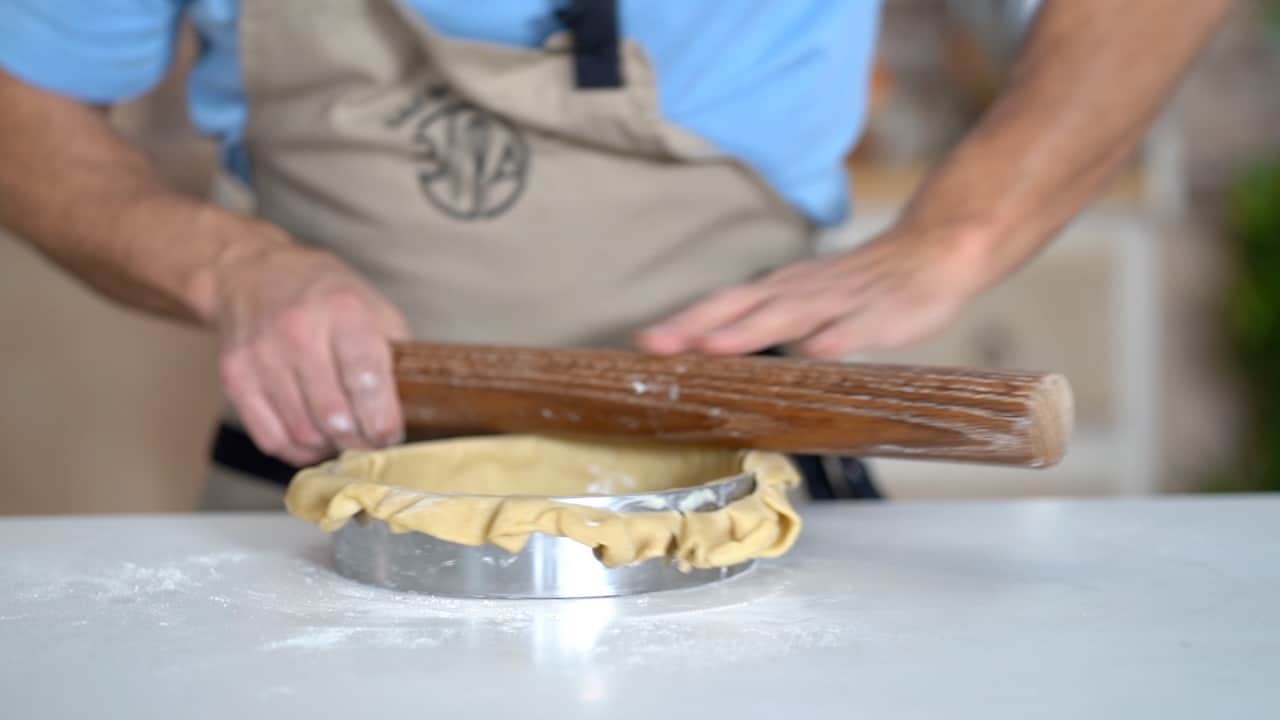
- Roll your rolling pin over the top of the pan to shear off the excess dough cleanly. Chill for 15 minutes.
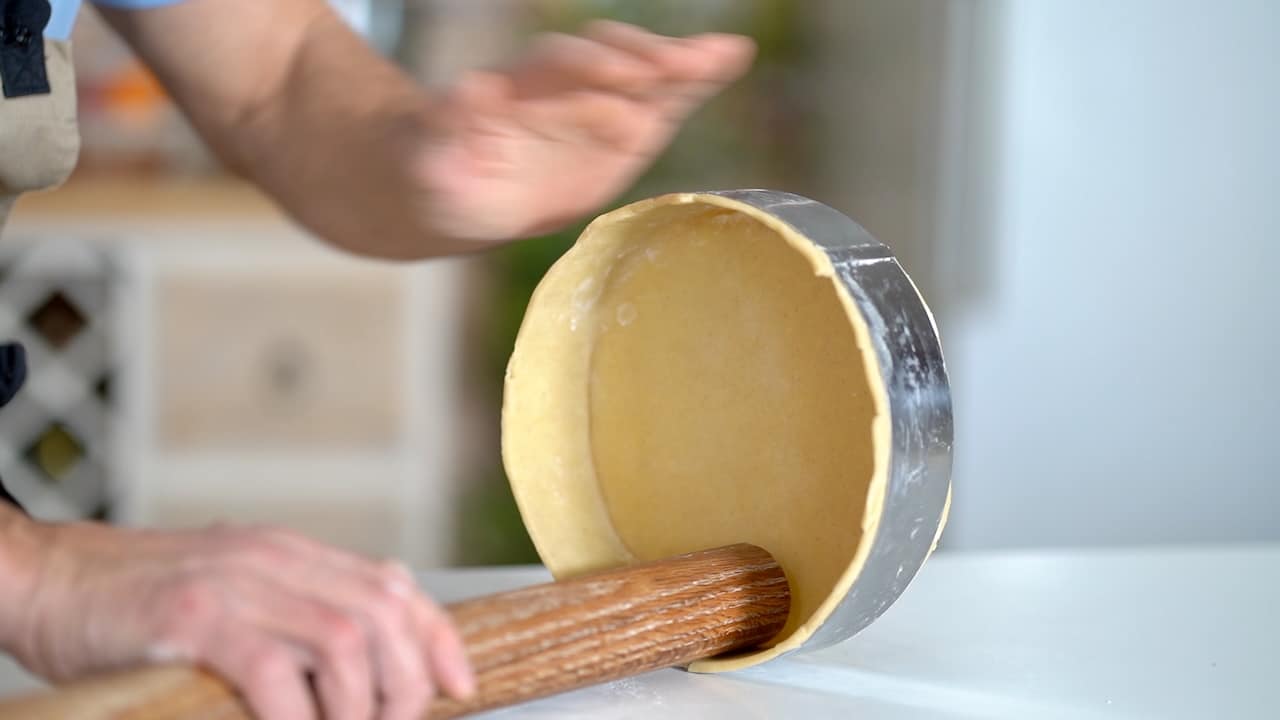
- To ensure a sharp definition, position the cake ring upright. Hold it and place the end of the rolling pin against the inner curve. Gently press the dough down, following the contour of the ring. Freeze the quiche shell for 15 minutes.
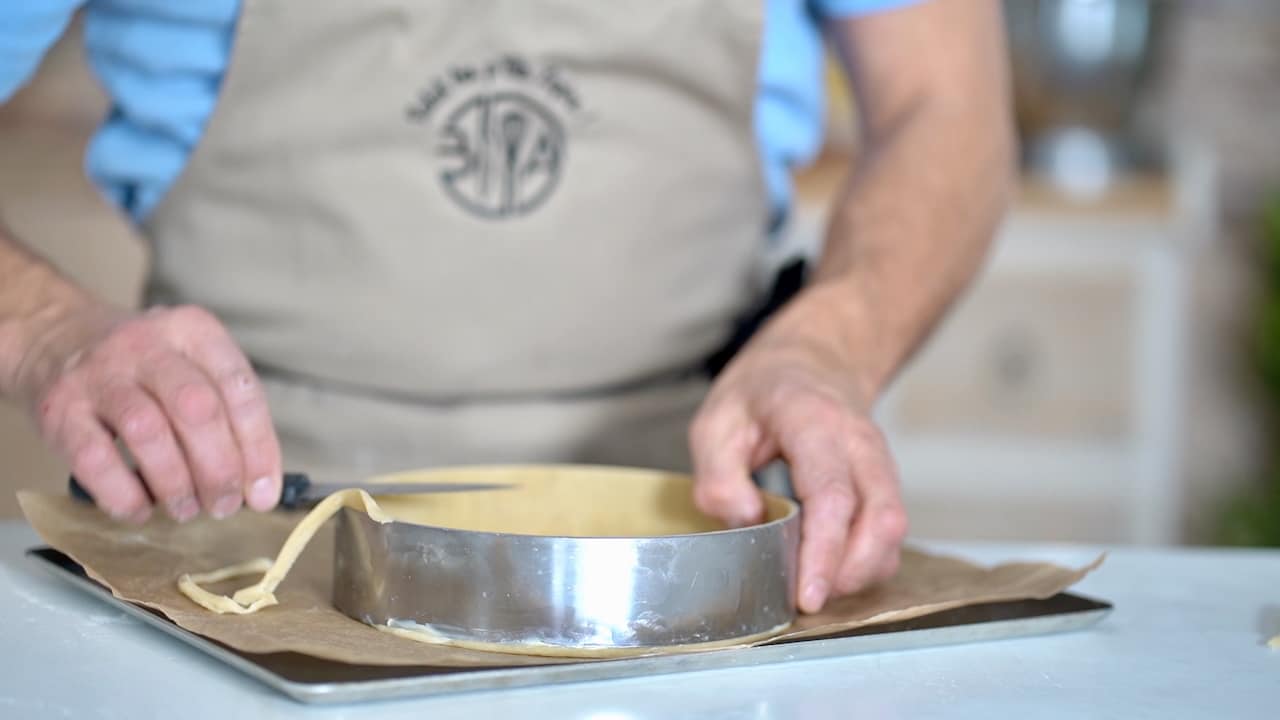
- With a paring knife, trim away the excess dough. Note that docking quiche dough is not necessary, as the quiche filling may leak out during baking. Refrigerate for 2 hours or freeze until ready to bake.


Blind Baking
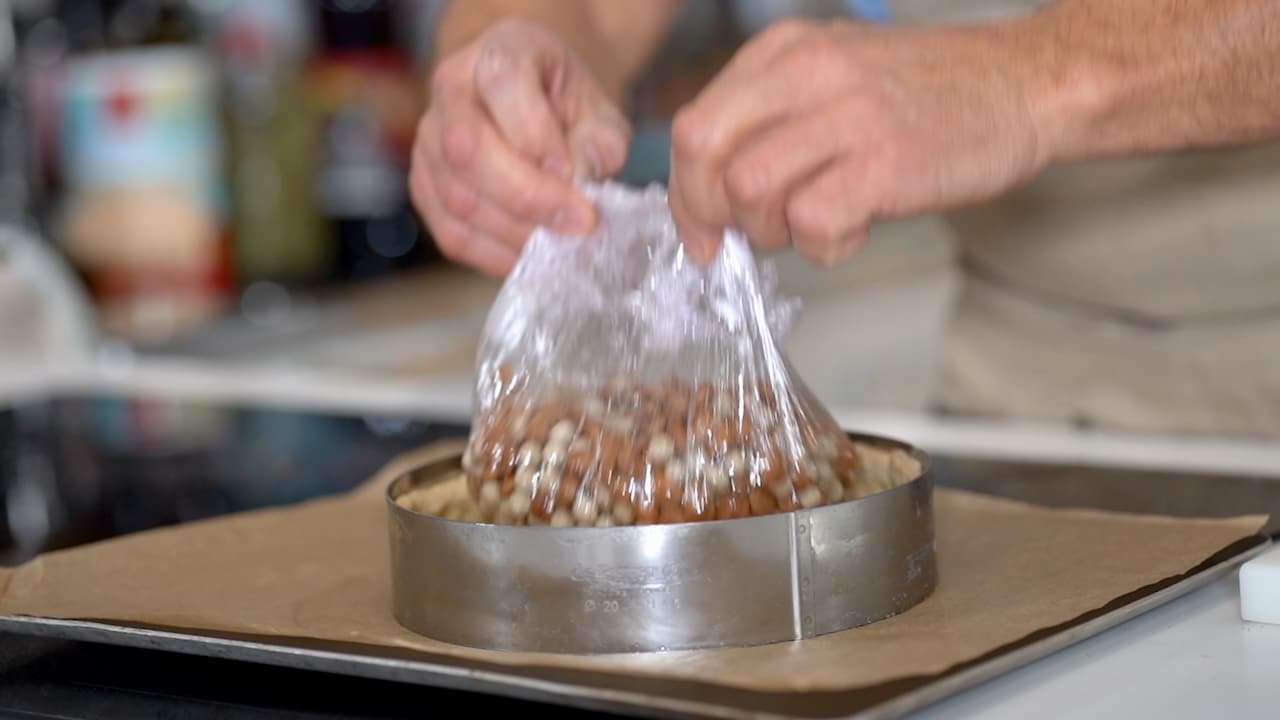
- This is the most important reason for quiche. The filling is a liquid custard that takes time to set in the oven. If the raw dough sits in that liquid, it absorbs moisture and becomes a soft, gummy, and undercooked layer instead of a crisp, flaky crust. Blind baking creates a protective, partially cooked barrier.Preheat a convection (fan) oven to 160°C (330°F). Drape two layers of microwave-safe plastic wrap over the chilled shell. Fill completely with pie weights, dried beans, rice, or cherry pits. Bake for 20 minutes. Remove the plastic wrap and pie weights. Return the shell to the oven and bake for an additional 10 minutes. If the crust puffs up in any spots, pierce it with a toothpick to release the air.
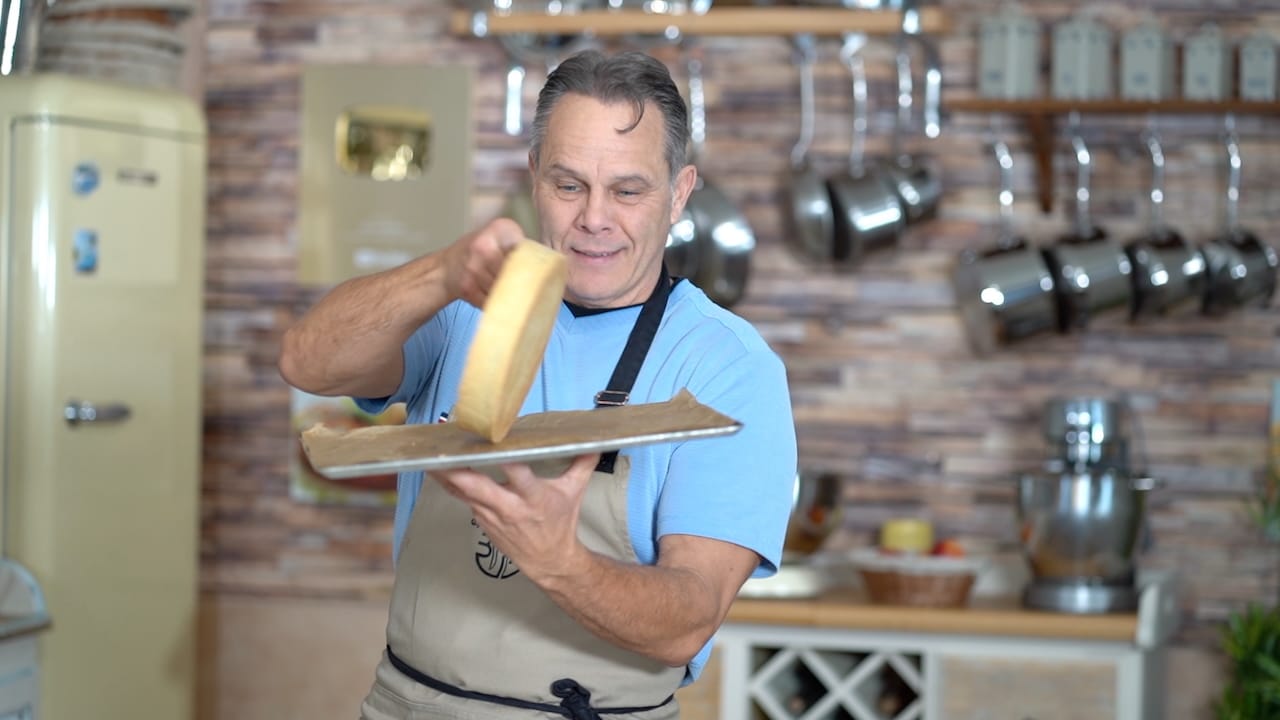
- Remove the pre-baked shell from the oven and let it cool completely at room temperature.


Storage
- Keep blind-baked shells in a dry, airtight container for up to 3 days.
Finished Quiche Storage
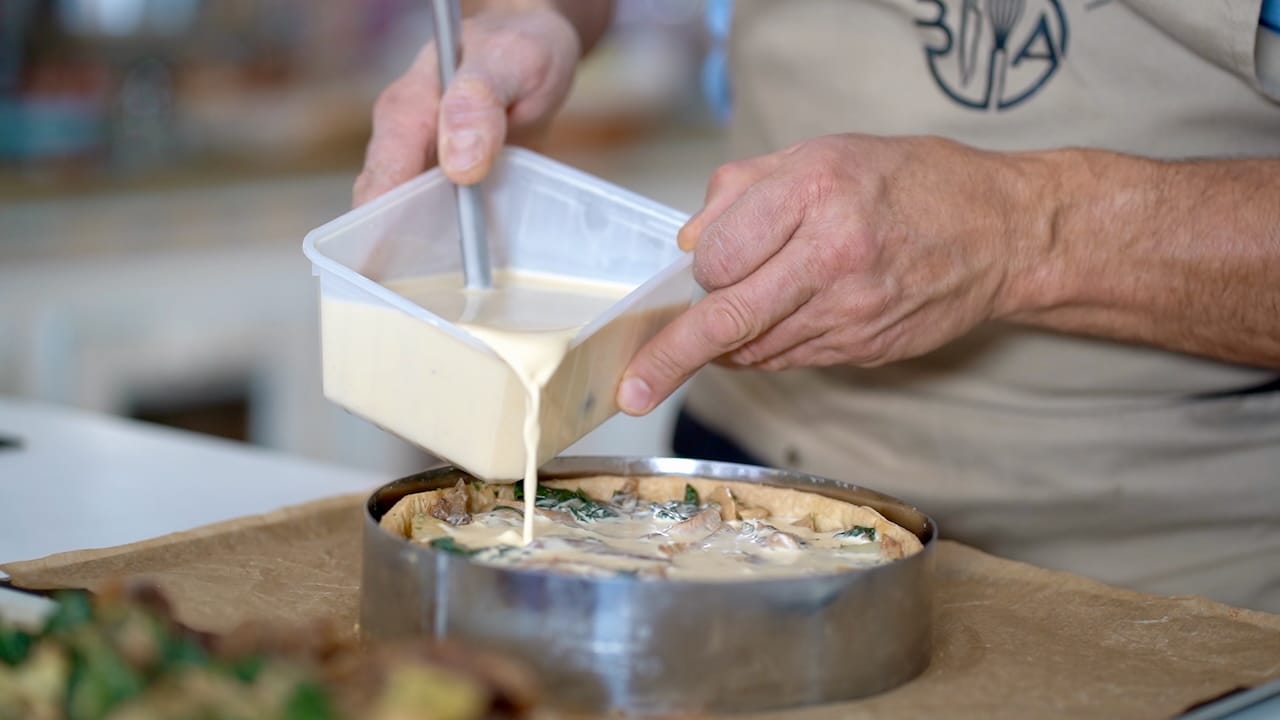
- Fill shells according to your recipe, bake, and serve immediately. Baked quiche can be stored in the refrigerator for 2–3 days.

This content is part of the PREMIUM SECTION

This recipe requires a All-content access subscription. The Premium section includes more than 50 essential recipes from French pastry and a special section for mastering artisanal bread.
The Premium section is only accessible with "A year at the table" subscription. Discover it with special first year discount.