
Please note that the full access to this content needs a subscription: please sign up.
A classic Spanish dish
This recipe is a protected and only available for paid members. To obtain the full step by step recipe and detailed ingredients list, please sign up.
Preview the recipe
Paprika vs Chorizo
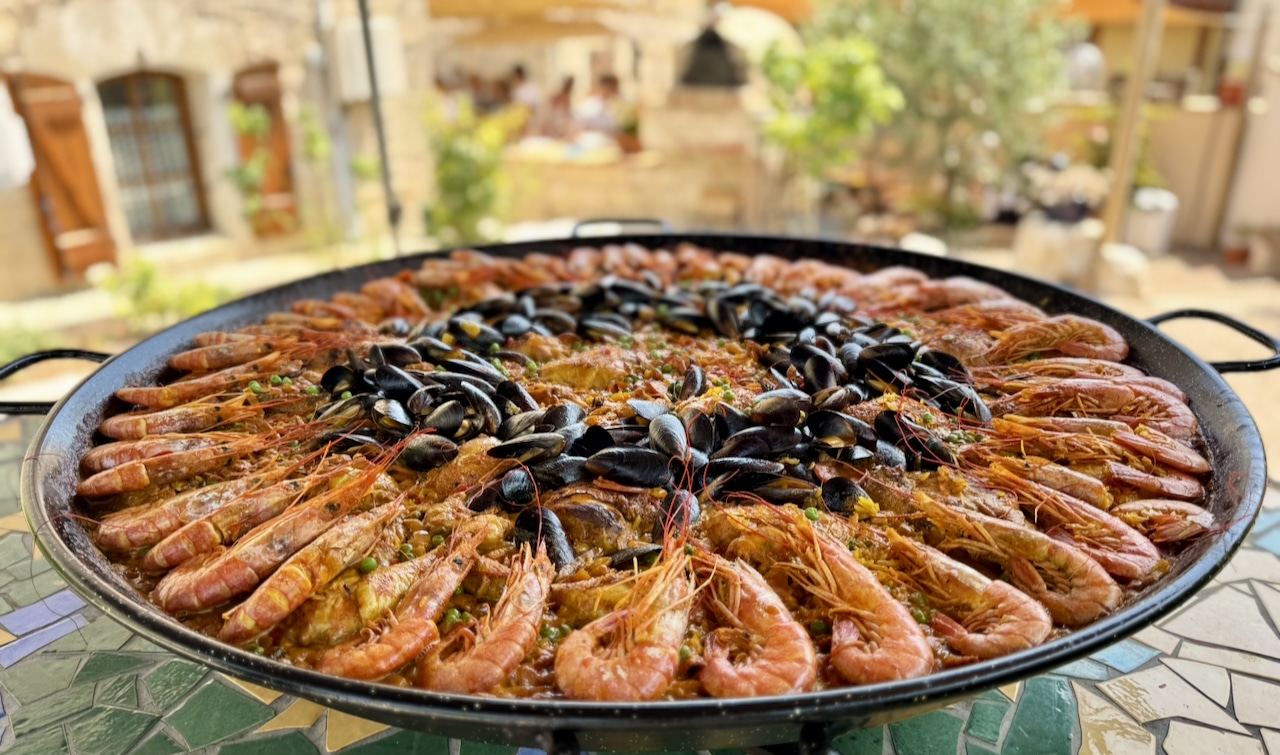
- Paella is a world-renowned rice dish from Spain. It originated in Valencia, on the eastern coast of the country. Today, paella is made in every region of Spain, using just about any kind of ingredient that pairs well with rice. There are as many versions of paella as there are chefs. Two key elements stand out: the rice and the saffron. Paella rice is a short-grain variety with exceptional absorption properties—typically, 1 cup (200g) of rice to 3 cups (800g) of stock. Although some purists claim that traditional paella does not contain chorizo, many Spanish paella recipes include smoked paprika and pork, which are chorizo's main ingredients.
Mise-en-Place
- Thaw shrimp overnight in the refrigerator if frozen, or defrost them under cold running water. Peel the thawed shrimp starting from the head end, pulling off the outer shell. For decorative purposes, leave the last segment of the shell and the tail tip on. Cut along the outer edge of the shrimp's back and remove the vein; discard it. Save all the shells for stock. Keep the shrimp on ice and refrigerated until ready to use.
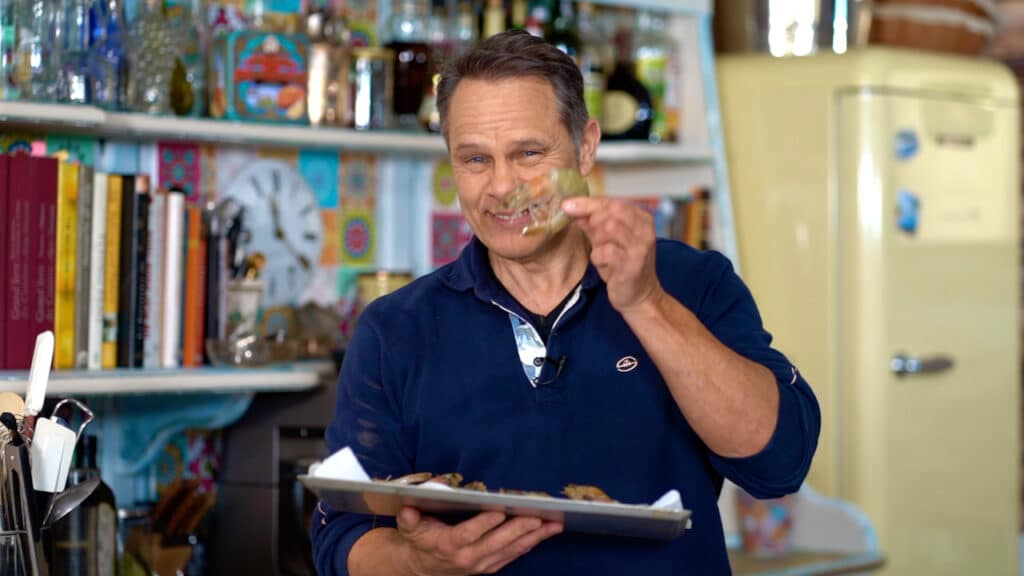
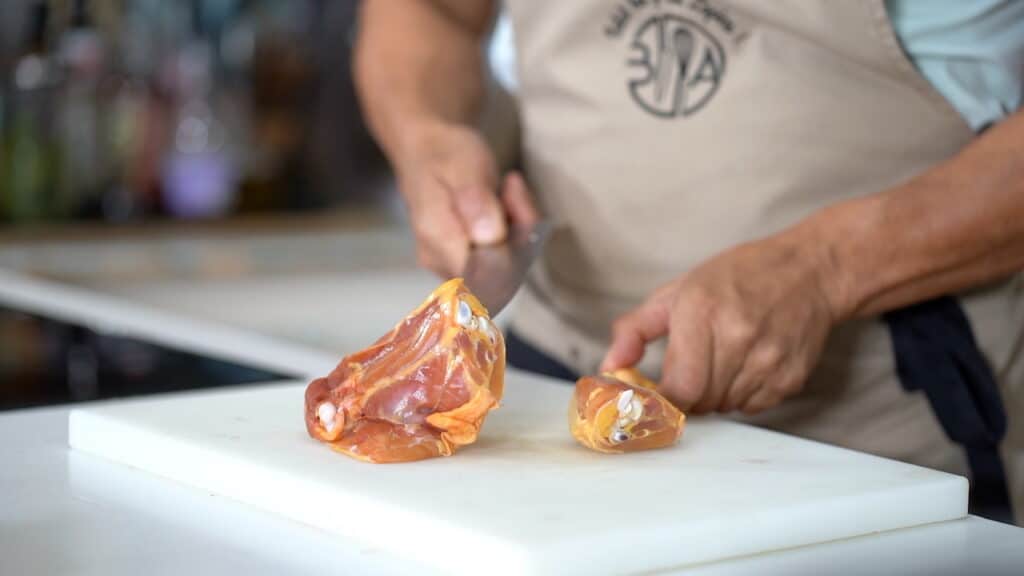
- Meanwhile, separate each chicken leg from the drumstick. Rotate the joint until it pops out, then cut the thigh away from the drumstick by slicing straight down through the remaining cartilage. Cut off the knuckles and reserve them for the paella stock. Debone the thighs if desired, and reserve the bones for the stock as well.In one gallon of cold water, stir in 1/3 cup (60g) salt and 1/4 cup (30g) cornmeal. Immerse the clams and mussels and let them soak for 50 minutes to purge any sand. Remove them from the water. Remove the beards from the mussels and scrub the clams; rinse and keep refrigerated.Soak the calamari and tentacles in cold water and clean them. Pat dry and cut the tubes into 1/4-inch (4mm) rings; keep refrigerated until ready to use.


Stock for Paella
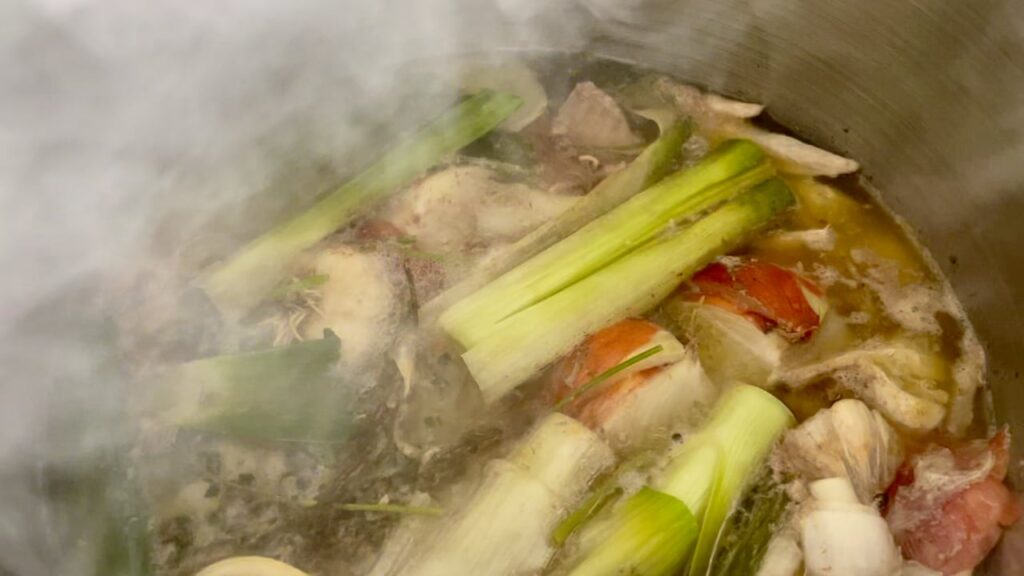
- For the onion piqué: prick the onion with a couple of cloves and bay leaves. In a large pot, combine all the ingredients. Bring to a boil, then reduce to a simmer and cook for 4 hours, skimming off any impurities that rise to the surface as it cooks. Strain the hot stock through cheesecloth and discard the solids. Let it cool, then cover and refrigerate overnight. Once chilled, scrape off the layer of fat that has solidified on the surface. Measure out the amount needed for the recipe, and freeze the leftover stock for later use, or reduce it to the quantity required. An hour or more before cooking the paella, bring the stock to a boil and add the saffron threads.

Paella
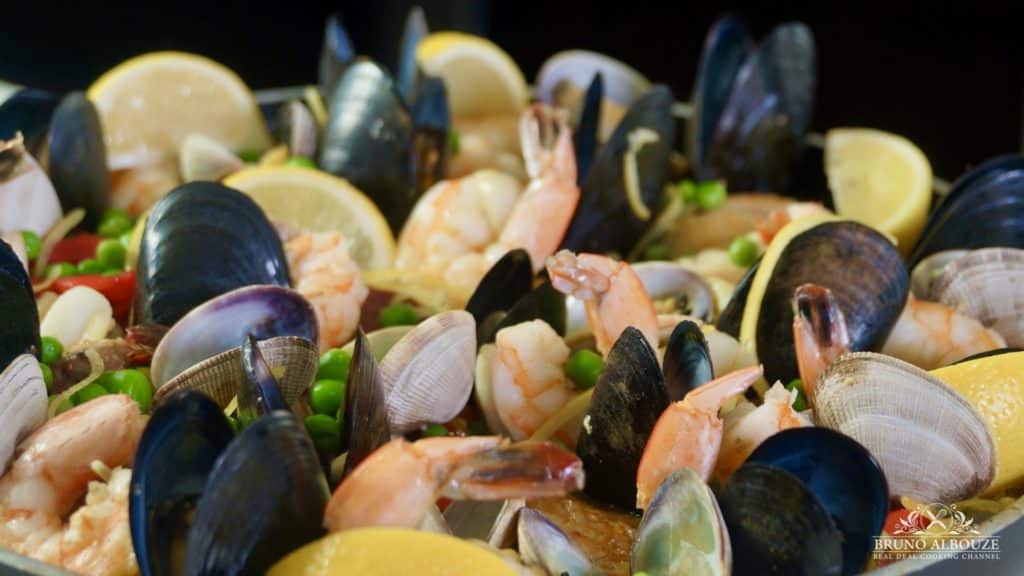
- Clean the bell peppers, remove the membranes and seeds, and cut them into squares. Save the trimmings for your next salad.Using a charcoal barbecue or stovetop, cook the paella over medium heat. Heat the pan, add olive oil, and sprinkle some salt over the surface. Sear the chicken on both sides (skin side down first) until golden brown, about 5 minutes per side. Remove the meat and set it aside. Immediately after, cook the diced chorizo with minced garlic for about 3 minutes, or until fragrant, stirring occasionally. Add the chopped onions and bell peppers, and cook for 5 minutes, then transfer the mixture to a separate bowl.Sauté the calamari (squid) with a drizzle of olive oil for a few minutes and remove from the pan. Bring the paella stock to a boil. Return the bell pepper mixture to the hot pan. Add the rice, stir, and pour in the hot stock, adding turmeric if desired. Season with salt, black pepper, and cayenne to taste. Add the seared chicken along with its juices and the chorizo slices, then stop—stirring will activate the starch and turn the rice gloppy; this is not a risotto!Cover the dish with a lid and cook for 20 minutes. Remove the lid and arrange (without stirring) the calamari and tentacles, piquillo peppers, lemon confit, clams, shrimp, and mussels. Cover with foil and cook for 10 minutes more. Remove the foil and continue to cook until the bottom of the paella begins to caramelize.Garnish the paella with some blanched greens such as English peas, broccolini, or haricot vert, and lemon wedges. Enjoy!

Ready to discover this recipe? You're only 1 step away.
This recipe is only accessible to registered members!
Create your account to access all recipes and content of my website.
Join us now and enjoy more 800 recipes (Mostly French with European Influences, American Classics and Asian fusion)
Already register? Sign in
