
Please note that the full access to this content needs a subscription: please sign up.
Pure haven
This recipe is a protected and only available for paid members. To obtain the full step by step recipe and detailed ingredients list, please sign up.
Preview the recipe
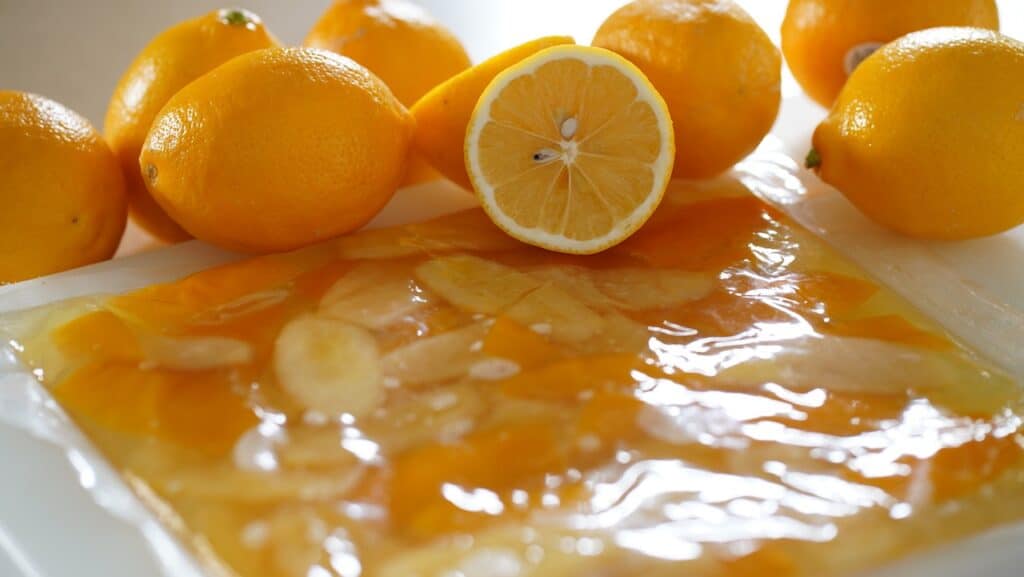
Lemon Gel
- Lemon gel can serve as a substitute for your favorite store-bought lemon or mandarin spread. To prepare it, first mix sugar and agar agar. In a separate saucepan, heat lemon juice with water and vanilla. Add the sugar-agar mixture, bring to a boil, and cook for 2 minutes. Allow it to cool, then refrigerate until completely set. Once set, use an immersion blender to process the gel into a smooth, soft consistency. If the mixture is too firm, add a little more lemon juice and blend again. The gel can be used as is, or you can fold in diced poached lemons for added texture.For assembly, shape up to 2.5 ounces (80g) of the gel per cake and freeze before use.

Chestnut Sponge
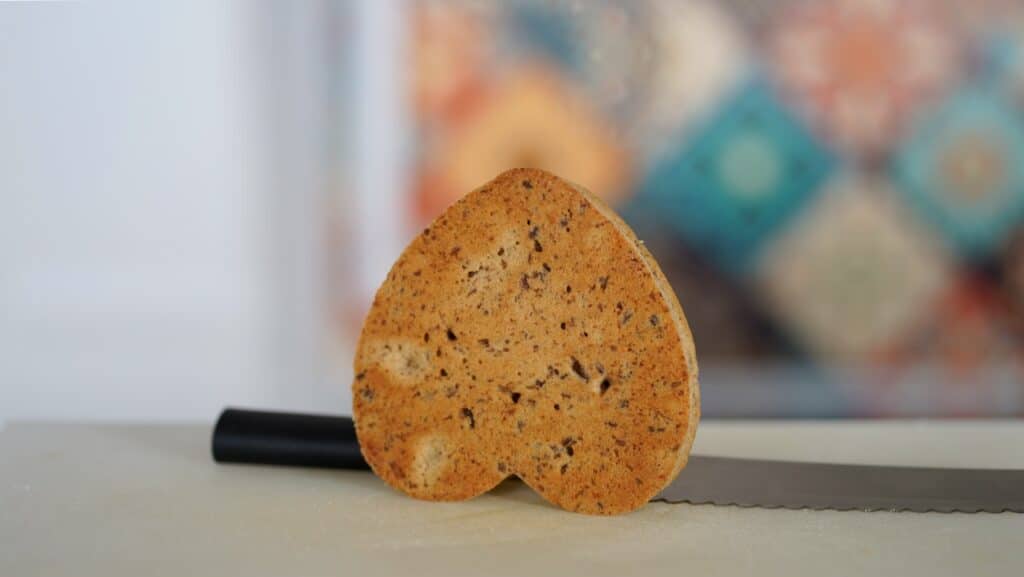
- Grease a cake ring and lightly flour it, or simply grease it and line the sides with a parchment paper strip. In a medium bowl, sift together the flour and baking powder. Set aside. Using a food processor, blend the room-temperature chestnut cream with the rum until smooth. Add the softened butter and process until fully combined, pausing to scrape down the sides of the bowl as needed. Add the eggs one at a time, processing briefly after each addition. Add the sifted dry ingredients and mix just until the batter is smooth and no streaks of flour remain. Finally, add the roasted chestnuts and pulse only a few times until they are just incorporated—be careful not to overmix.Pour the batter into the prepared mold and bake at 350ºF (180ºC) for approximately 30 minutes. The cake is done when a toothpick inserted into the center comes out clean. Let the cake cool completely in the mold, then refrigerate it until firm before slicing.

Chestnut Crémeux
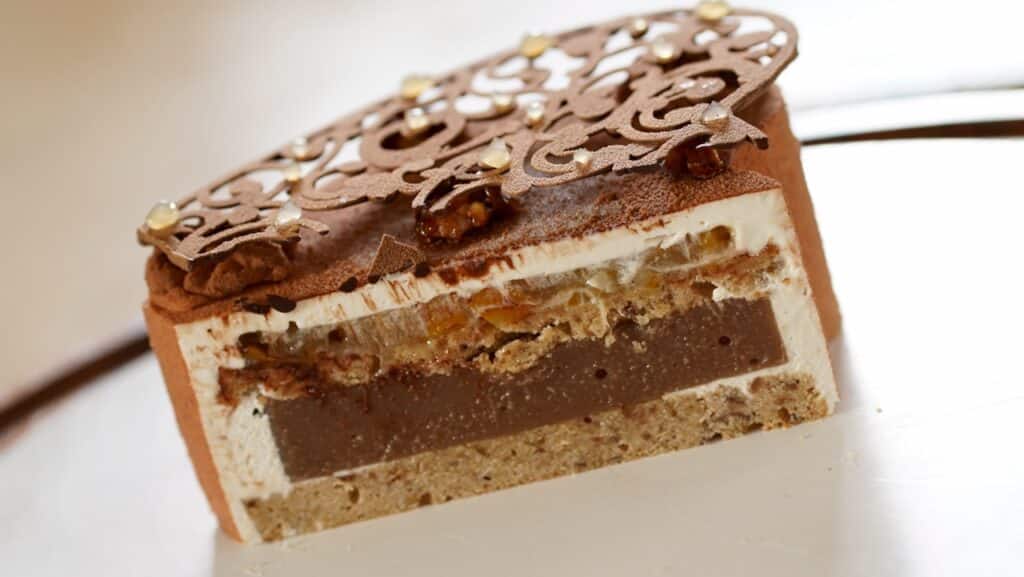
- Soften the gelatin in cold water, then drain and set it aside. Pass the chestnuts through a food mill to create a smooth purée.Transfer the chestnut purée to a saucepan. Add the chestnut cream, water, vanilla, rum, and simple syrup. Bring the mixture to a brief boil, then immediately remove it from the heat. Stir in the softened gelatin until it is fully dissolved and incorporated. For an ultra-smooth texture, transfer the mixture to a narrow container and blend thoroughly with an immersion blender. Alternatively, you can pass it through a fine-mesh sieve.To shape the crémeux, form it into 2 identical hearts that are 1 inch (2.5 cm) smaller in diameter than your cake. (You can fashion temporary heart molds from strips of acetate cake collar). Freeze the shaped crémeux until completely solid.
Chestnut Mousse
- This mousse is based on ganache montée. First, soften the gelatin in cold water, then drain it. In a saucepan, bring the heavy cream and vanilla to a boil. Pour the hot cream over the white chocolate and stir until the chocolate is completely melted and the mixture is smooth. While the mixture is still warm, stir in the softened gelatin until fully dissolved.Next, blend in the chestnut cream, followed by the remaining chilled heavy cream. Mix thoroughly until fully combined. Cover the mixture and refrigerate it overnight to set.
Caramelized Walnuts
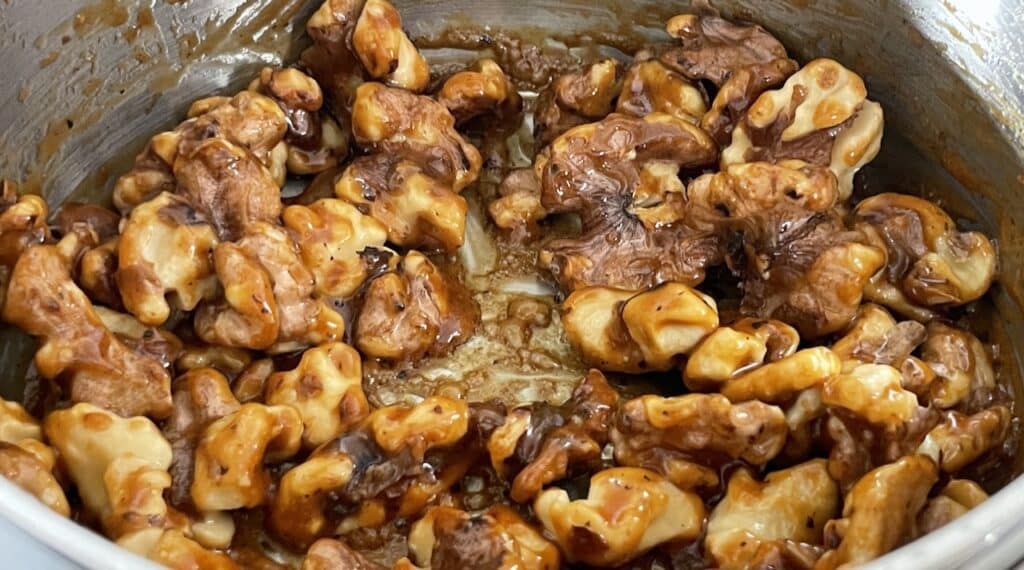
- Lightly toast the walnuts in a dry skillet over medium heat or on a baking sheet in the oven. In a small saucepan, combine the honey, water, and butter. Cook over medium heat, swirling the pan occasionally, until the mixture turns a dark amber caramel. Immediately remove the saucepan from the heat and carefully stir in the toasted walnuts, coating them evenly in the hot caramel. Return the pan to low heat and cook, stirring constantly, for another minute to ensure the nuts are well-coated and the caramel sets slightly.Quickly pour the mixture onto a silicone mat or a parchment-lined baking sheet. Immediately use two forks or a spatula to separate the nuts into individual pieces before the caramel hardens. Let them cool completely. Once cool, store the caramelized walnuts in an airtight container.

Cake Assembly
- Stainless steel ring: Assemble from the bottom up.Inverted silicone mold: Assemble from the top down (the first component placed will become the top of the finished cake).Place the appropriate sponge layer (the thickest one, if applicable) in the bottom of the mold. Pipe a generous layer of chestnut mousse around the inner edges of the mold. Use the back of a spoon to spread and press the mousse firmly against the sides, creating a seamless wall and ensuring there are no gaps. Gently place the frozen chestnut crémeux insert in the center.Spread a thin, even layer of mousse over the crémeux to seal it.If using a steel ring: Place the second sponge layer on top. Then, add the frozen lemon gel insert. Completely enclose the assembly with more mousse, filling any gaps and covering all inserts. Smooth the top with an offset spatulaFreeze the assembled cake overnight, or until completely solid, before un-molding.
Garnish
- Use a small amount of the leftover mousse as "glue" to adhere 3 caramelized walnuts together, forming a cluster. Freeze this garnish separately until ready to decorate the cake.
Heart Shaped Chocolate Lace
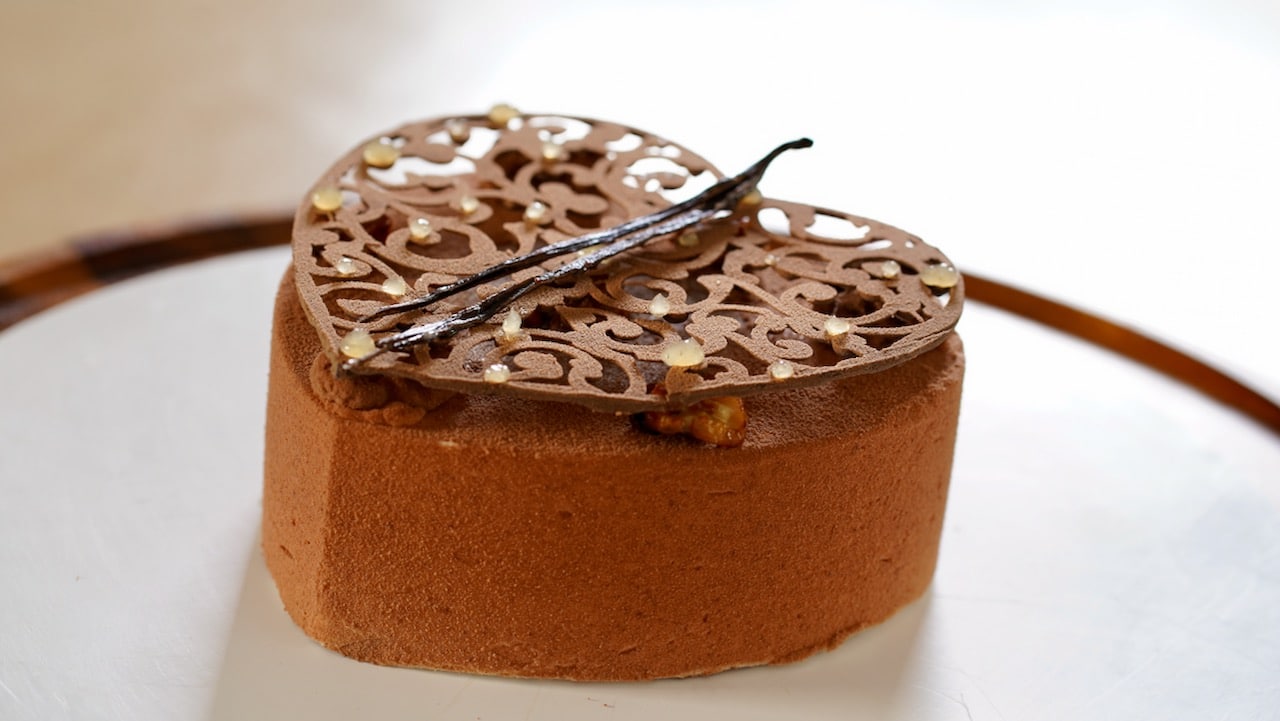
- For a simpler alternative, I recommend using a decorative chocolate transfer sheet. Please note that both methods require properly tempered chocolate.If you wish to create the lace by hand, you will need a few additional items: piping cones (made from parchment paper) and several large sheets of clean, smooth acetate. As a substitute, you can use the side of a clean plastic zip-top bag, but do not use plastic wrap as it is too thin and will cause problems.The key technique is to pipe the lace as a single, continuous interconnected web. The individual strands must be well-linked to create a stable structure. Once the web is piped, reinforce it by adding small dots of chocolate at all major intersections. After piping, allow the chocolate to set partially until it is no longer tacky to the touch. Then, carefully lay another sheet of acetate over the lace and weigh it down lightly with a flat tray or a second baking mat. This step is crucial to prevent the delicate lace from curling as it fully hardens.Store all finished chocolate decorations in a cool, dry place below 68°F (20°C) to prevent bloom or softening.


Chocolate Velvet Effect
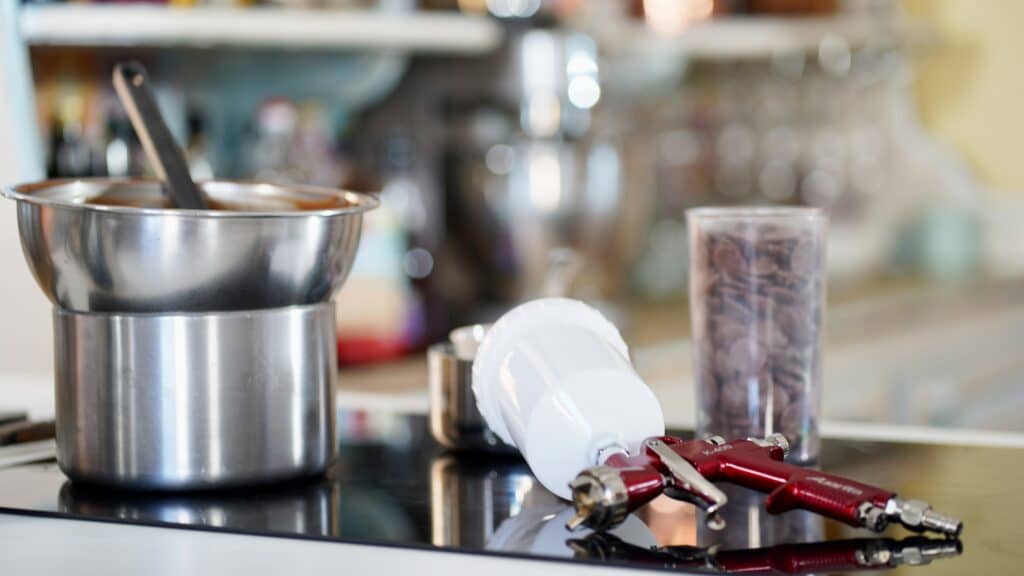
- If you prefer a velvety finish, you can use an edible cocoa butter base velvet spray on the cake and chocolate lace. Click here to learn the secret to achieving a chocolate velvet effect on cakes or a mirror sheen on chocolate bonbons.

Garnish
- As a final touch, arrange the remaining caramelized walnuts on top, placing one prominently in the center. Gently position the chocolate lace crown over the assembled walnuts. For a fresh, decorative accent, pipe small dots of lemon gel around the base of the cake. Enjoy!

Ready to discover this recipe? You're only 1 step away.
This recipe is only accessible to registered members!
Create your account to access all recipes and content of my website.
Join us now and enjoy more 800 recipes (Mostly French with European Influences, American Classics and Asian fusion)
Already register? Sign in


Appetizers
Beetroot Red Cabbage Mango Salad

Free Recipes
How To Prepare Red Cabbage Raw


Free Recipes
Apple Pie Traybake

Cakes
Olive Oil Chocolate Cake

Desserts
Spicy Chocolate Bar

Entrees
Deboning A Poularde Leg
Free Recipes
Chanterelle

Bread
Panettone Perdu

Free Recipes
Mustard Fig Spread

Free Recipes
Poularde Demi-Glace
