
Please note that the full access to this content needs a subscription: please sign up.
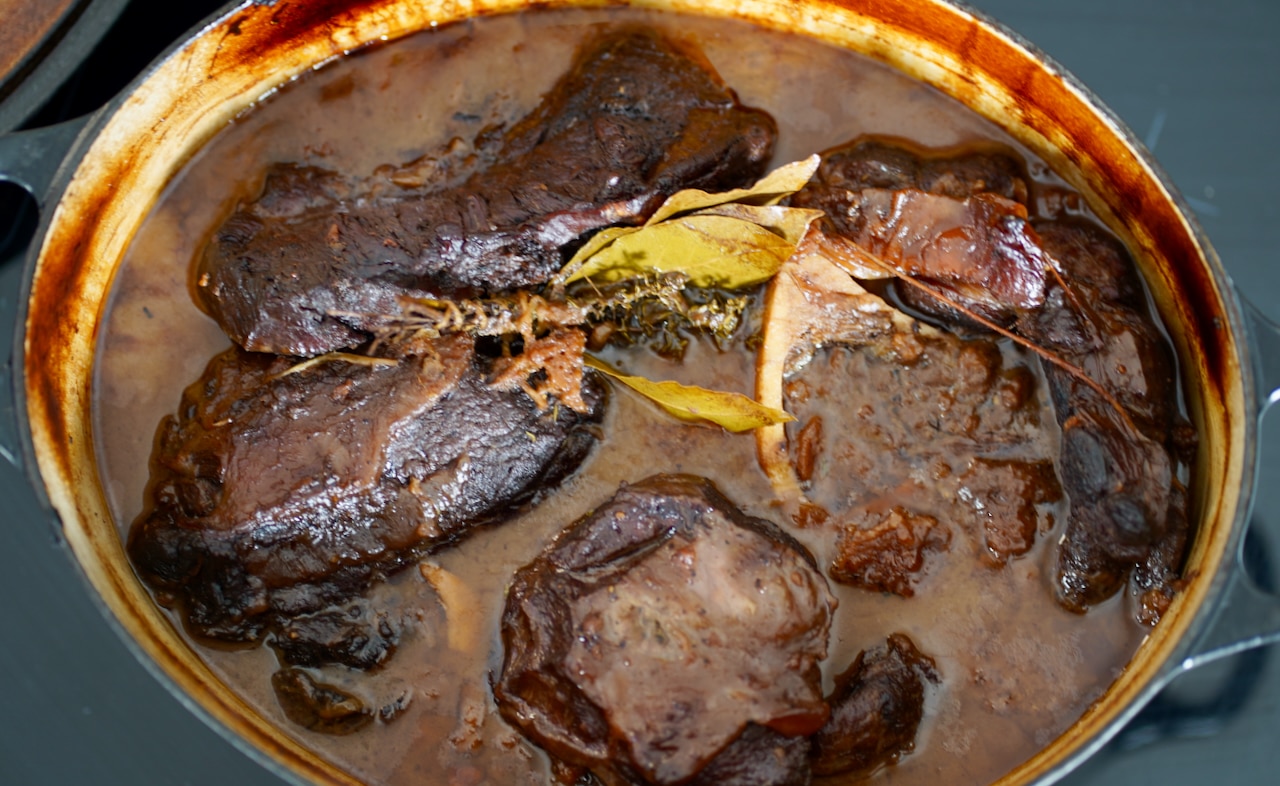
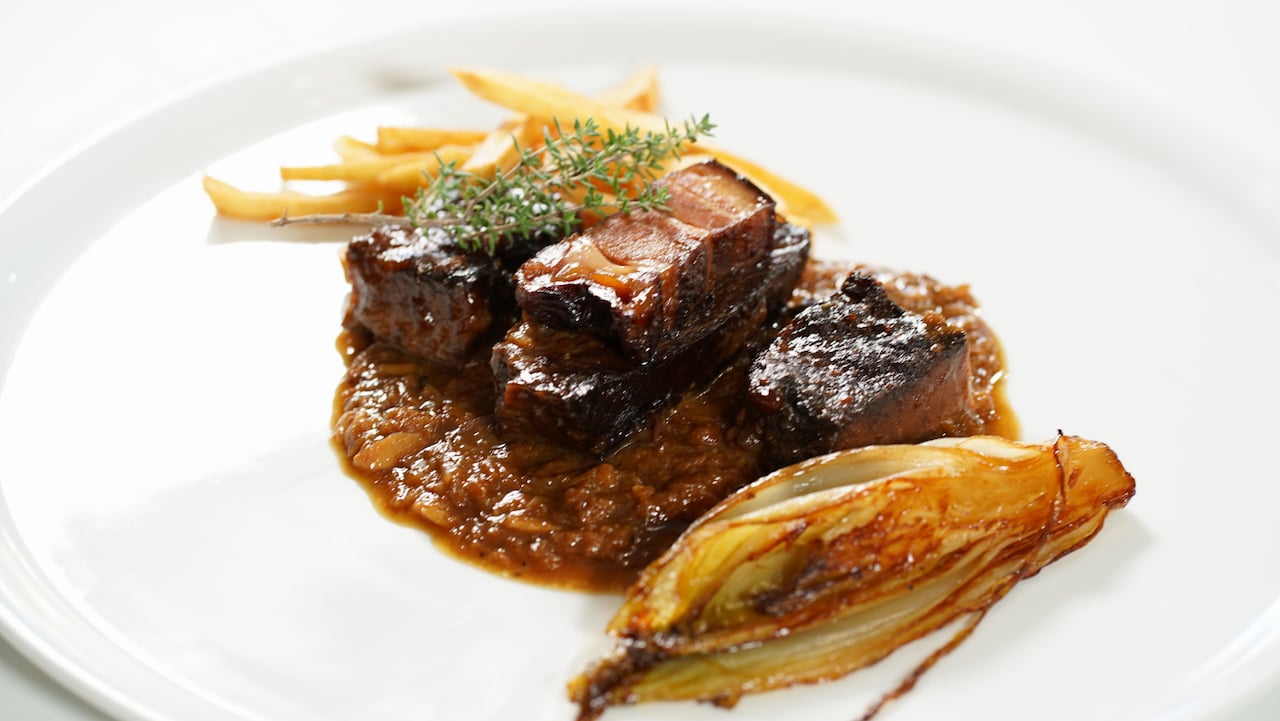
An iconic dish from Northern France and Belgium...
This recipe is a protected and only available for paid members. To obtain the full step by step recipe and detailed ingredients list, please sign up.
Preview the recipe
- This dish can be served straight from the pot. However, and like most stews, it is best served rewarmed the following day.

Mise-en-Place
- Pat the meat dry and reserve it in the refrigerator. If you plan to serve the dish right out of the pot, cut the meat into 50–80 gram portions (2 ounces). Tie up the shank with butcher twine. Otherwise, leave the meat cuts intact; they are way easier to manage from the beginning to the end for an awesome plating presentation.
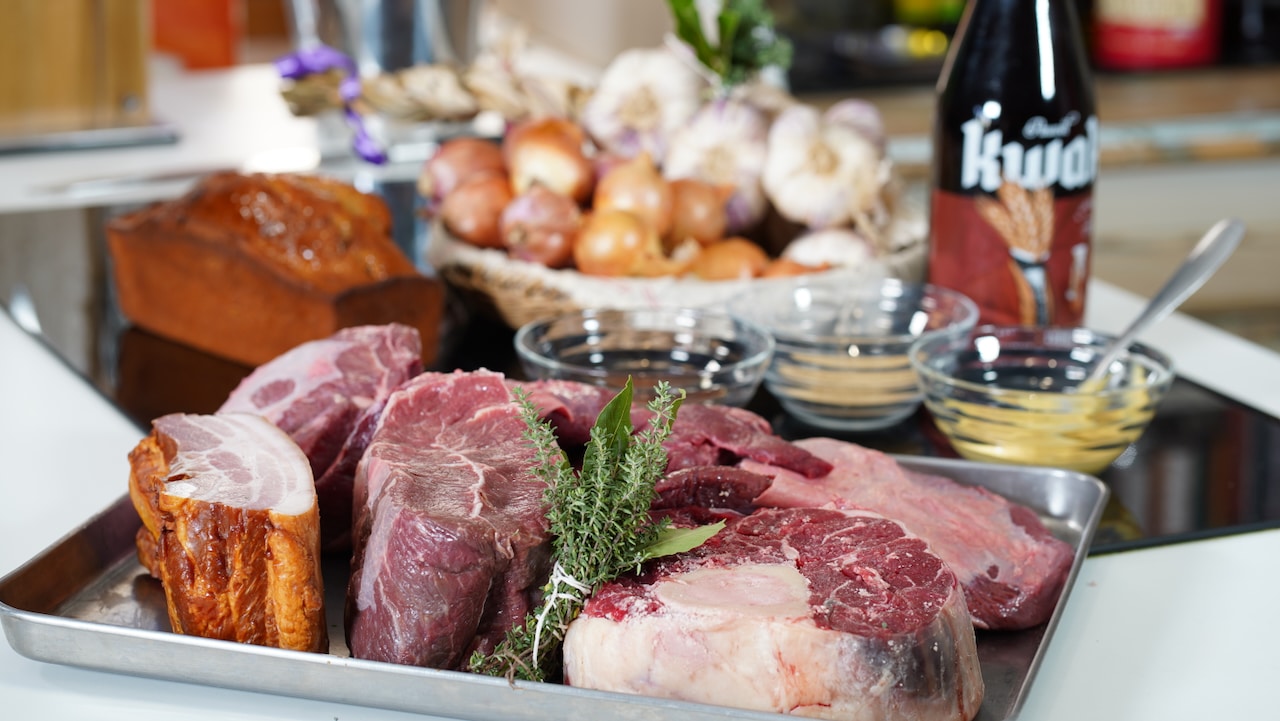
- Peel and cut the onions and shallots into thin slices using a mandoline slicer or a sharp chef's knife. Slice the garlic cloves and reserve it in a separate container.

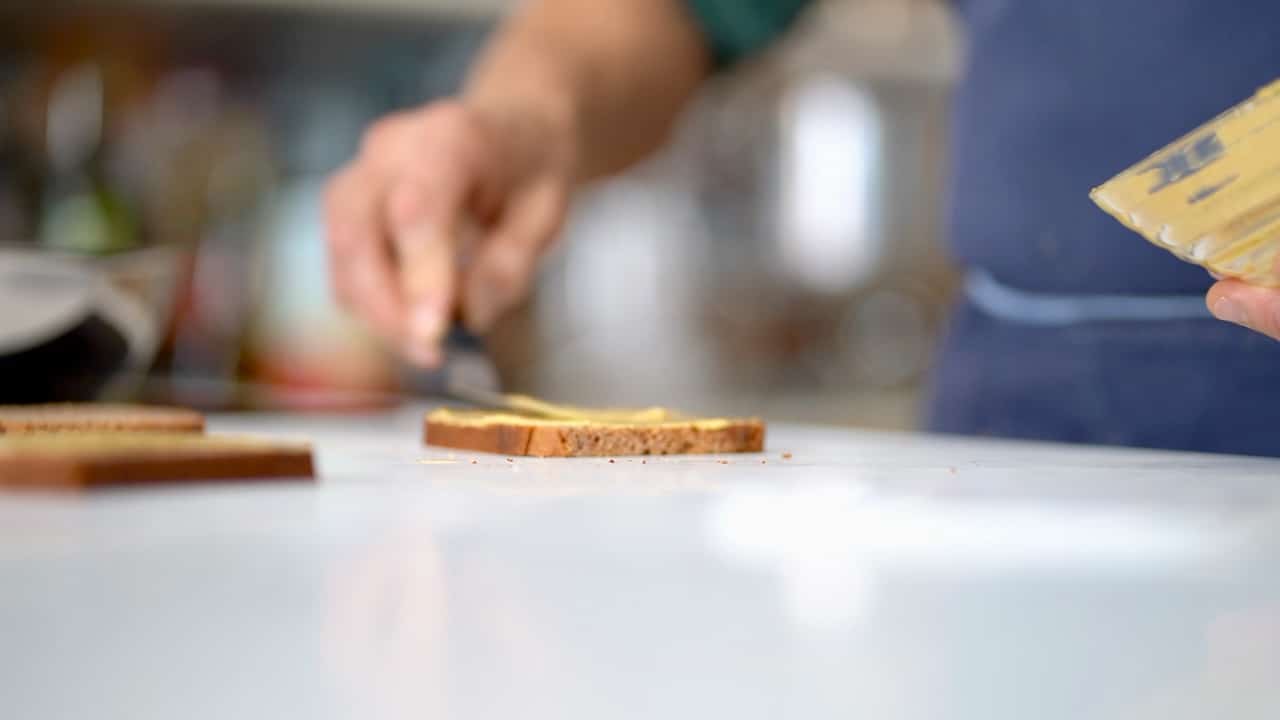
- Cut your homemade gingerbread into 4 slices and spread mustard onto each slice; reserve.


Searing Meat
- Heat the skillet over medium-high. Oil and season red meat with Celtic sea salt on both sides. No ground black pepper for now; it'll burn.
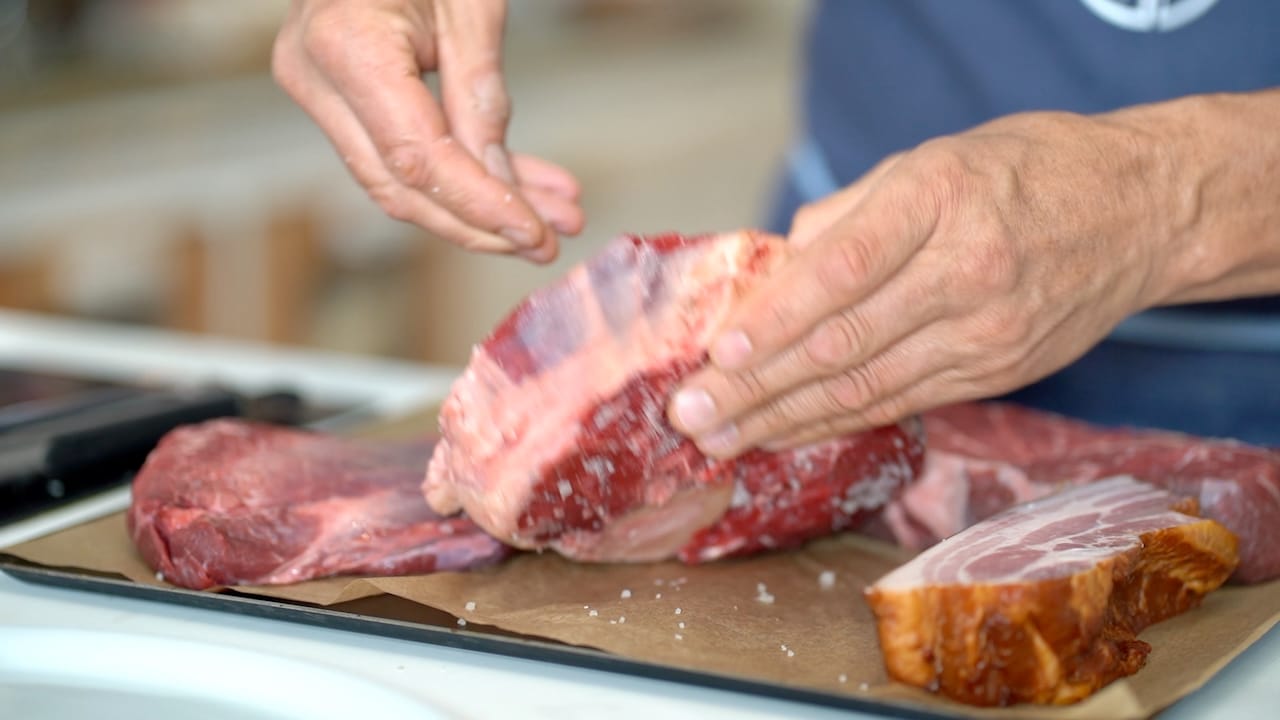
- Work in two batches; overcrowded pan will create excessive steam and meat wont sear well. Drizzle half of the oil, about one tablespoon. Sear the meat for 5 minutes on each side.
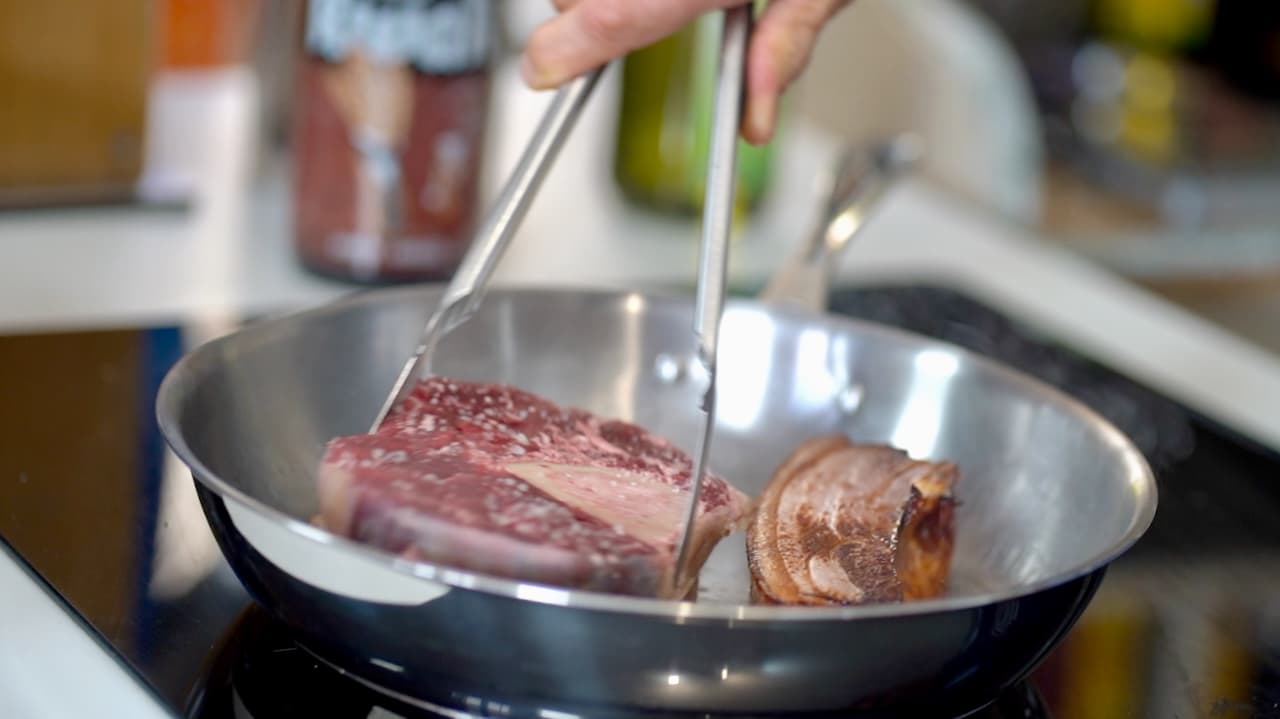
- It is very important to obtain a strong caramelization called the Maillard reaction.
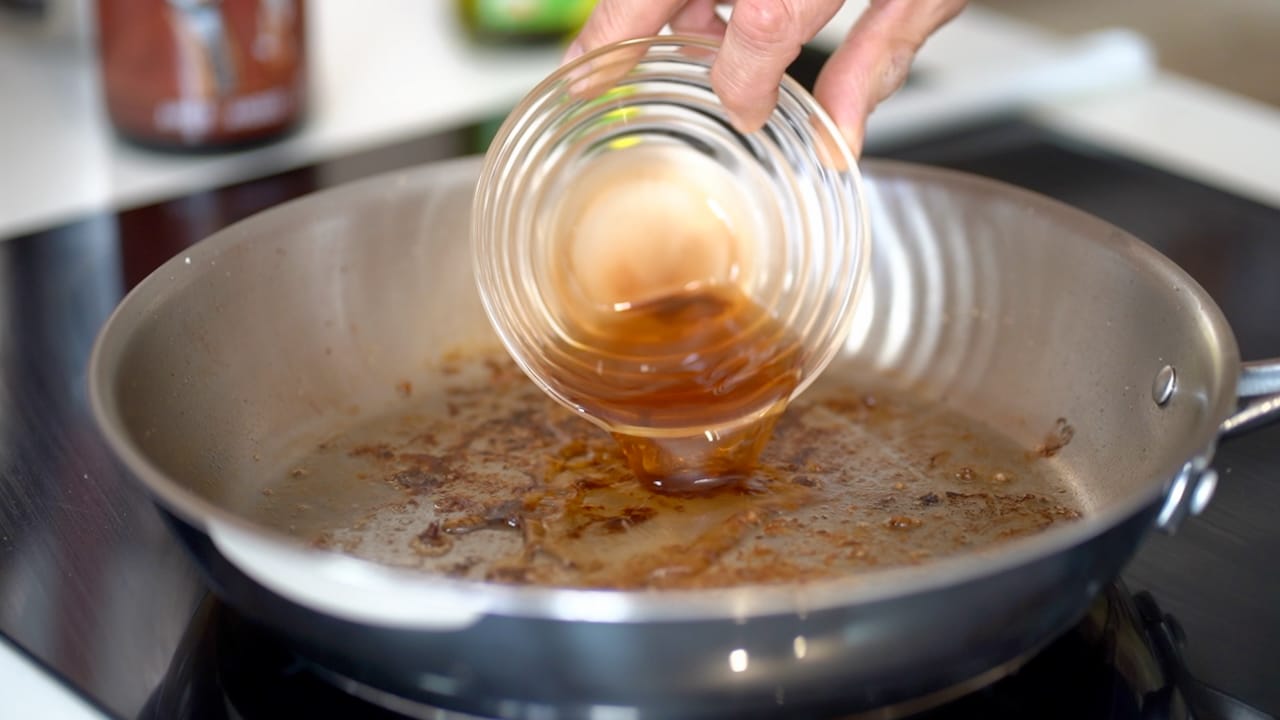
- Save the bits left on the pan and deglaze it with the vinegar. Cook for one minute and let it cool; set it aside for now.


Caramelizing Onions and Shallots
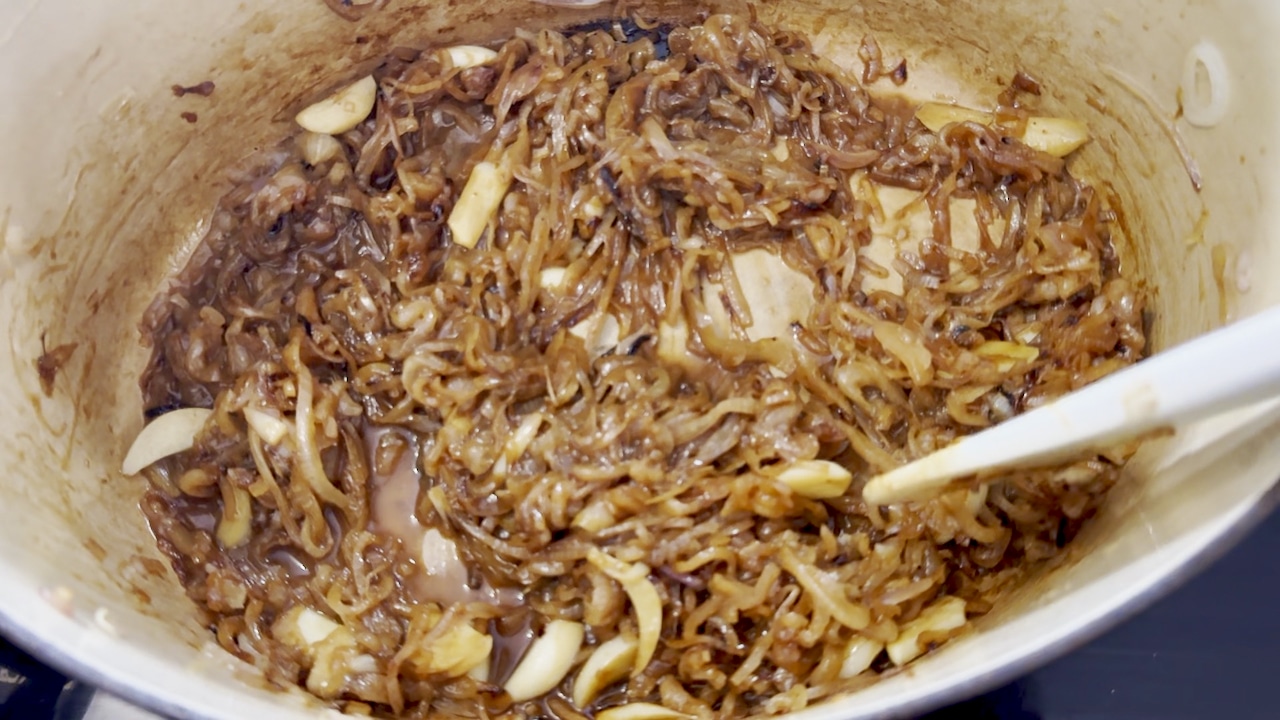
- Melt the butter in the dutch oven. Sweat onions and shallots for 5 minutes on high heat. Put the lid on and cook them for 15 minutes on medium-low heat. This step creates steam and will soften the onion mixture.
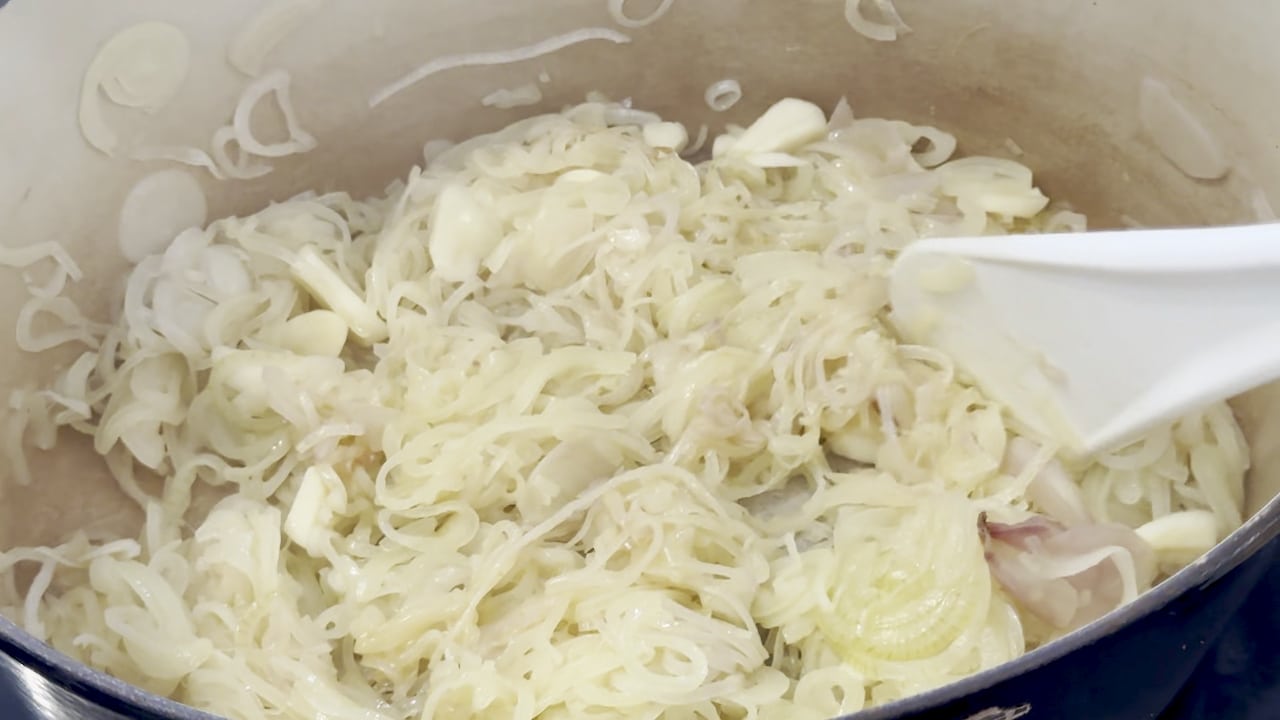
- Remove the lid, add the garlic and brown sugar. Cook for 20 minutes more or until onions have reached amber caramelization stirring every so often.


Carbonnade
- Add the meat flavored vinegar and water. Add the mustarded gingerbread slices. Arrange and press down the seared meat along with the rendered meat juice, herbs, beer and ground black pepper.
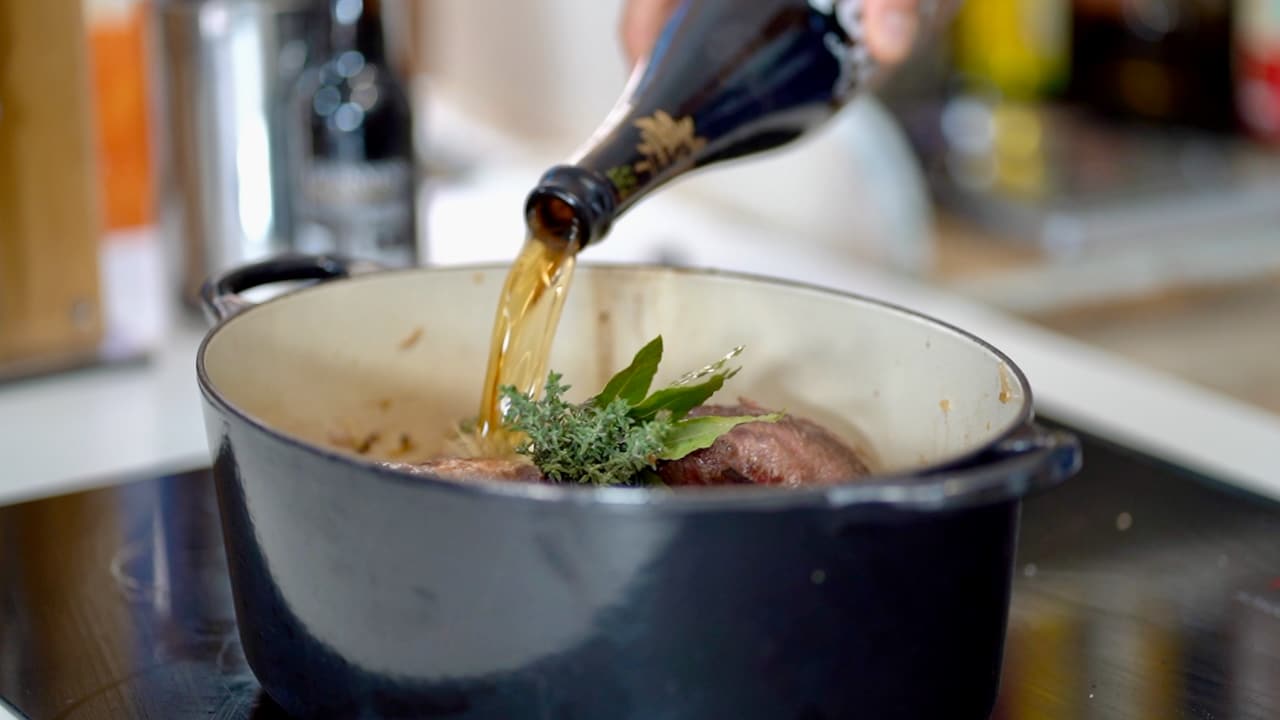
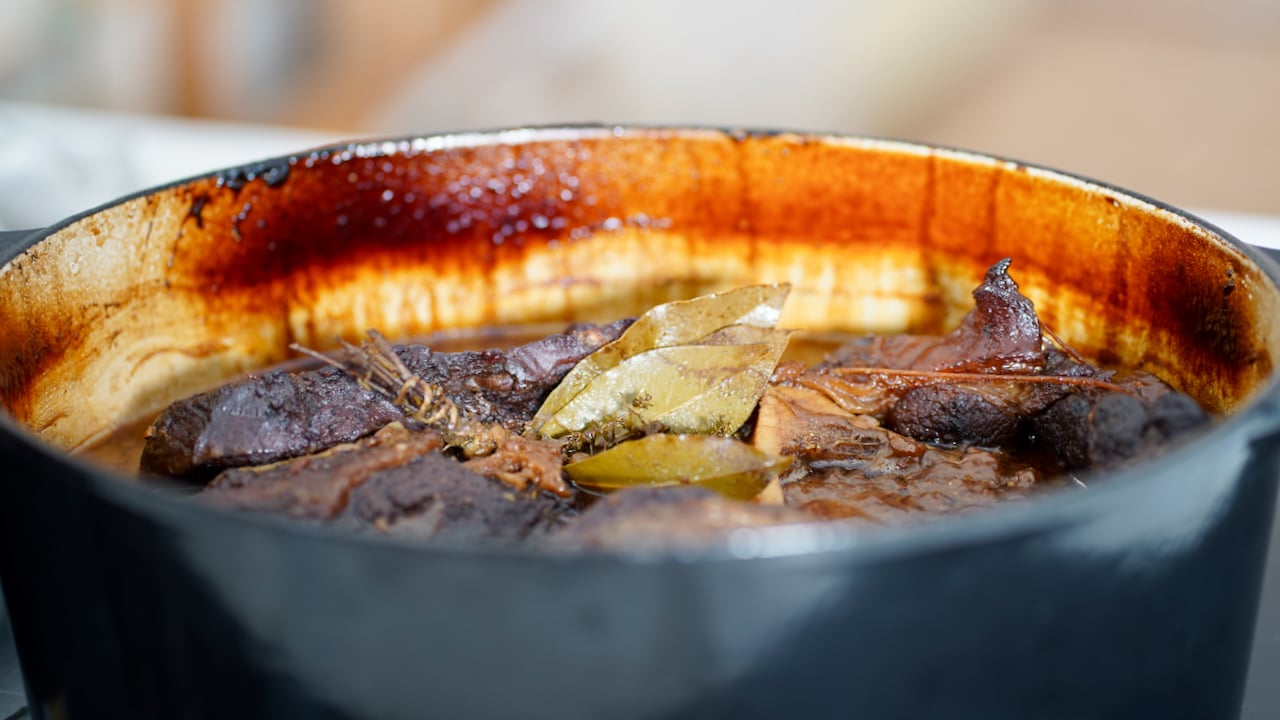
- Preheat a fan oven to 300ºF (150ºC). Bring the dish to a boil first, then cover and put in the oven. Cook for 2 hours. Turn the oven off and leave the dish rest inside for 30 more minutes. Remove from the oven, and leave it out to rest again for 30 minutes more. So, a total of 3 hours cooking time.


Why Putting Meat Under Press
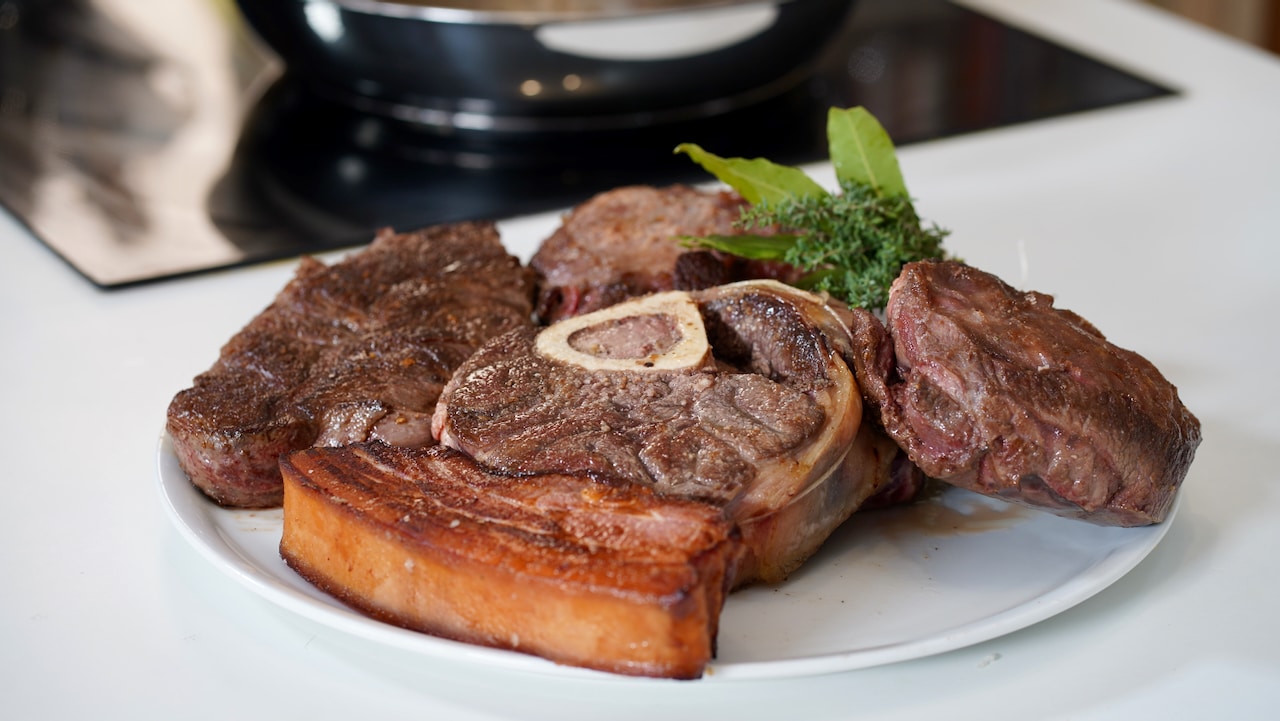
- This is a high-end restaurant trick: Follow this step only when meat has been cooked in large uncut portions. Cooling braising/stewing cuts slowly under press allows the meat to turn into evenly surfaced slabs. Each sort can then be trimmed and divided into desired portions. This way, each order would have a distinguished meat assortment on the plate.
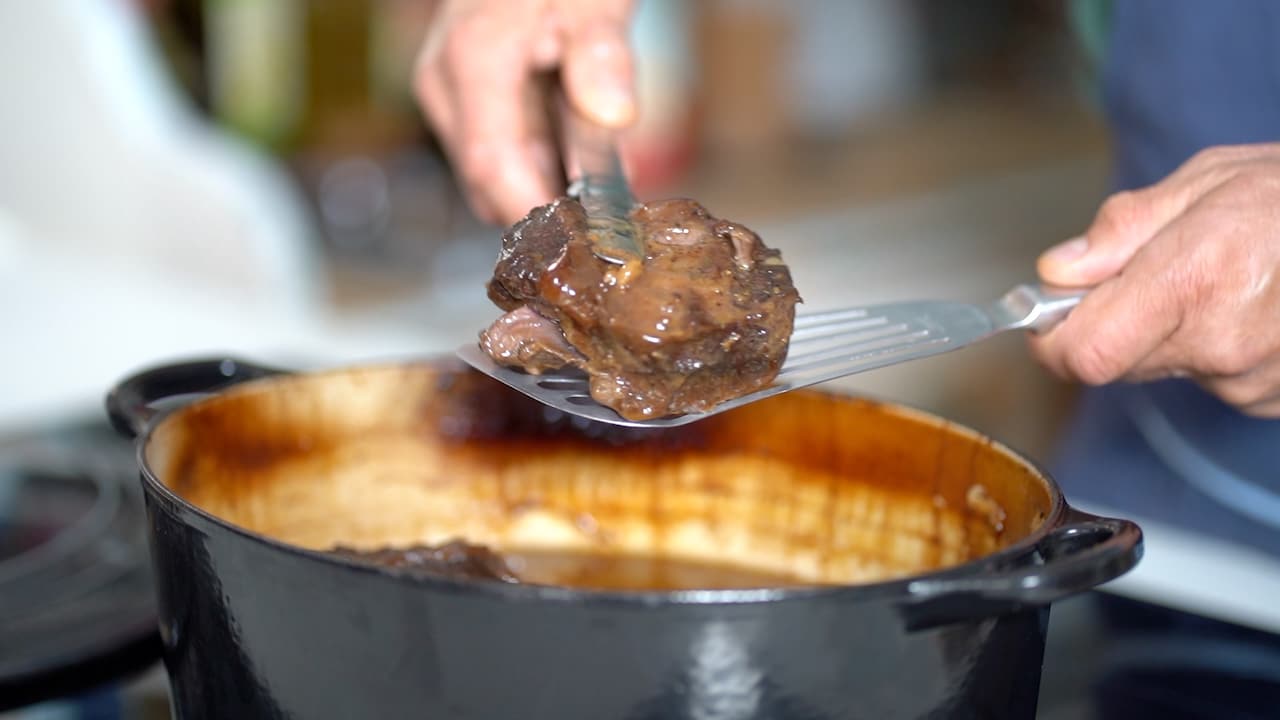
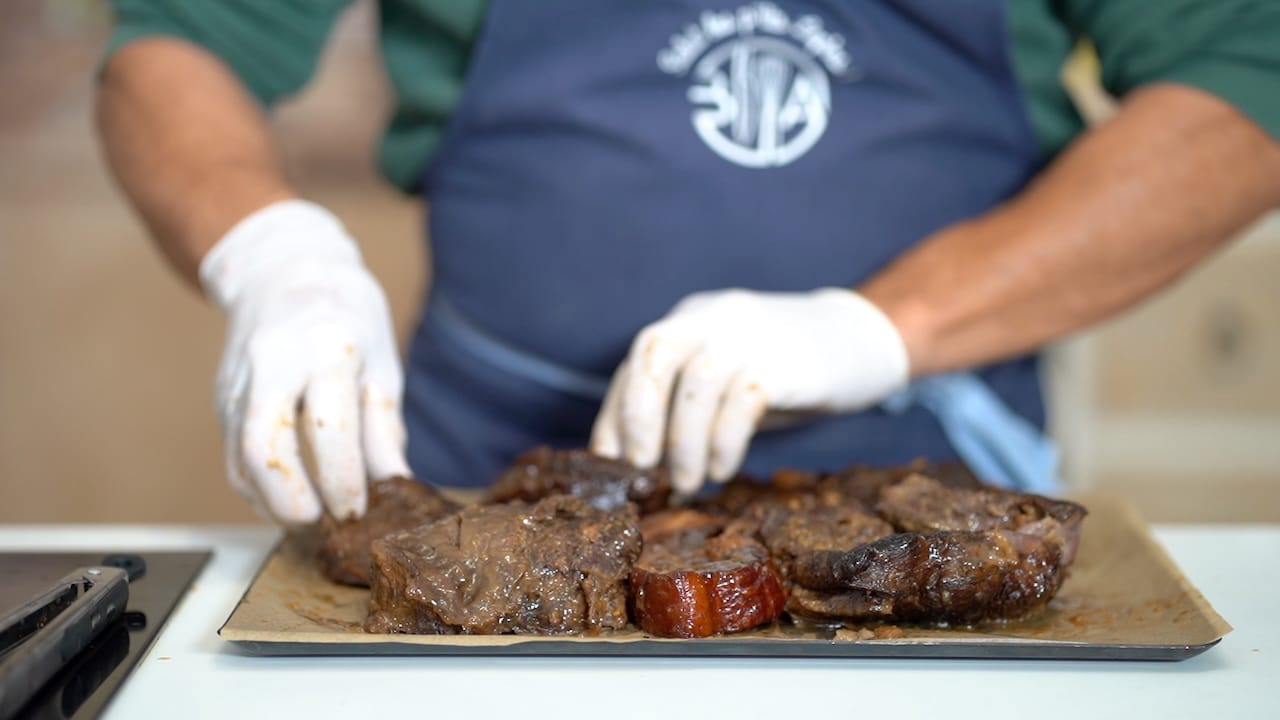
- After cooking and resting time is observed, carefully remove the warm meat and place each piece of meat onto a baking tray lined with parchment. Remove the cooked bone from the shank (save bone marrow for the sauce).
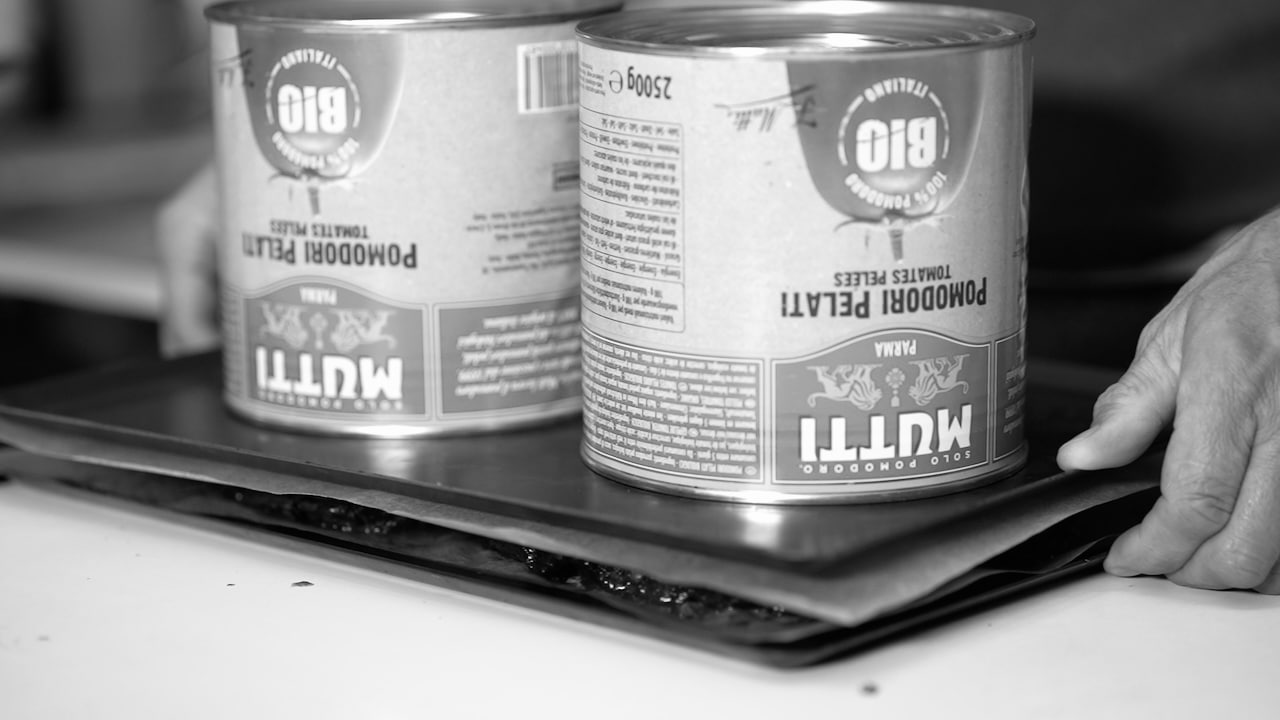
- Cover the meat with parchment, a baking tray and weights such as cans, and refrigerate overnight.
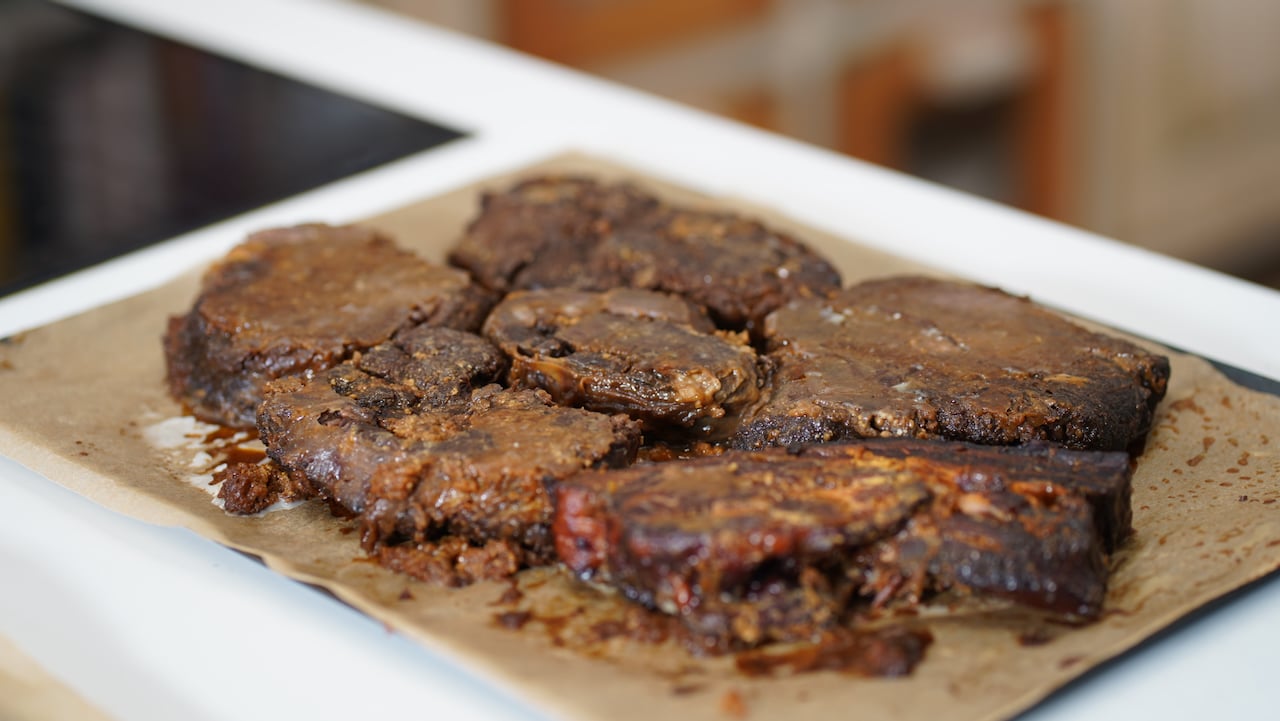
- Ready to be portioned meats. At this point, the meat can also be vacuum-sealed (bag the pork belly and beef separately) to be stored for 2 weeks in the refrigerator or frozen for up to 6 months.
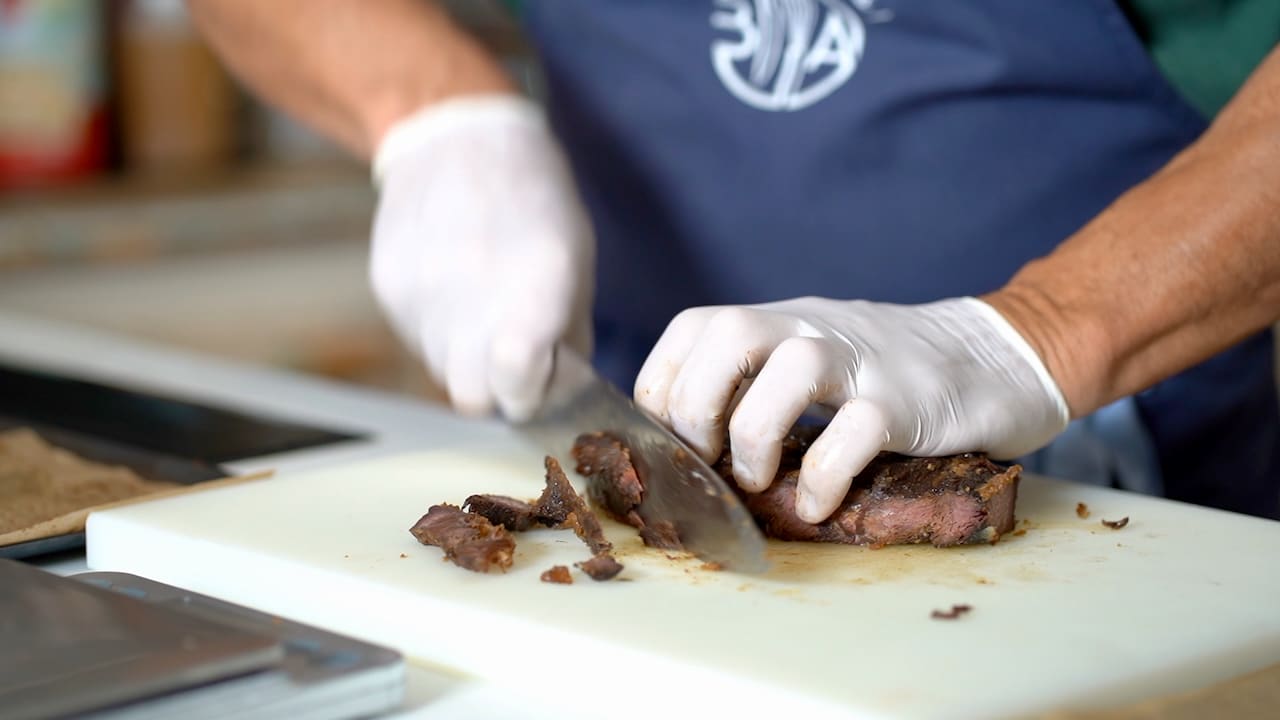
- Trim meat edges and cut into desired portions. Save scraps for your next Hachis Parmentier.
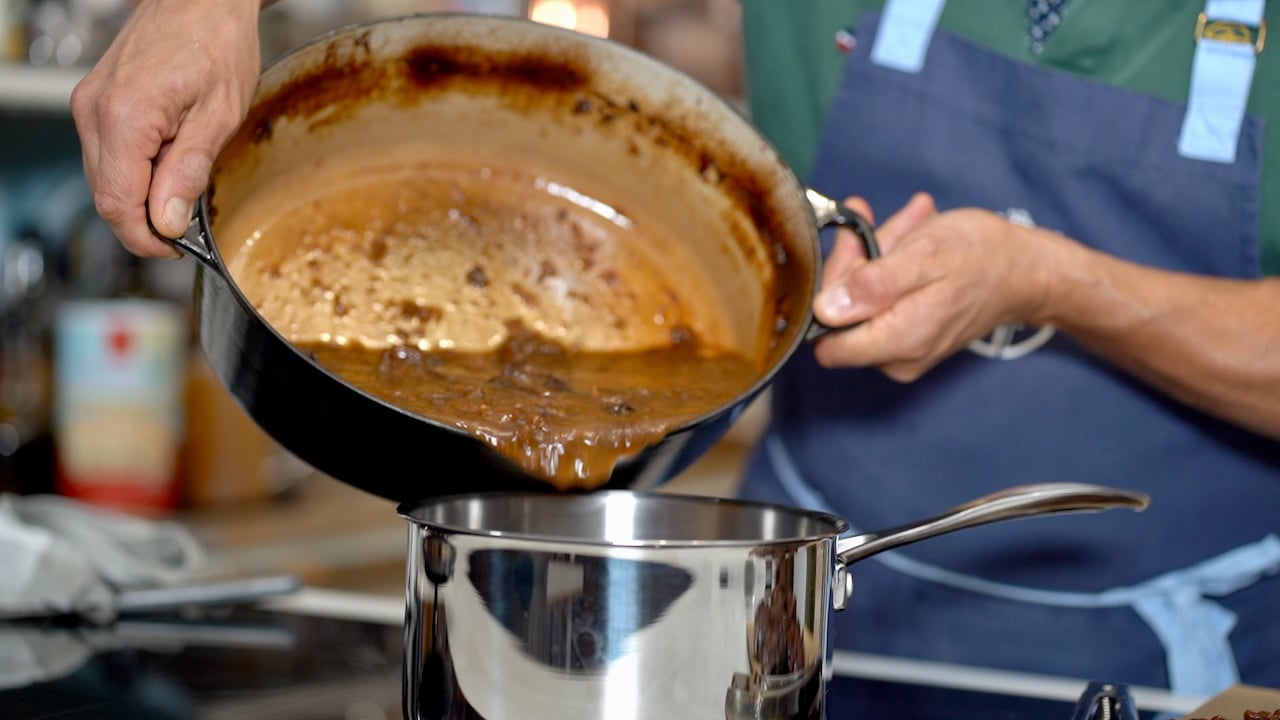
- Transfer the thickened brown cooking mixture to a container or saucepan and refrigerate it overnight. At this point, it can also be frozen for later use.


Restaurant Style Plating
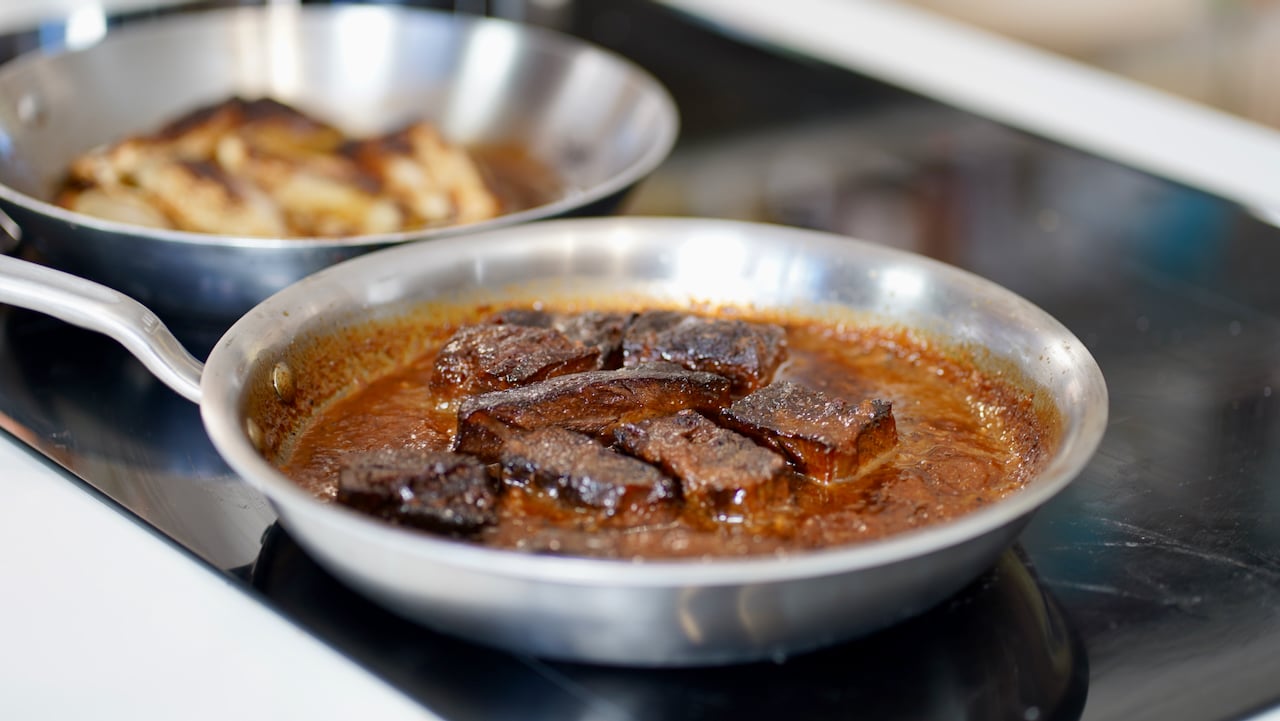
- In a sautoir, ladle out the chilled cooking mixture needed for the meal (about ½ cup per serving). If too thick, add a splash of water or beer. Arrange pieces of braised beef in the sauce, but do not immerse them. Rewarm the pork belly separately to keep its glossy appeal. Reheat and reduce over medium heat to concentrate the flavors even further. Readjust the seasoning with salt and pepper if needed.

Wood-Fired Oven
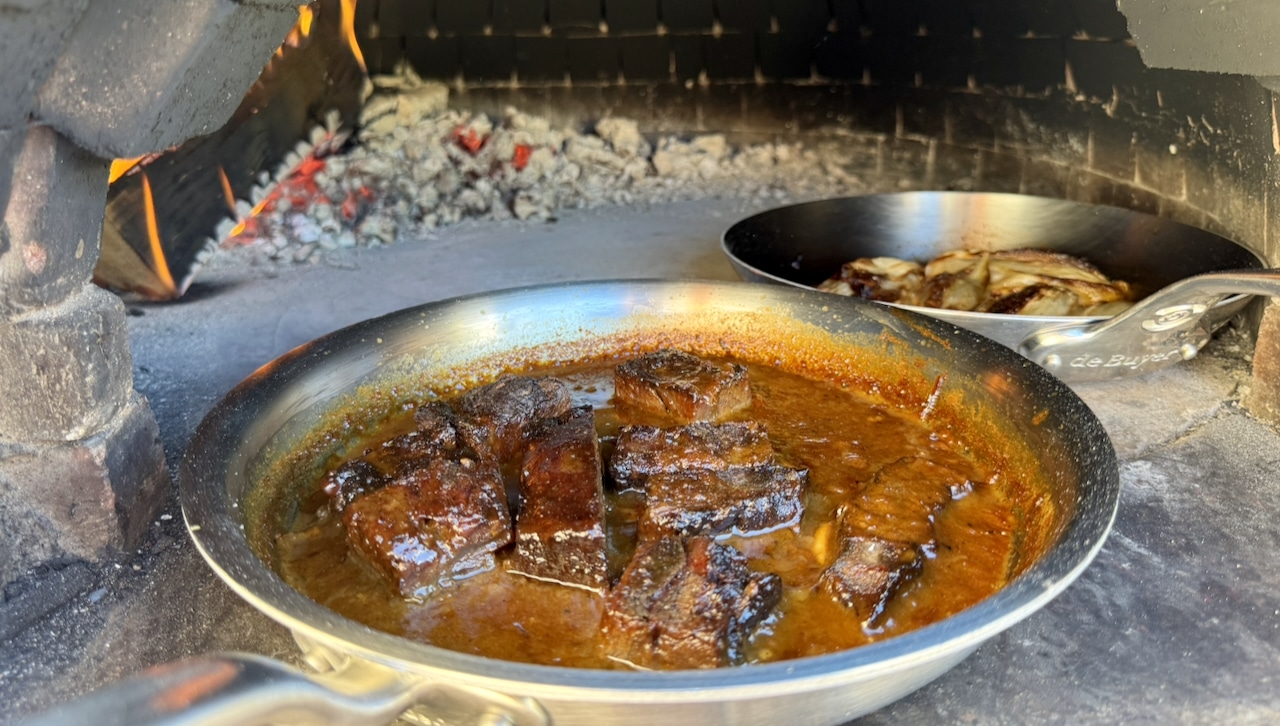
- There is no better place for a stew to cooked or rewarmed than in a wood-fired oven 🔥

Best Accompaniments
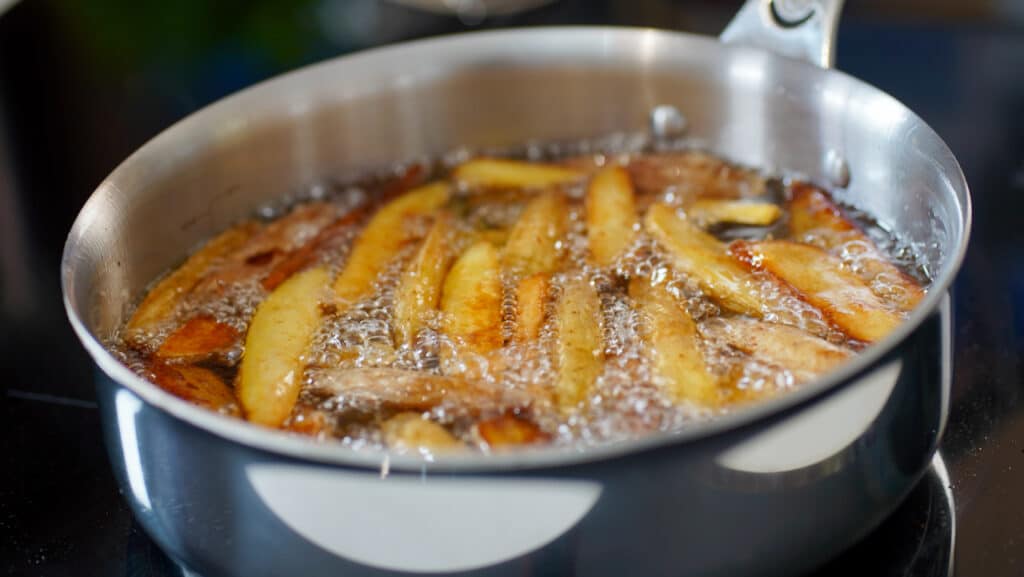
- Flemish beef stew is traditionally served with French fries cooked in beef or duck fat and honey braised endives.

Ready to discover this recipe? You're only 1 step away.
This recipe is only accessible to registered members!
Create your account to access all recipes and content of my website.
Join us now and enjoy more 800 recipes (Mostly French with European Influences, American Classics and Asian fusion)
Already register? Sign in
