
Please note that the full access to this content needs a subscription: please sign up.
Master the art of baking the perfect French baguette
This recipe is a protected and only available for paid members. To obtain the full step by step recipe and detailed ingredients list, please sign up.
Preview the recipe
Mixing
- Start by setting up your stand mixer with the hook attachment. This is essential for kneading the dough effectively and achieving the desired texture. The combination of water, yeast, flour, semolina, and salt creates the foundation for a flavorful and textured dough. Mix these ingredients on low speed for about 15 minutes. This kneading process helps develop the gluten in the flour, which gives the dough its structure and elasticity. The semolina adds a nice texture and flavor to the dough. Once the dough is well mixed and has formed a smooth consistency, transfer it to an oiled container. This step is important to prevent the dough from sticking and to allow it to rise properly. Cover the container with a damp towel or plastic cling to create a warm and humid environment for the fermentation process. Let the dough ferment for about an hour, or until it has doubled in size.
Fermentation
- After you have prepared your dough and let it rise for the first time, it is time to deflate it on a floured countertop. Gently press down on the dough to release any air bubbles that may have formed during the initial rise. Once the dough is deflated, place it back in the container and cover it securely. By placing the dough in the refrigerator overnight, you are allowing the flavors to develop slowly and naturally.
What Does Cold Fermentation Do?
- Cold fermentation process allows for more complete hydration of the starches, and more gluten development. An enzyme called protease, which is naturally occurring the flour, breaks some of the long gluten bonds, making the dough more extensible. Thus, creating more flavors through alpha-amylase action converting starches into sugars.
Shaping
- The process of transferring the dough onto a floured work surface without deflating it sets the foundation for creating the perfect baguette. Dividing the dough into three equal portions and shaping them into rectangles allows for uniformity in size and shape. After letting the dough rest for 45 minutes, covered to prevent a dry surface, it's time to focus on the actual shaping of the baguette. The technique of giving a gentle patting fold and pressing with the heel of your hand, as if folding a business letter, helps to create the distinctive elongated shape of the baguette. To further refine the shape, elongate each baguette by rolling it back and forth on the work surface with both hands. Focus on the center of the loaf and work your way out to the ends until the baguette reaches the desired length. This rolling motion helps to create a smooth surface and consistent thickness throughout the baguette.
Proofing
- One essential step in the process of making delicious baguettes is arranging them seam side down over a floured baker's couche. The baker's couche, a specially designed cloth made of natural flax linen, plays a crucial role in supporting the baguettes during the final proofing stage. Arrange the baguettes seam side down on the couche, it helps to maintain their shape and prevent them from spreading out too much during proofing. Cover baguettes and allow them to proof for about 90 minutes.
Baking
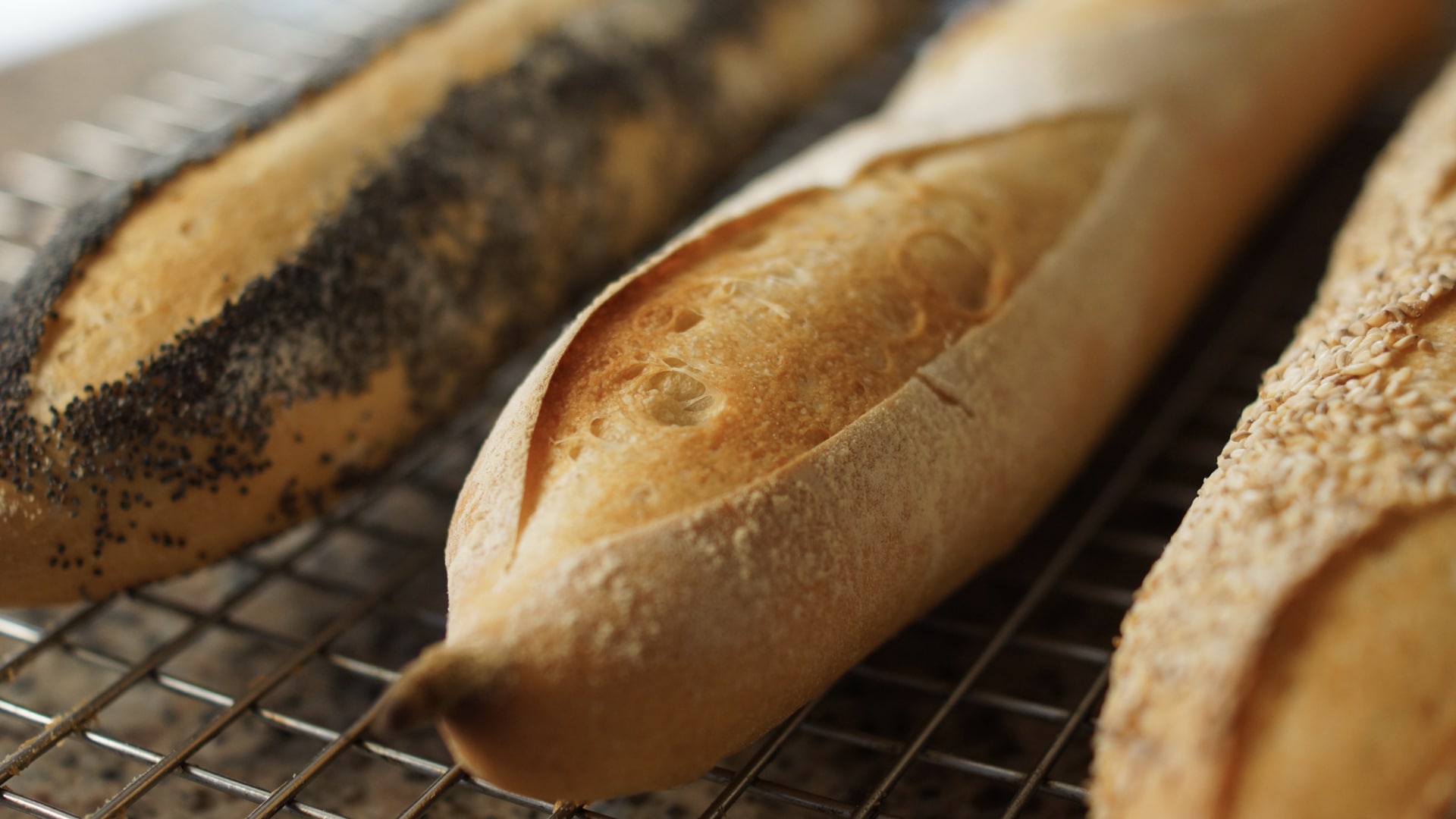
- Position your rack in the lower third of your oven and place an upside-down baking tray or a pizza stone inside to create more thermal mass. This setup will help distribute the heat evenly for a consistent bake. Preheat your oven to a high temperature of 500°F/260ºC for about 30-40 minutes. Next, carefully score the baguette using the tip of a razor blade or a sharp knife. This scoring helps the bread expand properly during baking without bursting at the seams. Once scored, transfer the baguette onto the hot pizza stone in the oven. Now, here comes the secret trick: creating steam. Adding steam to the oven slows down the formation of the crust, allowing the dough to expand fully and develop that coveted airy texture. You can achieve this by either throwing a couple of ice cubes into the hot oven or using a spray bottle to quickly mist water around the internal surfaces once the bread is inside. Allow the baguette to bake for around 20 minutes, and you'll start to see the crust turn a beautiful golden brown. Remove the baguette from the oven and let it cool on a wire rack. The sound of the crispy crust crackling as it cools is always a delight to hear.
Ready to discover this recipe? You're only 1 step away.
This recipe is only accessible to registered members!
Create your account to access all recipes and content of my website.
Join us now and enjoy more 800 recipes (Mostly French with European Influences, American Classics and Asian fusion)
Already register? Sign in
