
Malt (Roasted Barley) : The Secret Ingredient.
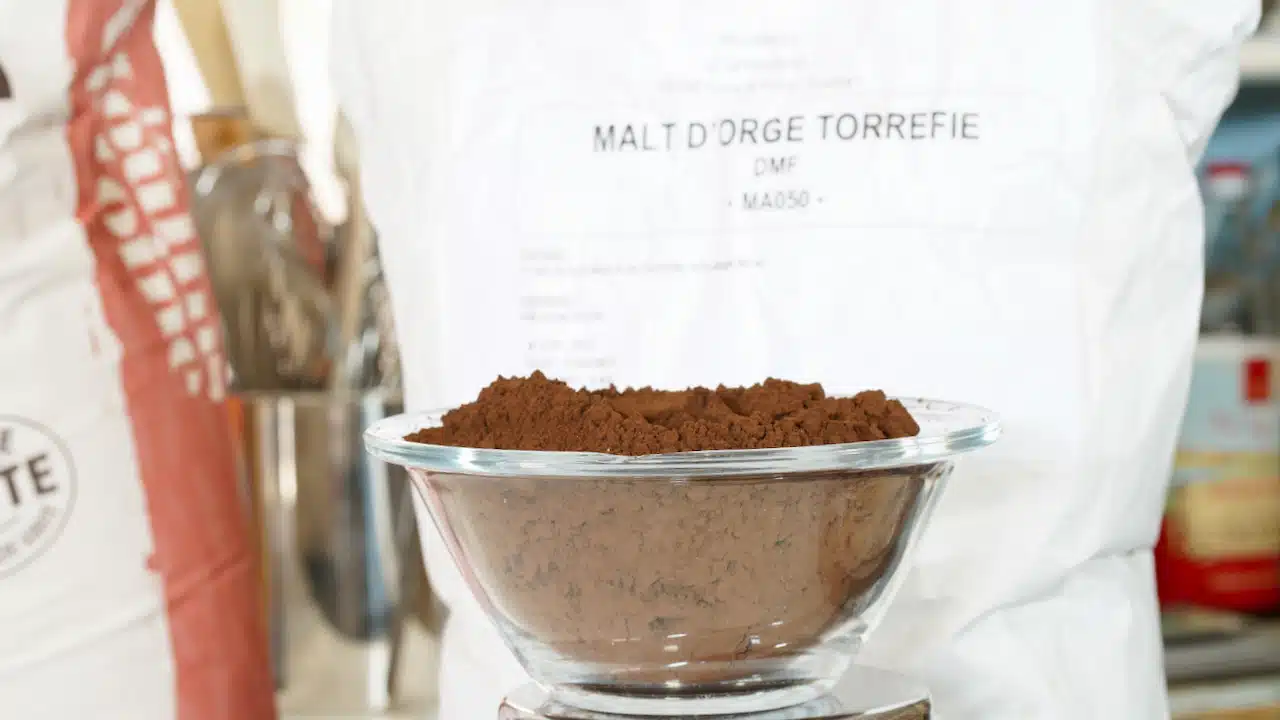
When entering the fascinating world of baking, one of the first questions an apprentice baker might ask—aside from those concerning the flours and yeasts that make up bread— is: what is the magic ingredient that can be added to the dough to obtain the perfect loaf, with a golden crust and a beautiful crumb? The answer isn’t simple, as there are many methods to improve dough quality. However, one ingredient stands out: malt. Malt is a natural fermentation activator, used for centuries in baking to optimize the rising process and give bread an intense flavor and an appetizing color. Malt is obtained from barley, which undergo a controlled maceration and germination process. With a high color specification, it brings strong, smoky, and full-bodied coffee flavors with dark, deep red color hues resembling processed cocoa powder.
Malt making process
The process begins by soaking barley grains in water in special containers. They absorb moisture, which activates germination. The grains are then transferred to temperature- and humidity-controlled germination chambers, where they remain for about a week until they begin to sprout. At this stage, to stop germination, the fine roots are separated, and the grains are dried until the moisture content reaches the optimal level of approximately 8%. During germination, a crucial chemical process takes place: starch saccharification. Alpha and beta amylase enzymes break down the starch in the grains into simpler molecules such as maltose and dextrin. These simple sugars feed the yeast, stimulating fermentation and contributing to even rising. After drying, the grains are ground into a fine powder. The most common form used in baking and pastry making, due to its ease of use, is a ready-to-use liquid or paste extract: liquid malt. The most popular type is barley malt, but there are also variants made from other grains—the so-called malted grains—obtained from rye or wheat, which have specific characteristics. However, the operating principle remains the same as for barley malt.
Types of malt available for sale and their properties
Not all types of malt are identical, and the differences between them are reflected in their enzymatic capacity, also known as diastatic power. This measures the amount of maltose produced from 1000 g of flour in 30 minutes and is expressed in Pollak units. Diastatic strength depends on the type of malt and the manufacturing process, and choosing the right one is essential for optimal results.
Main types of malt available
- Malt flour: Obtained by directly grinding germinated barley grains, it has moderate diastatic power and is low in sugar. Ideal for traditional bread.
- Malt extract in syrup: Characterized by high diastatic power and a high sugar content (up to 85%), it is perfect for doughs that require rapid fermentation.
- Malt extract powder: Obtained by drying malt syrup, it retains a high amount of sugars (80-90%) but has low diastatic power. It is mainly used for its flavor and color.
- Concentrated malt in syrup (or paste): Has the highest diastatic power and a high sugar content, making it ideal for complex doughs or breads with a rich texture.
In addition to these types, there is also non-diastatic malt, obtained by heat-treating malt extract, which loses much of its enzymatic activity. It is used to add color and flavor, particularly in rye bread, due to its intense hue and pronounced taste. However, its use in white bread is limited, as it can excessively darken the crust. So, useless in the oldfashioned way baguette for instance. Malt is not just an ingredient; it is a reliable ally for the baker. It is valued for improving fermentation. Unlike sugar, which can accelerate fermentation but does not provide a constant release of nutrients for the yeast, malt ensures stable fermentation activity, leading to a better-developed and more flavorful loaf. Sugars not consumed by the yeast caramelize during baking, giving the bread a golden crust and intense flavor thanks to the Maillard reaction. Malt also contributes to a more airy texture and a crispy crust. Unlike other artificial improvers, malt is a 100% natural product derived from grains. The amount of malt varies depending on the type of flour used and its characteristics:
- Liquid or paste malt: 0.5 to 1% of the flour weight.
- Malt flour: 3 to 5% of the flour weight.
Using malt in bread making
Malt is ideal for doughs with short or medium fermentation (3 to 5 hours like Lodève Bread). For long fermentations (24 to 48 hours in the refrigerator), it is best to avoid malt, as the slow fermentation process does not require additional stimulation. It is very important to understand that adding malt to bread dough can in no way replace sourdough starter Levain; the latter plays a complementary role.
At home and if malt powder isn’t available, choose a malt concentrate in syrup form or a malt extract in paste form (barley syrup) due to its high diastatic power. Warm the spoon slightly before removing it from the jar. This will make it easier to measure and incorporate into the dough.
Pro Tip
Another important aspect is the compatibility of malt with the type of flour, specifically the falling number (Hagberg index). Flours with a falling number above 350 have low amylase activity and benefit more from the addition of malt, especially for long-fermented doughs or strong flours. Conversely, for flours with a falling number below 220, adding malt is not recommended, as the enzymatic activity is already sufficient.
In conclusion, malt is not only used in baking and beer recipes but also in numerous nonalcoholic, healthy beverages. Mixed with warm milk, water to taste, or even added to your ground coffee, it won’t last long in your pantry!