
Please note that the full access to this content needs a "Year at the table" subscription: please sign up.
This is my quick (no shaping, no rolling) mini baguette method—but without compromising the texture of the crumb and the final taste...
This recipe is a protected and only available for paid members. To obtain the full step by step recipe and detailed ingredients list, please sign up.
Preview the recipe
Why the Old-Fashioned Way Tastes Better
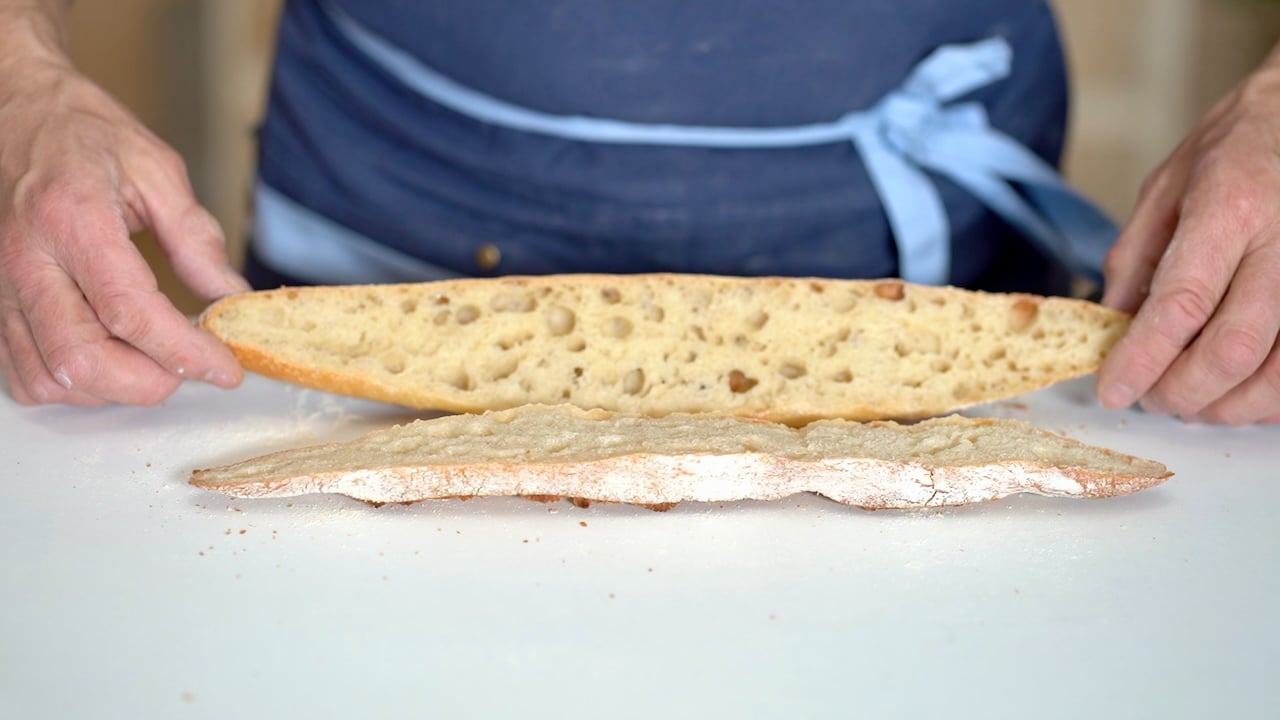
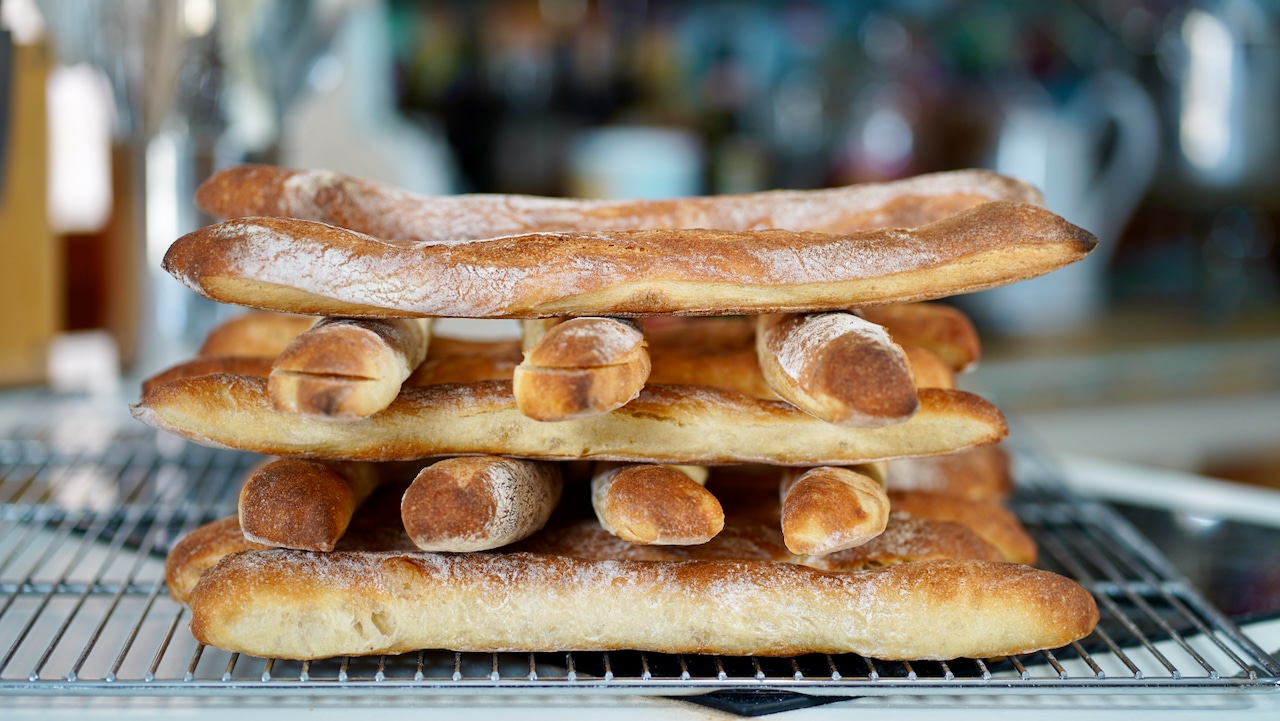
- The first thing you'll notice is this unique, honeycomb-like crumb with a beautiful yellow tint. In France, we call this l'alvéolage du pain. But notice—it's not excessive. I'm not a fan of over-hydrated baguette doughs that often end up with massive holes and a texture that's just too light and airy.I want my baguette to have some substance. I want it to be able to absorb butter, spreads, and jams without them dripping right through. It needs a pleasant chewiness—a baguette you can really sink your teeth into.


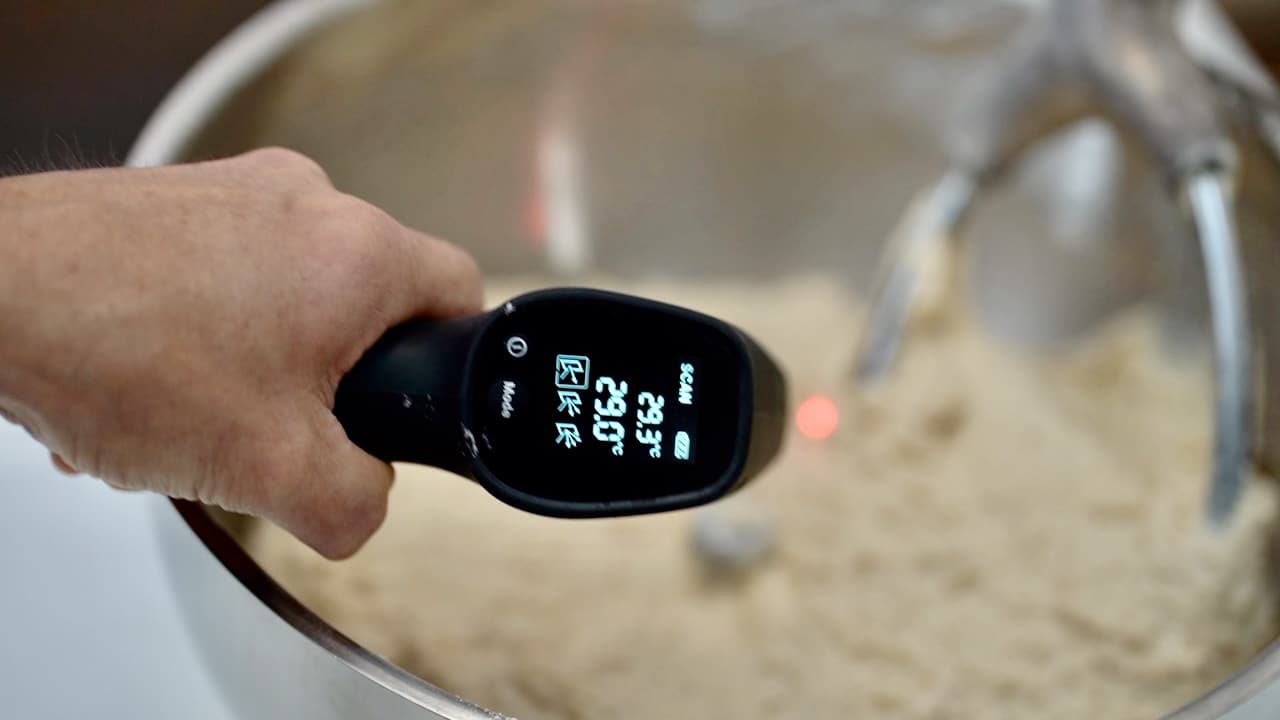
Basic Temperature: 75ºC
- This traditional mini baguette recipe calls for a desired dough temperature (DDT) that is warmer than most bread recipes: 28–30°C versus the standard 24°C. This higher temperature is intentional, as the method incorporates three specific factors: a slow and short mixing process, a low amount of yeast, and a four-hour bulk fermentation interrupted by a degassing intervention every hour.For example, during winter, if the room temperature and flour are both at 18°C and the friction factor is insignificant (≈1 degree celsius).75-18-18-1= water temp set at: 38/39ºC.Summer: 75-24-24-1= water temp should be set at: 24/25ºC. You also want to lower even further the amount of yeast by 2.

Kneading
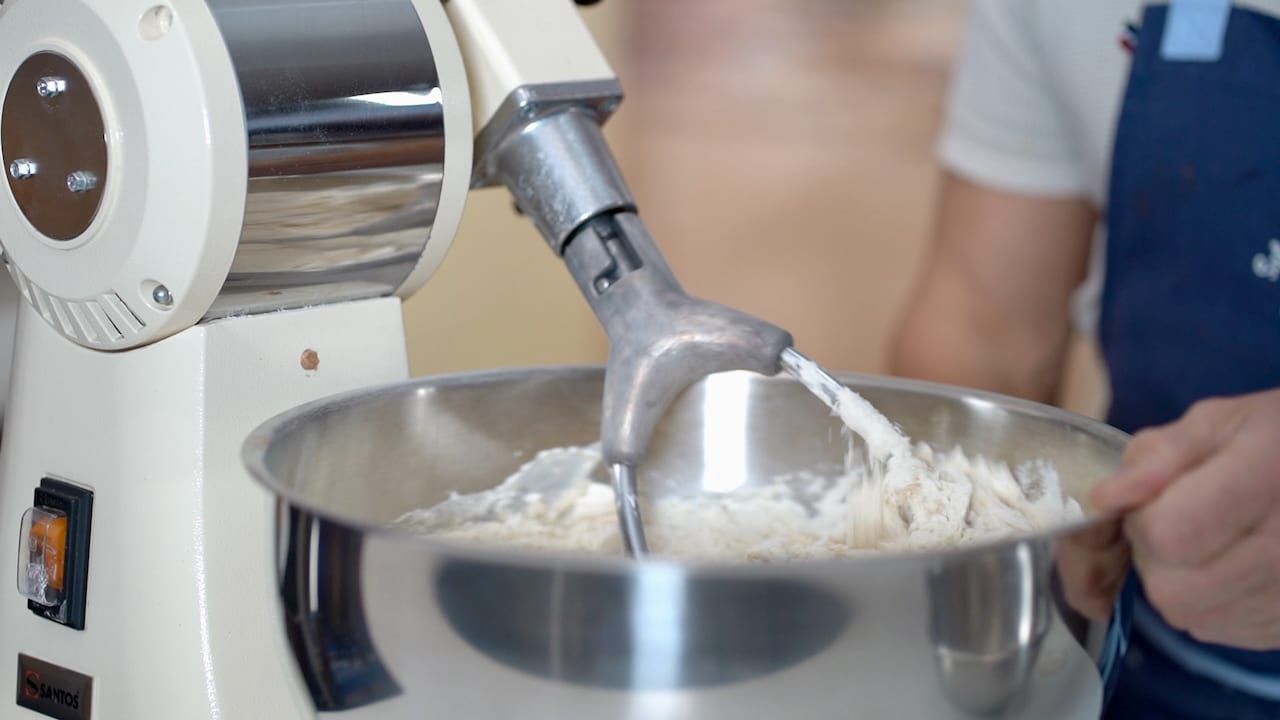
- First, pour the water into the mixing bowl and sprinkle in the fresh yeast. Add the flour and salt, then mix on low speed for 8 to 10 minutes max. Pause the mixer occasionally to scrape down the sides of the bowl and the dough hook.The dough does not need to be mixed beyond this point. We are not aiming for a fully developed dough that passes the 'windowpane test'; instead, we want the dough to be slightly under-mixed. The gluten network will develop during the bulk fermentation.

Bulk Fermentation
- Cover the dough and let it ferment for 4 hours. During this time, the dough must be degassed 3 times (once every hour).
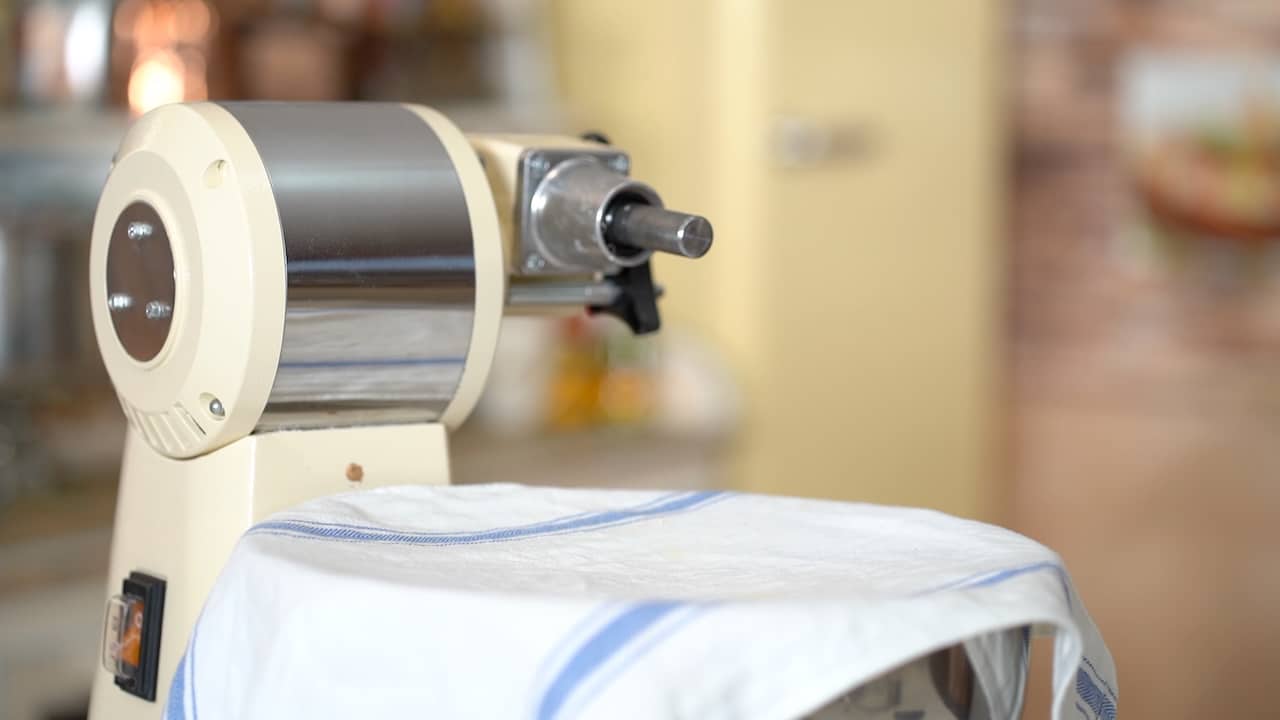
- This bulk fermentation can take place in the mixing bowl; to degas it, simply turn on the mixer briefly each hour, then re-cover the dough.
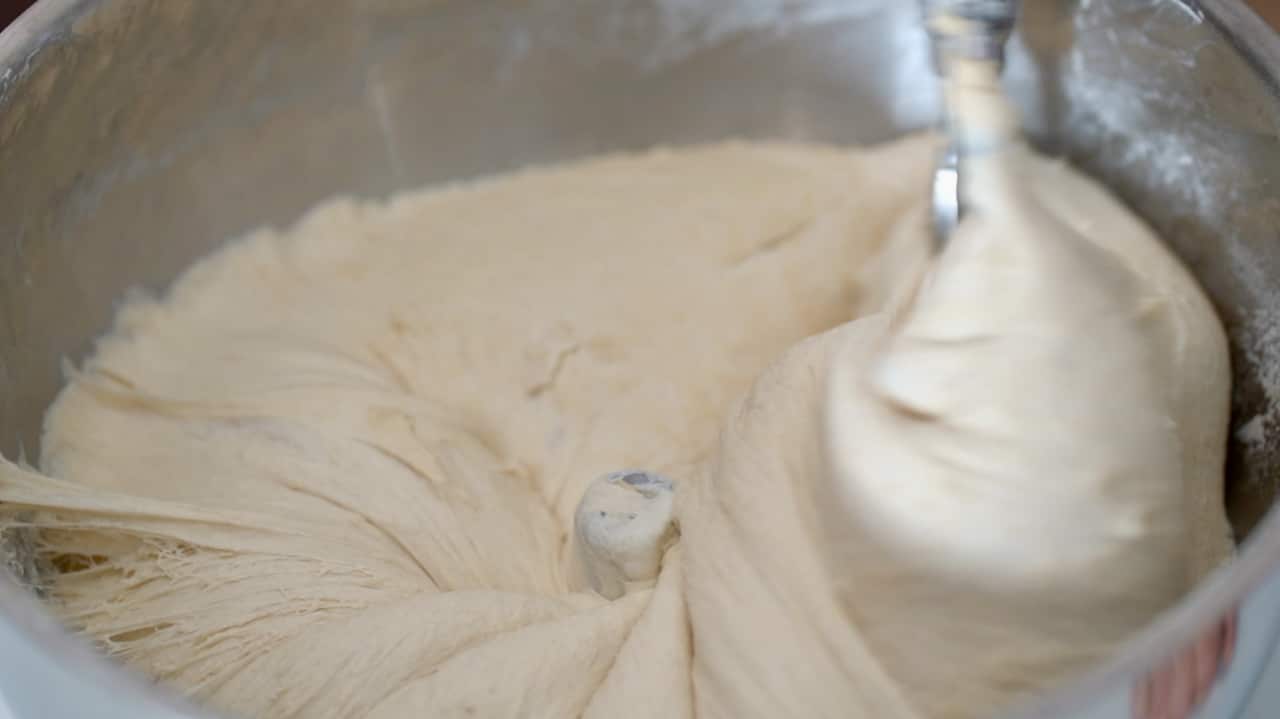


Dividing Dough
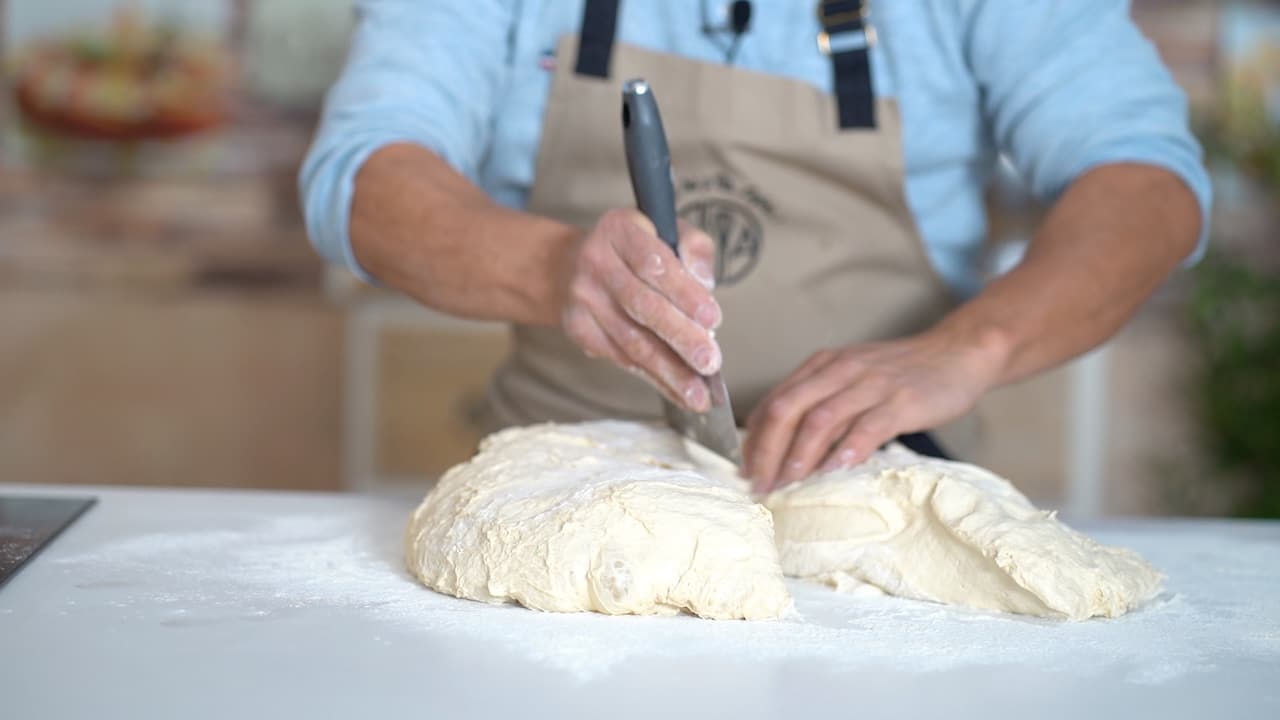
- Flour the work surface and the dough. Use the plastic dough scraper to release it from the edges of the bowl. Turn the bowl over (now, the skin is down). Flour the dough and divide it into 2 equal portions (each piece will produce 12 mini baguettes).

Shaping Dough into Slab
- Gently degas, keeping it in a rectangle shape throughout. Fold the left corner toward the center, and the right over it.
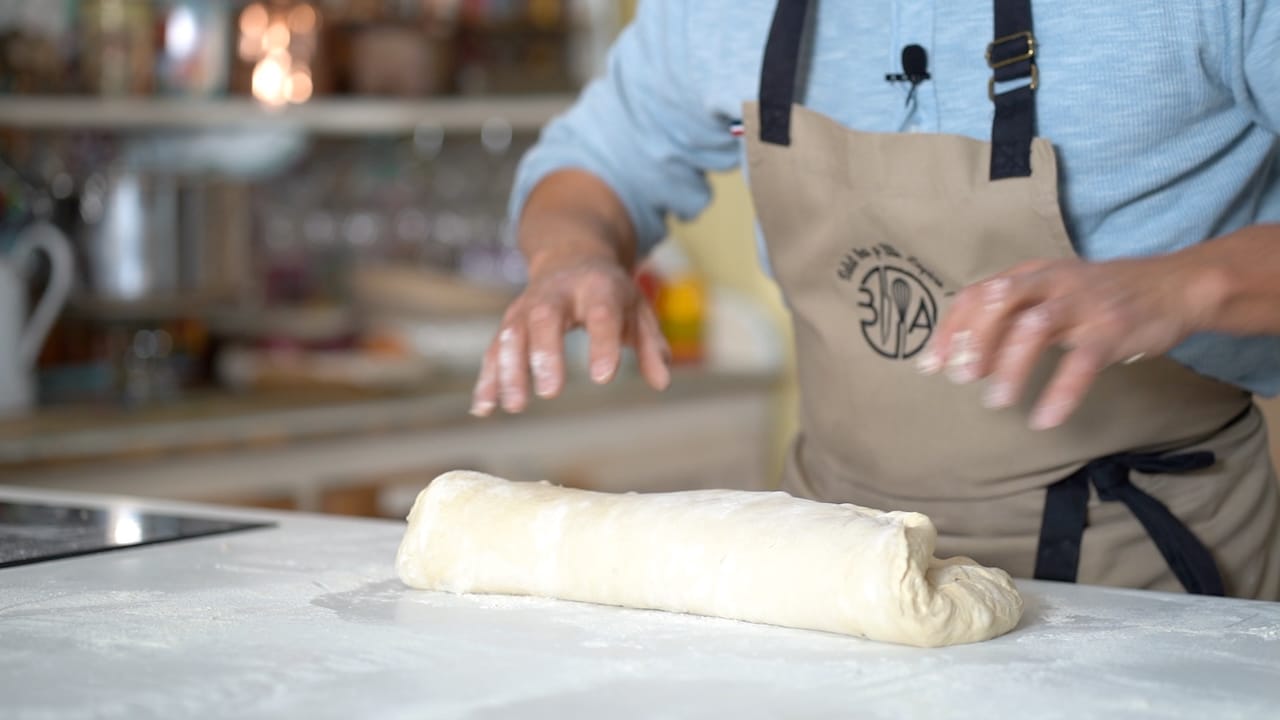
- Then fold the top edge over to enclose it like an envelope. Do likewise with the bottom. Gently tap the dough to remove only the large bubbles that may have burst here and there due to ongoing fermentation.
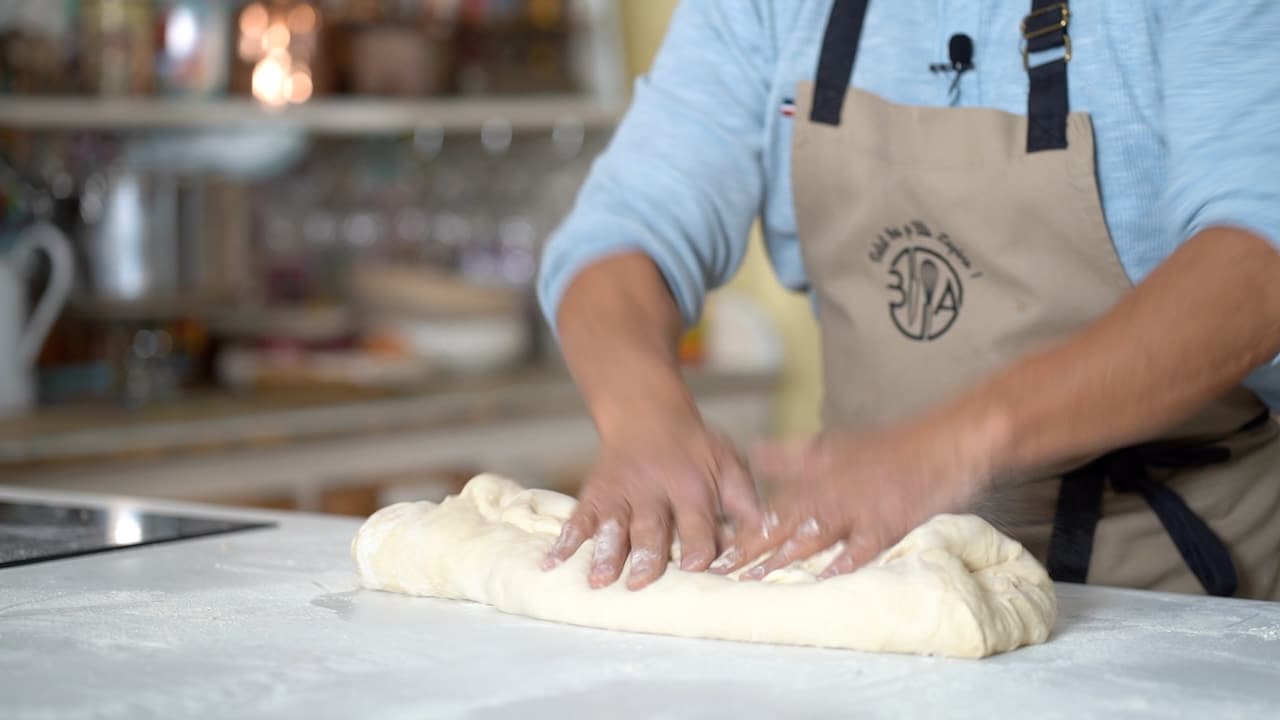
- Reverse the dough so the skin is now facing up. Do the same with the remaining dough.
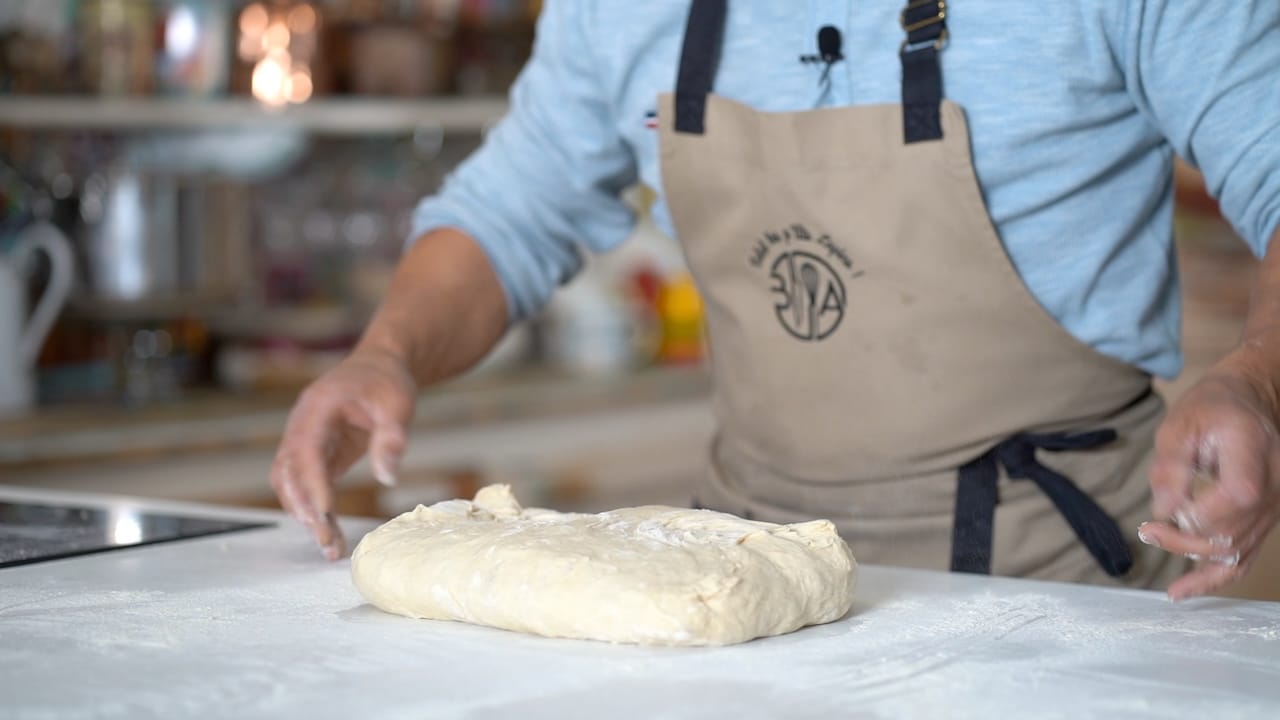


Bunch Resting
- Use an upside-down plastic container to cover each pâton. Let them relax for 20 minutes. Lightly oil both plastic containers or use cooking spray.
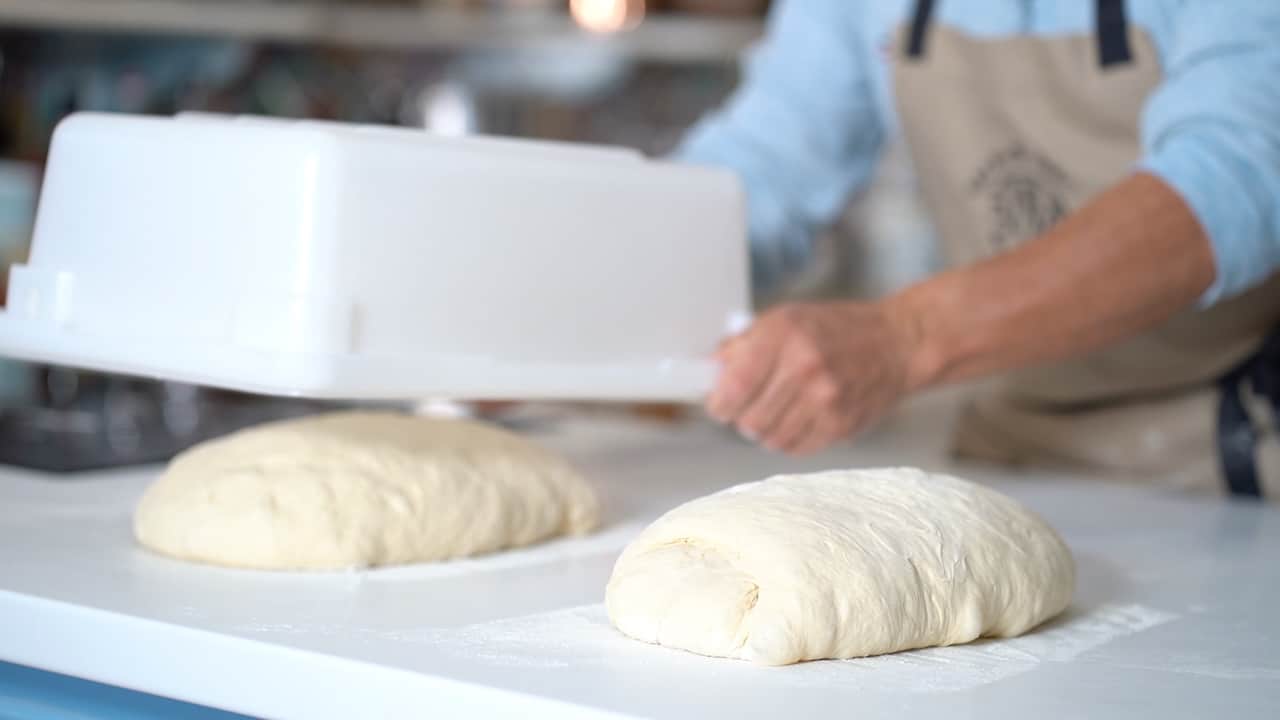

Boxing & Proofing
- No shaping required! Transfer each pâton into the prepared plastic container. Gently press down the dough ensuring it is evenly spread. Put the lid on and let it proof at room temp for 90 minutes. Then place the boxes in the refrigerator for an hour (3 hours max).
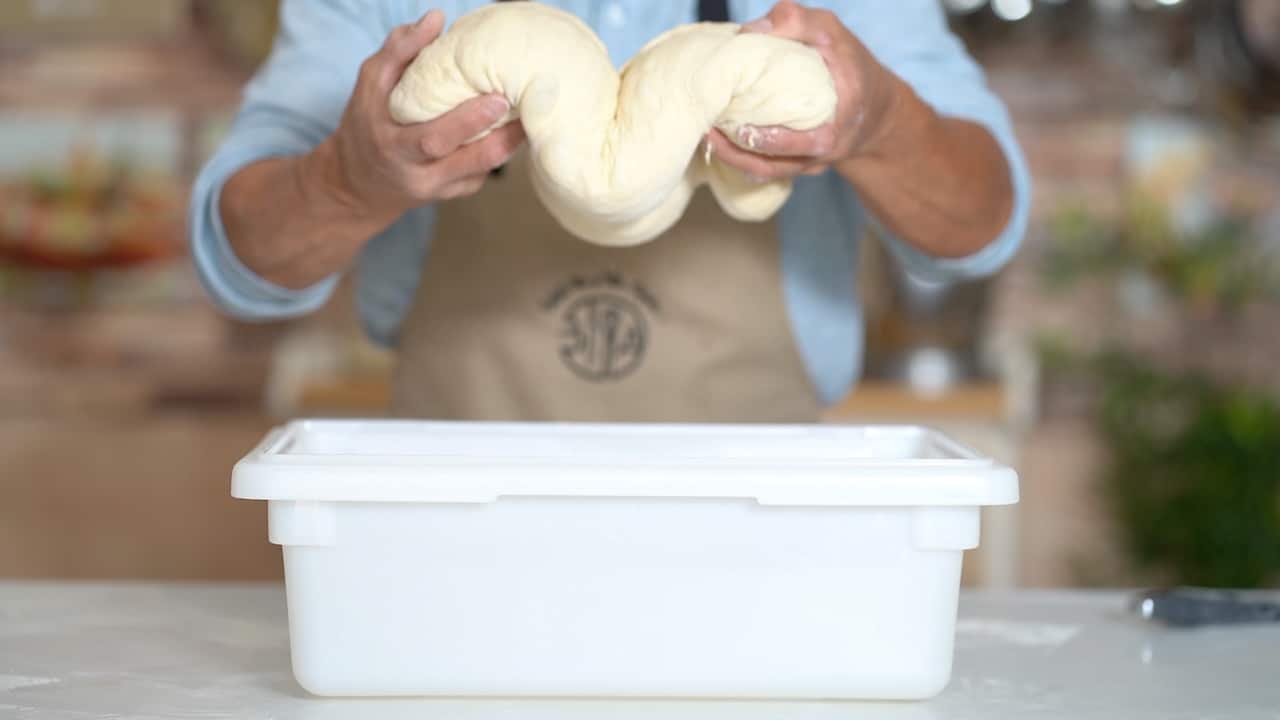
- Preheat your conventional oven to 480ºF/250ºC with the pizza stone positioned on the bottom third of the oven for 45 minutes before baking your first series of 6 mini baguettes.
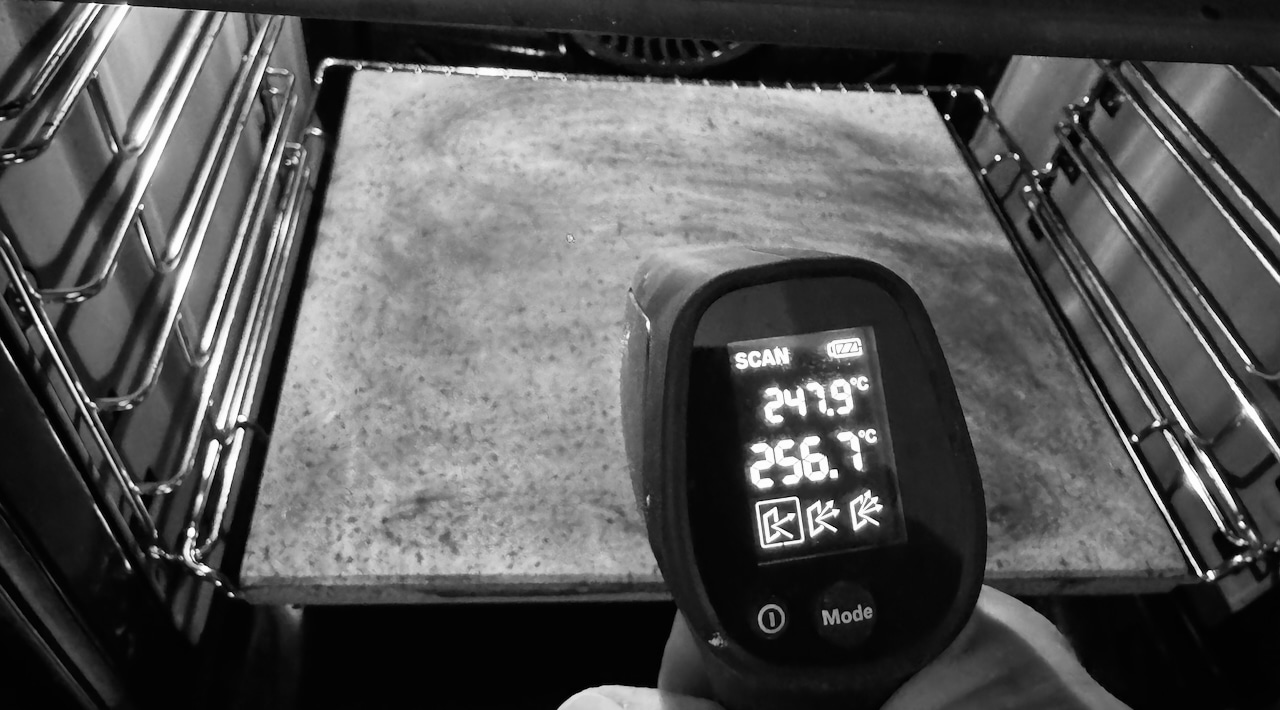


Baking Steps
- Lay a baker's couche on the work surface and lightly flour it. Pull the first container from the cold, take the lid off, flour dough and slide a dough scraper all around the edges to ease the release of the dough once it is flipped over onto the floured couche.
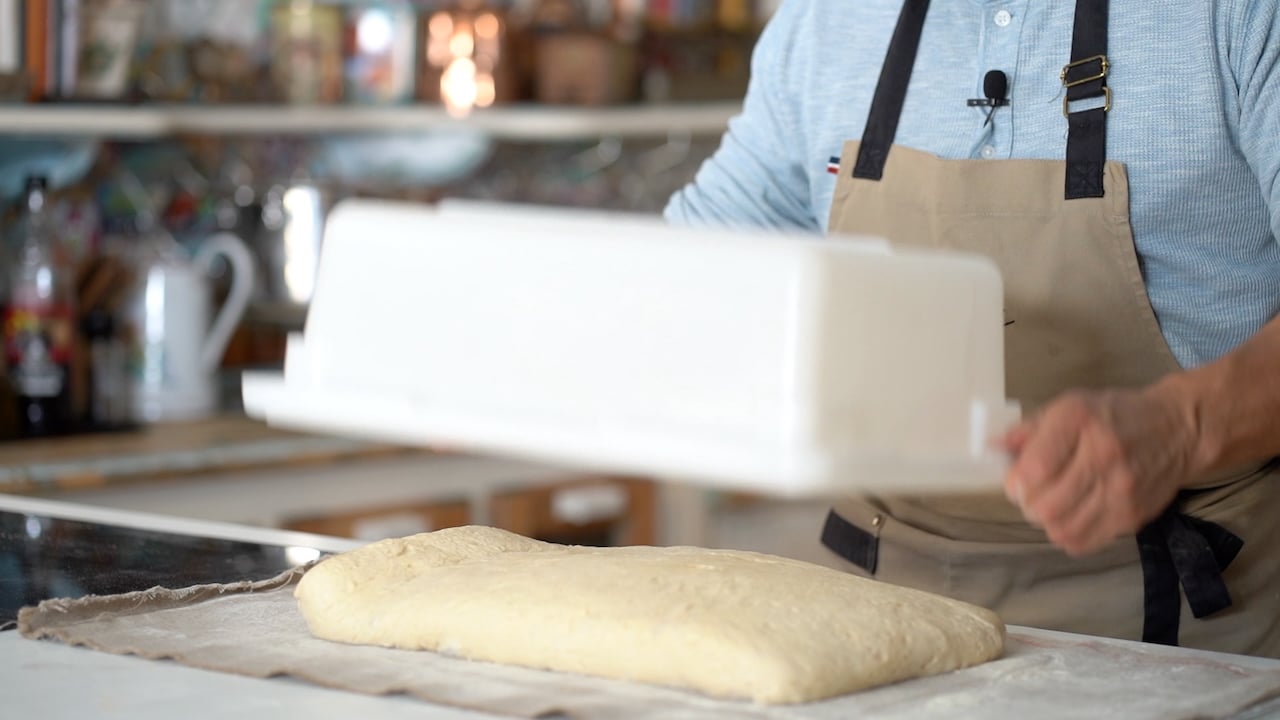
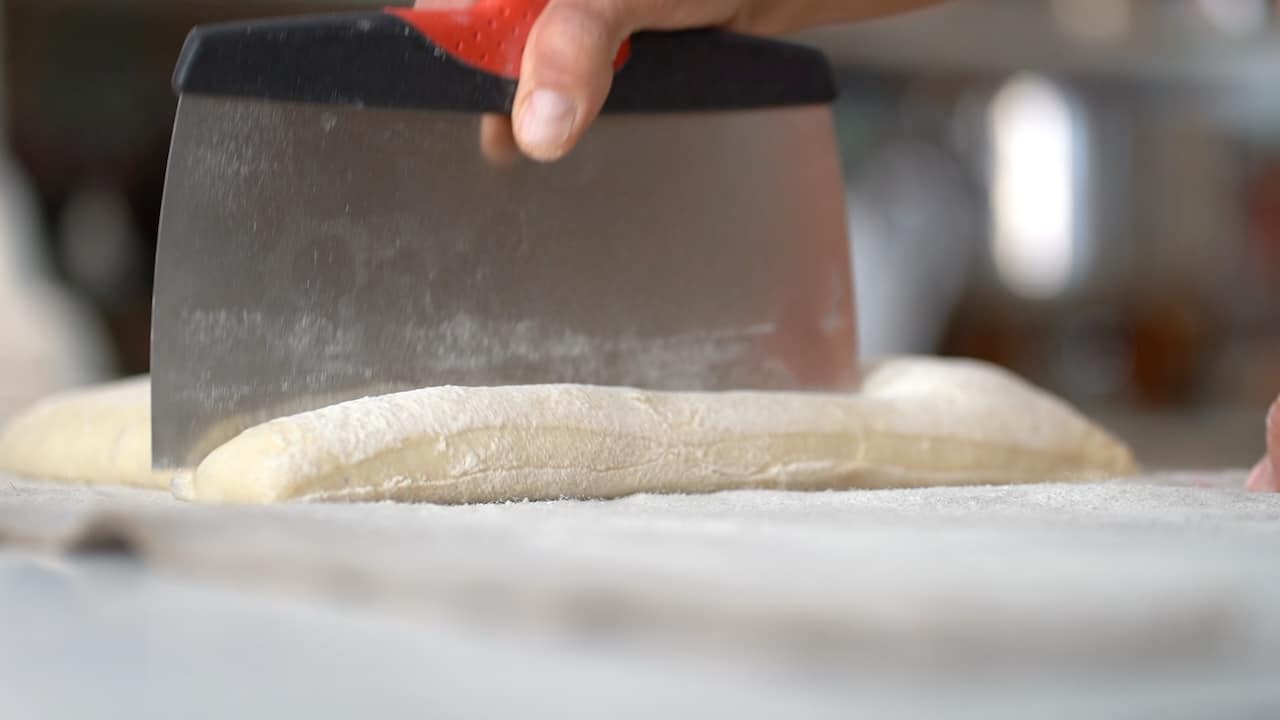
- Dust flour on top and split the dough slab in half, then cut one half into 6 batons. At this point, you can divide the dough into larger breads. Note that unless your oven is large enough to handle baking the whole first batch of baguettes...
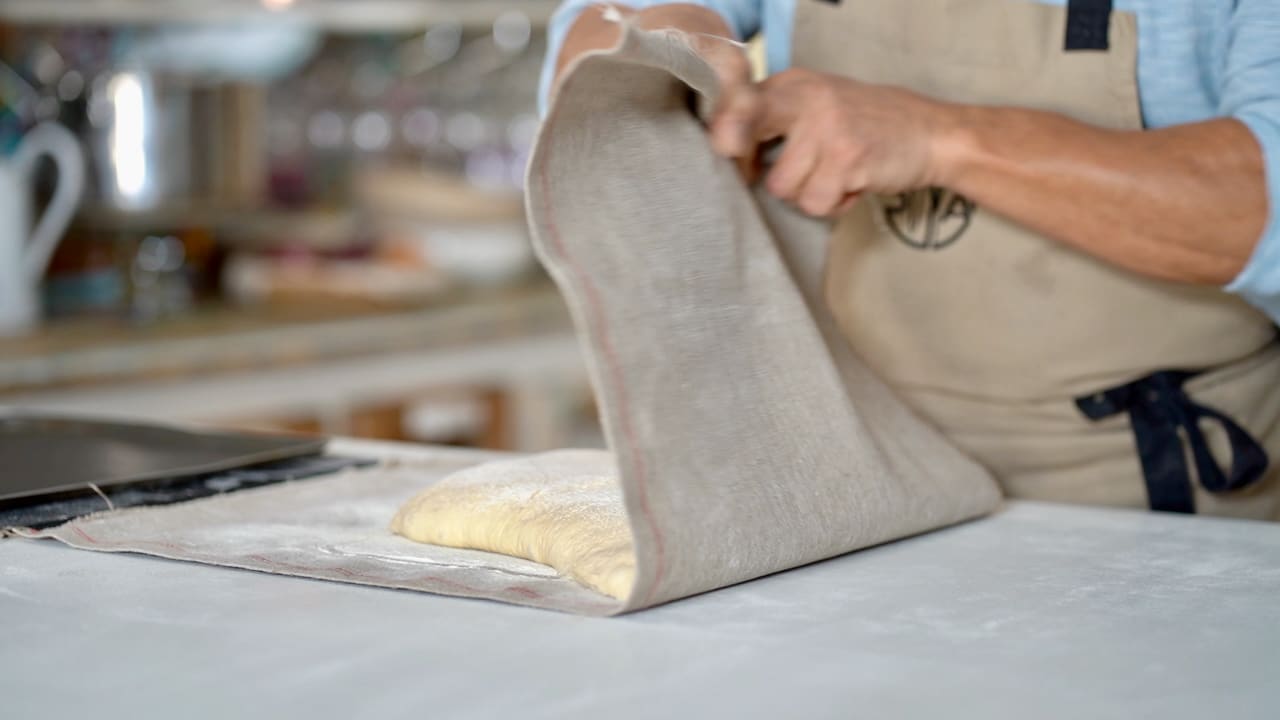
- ... you'll want to wrap the other half of the dough slab (uncut) in the couche, slide it onto a tray, and keep it refrigerated until the next batch of baguettes is ready to be put in the oven.
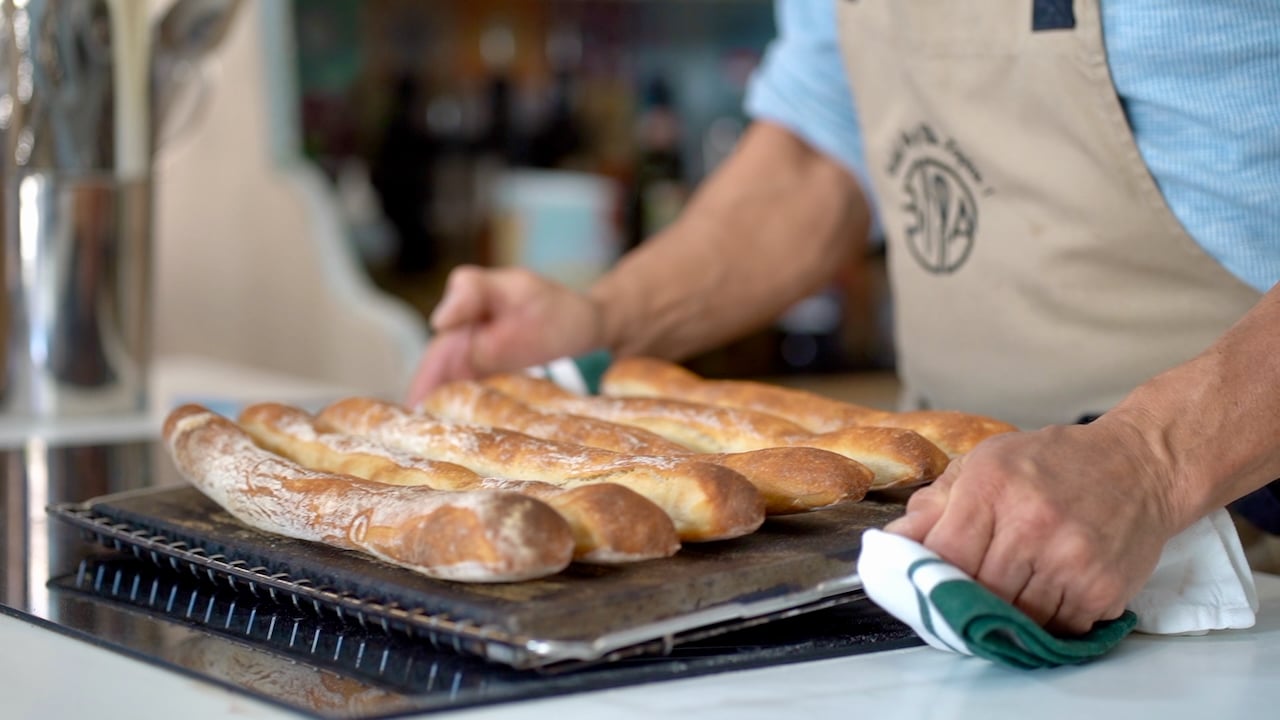
- Spray water in the oven to create steam. Carefully lay each baguette stick onto the hot pizza stone. No scoring required. Bake 6 mini baguettes per batch for about 18–20 minutes at 435°F/225°C. Then, carefully open the oven door to let the steam escape, and leave the baguettes inside for 2 more minutes, leaving the oven door ajar.
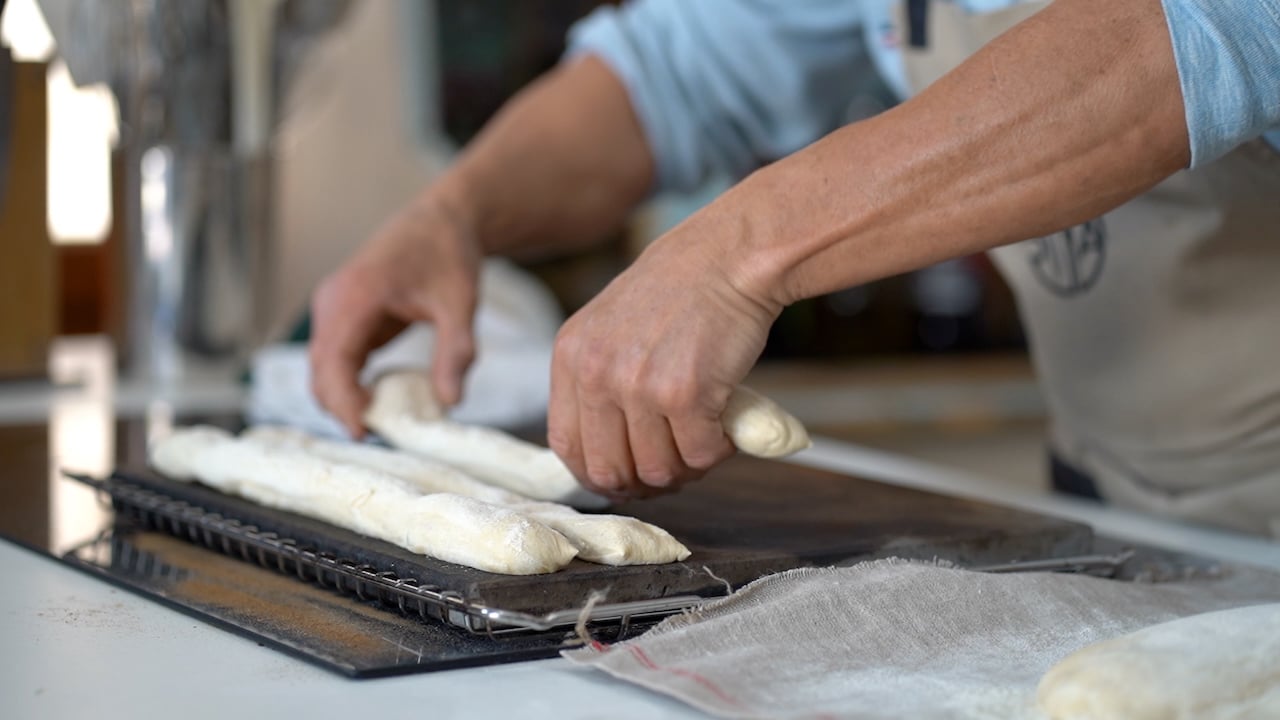
- Transfer them to a wire rack to cool. Immediately, reheat the oven to the same temperature (stone at 250ºC or higher), and repeat the same baking process 3 times more for the remaining baguettes.


How to Store Mini Baguettes
- Baguettes and even more so mini ones are a type of bread that, due to their narrow shape, dry out faster than other kinds. Therefore, they should ideally be eaten within 24 hours.

- For later events: To enjoy them as crispy as they were on the first day, store them in sealed freezer bags just a few hours after baking—they can be kept this way for up to two months. An hour before serving, place them in a preheated (220ºC) oven, turn it off, and leave them inside for 5 minutes. Let the breads rest at room temperature for 20 minutes before eating.


This content is part of the PREMIUM SECTION

This recipe requires a All-content access subscription. The Premium section includes more than 50 essential recipes from French pastry and a special section for mastering artisanal bread.
The Premium section is only accessible with "A year at the table" subscription. Discover it with special first year discount.