
Please note that the full access to this content needs a subscription: please sign up.
Gascony's best comfort food
This recipe is a protected and only available for paid members. To obtain the full step by step recipe and detailed ingredients list, please sign up.
Preview the recipe
What Duck Legs To Choose?
- The key to a perfect Duck Confit lies in using high-quality fat farm raised duck legs that weigh about a pound each. These plump and juicy legs are ideal for this preparation, ensuring a rich and satisfying end result. One important thing to note is that during the cooking process, duck legs lose about half of their weight. This is normal and to be expected, as the slow cooking in duck fat allows the meat to become tender and succulent while infusing it with delicious flavor. Where to order? Moulard duck legs at hudsonvalleyfoiegras is one the best address.


How To Prep The Duck Legs
- Here, we’re using duck legs to confit in their own fat, and they can be prepared either by Frenching, which simply means chopping off the knuckle using a cleaver, or leaving it whole as shown. To do so, you make a circular cut above the first leg joint and grab the knob firmly with a towel and give a nice pull. Save the scraps. They’ll be part of what’s cooked down for fat. Once that’s off, trim the duck legs off as much excess fat as you can without cutting into the meat. Save those trimmings, too.


Brining Duck Legs
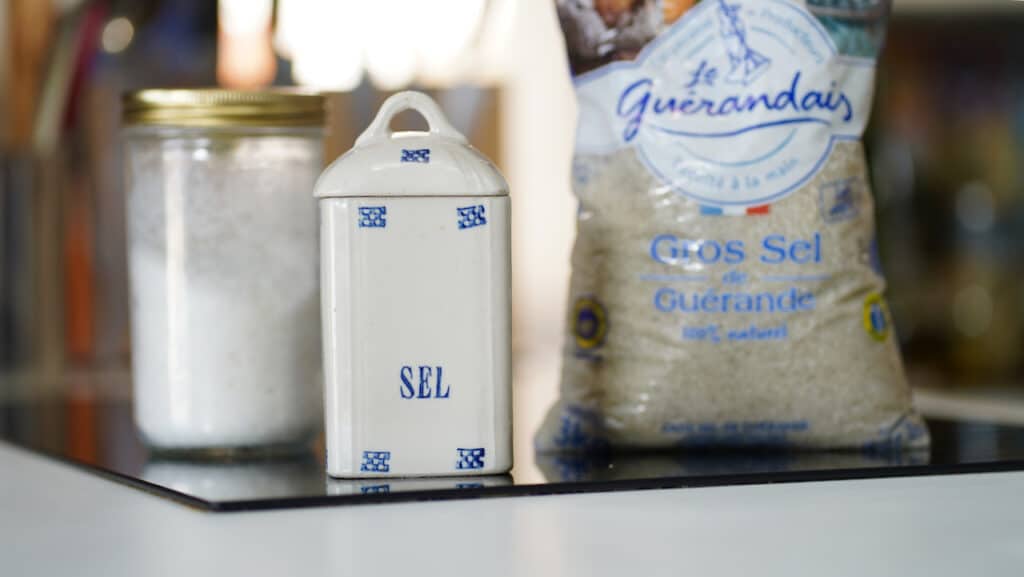
- Brining duck legs prior to cooking is a classical French preservation method that tenderize flesh and give a new depth of flavor. The use of Celtic grey salt ''sel gris'' is a must. Indeed, grey salt is a hand-harvested authentic sea salt from the coastal region of France. It is dried by the sun and the wind, retaining the ocean’s moisture.
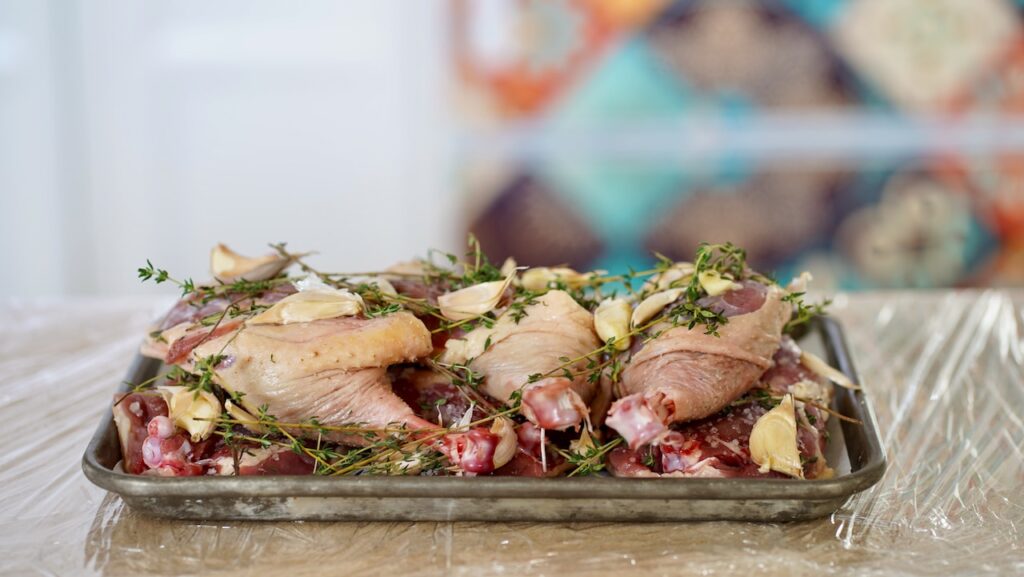
- Lay prepared duck legs onto a large shallow dish or baking tray lined with parchment. Salt generously duck meat and top with fresh thyme and crushed garlic. Wrap up in plastic film and refrigerate for up to 24 hours. Discard herbs and garlic. Wash off duck legs thoroughly and pat dry. Garlic used for brining can be saved and confit in duck fat separately. If so, in small saucepan cover garlic with duck fat and cook on low heat for about 45 mins. Save duck fat for later use.
- Meanwhile, gather all duck legs scraps and cook on low heat to render fat; drain and save. Discard solids.


Cooking
- Compared to other animal fats, duck fat is a healthy option. It contains a substantial amount of monounsaturated and polyunsaturated fats. These fats are the healthy fats. To cook the duck legs, preheat your fan oven to 250ºF/120ºC. Arrange duck legs skin side up in a Dutch oven or a large deep roasting pan. Cover them with melted duck fat and bring to a boil. Seal with parchment and lid or foil and place in the oven. Cook duck until meat is tender, about 3 hours. Carefully remove pot from oven. Take off lid and leave the legs to rest for an additional hour on the stove top.

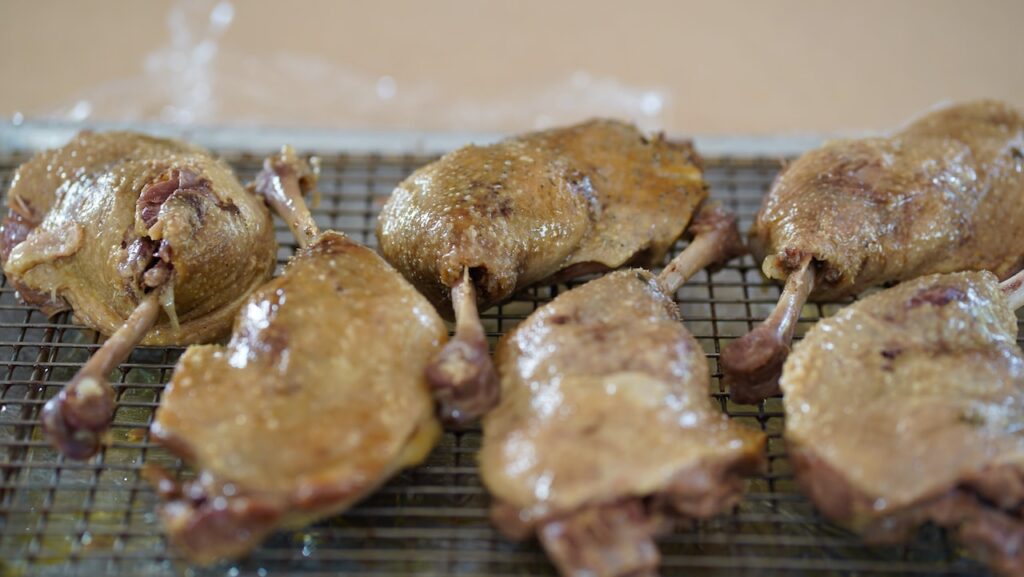
- Carefully remove the duck legs from the fat in which they were cooked. The fat serves both as a cooking medium and a preservative, imparting its delicious taste to the meat while preserving it for an extended period. Transfer the duck legs to a cooling rack lined with plastic wrap and refrigerate them overnight. Meanwhile, as the duck legs chill, it's essential to strain the duck fat left in the cooking vessel.
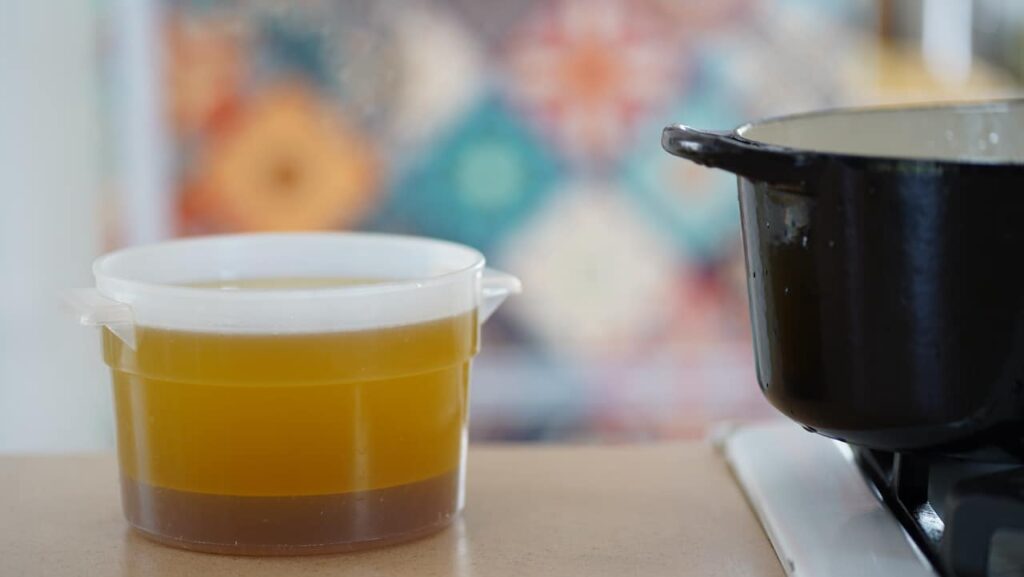
- Now, you'll find a layer of rendered duck jus underneath the duck fat. This jus is a concentrated liquid filled with flavor and collagen, making it a valuable ingredient for the sauce.


Storage
- To preserve your duck confit in fat, start by arranging the duck legs in a clean container, standing them up with the bone side up. This positioning ensures that the meat is fully submerged in the fat, allowing it to stay moist and flavorful. Next, gently pour lukewarm duck fat over the duck legs, ensuring that they are completely covered with a generous layer of fat. The fat acts as a protective barrier, sealing in the juices and flavors of the meat. Once you have submerged the duck legs in fat, you can refrigerate them for up to 3 weeks.
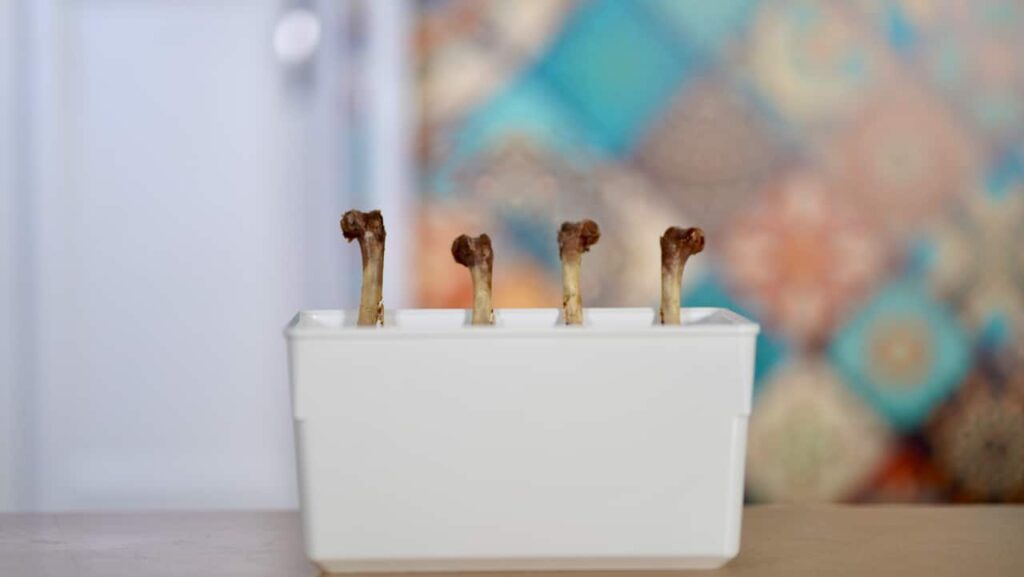

Vacuum-Sealing
- Store vacuum-sealed duck leg in the refrigerator for up to 6 weeks or freeze for up to 6 months.


Duck Glaze
- Chicken or Veal Demi-Glace can be used for the sauce. If so, mix 150g demi-glace with 750g water. Otherwise use low sodium stock. To create duck confit with glaze, mix together demi-glace with water or use low-sodium chicken stock. Add carrots, leeks, onions, garlic, mushroom stems, herbs and a couple of peppercorns. Bring to a boil and then lower the heat to simmer. The goal is to reduce it by half, which should take about an hour. Add rendered duck jus and continue to simmer. Meanwhile, reduce the port by two-thirds so it is syrupy. Remove stock from heat and pour through a sieve to eliminate solids. Pour the liquid into the reduced port and stir to mix. Season with salt and pepper, then let simmer for another 20 minutes. Taste the sauce and reduce further if needed.
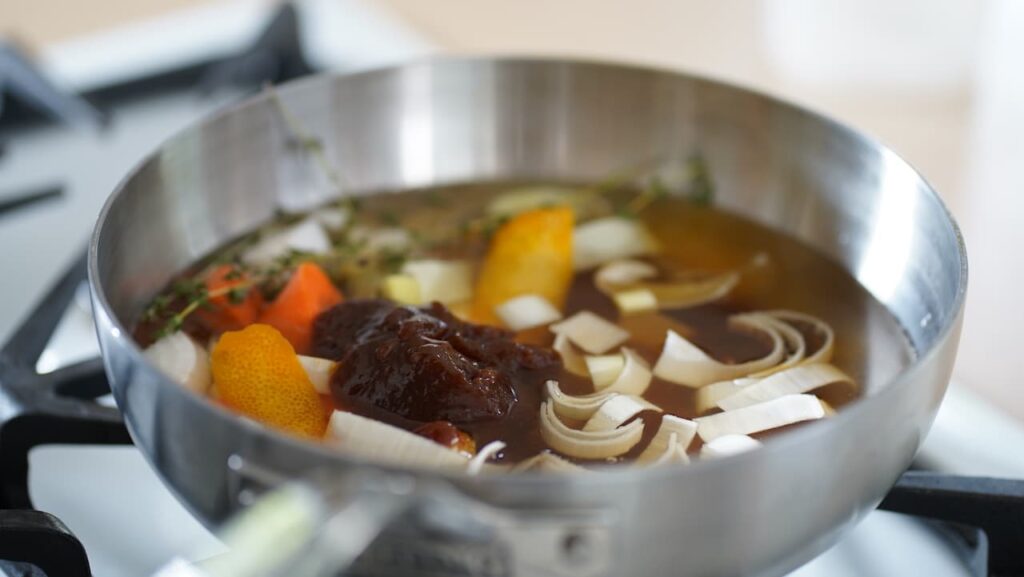
- Whisk together the extra port and cornstarch in a small container to make a smooth slurry. Whisk half of the slurry into the simmering sauce and bring to a boil. Check the viscosity of the sauce and swirl in more slurry if needed. Stir in butter to give the glaze a glossy finish. Do not bring back to a boil. Set the glaze aside.


Potato Sarladaise
- For the persillade, wash and pat dry parsley leaves and chop. Meanwhile, mince shallots and garlic and combine with the chopped parsley. Refrigerate for up to 5 days.

- Peel potatoes and cut into 0.20-inch/5 mm thick slices. Keep potato slices in cold water until ready to use.
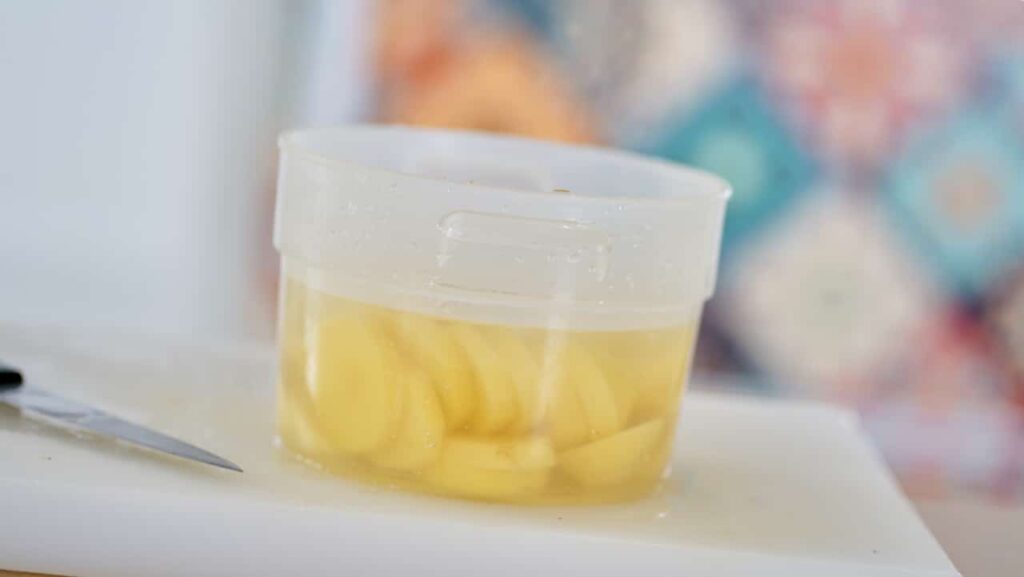
- Drain potatoes and pat dry. In large skillet or sautoir, heat up duck fat and arrange potato slices. Season with salt and pepper (Celtic salt can be used as well) – add a a couple of thyme sprigs. Lower the heat and cook for 10 mins with the lid. Flip potatoes and continue to cook until golden brown. Flip again. Add 2 tablespoons of persillade and cook until fragrant shaking pan every so often. Keep potatoes hot until ready to serve.


Mushrooms Sarladaise
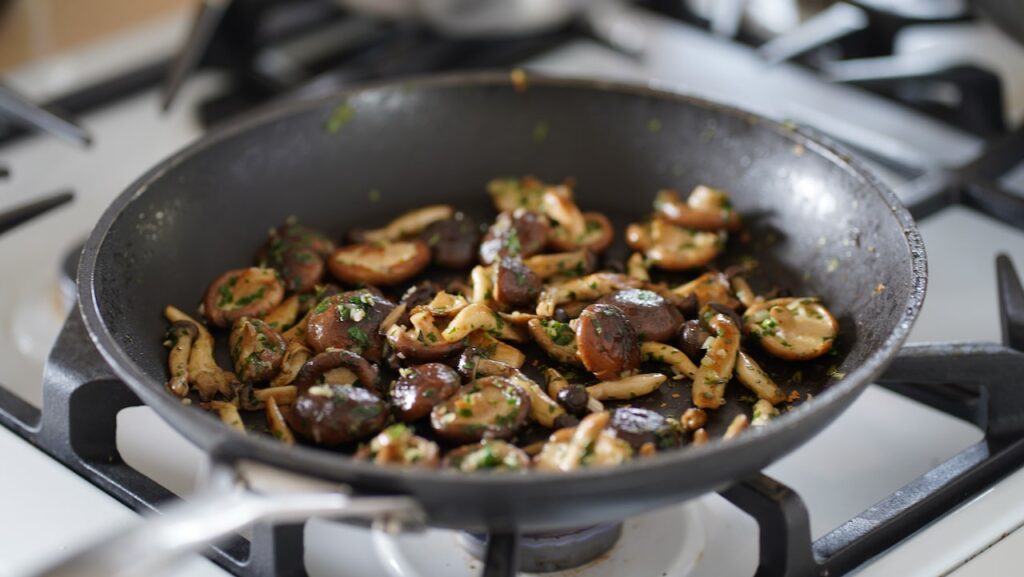
- Clean and trim off mushrooms stems; save some for the duck glaze. Sauté trimmed mushrooms in duck fat at high heat for about 15 minutes. Season with salt and pepper and continue to cook for a few more minutes. Season to taste with persillade and cook until fragrant. Lower heat and keep hot until ready to serve.

Searing Duck Legs
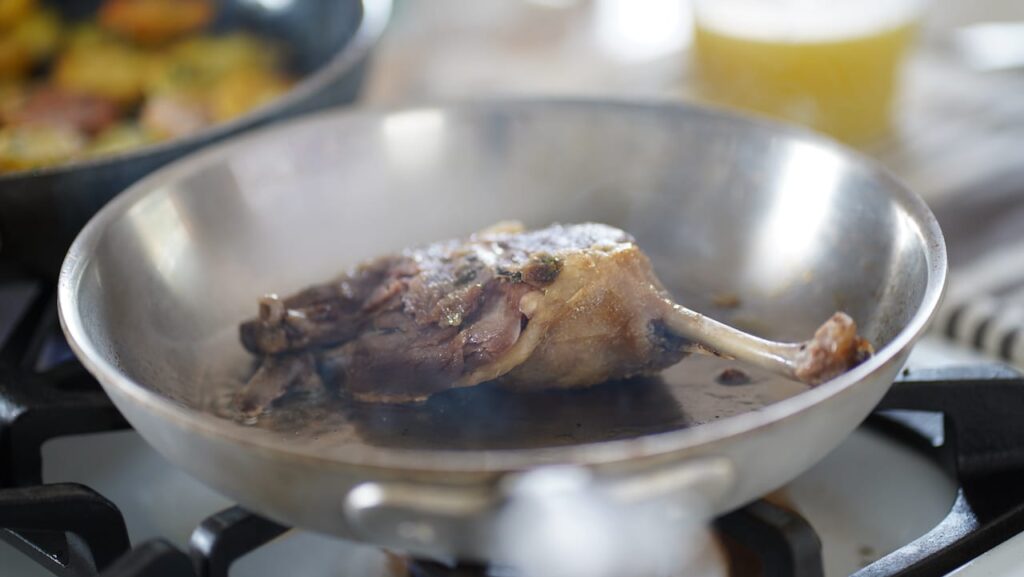
- Duck legs can be slowly reheated in duck fat. For vacuum-sealed legs, immerse in boiling water for about 10 mins and remove from the bag. Once the legs are reheated, heat a frying pan and add a dash of duck fat. Sear the legs, skin side down for about 5 minutes or until brown and crispy.

Plating
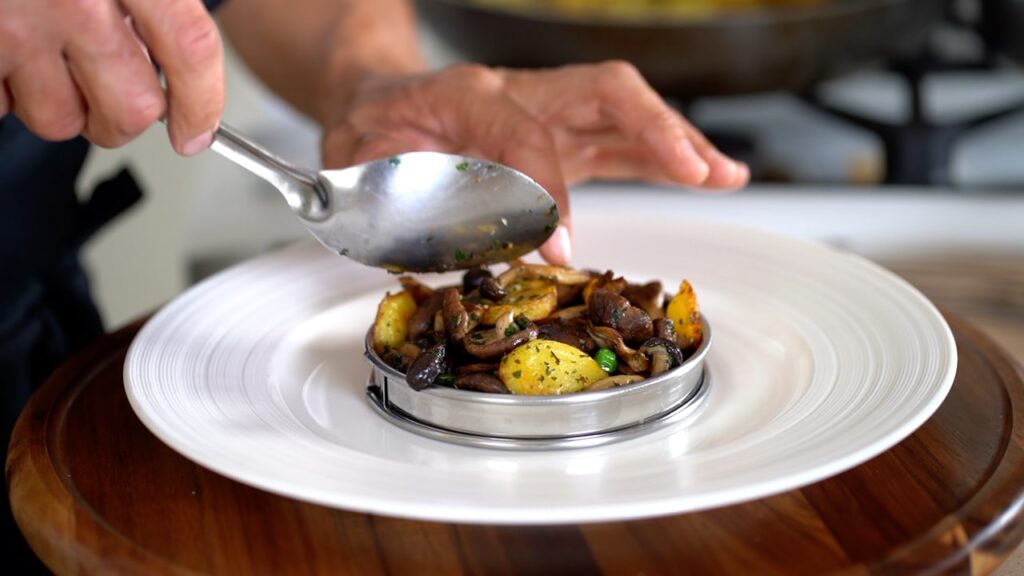
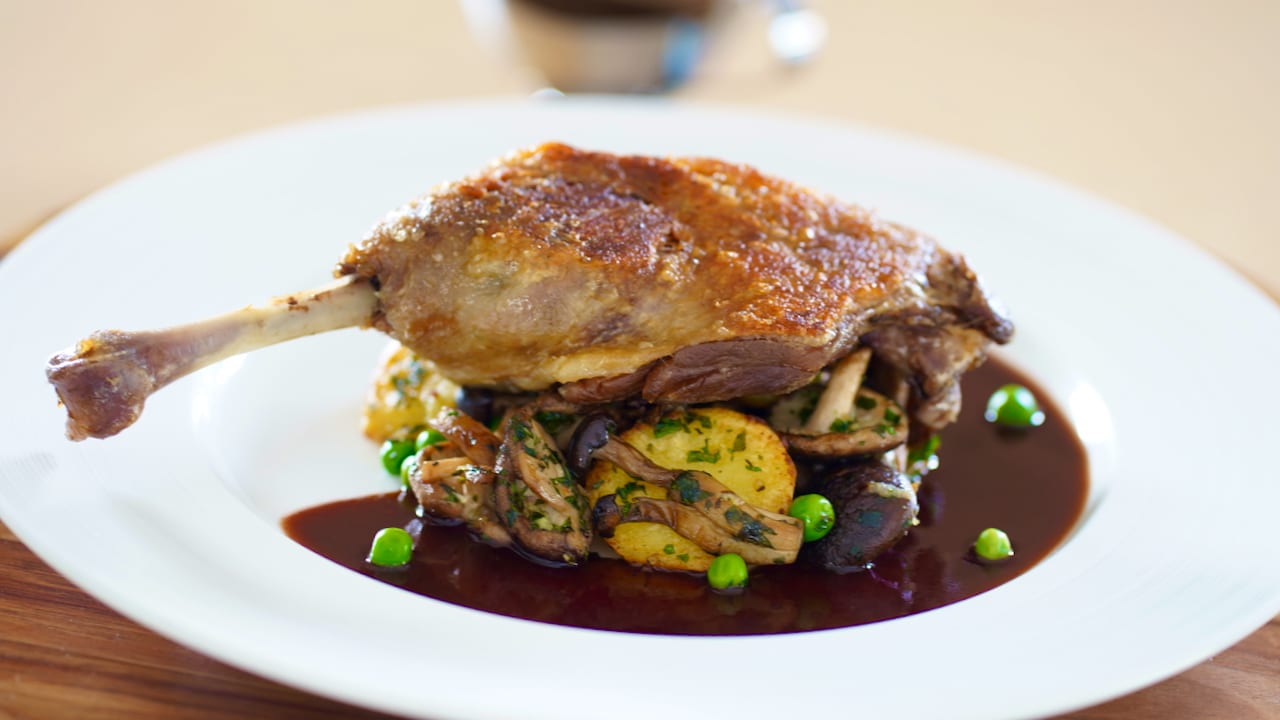
- Arrange the Potato and Mushroom Sarladaise on warm plates. Add a seared duck leg to each plate and garnish with blanched peas. Spoon the glaze around the duck leg or serve in a gravy boat. Enjoy!

Ready to discover this recipe? You're only 1 step away.
This recipe is only accessible to registered members!
Create your account to access all recipes and content of my website.
Join us now and enjoy more 800 recipes (Mostly French with European Influences, American Classics and Asian fusion)
Already register? Sign in


Appetizers
Beetroot Red Cabbage Mango Salad

Free Recipes
How To Prepare Red Cabbage Raw


Free Recipes
Apple Pie Traybake

Cakes
Olive Oil Chocolate Cake

Desserts
Spicy Chocolate Bar

Entrees
Deboning A Poularde Leg
Free Recipes
Chanterelle

Bread
Panettone Perdu

Free Recipes
Mustard Fig Spread

Free Recipes
Poularde Demi-Glace
