
Please note that the full access to this content needs a subscription: please sign up.
Stocks: The base for great recipes
This recipe is a protected and only available for paid members. To obtain the full step by step recipe and detailed ingredients list, please sign up.
Preview the recipe
Demi-Glace
- The addition of pork rind will add more collagen to the final product improving thus its viscosity. Demi-glace is traditionally made by combining one part Espagnole sauce and one part brown stock. Espagnol sauce is a basic brown sauce that originated in Spain in the late nineteenth century. It was later codified by chef Auguste Escoffier and became one of the five French mother sauces we still use today. It is a brown roux, to which veal stock and tomatoes are added and simmered until reduced. Bacon, mirepoix and mushrooms are often added to the Espagnol. Nowadays, most chefs make demi-glace from stocks. Demi-glace is added to many sauces such as Bordelaise sauce, stews, pasta, soups etc..
Brown Veal Stock
- Preheat oven to 425ºF/220ºC. Lower temp to 400ºF/200ºC if using a fan oven. Spread bones onto 2 large oiled baking tray (do not use wax paper or baking mat; it may not caramelize well).
Roasting
- Bake bones for 30 minutes. Rotate the trays and and roast for 20 min more or until bones turn brown. Spread tomato paste over some bones and return to the oven for 15 min more or until dark spots appear on the tomato paste.


Vegetables
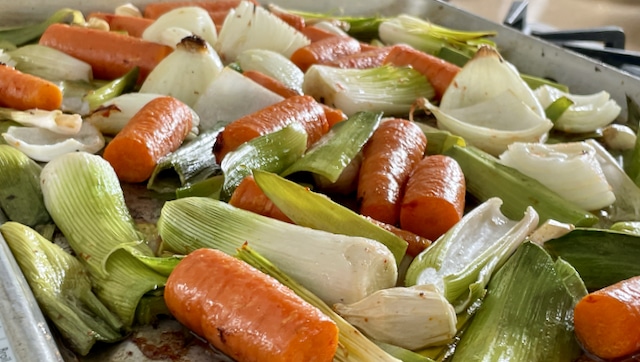
- By the time bones are roasting, trim off leeks tips, split in half and soak in warm water for 10 minutes or so. Meanwhile, quater onions and peel. Quarter turnip. Split garlic bulbs in half. Cut carrots into large chunks and chop celery. Drain leeks and roughly chop. Chop tomatoes.

Cooking Stock
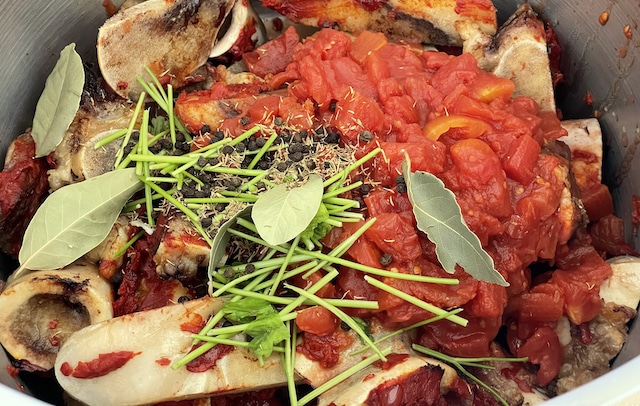
- Transfer roasted bones to the large pot. Add vegetables to the baking tray and put in the oven to roast for 40 minutes or so. Add roasted vegetables to the pot along with the aromatics (thyme, bay leaves, pepper and parsley stems). Add some water to the tray and scrap out remaining bits and add it to the pot. Add pork rind and the cold water. Bring to a boil and cook slowly for 12 to 20 hours. Skim off scum and fat every so often. Turn off the heat and remove the bones from the pot using a spider strainer. Toss solids and pass liquid through a fine sieve over a ≈8 qt/L pot. Bring stock back to a boil and skim off remaining fat that rises to the surface. Now, the veal/beef stock is ready – you should end up having 6 or 7 qt/L.

Demi-Glace & Glace de Viande
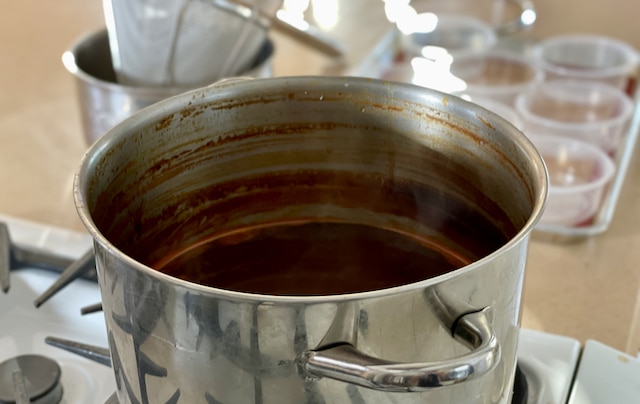
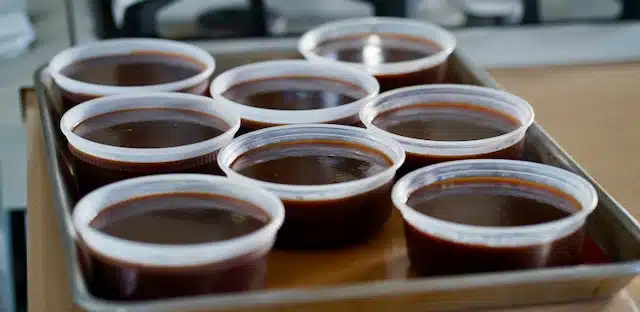
- Reduce veal stock by 50 to 60% ≈2500/2000g. It's going to takes about 6 more hours on low heat. To obtain glace de viande, continue to reduce demi-glace on low heat for a couple more hours or until you get less than a qt/1L.

Storage
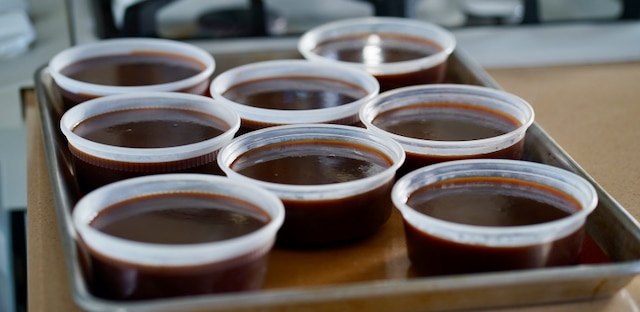
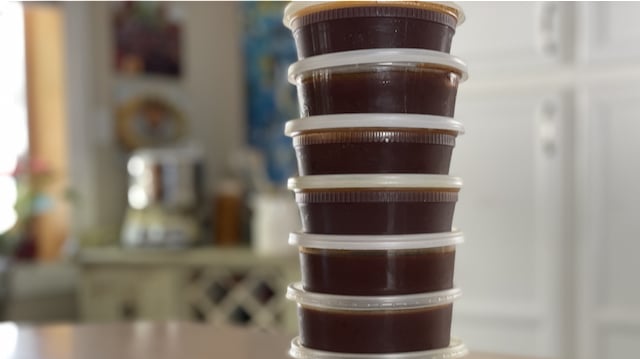
- The more concentrated the longer the shelf life. Stocks would last a few days refrigerated and would keep for months in the freezer. Demi-glace and glace de viande can both be stored in the refrigerator for a couple months and almost indefinitely frozen.
How To Use It
- Stocks can directly be used to cook carbs, whole grain, vegetables, soups and stews. Demi-glace is used to enhance sauces, braising and sautéing. Glace de volaille or viande is rather seasoned according to the recipe and used directly as a glaze. To reconstitute stock, dissolve glace in water (10:1 ratio / 10 parts water to 1 part glace).
Ready to discover this recipe? You're only 1 step away.
This recipe is only accessible to registered members!
Create your account to access all recipes and content of my website.
Join us now and enjoy more 800 recipes (Mostly French with European Influences, American Classics and Asian fusion)
Already register? Sign in
