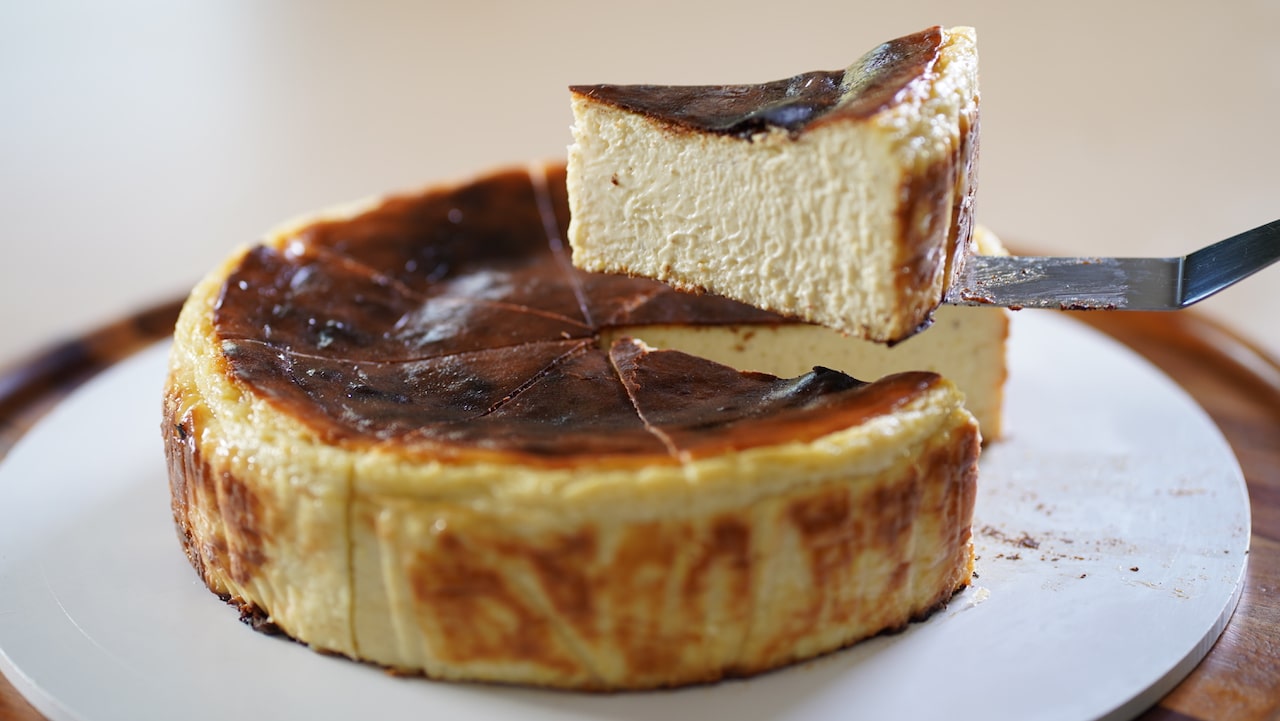
Basque Cheesecake

I invite you to discover my unique take on the iconic Basque Cheesecake. Originating from the charming city of San Sebastian, Spain in 1990, this decadent dessert offers a twist on the traditional New York cheesecake. Unlike its American counterpart, the Basque cheesecake is crustless and boasts a uniquely rich, scorched exterior while maintaining a delightfully jiggly center. In my version of this beloved dessert, I have substituted heavy cream with pastry cream, resulting in a creamy and indulgent texture that is sure to exceed your expectations. The Basque cheesecake can be infused with various flavors such as lemon zest, orange zest, vanilla, and almond extract, adding a delightful twist to this classic recipe. Join me in exploring the exquisite flavors and textures of this delightful Basque cheesecake, as I guide you through the creation of this mouthwatering dessert. Get ready to embark on a culinary journey unlike any other, where every bite is a celebration of taste and tradition.

Basque Cheesecake

Course: Cakes
Cuisine: French
Keyword: burnt cheesecake
Difficulty: easy
Prep Time: 35 minutes
Cook Time: 25 minutes
Make a day ahead: 0 minutes
Total Time: 1 hour
Servings: 8
Calories: 290kcal
Cost: $9
Best ever cheesecake?

Equipment

  • 1 Cheesecake mold or tall cake ring
  • 1 Stand mixer
  • 1 Immersion blender
  • 2 Baking trays
  • 1 Saucepan
  • 2 Pastry bowls
  • 1 Rubber spatula
  • 1 Whisk
  • 1 Pizza stone
  • 1 Microplane

Ingredients

Cream Cheese Mixture

  • 600 g Cream cheese at room temp
  • 80 g Sugar
  • 5 g Vanilla
  • 10 g Lemon zest
  • 130 g Egg whites

Pastry Cream

  • 300 g Whole milk
  • 50 g Whole eggs
  • 80 g Egg yolks
  • 250 g Sugar
  • 15 g Flour
  • 15 g Cornstarch
  • 5 g Vanilla
  • 200 g Cream cheese, cut into chunks chilled
  • 2 g Salt

Chocolate Basque Cheesecake

  • 300 g Whole milk
  • 50 g Whole eggs
  • 80 g Egg yolks
  • 200 g Sugar
  • 15 g Flour
  • 15 g Unsweetened cocoa powder
  • 200 g Bittersweet chocolate disks
  • 200 g Chilled cream cheese
  • 2 g Salt

Instructions

Cream Cheese Mixture

  • Using a stand mixer fitted with the whisk attachment, beat the room-temperature cream cheese, sugar, vanilla, and lemon zest on medium speed until completely smooth, about 3–4 minutes. Scrape down the bowl as needed to ensure no lumps remain. With the mixer running on low speed, gradually add the egg whites and mix just until fully combined.
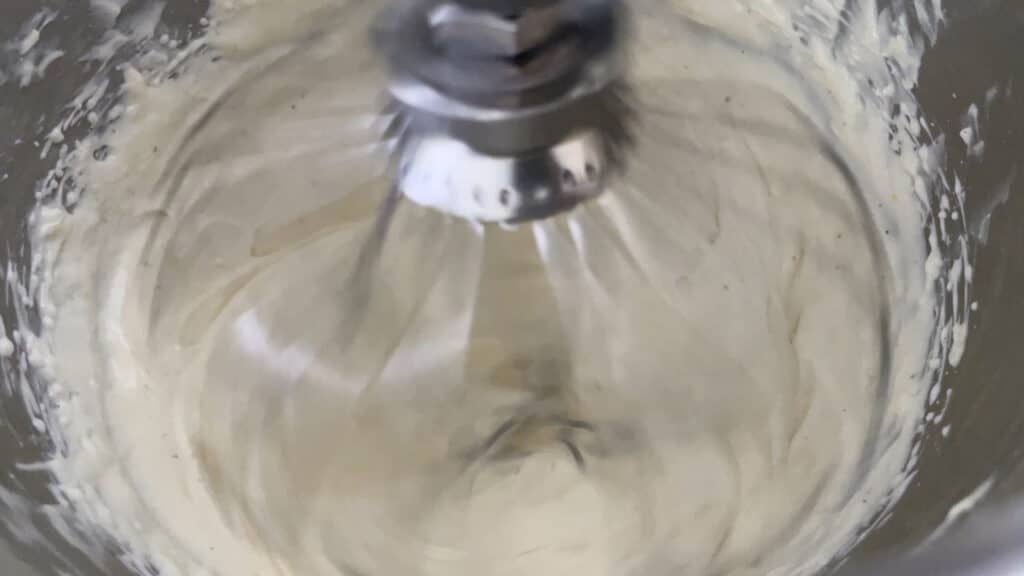
    beaten cream cheese

Pastry Cream

  • In a medium saucepan, combine the milk, one-third of the sugar, the vanilla, and the salt. Heat over medium heat, stirring occasionally, until the mixture is hot and just begins to simmer. While the milk heats, combine the eggs, the remaining sugar, and the starches in a separate bowl. Whisk until the mixture is smooth, and well combined. Once the milk is simmering, gradually pour about one-third of it into the egg mixture, whisking constantly. Pour the tempered egg mixture back into the saucepan with the remaining hot milk.
    Return the saucepan to medium heat and cook, whisking constantly, until the mixture thickens and comes to a full boil. Once bubbling, continue to cook for 2 full minutes, whisking continuously. Remove the saucepan from the heat and immediately add the chilled cream cheese. Use an immersion blender to blend until the mixture is perfectly smooth and creamy.
    Allow the mixture to cool to room temperature (about 77°F / 25°C). Then thoroughly whisk the room temp pastry cream into the cream cheese mixture until fully incorporated and smooth.
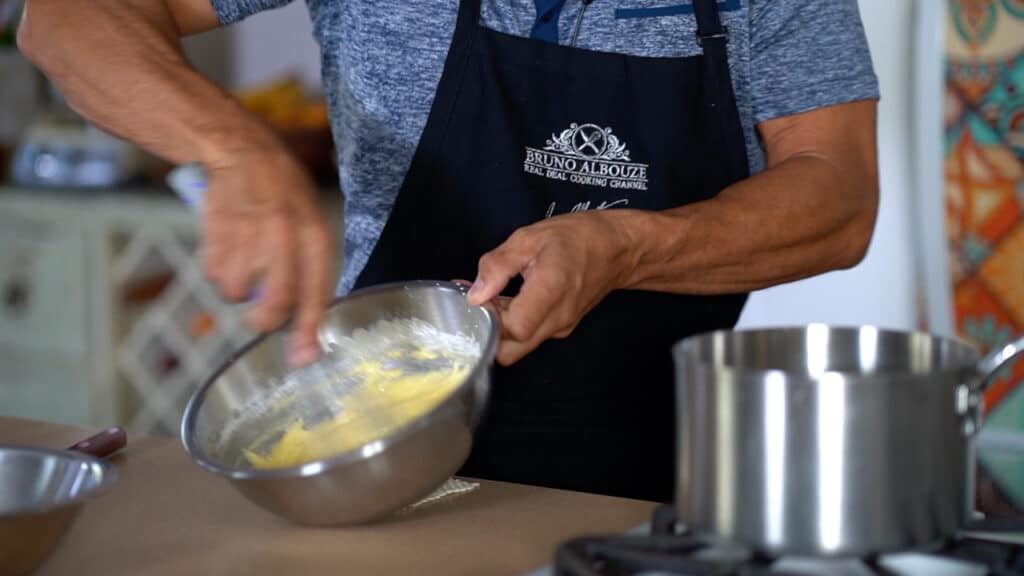
    basque cheesecake pastry cream

Filling the Pan

  • For a springform pan: Do not place it on a baking sheet.
    For a tall cake ring: Place the ring directly on two stacked baking sheets. This double-layer technique insulates the bottom of the cake, promotes even baking, and ensures the cake rises uniformly.
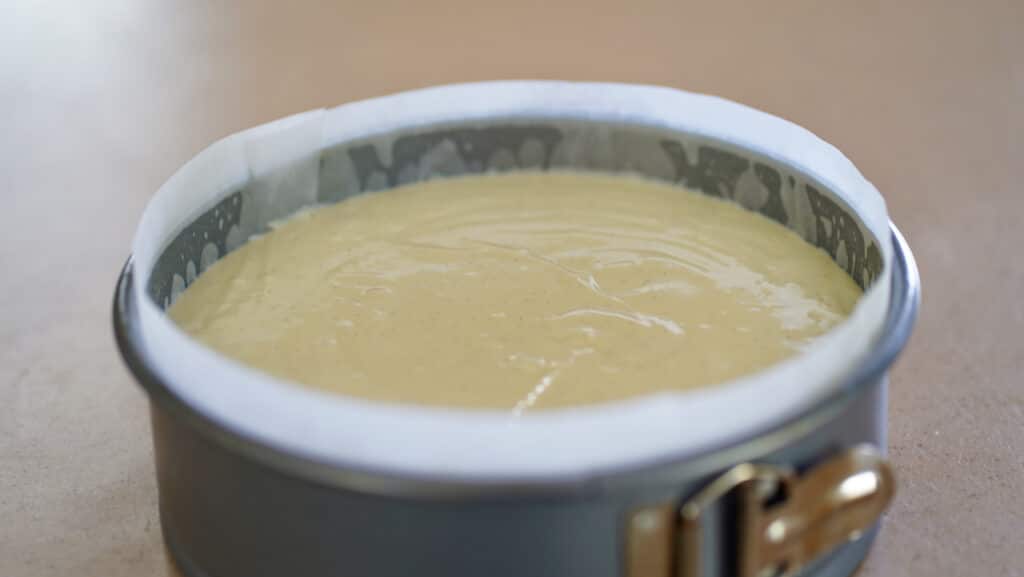
    ready to bake basque cheesecake

Baking

  • For a standard oven: Preheat to 500°F (260°C). This high initial heat is key for achieving a dark, caramelized surface with a creamy interior.
    For a convection (fan) oven: Preheat to 460°F (240°C). Bake the cheesecake for 25–30 minutes. The true indicator of doneness is the coveted dark top. Once achieved, gently open the oven and jiggle the pan; the center should have a distinct but slight wobble, indicating a perfectly creamy interior.
    Remove the cheesecake from the oven and let it cool completely at room temperature for at least 3 hours. Then, refrigerate for several additional hours before carefully removing the cake ring and slicing for the best texture.
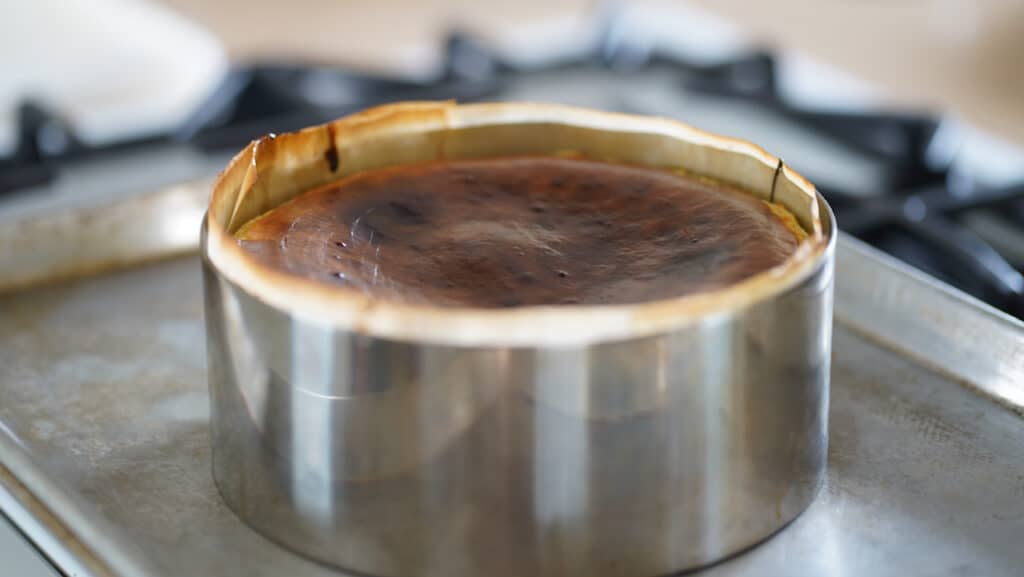
    baked basque cheesecake

Storage

  • Basque cheesecake can be refrigerated for up to 4 days. For the best texture and flavor, let it sit at room temperature for about 30 to 60 minutes before serving.
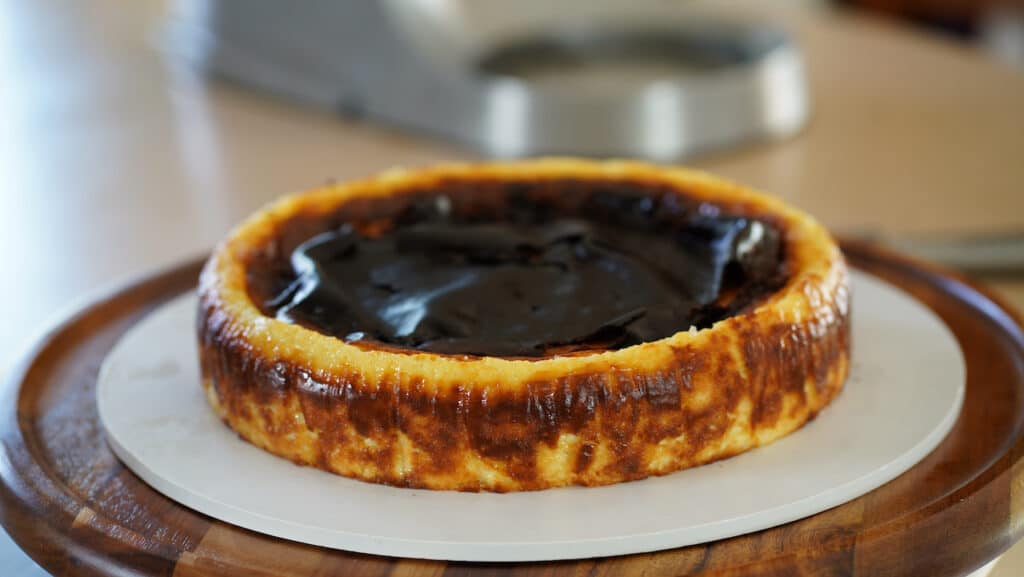
    baked basque cheesecake

Chocolate Basque Cheesecake

  • In a medium saucepan, combine the milk, one-third of the sugar, and the salt. Heat over medium heat until it just begins to simmer. While the milk heats, whisk the eggs with the remaining sugar, cocoa powder, and flour in a separate bowl until smooth. Once the milk is simmering, slowly pour about one-third of it into the egg mixture while whisking constantly. Pour the tempered egg mixture back into the saucepan with the remaining hot milk.
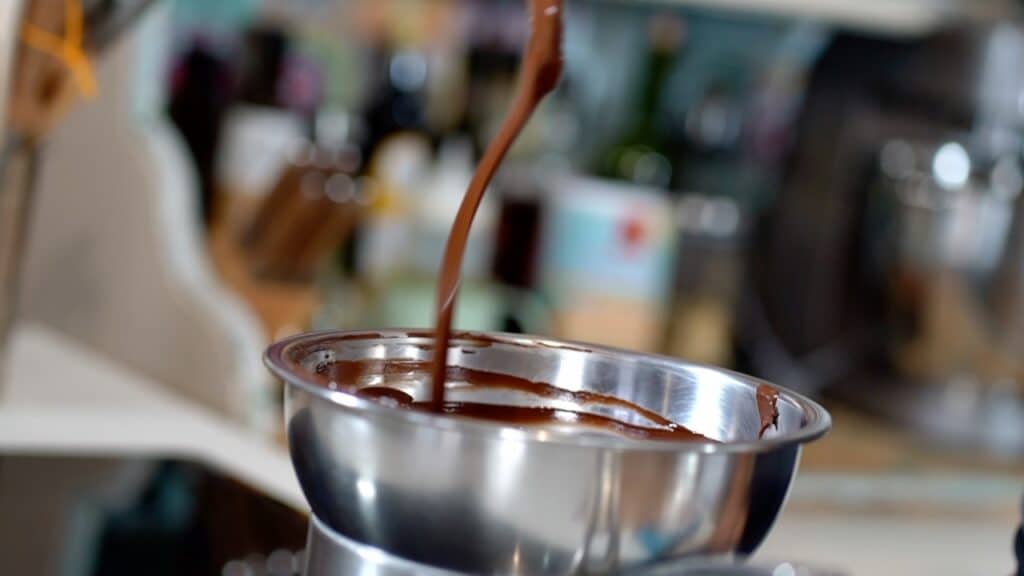
    Return the saucepan to medium heat and cook, whisking constantly, until the mixture thickens and bubbles for a full 2 minutes. Remove from heat and immediately add the chopped dark chocolate. Use an immersion blender to blend until perfectly smooth. Add the cream cheese and blend again until well combined and smooth. Let the mixture cool to room temperature (about 77°F / 25°C). Once cooled, thoroughly whisk this chocolate pastry cream into the prepared cream cheese filling until fully incorporated.
    Proceed with the remaining steps as directed above.
Nutrition

Serving: 100g | Calories: 290kcal
Print Recipe

21 thoughts on “Basque Cheesecake”

      1. Hi Bruno. I think I see where the confusion comes from that Samundi ran into.

        The instructions say you should add the 250g sugar to the milk, vanilla, and salt; but then right after when you make the egg mixture it says “remaining sugar.”

        When making pastry cream I’ve always divided the sugar evenly between the milk and the eggs, which I *think* helps prevent the milk solids from potentially burning, and also has the benefit on the other side that only using half the sugar in the the egg yolk mixture (instead of all of it) prevents it from being too thick, so it’s easier to whisk than if you had added all 250g to it.

        I’m very curious to hear your thoughts on this because not all recipes do this and I’ve always been curious how much my assumptions about the reasoning were true!

    1. Hello Yvette,

      Good point Yvette!
      Well, in culinary schools, restaurants, and bakeries, the metric system is the preferred choice as well as written recipes. It ensures consistent and reliable results in baking and cooking. Using a kitchen scale offers a level of accuracy that simply cannot be achieved with measuring cups and spoons alone. When it comes to baking, especially with delicate pastries and desserts, even small variations in ingredient quantities can have a significant impact on the final outcome. By weighing ingredients in grams or ounces, we can ensure that each component is added in the exact amount required by the recipe. One of the main advantages of using a kitchen scale is the ability to easily scale recipes up or down. This level of precision allows for greater flexibility in the kitchen. Not all measuring cups are created equal, and slight variations in the size of a cup can lead to inaccurate measurements 🌝

      1. Thank you for your quick response. I will invest in a kitchen scale. I am just getting into baking and I love it. My meringue cookies and pie topping is always a hit! I am trying to conquer cheesecakes now:).

  1. Erika Estefanía Vaquero

    Hello Bruno, Glad to speak to you there.
    One question, I have an Oven UNOX, what is the temperature that I need to bake this Tarte, and I need a fan and humidity to bake this?

  2. Hello! Chef, I just wanted to clarify, how many grams of cream cheese did you use? Is the amount different for the cream cheese mixture and the pastry cream? Sorry it’s my first time in baking.

      1. Richard Levings

        Thanks Bruno!

        Any recommendations for adding pumpkin to this recipe for autumn (based in NZ)? Was thinking about using roasted butternut pumpkin and serving with pecan butterscotch ice cream.

        Really appreciate you taking the time to answer these questions!

        Cheers,

        Richard

Leave a Comment

Want to see more tasty recipes?

The kitchen is an incredible playground where every ingredient, every recipe, every flavor, is both a destination and a path to new discoveries. I always try to introduce you to new taste horizons through my recipes. Did you enjoy this one? If so:I advice test the Chia Cup recipe. Are you ready for the Chiboust Cream step by step video recipe? Let’s also try this one: Chouquettes.

You might also like these contents...

Enjoy these free access recipes

Join the family. We're + 1 000 000!

Scroll to Top