Why Your Chicken Sear Fails
Why It Fails and How to Fix It…
Yield: 2
Cost: $10
Equipment
- 1 heavy-bottom frying pan
- 1 Kitchen tongs
- 1 Fish spatula
- 1 Small whisk
- 1 Rubber spatula
- 1 Wooden spatula
- 1 Sieve
- 1 Small saucepan
Materials
Searing
- 2 each chicken thighs or chicken supreme
- 10 g neutral oil
- 15 g butter chilled
- 1 each thyme sprig
- 1 each bay leaf
Quick Sauce
- 40 g minced shallots
- 15 g flour
- 50 g Chardonnay or madeira or vermouth or cognac
- 300 g chicken stock recipe
- 15 g cubed butter chilled
- salt and pepper to taste
Instructions
The Pan
- Stainless steel and cast iron are porous at a microscopic level. When the pan is properly preheated, the metal expands and the pores close. The protein bonds to the pan initially, but as a crust forms, it releases naturally. If the pan is cold, the protein bonds permanently before a crust can form. Non-stick pan aren't mandatory when searing meat.
The Surface is Wet (Steam Trap)
- The three most common mistakes when searing meat leaving it sticking, steaming, or turning grey is the amount of moisture forgotten on the surface of the skin. Learn the science of the Maillard reaction and how to get a golden, non-stick skin every time.The Maillard reaction (browning) requires surface temperatures of at least 330ºF (280°F). If the skin is wet, the pan's energy is wasted evaporating water instead of browning meat. You are essentially steaming it before it begins to sear.
Seasoning
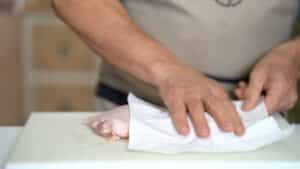
- Pat it completely dry. Use paper towels on the skin and meat. If you brined or marinated, dry it thoroughly before it touches the heat.
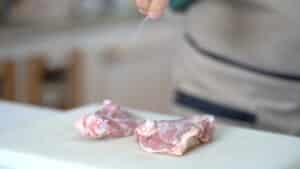
- Season chicken flesh only with salt.


The Pan is Not Hot Enough
- If the pan is not hot enough, the chicken rips apart when you try to flip it, leaving a crust stuck to the metal.Heat the pan for 2–3 minutes on medium low heat; not on full blast! it's useless. Indeed, the pan's structure needs to heat slowly and evenly before moving to the next step. When you feel the heat by hovering your hand over the pan, add the oil and sprinkle some salt (2g), salt creates a non-stick effect.
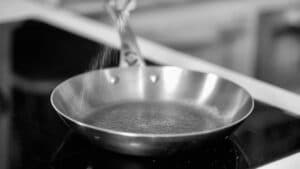

Searing
- Preheat a fan oven to 350ºF (180ºC). Place the chicken in the pan skin side down and press the meat down for every so often. Do not touch it for 4 minutes on medium heat. The crust needs uninterrupted contact time with the hot metal to caramelize. Moving the chicken prevents the continuous heat transfer needed for browning.
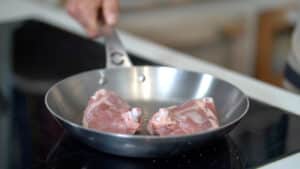
- Then move the meat around, shake the pan, set the heat to low, and add the cold butter. Leave the chicken skin side down, continuing to sear for 2 to 3 more minutes. The chicken flesh may be basted with the fat and aromatics during this time. Be carefully not to burn the butter, it should stay to light brown stage called beurre noisette.
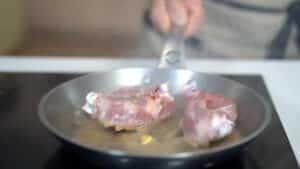
- Turn the heat off, flip the chicken, and season the skin with ground black pepper. Leave for one minute and transfer the seared chicken thighs to a bowl or plate for now.
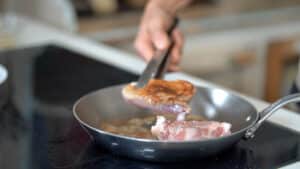


The Sauce
- Remove half of the fat left on the pan; reserve. Reheat the pan and stir in shallots. Add fresh herbs if desired such as thyme, bay leaf or sage.
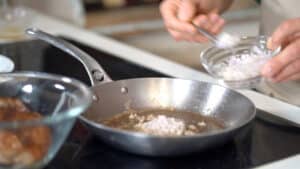
- Add flour and cook for 2 minutes.
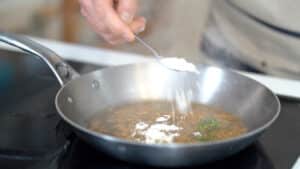
- Deglaze with the white wine, and cook for 2 minutes on low.
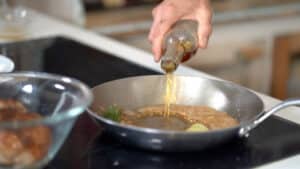
- Add the chicken stock, bring it to a boil and cook on low heat for 5 minutes or longer stirring it with a whisk every so often. If too lose, cook more. If too thick, add more stock.
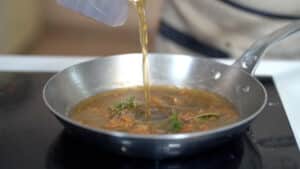
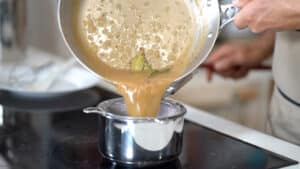
- Sieve the sauce over a small saucepan; keep it warm. Save the shallots for garnishing separately and the pan.


Cooking Chicken
- Meanwhile, place the seared chicken thighs in the pan with some herbs (thyme and bay leaves underneath), and pour over the saved fat. Pop the pan in the oven and cook for 30 minutes at 180ºC. Remove the pan from the oven, season with ground black pepper, and let the chicken rest for 5 minutes in the pan. Then transfer the meat to a plate to rest.

Finishing Sauce
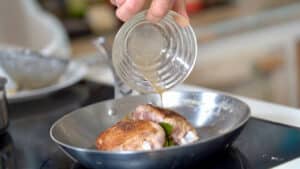
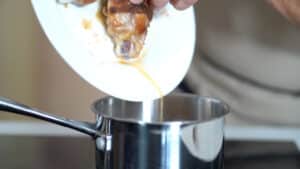
- Immediately deglaze the pan with ¼ cup of chicken stock or water. Scrape out the bits and add them to the sauce. Add the rendered juice from the cooked chicken as well. Reheat the sauce and whisk in the cubed butter, and once melted remove the sauce from the heat (avoid boiling it). Readjust seasoning with salt and pepper.

Plating
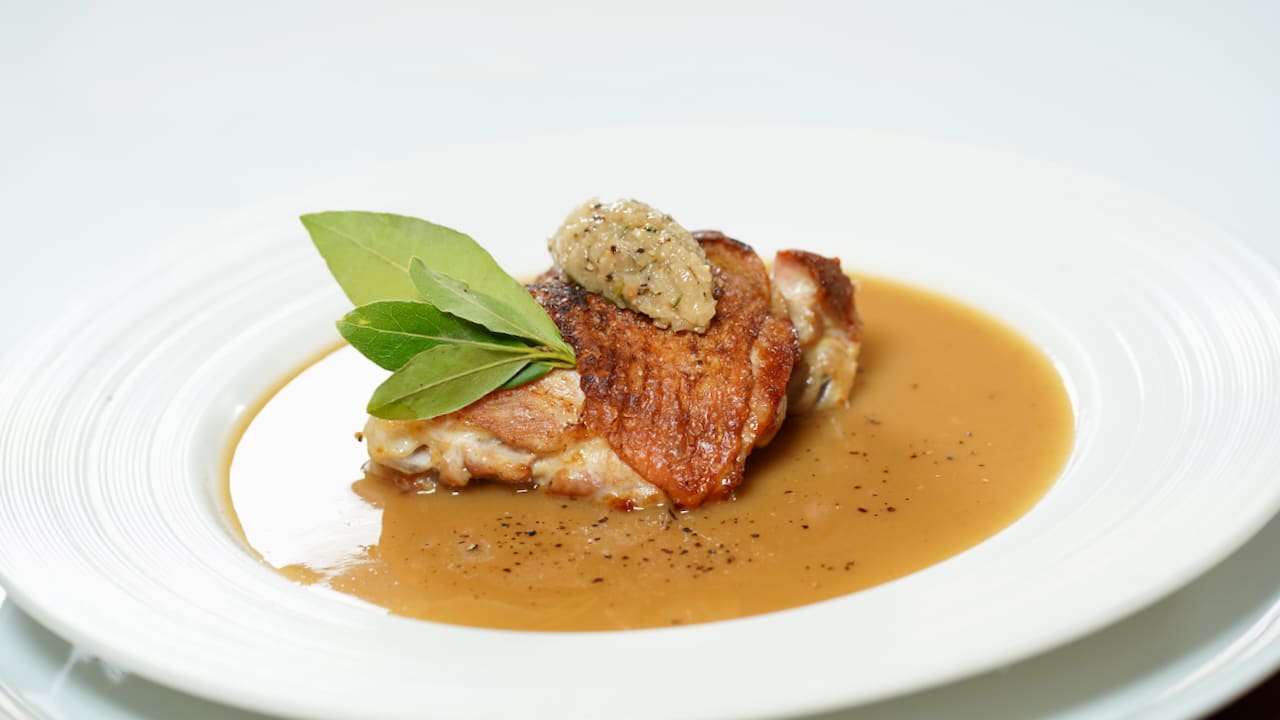
- Ladle out some sauce, add chicken and top with a little quenelle of the saved shallots. Bon appétit!