
Please note that the full access to this content needs a "Year at the Bruno's table" or a "Life at Bruno's table" subscription: please sign up.
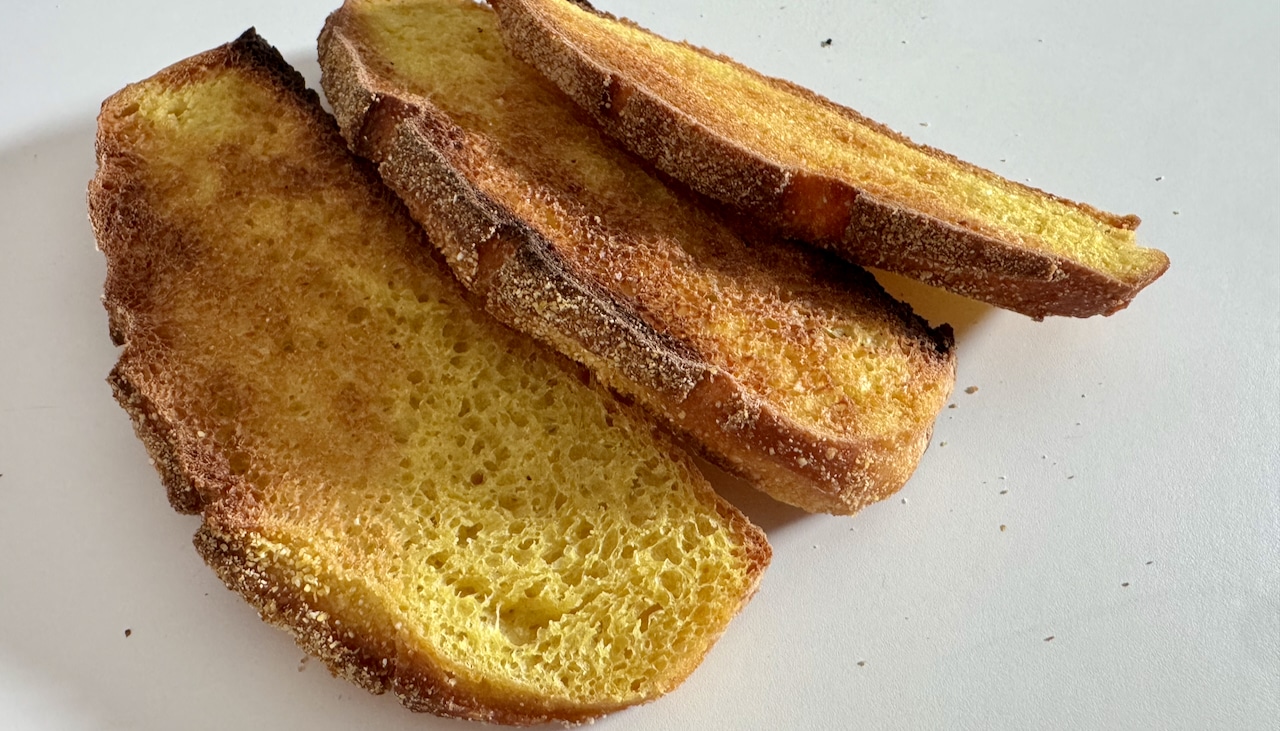
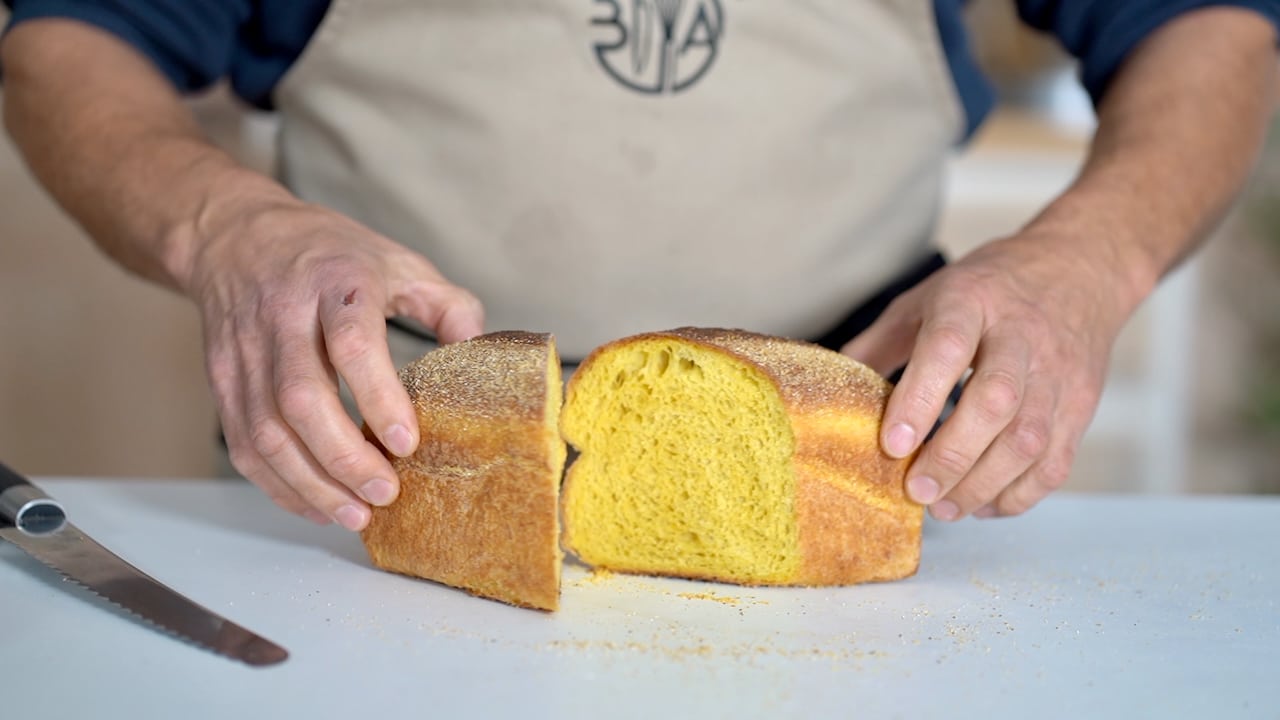
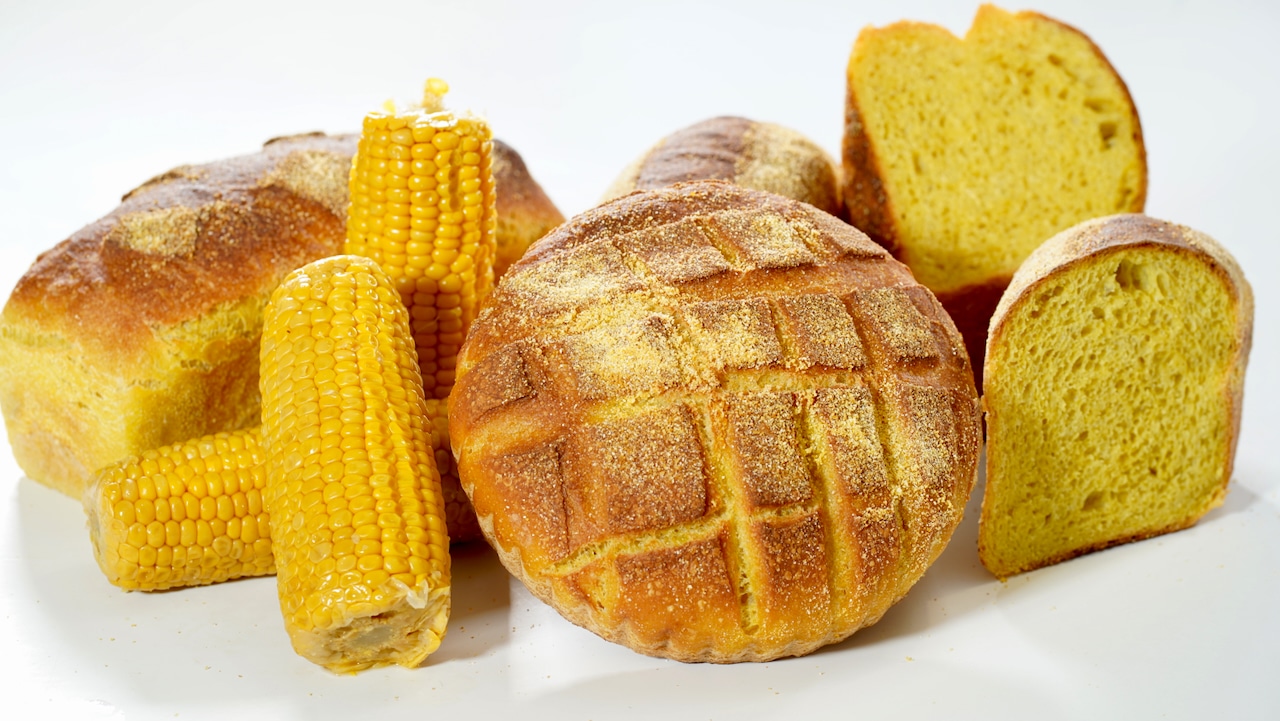
The crust is golden brown, and the yellow crumb is sufficiently dense but still airy and so flavorful...
This recipe is a protected and only available for paid members. To obtain the full step by step recipe and detailed ingredients list, please sign up.
Preview the recipe
👉 Full video coming shortly :)
- Corn bread is excellent with eggs, stews, fried chicken, chili con carne, red beans, rice and not to mention toasted for breakfast.

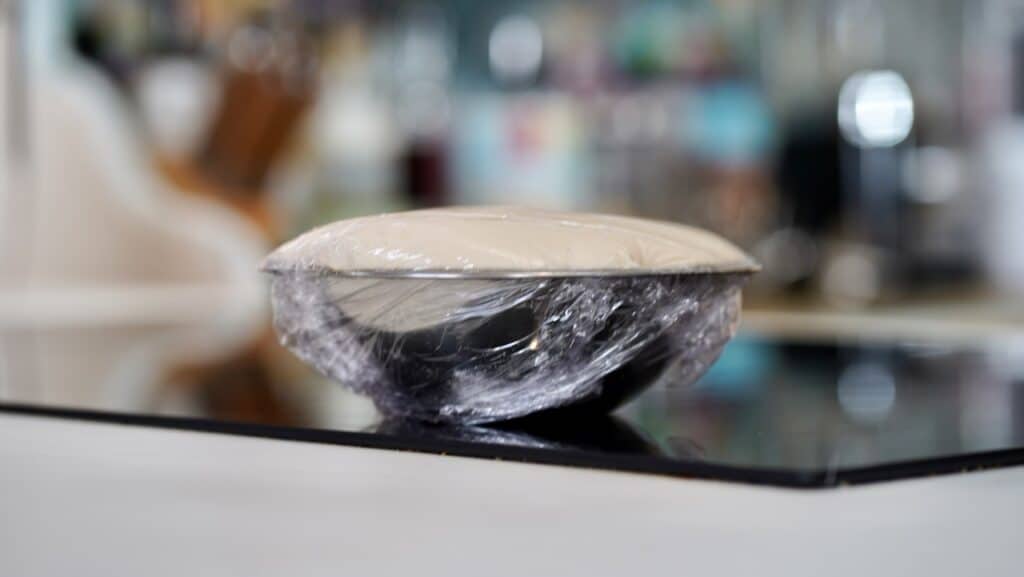
Fermented Dough
- In baker's language, fermented dough (pâte fermentée) is nothing less than a leftover piece of proofed white bread dough that was not baked the day before. Fermented dough is not to be confused with natural levain; the core difference between natural levain and fermented dough lies in their microbial source, leavening capability, and reusability. Natural levain is a continuous culture system based on wild yeasts and lactic acid bacteria that can be maintained long-term; fermented dough is a piece of dough left over from a prior batch, relying primarily on commercial yeast, used to enhance breads for which natural levain is not mandatory. Fermented dough can also be refreshed with a piece of old dough added to the recipe. It can be stored for up to 2 days. Always add liquid first into the mixing bowl, then add the yeast, flour and salt. Mix for 2 minutes on low speed and 5 on medium speed. For faster incorporation, use a paddle attachment when dealing with small quantity. Form a tight bowl and place it into lightly oiled bowl. Cover and leave the dough at room temperature for an hour or so and refrigerate overnight. If the dough has doubled in size, deflate it, reshape and chill.

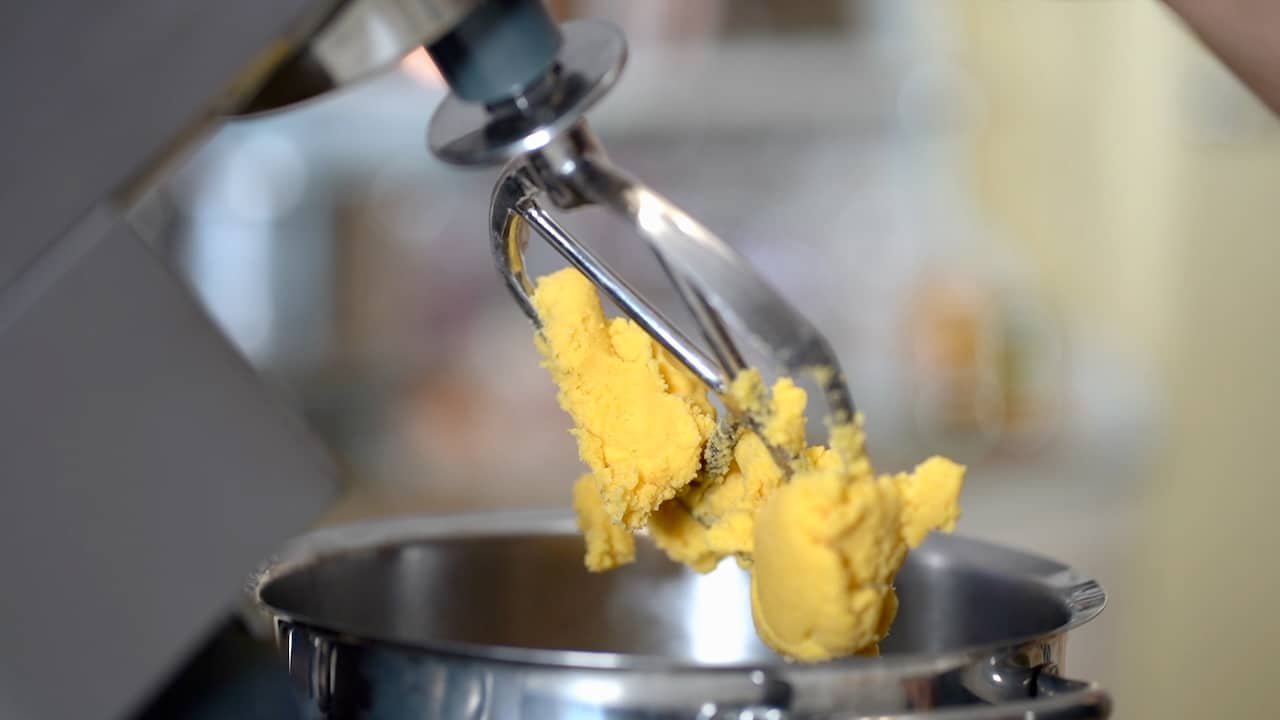
Masa
- In the stand mixer fitted with the paddle attachment, add the corn flour. In a saucepan, bring water to a simmer. Add the hot water to the corn flour and mix on medium speed until it comes together. Transfer the masa to a deli container, let cool, and refrigerate overnight.

Corn Soup
- Homemade white chicken stock can be used in place of the water. Corn on the ear can be steamed, boiled, grilled, or roasted. Cut the kernels off an ear of cooked corn.
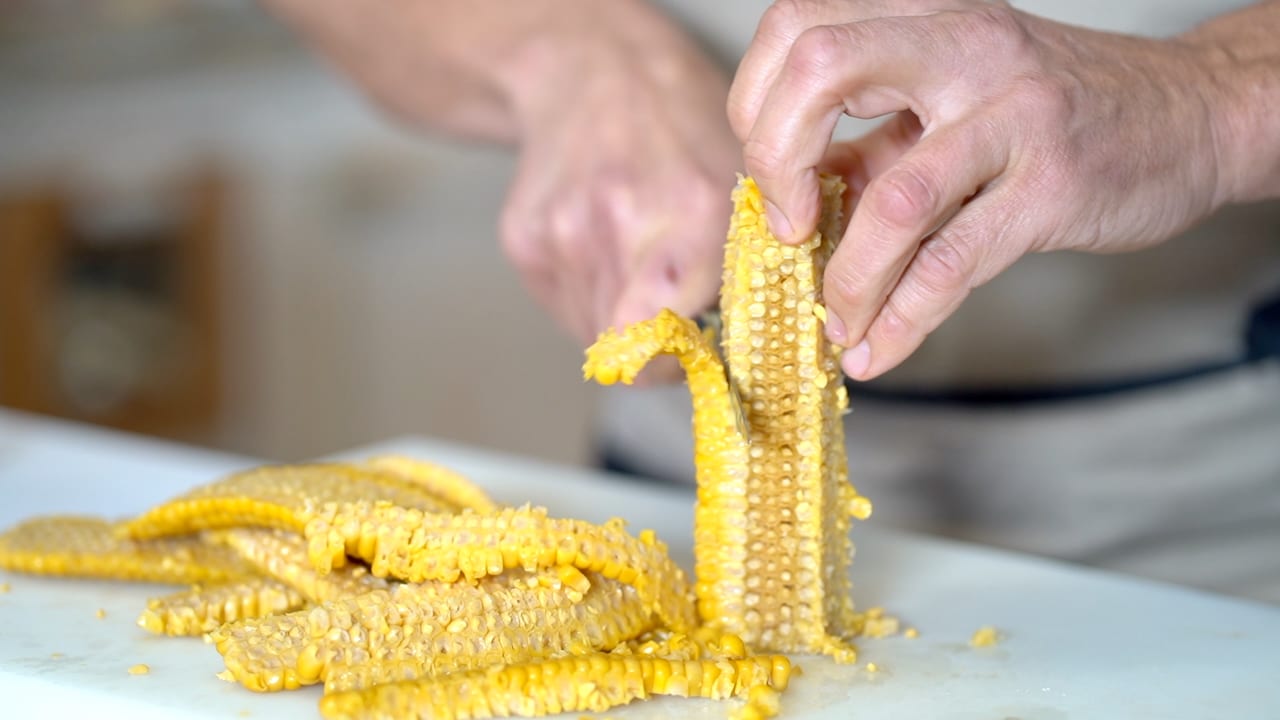
- Add them to the spring water and mix using an immersion blender or high-powered mixer. Transfer to a bowl and refrigerate overnight.
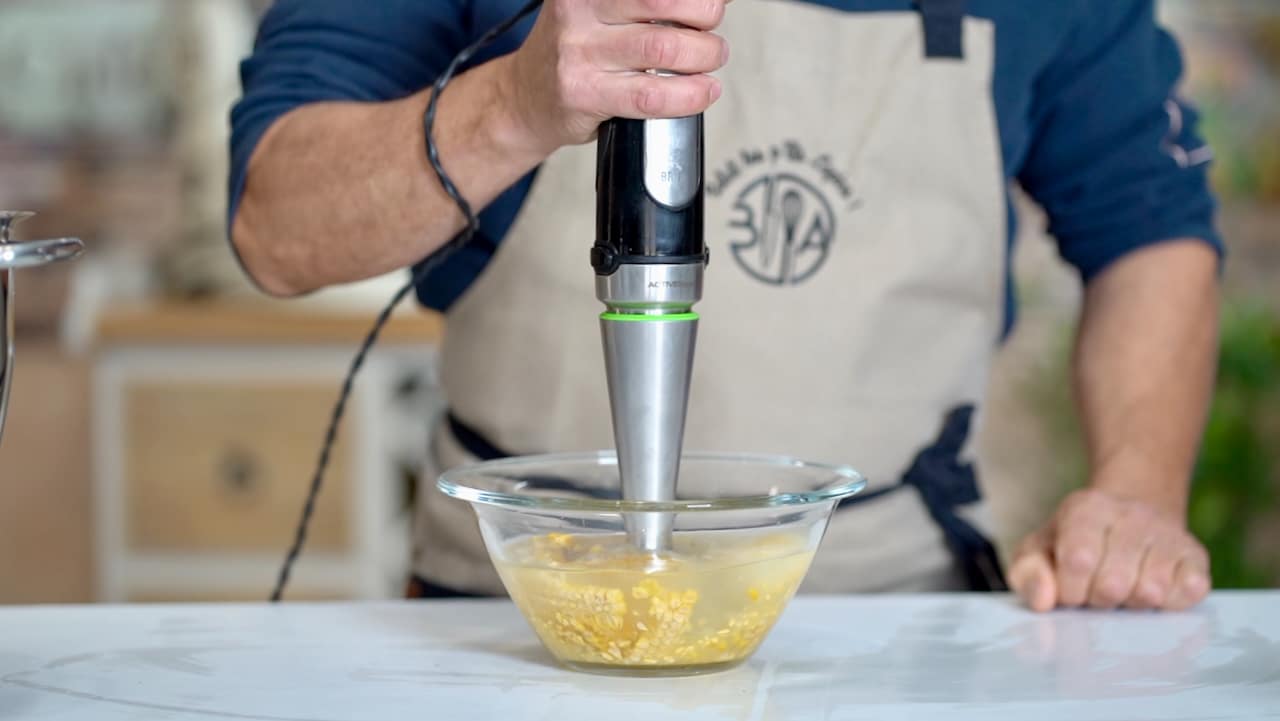


Corn Bread Dough
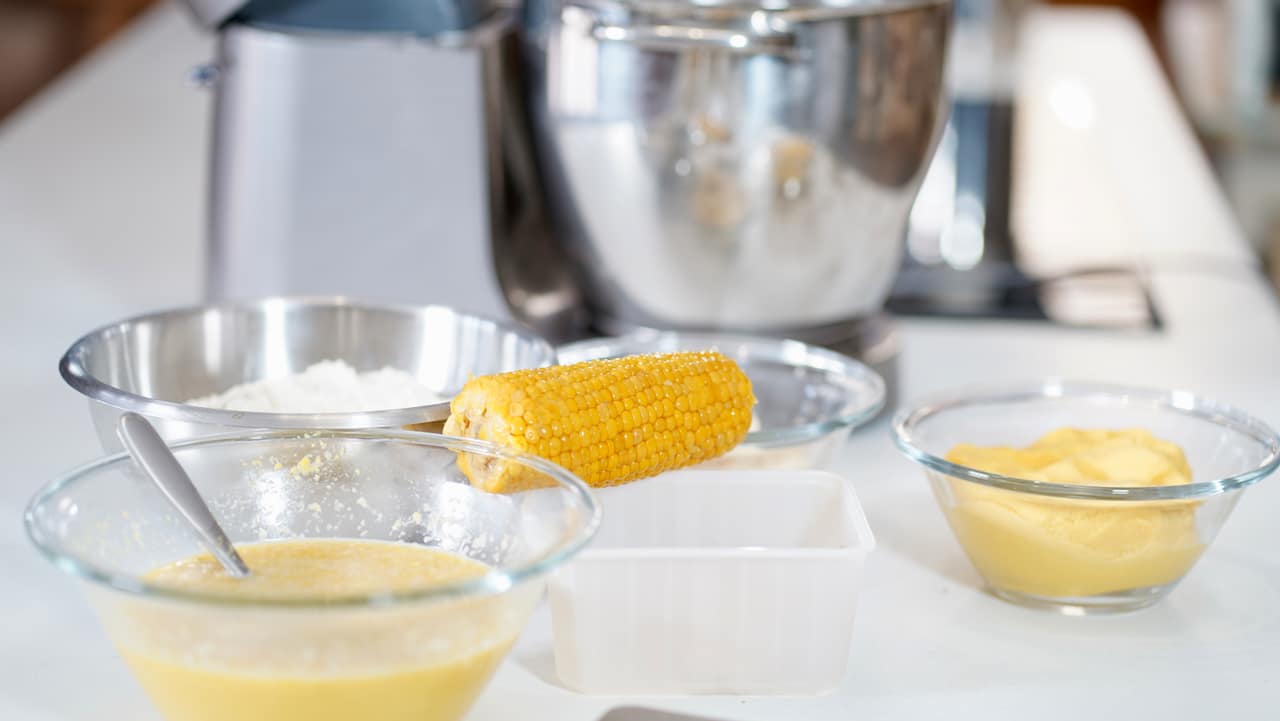
- Add to the mixing bowl in order: the cold masa and fermented dough cut into pieces, salt, tempered corn soup, yeast, and flour.
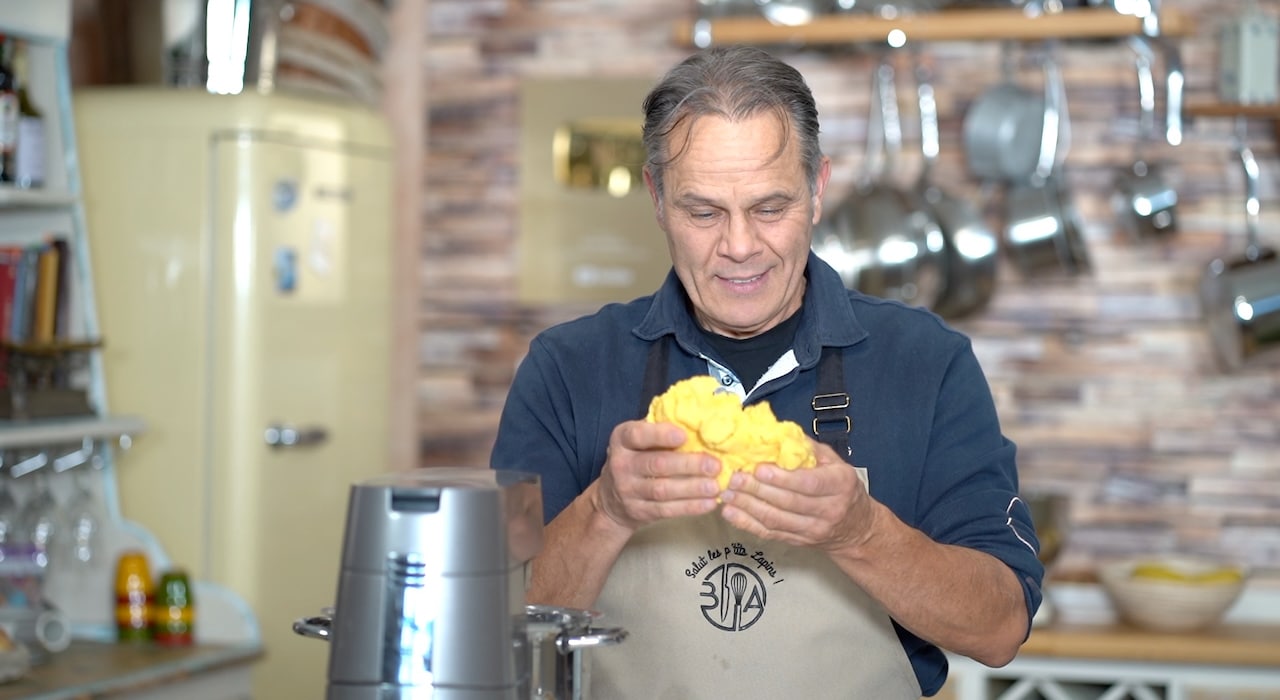
- Mix for 5 minutes on low speed, then 12 to 15 minutes on medium-high speed until the dough comes off the sides of the bowl. Scrape down the sides of the bowl and hook every so often during kneading. The internal temperature of the dough should reach then 23–24ºC at the end of mixing. Transfer dough to a large and lightly oiled bowl.
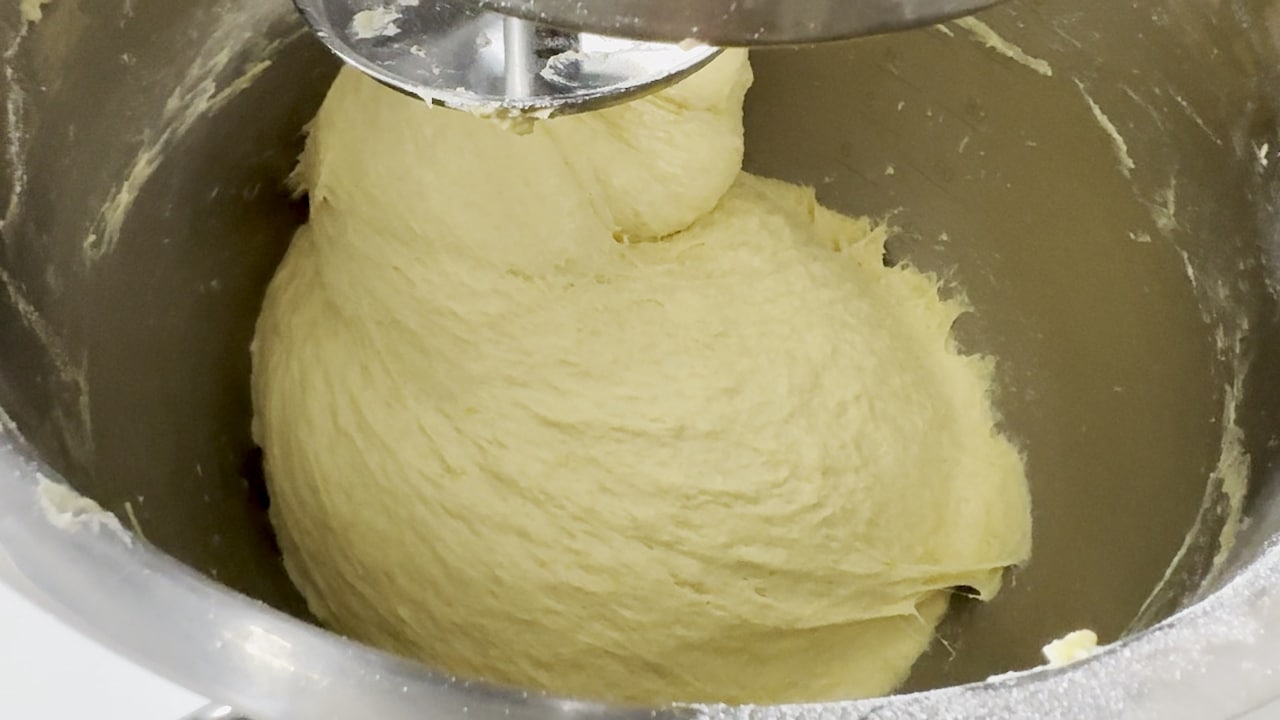


Bulk Fermentation
- Cover with a damp towel and refrigerate for 12 to 16 hours max. Remove the dough from the refrigerator an hour before dividing it.
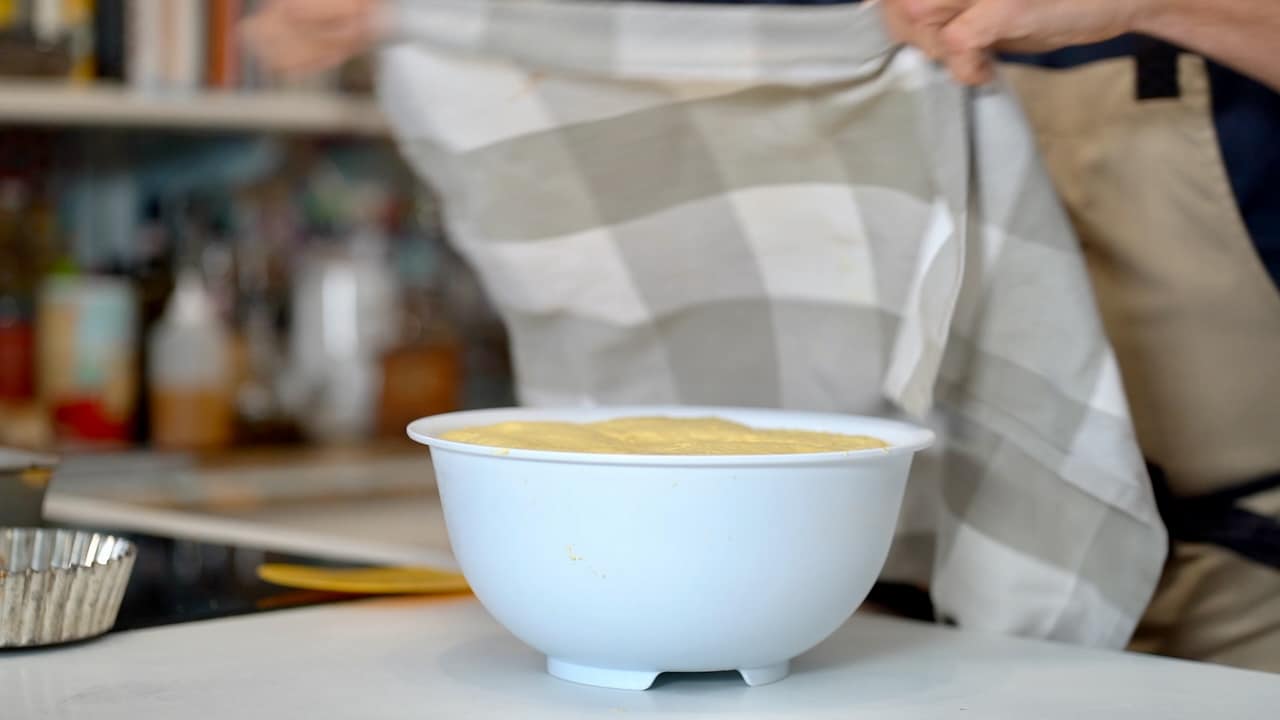

Dividing & Resting
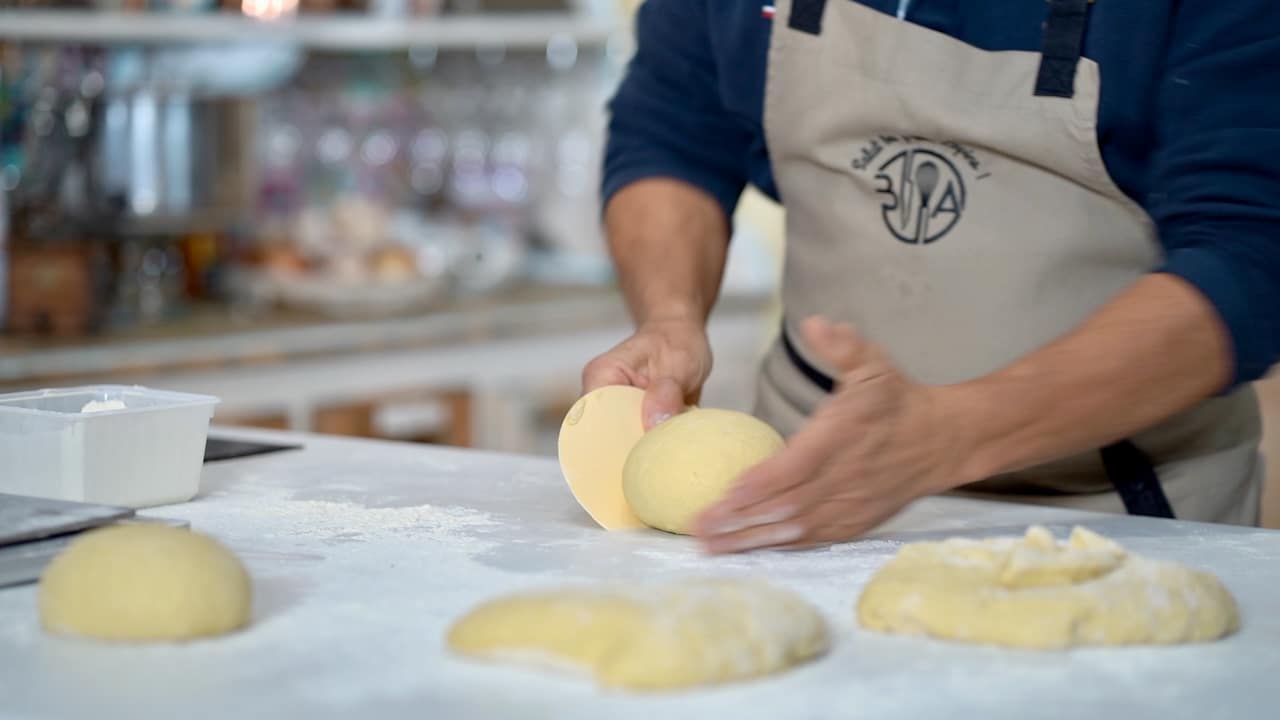
- Flour the dough and countertop. Flip it over. Now, the dough is positioned skin side down. Lightly dust flour on top.
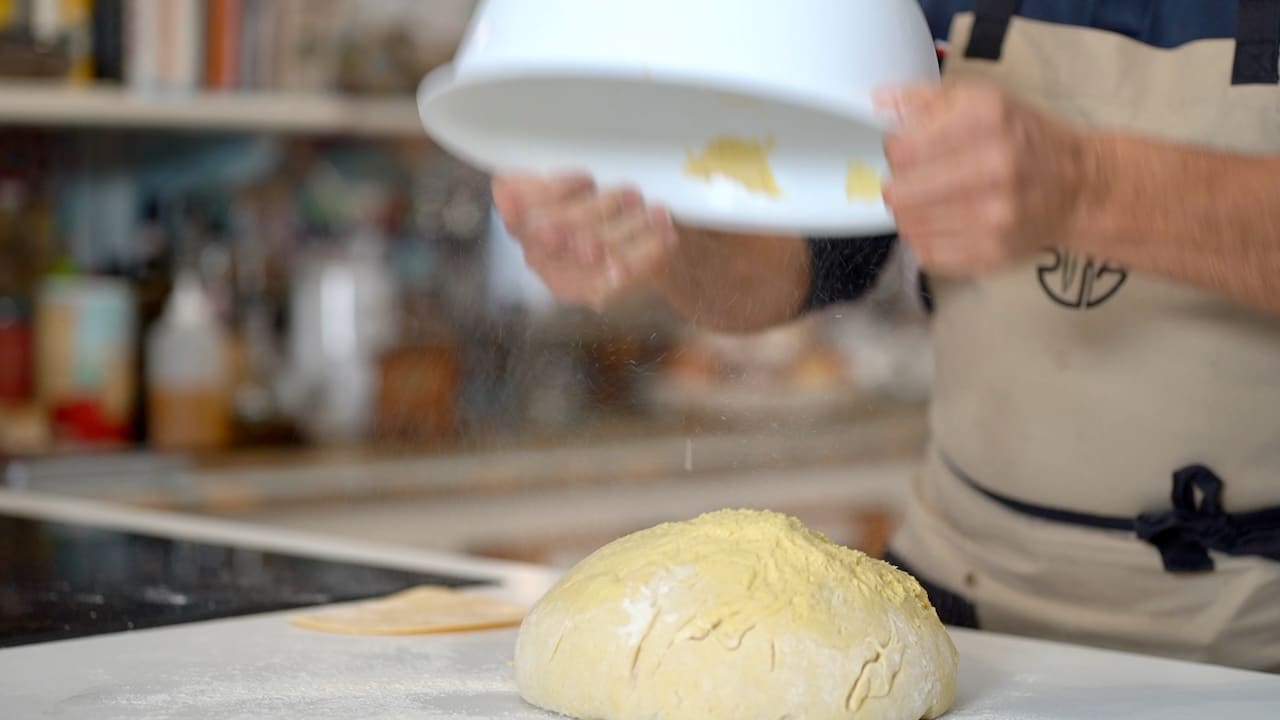
- Divide dough into four equal 600g portions.
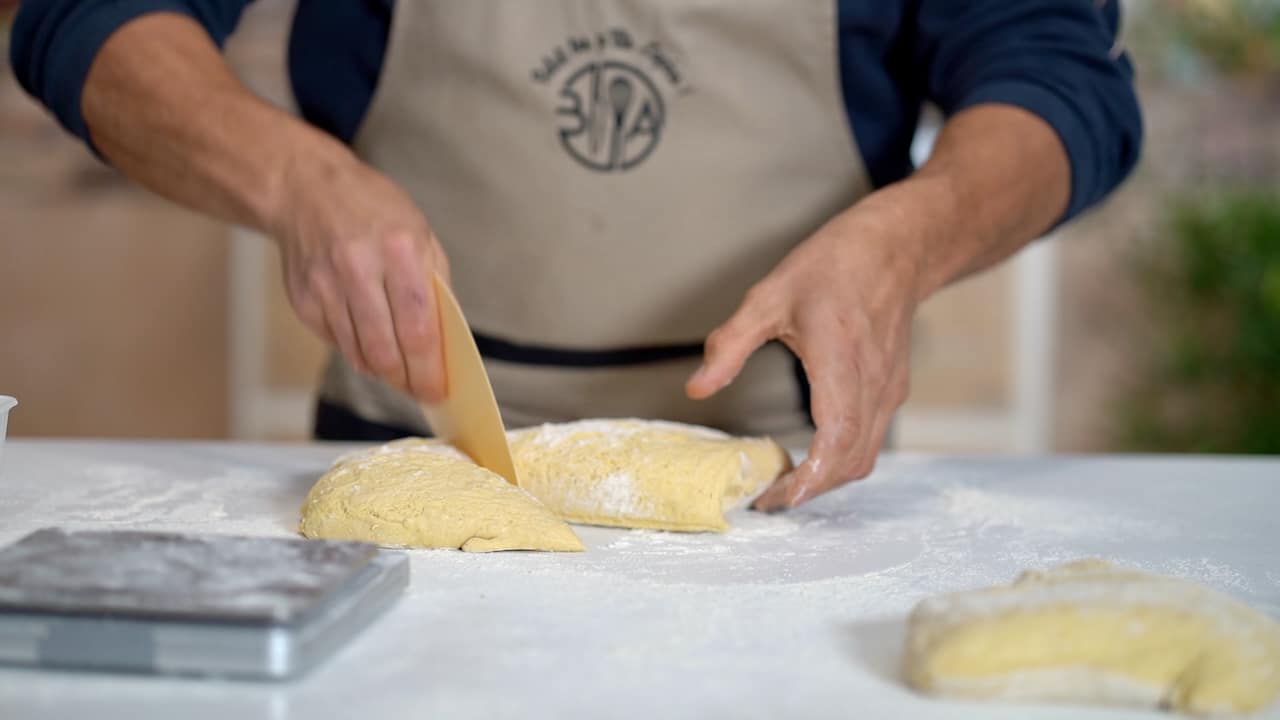
- To shape: use minimal extra flour when folding, except for what's already on the countertop. Fold the corners toward the center of the dough, pressing down each time to seal.
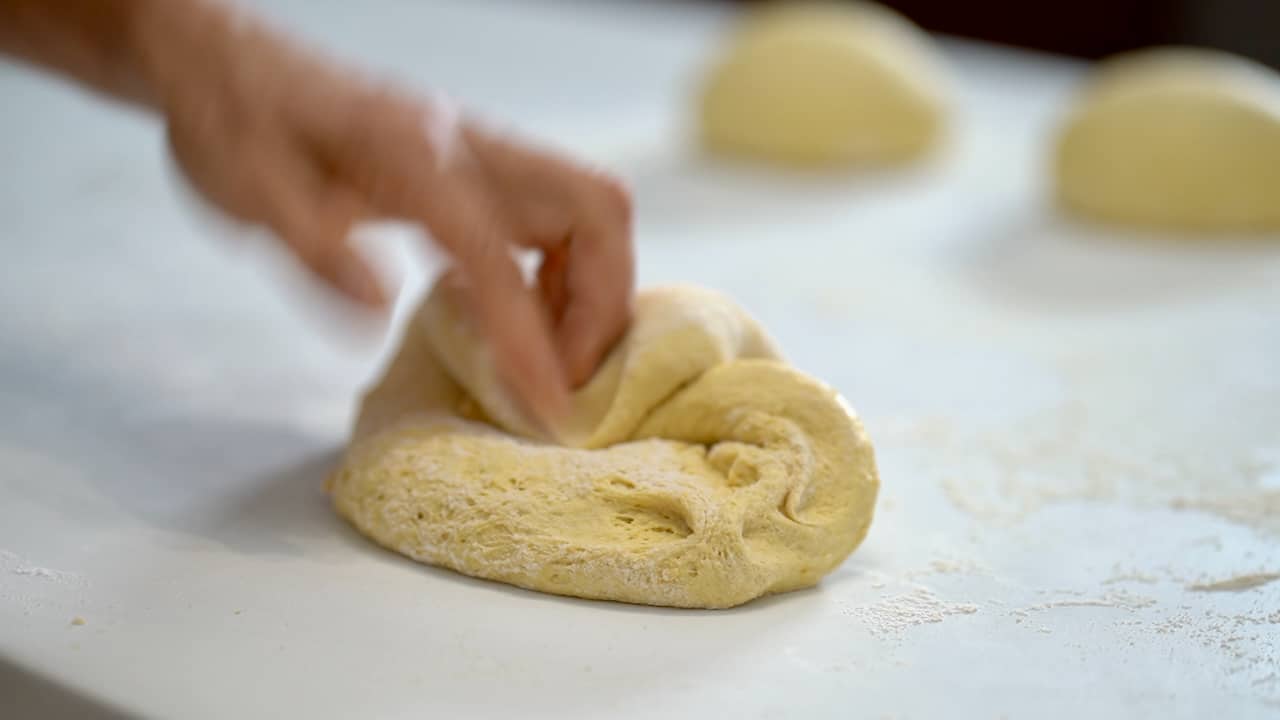
- Then flip it over so the skin is facing up and the seam is down. Form a tight ball and repeat. Cover the rounds with a kitchen towel and let rest for 25 minutes.


Shaping
- Flip and gently flatten the dough; skin side down. Fold half of the dough like an envelope, and fold the bottom over the seam.
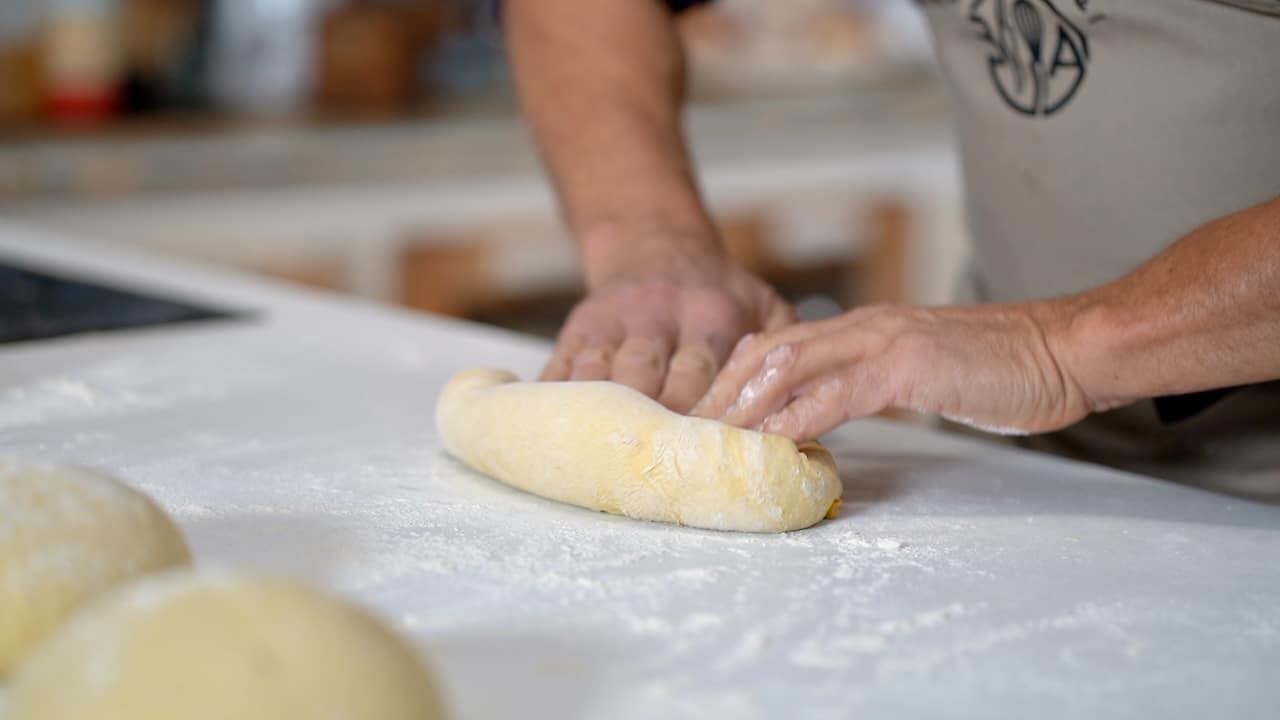
- Then fold it again to form a slightly elongated croissant shape.
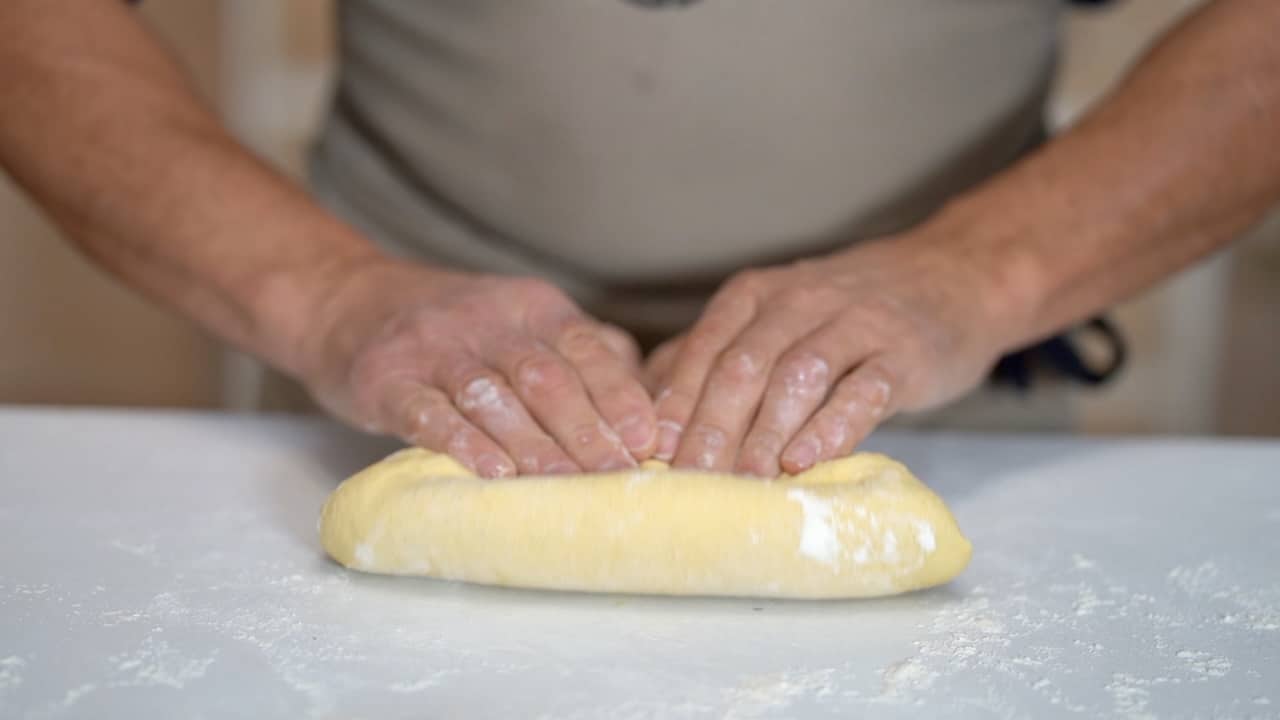
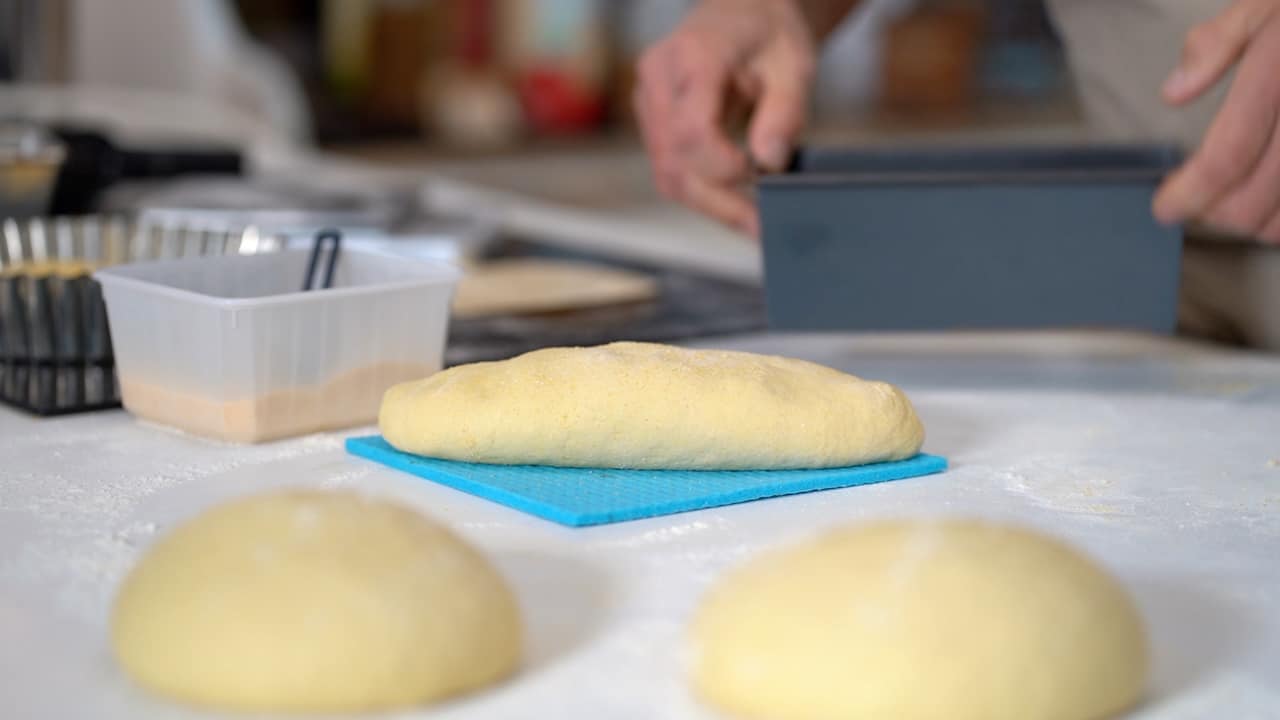
- Moisten the top (this can be done before or after the dough is placed into the greased mold).


Scoring & Proofing
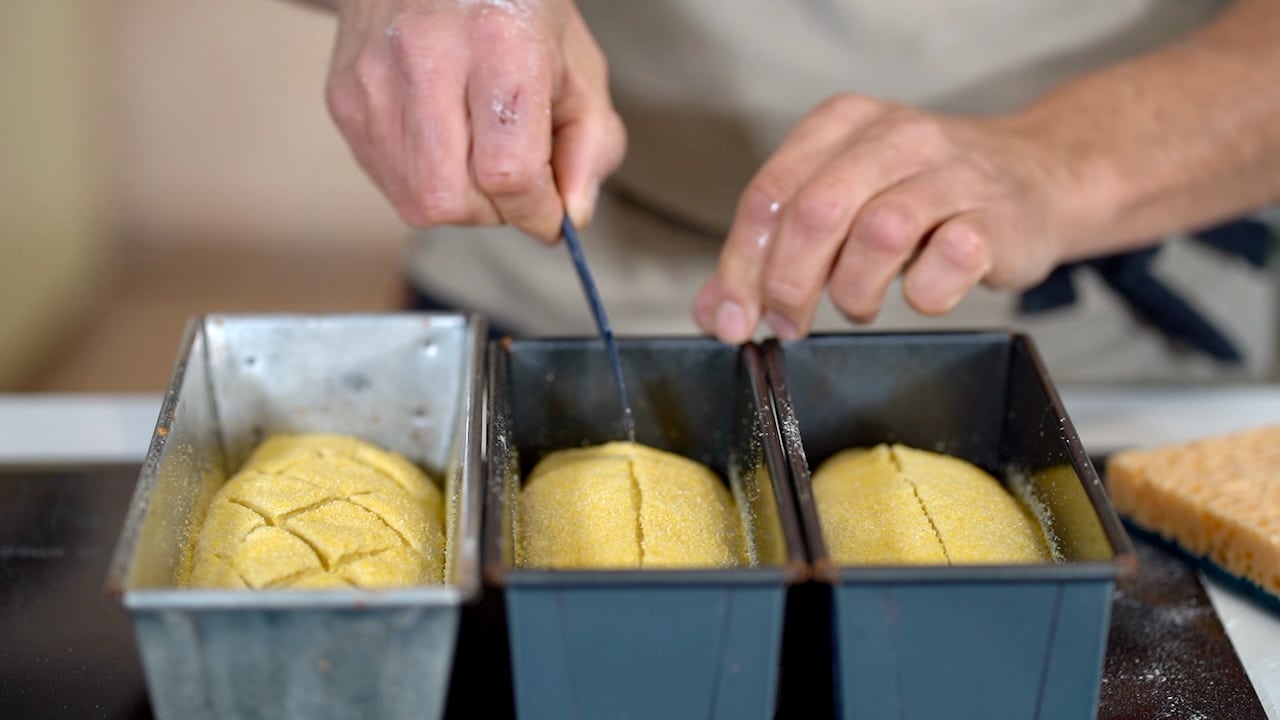
- Sprinkle some polenta over each loaf, and score. Cover and let proof for 3 hours at 20ºC, or for about 90 minutes at 25-28ºC. It is ready to bake when the dome has risen slightly above the mold.

Baking
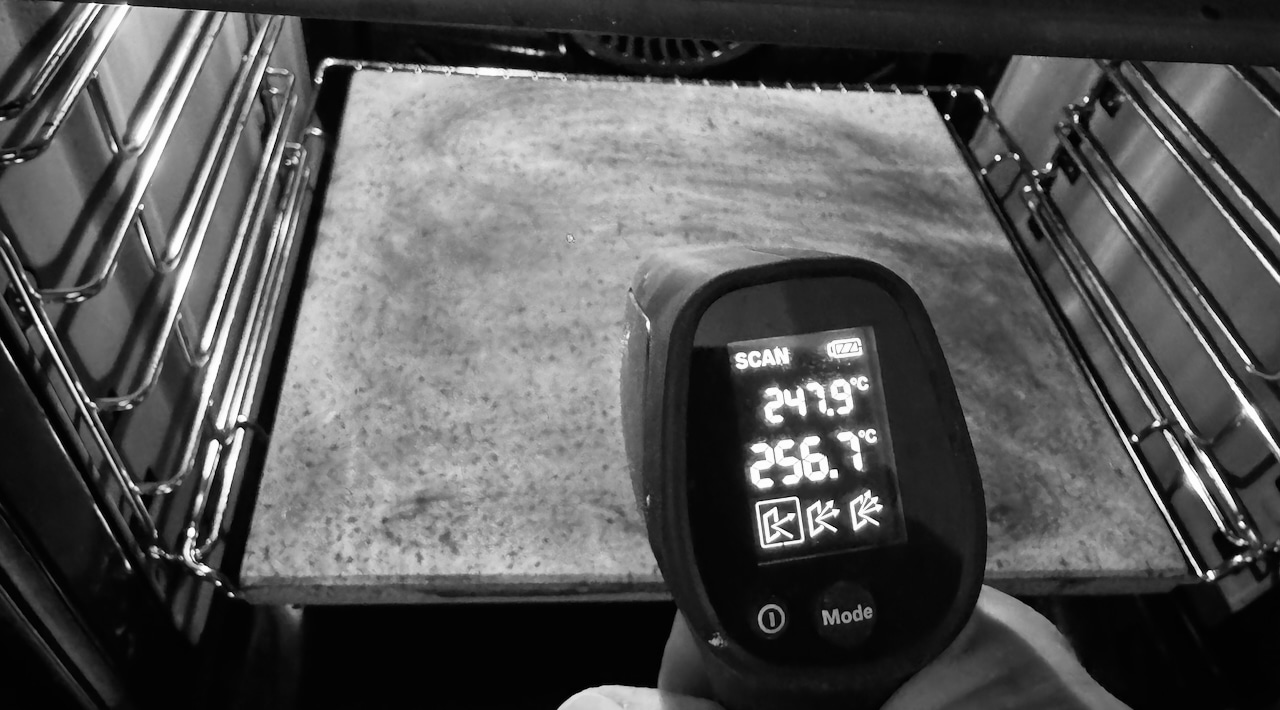
- Preheat a conventional oven in the baking position with the pizza stone placed on the lower rack. Set the oven temperature to 480ºF (250ºC) and preheat for 30 minutes or longer, until the pizza stone temperature reaches 250ºC or higher. Put the proofed bread in the oven straight onto the hot pizza stone and immediately spray water to create steam. Bake loaves for 5 minutes, then lower the oven temperature to 220ºC and continue baking for 25 minutes more. Turn the oven off and leave the oven door ajar, allowing excess steam to escape. Leave the loaves inside the oven for 5 minutes more.
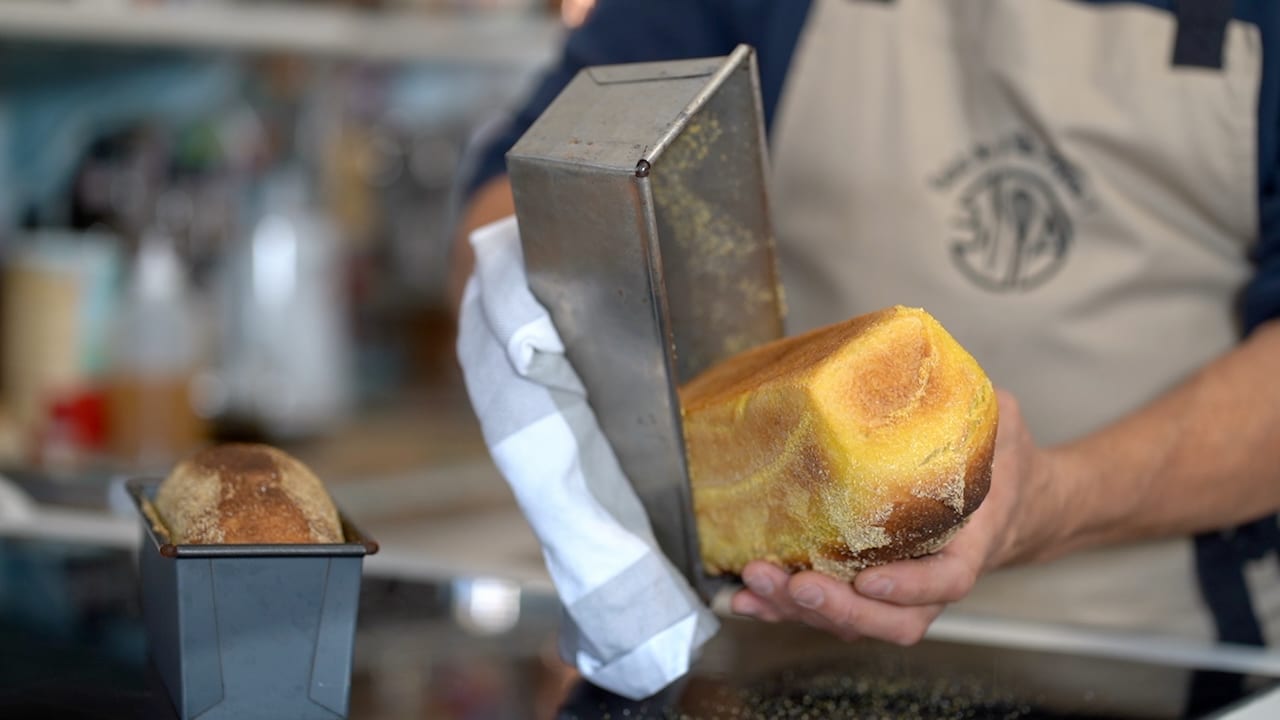
- Remove the breads from the oven, then carefully de-mold and let the loaves cool on a cooling rack.


Storage
- Corn bread loaves can be left on the counter for a couple of days. Once wrapped in plastic cling wrap, they can also be kept for a few weeks in the freezer.

This content is part of the PREMIUM SECTION

This recipe requires a All-content access subscription. The Premium section includes more than 50 essential recipes from French pastry and a special section for mastering artisanal bread.
The Premium section is only accessible with the following subscriptions: "A year at Bruno's table" and "A life at Bruno's table". See the plans here