
Please note that the full access to this content needs a subscription: please sign up.
Duck duo
This recipe is a protected and only available for paid members. To obtain the full step by step recipe and detailed ingredients list, please sign up.
Preview the recipe
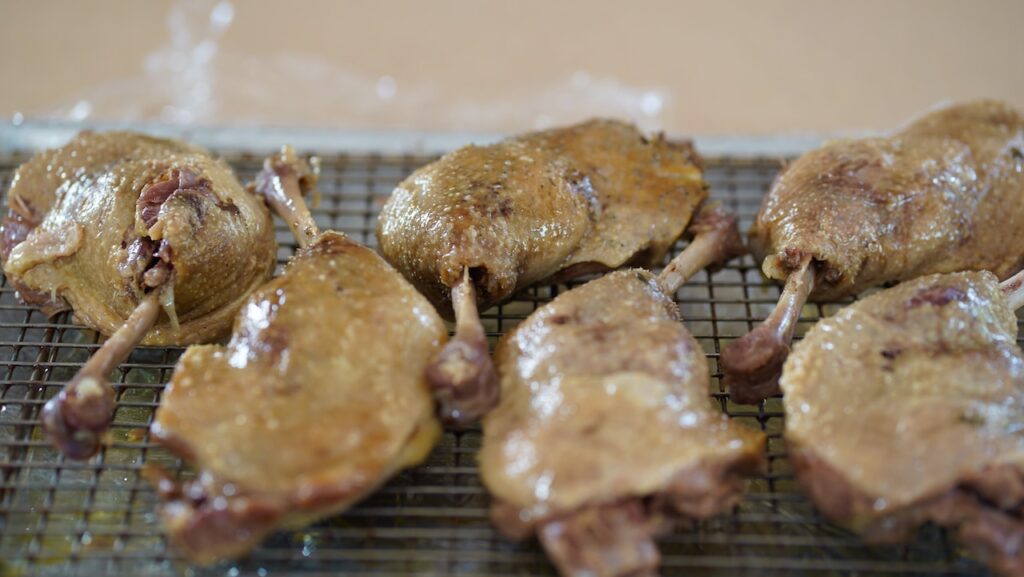
Duck Confit
- The best and easiest way to shred meat from duck confit is to do it about an hour after being cooked.

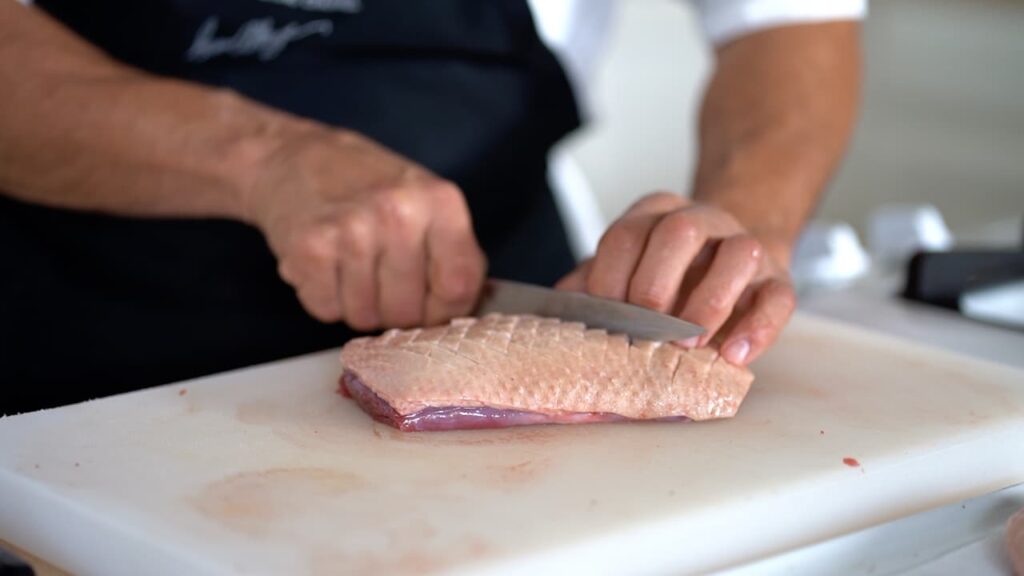
How To Prepare Duck Breast
- Pat the duck breast dry with paper towels. Using a sharp knife, trim off any excess fat (reserve it for the sauce), remove any blood spots, and trim the silver skin (discard). Be careful not to nick the flesh or stretch the skin. This technique maximizes tenderness, intensifies flavor, and ensures the skin becomes crispy. For the best results, refrigerate the meat, fat side up and uncovered, for 12 to 48 hours before cooking.

Duck Sauce
- Chicken demi-glace can be substituted for 1 cup (250 ml) of chicken stock. If using stock, do not add extra water to the sauce.Carefully loosen the duck leg skin by running your thumb underneath it; reserve the skin for making duck skin chips. Remove and shred the duck meat. Save the bones and cartilage for the sauce, and set aside the shredded meat for the samosas.

- Peel and cut carrot into small cubes and chop shallots. In a saucier or saucepan, melt butter and sear duck bones and scraps for about 5 minutes.
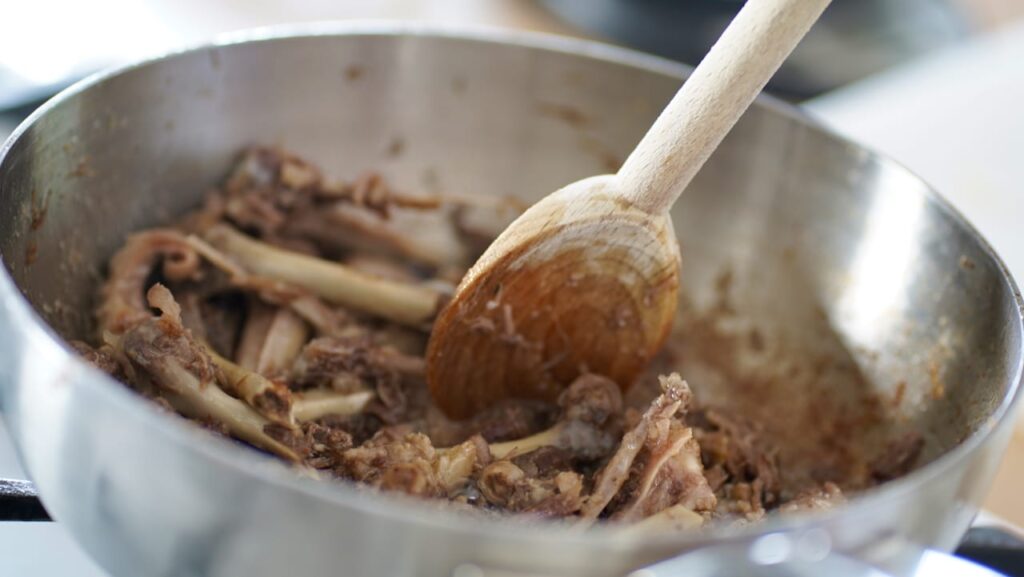
- Add the crushed garlic, zest, spices, bay leaf, carrots, and shallots. Cook for a few minutes, then add the liquids: port, chicken demi-glace, and either water, stock, or duck jus/juice. Add enough liquid to just cover the bones. Bring to a boil, then reduce the heat and let simmer for about 90 minutes. Pass the liquid through a sieve and continue to cook the sauce over low heat, skimming off any impurities and foam that accumulate around the edge of the pan. After about 20 minutes, readjust the seasoning.Let the sauce cool completely, then refrigerate. Once chilled, remove and discard the solidified fat from the surface. Store the sauce in the refrigerator for up to 5 days, or freeze for later use.


Duck Confit Samosas
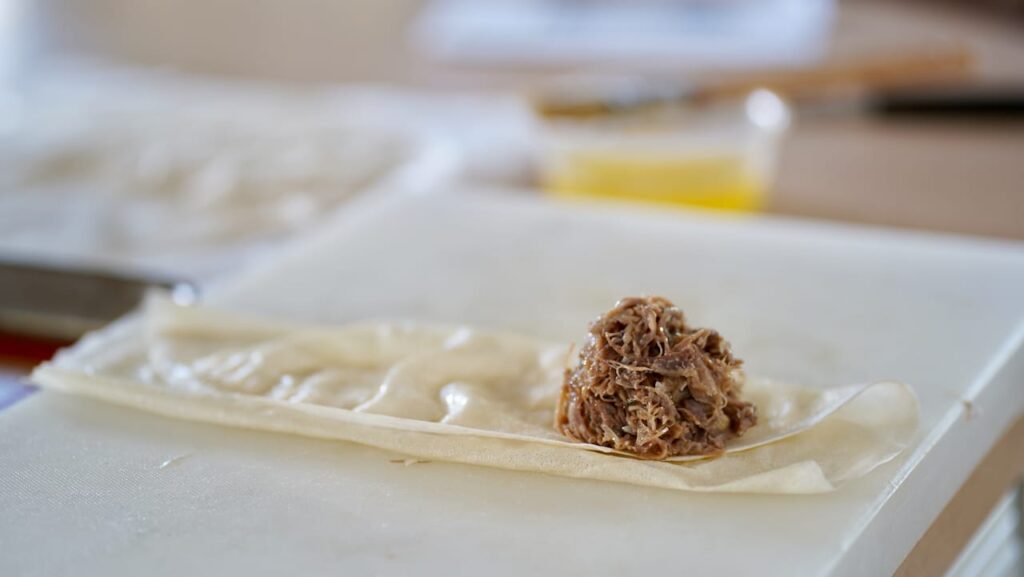
- Duck confit samosas can be prepared in advance and kept frozen for later use. Cut each feuille de brick pastry sheet in half, then fold one side over to form a neat rectangle. Place about 2 ounces (60g) of shredded duck confit meat along the folded edge. Fold the pastry over the filling to create a perfect equilateral triangle, continuing to fold until you reach the end. Brush the lip with egg white or egg yolk to seal. Repeat with the remaining filling and pastry, keeping the prepared samosas refrigerated.To cook, fry the samosas in duck fat or clarified butter for about 5 minutes per side, until golden brown and crispy.

Cooking Beetroot & Carrot
- Cardinal puree can be made in advance and reheated before serving.Begin by rinsing and peeling the carrots, and cleaning the beets. Place the beets in the saucepan first, then top with the carrots, and cover completely with neutral oil. Cook over low heat until tender. After about 30 minutes, check the carrots for doneness and remove them if they are already cooked. Peel the beets while they are still warm, then cut them into chunks before pureeing.


Cardinal Puree
- Puree the hot beets and carrots together. Add cold butter and a splash of Cointreau or orange juice. Do not add too much liquid—the cardinal puree should not be runny. Season with salt and pepper to taste, then set aside.
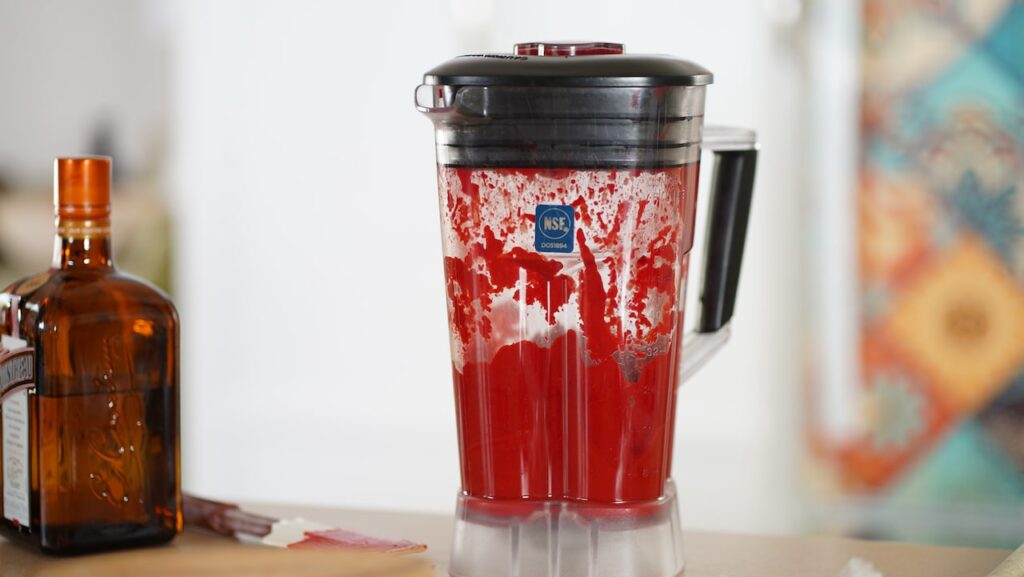

Edamame
- Cook frozen or fresh edamame in salted water for 5 minutes or so and drain. Reheat and season with olive oil, salt and pepper before serving.
Duck Skin Chips
- Place the duck skins in a single layer between two sheets of parchment paper. Put a baking tray (or another oven-safe weight) on top to press them flat. Cook in the oven at 430°F (220°C) for about 2 minutes, until golden brown and crispy. Do not hesitate to add extra cooking time if needed.


Honey Roasted Pears
- Peel, core, and cut the pears into wedges. In a hot frying pan, quickly caramelize the pears with the oil, honey, sugar, star anise, and vanilla. Deglaze the pan with apple cider vinegar and cook until most of the moisture has evaporated. Lightly season with salt and pepper. Reserve the pan for the duck sauce later—it will add a wonderful sweet and sour touch.


How To Cook Duck Breast
- Duck breast should be cooked like a steak and served medium-rare (rosé). This means the proper internal temperature, after the meat rests, should be between 125°F and 140°F (51°C–60°C).Remove the meat from the refrigerator one hour before cooking to allow it to come to room temperature. Season generously with kosher salt or fleur de sel on the fat side, and a bit less on the meat side.Place the duck breast fat side down in a room temp pan and cook over low heat for about 8 minutes, until the skin is golden brown and crispy. Pour off about two-thirds of the rendered fat (reserve it for later use), then flip the meat and continue cooking for an additional 8 minutes over low heat.If the duck breast is seared at a higher temperature, the flesh quickly cooks before enough fat has rendered out, leaving you with a thick, flabby layer of fat over tough meat.

- Transfer meat to another tray, and let it rest for 5 to 10 minutes. Save bits in pan for the final sauce.
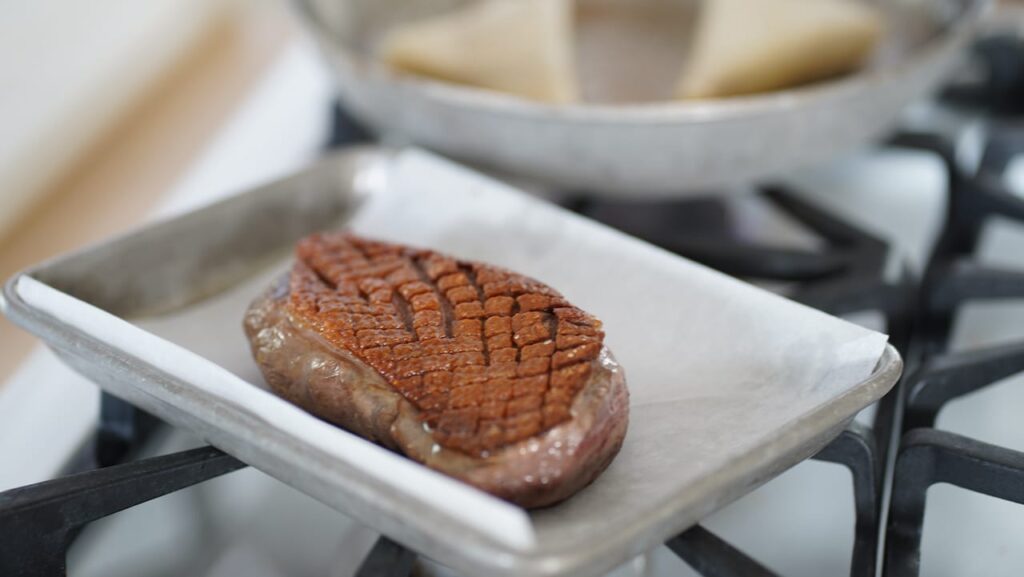


Final Sauce
- Deglaze the pan in which the duck breast was cooked with the duck sauce. Add the rendered juices from the breast and bring to a boil. Pour this sauce into the pan where the pears were roasted. Taste and readjust seasoning if needed. The sauce is ready!
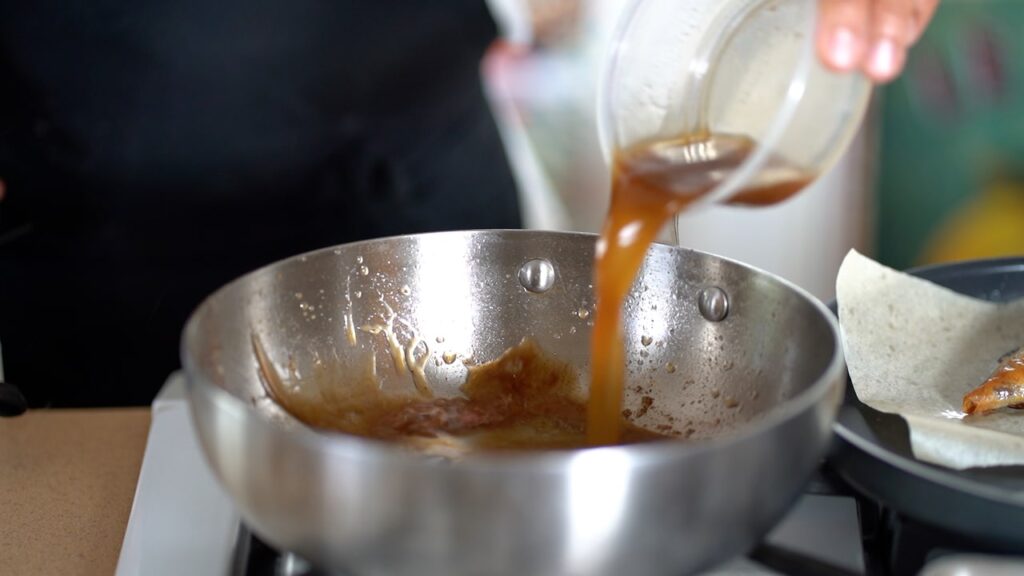
- Cut duck breast and season with black ground pepper and fleur de sel.


Plating
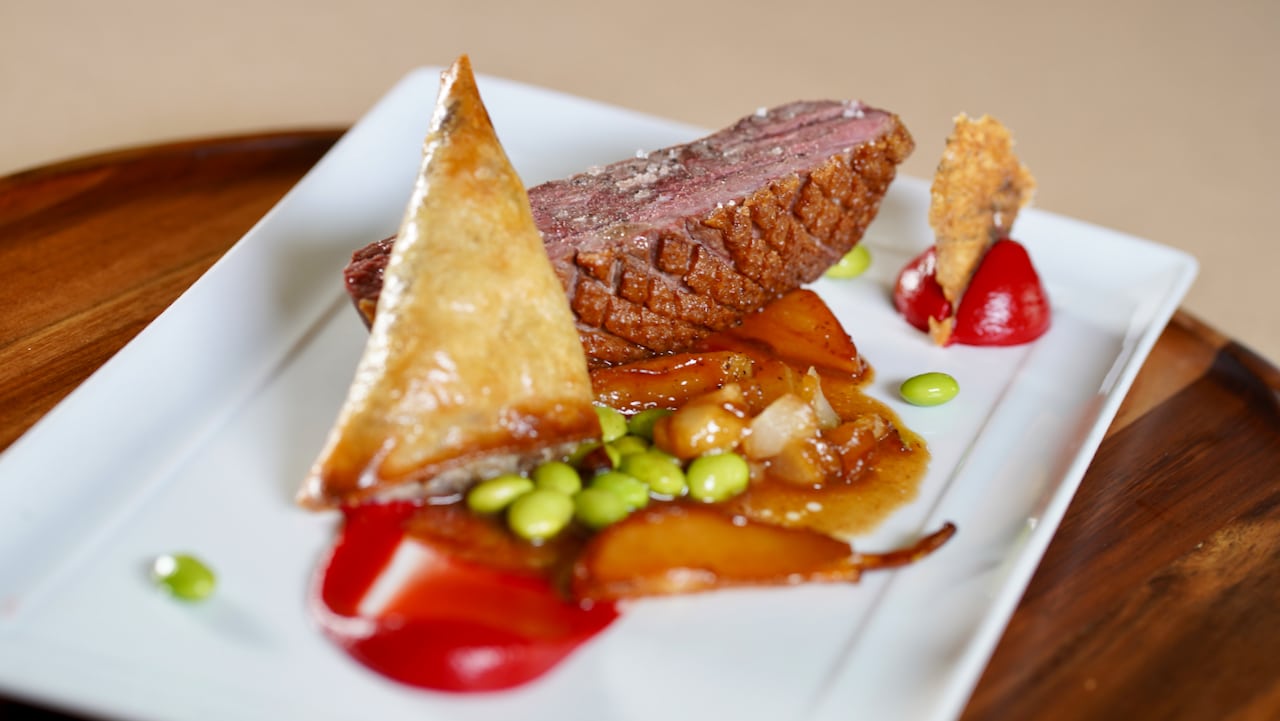
- Reheat the roasted pears and cardinal puree. Pipe a dollop of cardinal puree onto the corner of a hot plate and spread it out using a small offset spatula. Artfully arrange three honey-roasted pear wedges on each plate. Garnish with edamame and add the duck breast (half per serving). Place the pan-seared samosa on the plate, along with some chopped roasted pears. Add more cardinal puree if desired, then top with a couple of duck skin chips and finish with the sauce.


Ready to discover this recipe? You're only 1 step away.
This recipe is only accessible to registered members!
Create your account to access all recipes and content of my website.
Join us now and enjoy more 800 recipes (Mostly French with European Influences, American Classics and Asian fusion)
Already register? Sign in


Appetizers
Green Asparagus Starter

Appetizers
Beetroot Red Cabbage Mango Salad

Free Recipes
How To Prepare Red Cabbage Raw


Free Recipes
Apple Pie Traybake

Cakes
Olive Oil Chocolate Cake

Desserts
Spicy Chocolate Bar

Entrees
Deboning A Poularde Leg
Free Recipes
Chanterelle

Bread
Panettone Perdu

Free Recipes
Mustard Fig Spread
