
Please note that the full access to this content needs a subscription: please sign up.
Pour commencer
This recipe is a protected and only available for paid members. To obtain the full step by step recipe and detailed ingredients list, please sign up.
Preview the recipe
Pink Curing Salt
- Pink curing salt, also known as Prague powder, serves two purposes: it prevents the growth of bacteria and preserves the meat's original color. Vitamin C, acting as an antioxidant, inhibits foods from oxidizing when exposed to air. This helps maintain the food's texture, flavor, and color.
What Mold To Use
- In professional kitchens, pâté en croûte is always made with a foldable pâté mold. For home cooks, however, a Pullman loaf pan works perfectly.
Pâté Crust
- In the bowl of a stand mixer fitted with the paddle attachment, beat the butter, sugar, and salt on medium-high speed until smooth and creamy. Reduce the speed to low and mix in the cornstarch until incorporated. Add the egg, water, and vinegar, mixing just until combined. Add one-third of the flour, mixing on low until absorbed. Then add the remaining flour, mixing just until the dough comes together. Turn the dough out onto a lightly floured surface. Shape it into a rectangle or disk, wrap tightly in plastic wrap, and refrigerate for at least two hours, or preferably overnight, until firm.
- A pâté crust creates the ideal base for quiche. Learn how to form and blind-bake it perfectly using a cake ring here.
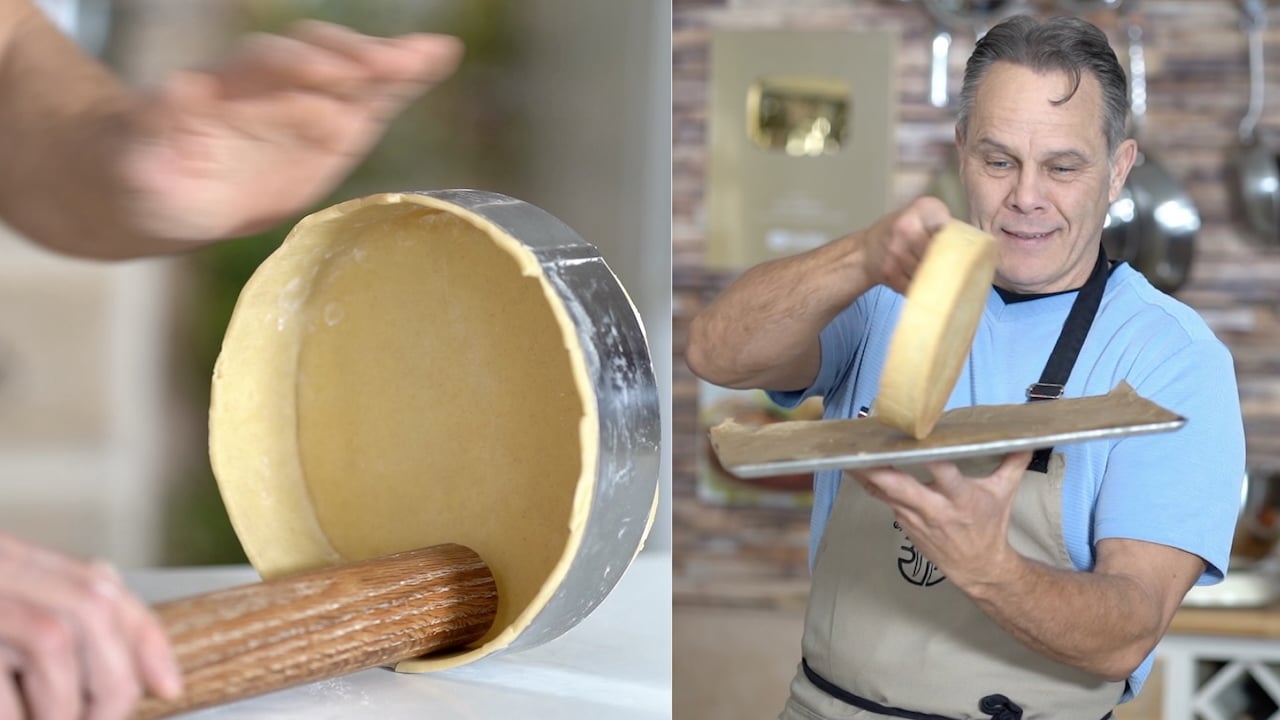

To Line the Mold with the Pastry
- Lightly dust a clean work surface with flour. Turn out the rested dough and knead it briefly until pliable. Using a rolling pin, roll it into a large, even rectangle approximately 4mm (about 1/6-inch) thick. The rectangle should be significantly larger than your mold on all sides to provide enough dough to fully line the interior and fold over the filling.Carefully drape the rolled dough over the greased mold. Gently press it into the bottom and against the sides, ensuring it fits snugly into all corners without stretching or tearing. Let the excess dough overhang the edges. Place the lined mold in the refrigerator for 20–30 minutes. This re-firms the dough, making it easier to fill and fold without slumping.Using kitchen shears or scissors, trim the excess pastry. Do not cut too close to the mold's edge; leave a generous overhang (about 2-3 cm or 1 inch). Save these trimmings for the pastry lid (the "cap").
Meat Marinade
- Cut the pork shoulder, pork belly, and chicken breast into uniform cubes. Place the cubed meat in a bowl and add the port, brandy, and remaining marinade ingredients. Mix well to coat. Cover the bowl with plastic wrap and refrigerate for up to 24 hours.
Chicken Livers Marinade
- Remove any membranes from the chicken livers. Place them in a bowl, add the remaining marinade ingredients, and gently fold to combine. Cover the bowl with plastic wrap and refrigerate for up to 24 hours. When ready to cook, remove the livers from the marinade and pat them dry. Heat a small amount of fat in a skillet over medium-high heat. Sear the livers quickly for about 1-2 minutes per side, or until browned but still slightly pink inside. Transfer the seared livers to a plate to cool completely.
Forcemeat
- Cook the mushrooms in a hot skillet over high heat for 5 minutes. Drain any excess liquid and let them cool completely. In a separate bowl, gently beat the eggs with salt and pepper. Stir in the shallots and parsley. Add the egg mixture and the cooked mushrooms to the marinated pork and chicken. Gently combine until just incorporated.
Pâté Assembly
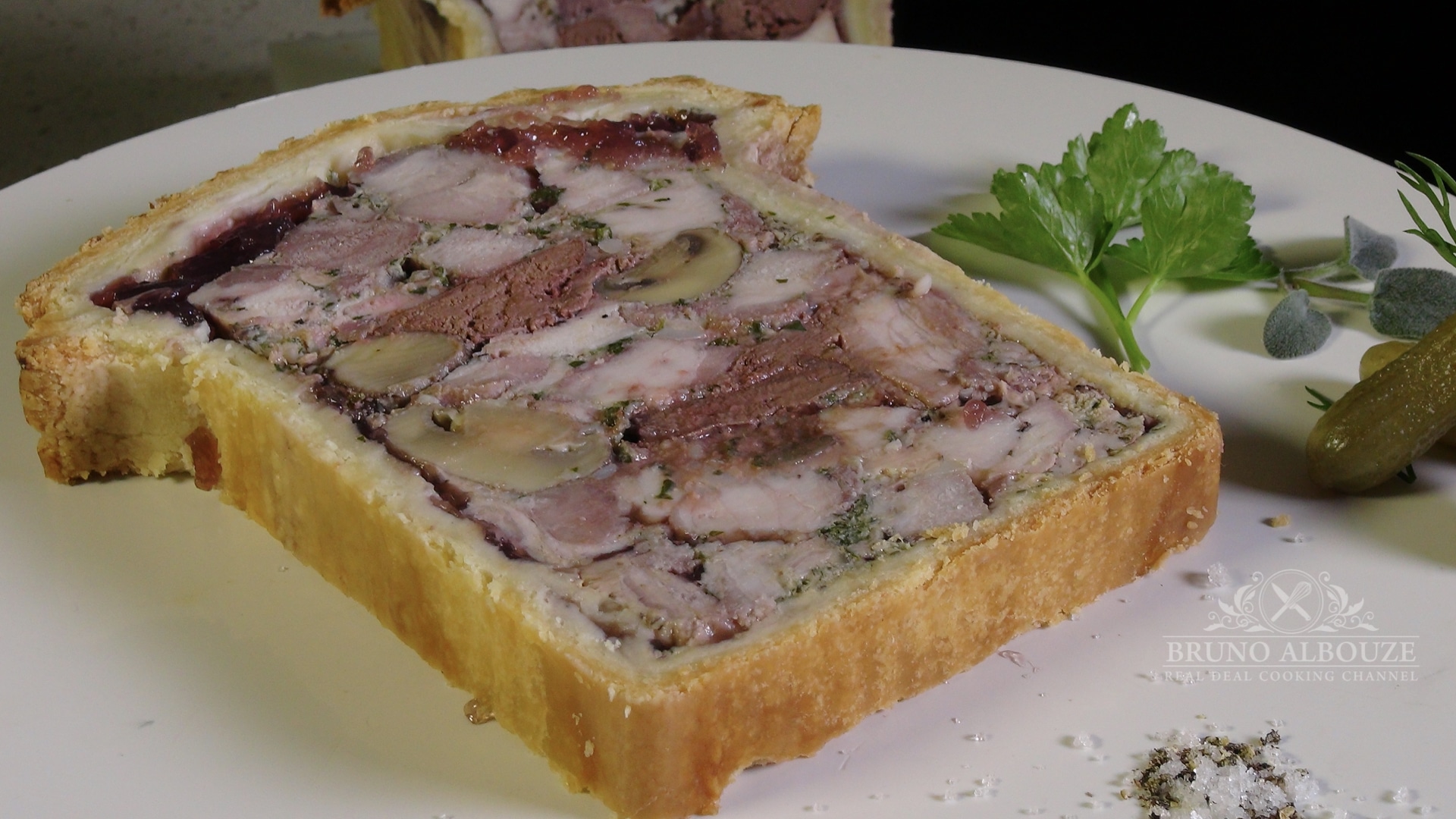
- Fill the prepared mold by alternating layers of the forcemeat with the cooked mushrooms and the seared chicken livers (including any juices from the pan). Fold the overhanging dough inwards over the forcemeat and brush the folded edges with egg wash.Add the Cap: Roll out the reserved dough into a rectangle measuring approximately 28 x 15 cm (11 x 6 inches). Place it over the pâté to form the top crust, pressing it lightly to seal against the egg-washed edges. Refrigerate the assembled pâté for 1 hour to allow the dough to firm up.Trim any excess dough from the edges, then crimp or score the border decoratively. Brush the entire surface of the dough with egg wash. Chill for 10 minutes, then apply a second coat of egg wash. Using the back of a paring knife, gently score a decorative pattern on the top crust (do not cut deeply into the filling).Create Chimneys: Use a piping tip or the blunt end of a skewer to poke two clean holes ("chimneys") through the center of the top crust. Insert a small, rolled cylinder of aluminum foil into each hole to keep it open during baking. These vents allow steam to escape and prevent fat from bubbling over.
Aspic Port
- Bloom the gelatin by soaking it in a bowl of cold water. Let it soften for 5–10 minutes, then drain off any excess water. In a small saucepan, bring the water, port, and salt to a boil. Remove the pan from the heat and stir in the bloomed gelatin until it is fully dissolved.
To Bake and Finish
- Place a pizza stone on the lowest rack of the oven. Preheat the oven (with the fan/convection setting on) to 350ºF (180ºC) for a full 20 minutes to ensure the stone is thoroughly hot. Place the pâté on the preheated stone and bake for 45 minutes. Lower the oven temperature to 325ºF (160ºC) and continue baking for another 45 minutes. The pâté is done when an instant-read thermometer inserted into the center of the meat (not touching the pastry) reads 155ºF (68ºC).Remove the pâté from the oven and let it cool on a rack until its internal temperature drops to about 100ºF (38ºC).Add Aspic: Slowly pour the warm port aspic through both chimney holes, topping up as needed until the pâté will not absorb more. Refrigerate the pâté, uncovered, for at least 6 hours or, ideally, overnight until completely chilled and set. Once chilled, you may find that the aspic has settled; you can add more to fill any remaining voids by pouring it carefully into the chimneys.
How To Un-mold Pâté
- If your pâté was cooked in a foldable mold, skip these steps. For removal, briefly warm the bottom of the chilled loaf over a low flame or burner. Then flip it—the pâté should release easily.
Plating
- For clean cuts, slice pâté with a serrated knife. Serve with pickles and bread.
Storage
- Pâté en croûte can be refrigerated for up to one week if it contains pink curing salt; otherwise, consume it within 2–3 days. Do not freeze it, as the pastry will become soggy upon thawing.
Ready to discover this recipe? You're only 1 step away.
This recipe is only accessible to registered members!
Create your account to access all recipes and content of my website.
Join us now and enjoy more 800 recipes (Mostly French with European Influences, American Classics and Asian fusion)
Already register? Sign in


Appetizers
Beetroot Red Cabbage Mango Salad

Free Recipes
How To Prepare Red Cabbage Raw


Free Recipes
Apple Pie Traybake

Cakes
Olive Oil Chocolate Cake

Desserts
Spicy Chocolate Bar

Entrees
Deboning A Poularde Leg
Free Recipes
Chanterelle

Bread
Panettone Perdu

Free Recipes
Mustard Fig Spread

Free Recipes
Poularde Demi-Glace
