
Please note that the full access to this content needs a subscription: please sign up.
A boot of flavors
This recipe is a protected and only available for paid members. To obtain the full step by step recipe and detailed ingredients list, please sign up.
Preview the recipe
Poached Citrus Uses
- Poached lemons can be used for many pastries such as lemon-shaped dessert, ice cream and sorbet, lemon pie, cheesecake etc..
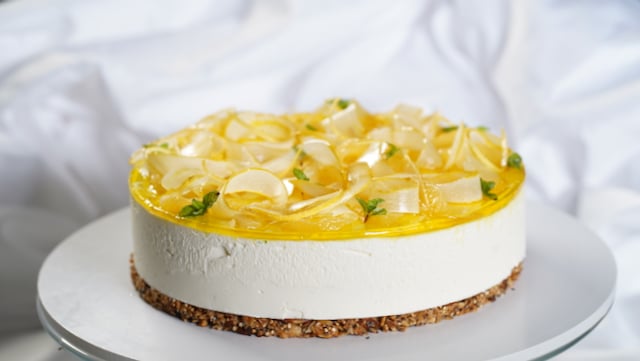

Blanching the Lemon Peel
- The white pith of lemon peel is where most of its bitter compounds reside. Blanching is the key to taming that bitterness. By placing the peel in cold water and allowing it to come slowly to a boil, you encourage a gentle, thorough extraction—a method far superior to plunging it directly into hot water, which would seal in those unwanted flavors.


Preparation of the Lemon Wedges
- Remove the lemon stems, cut the lemons in half, and divide each half into large wedges. Trim away the membranes and some of the flesh as well, then remove any seeds. Weigh the prepared wedges to ensure you have 750–800g total. Squeeze the trimmings to extract any remaining juice, strain it through a sieve, and set it aside for later use. Place the lemon wedges in a large pot, cover with cold water, and bring to a boil. Drain, then repeat this blanching process once more.
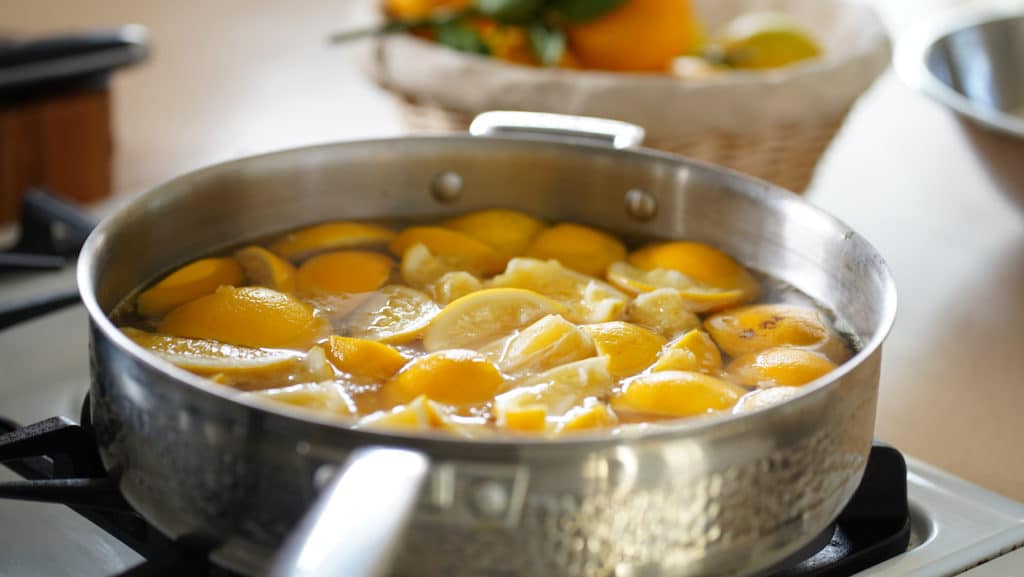

Poached Lemons / Direct Cooking Method
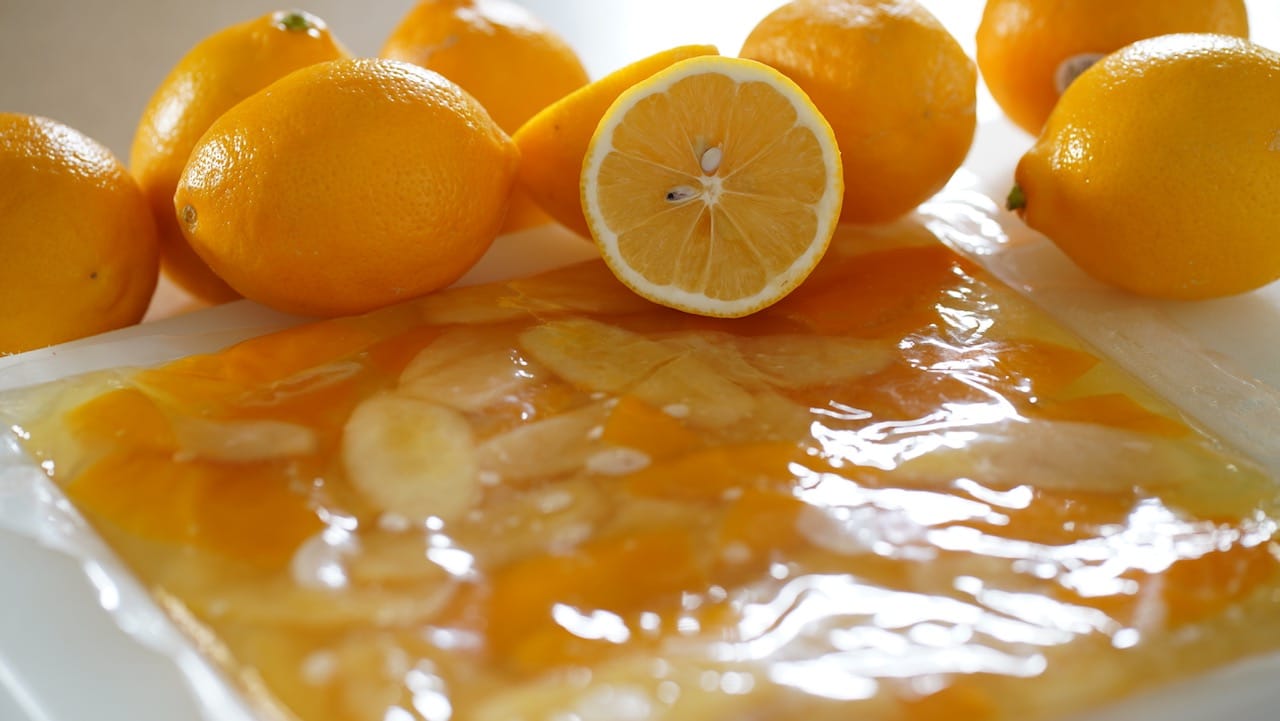
- Cover the lemons with water and sugar. Bring to a boil, then reduce to a low simmer and cook, uncovered, for 3 hours. Leave the lemons in the saucepan and allow them to cool completely to room temperature—preferably overnight. At this point, the poached or semi-confit lemons can be canned or stored in the refrigerator, where they will keep for months.
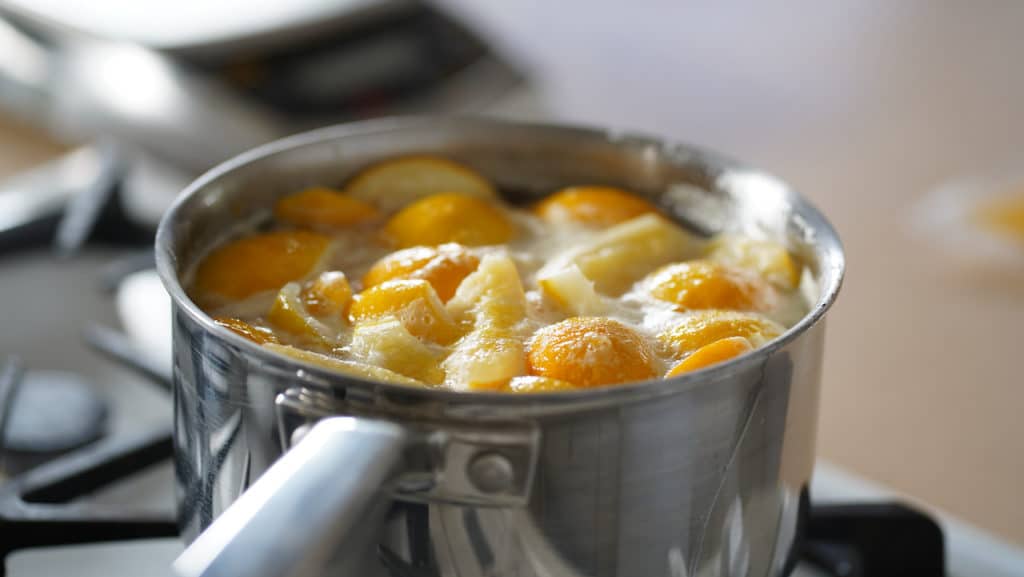

Poached Lemons / Sous-Vide Method
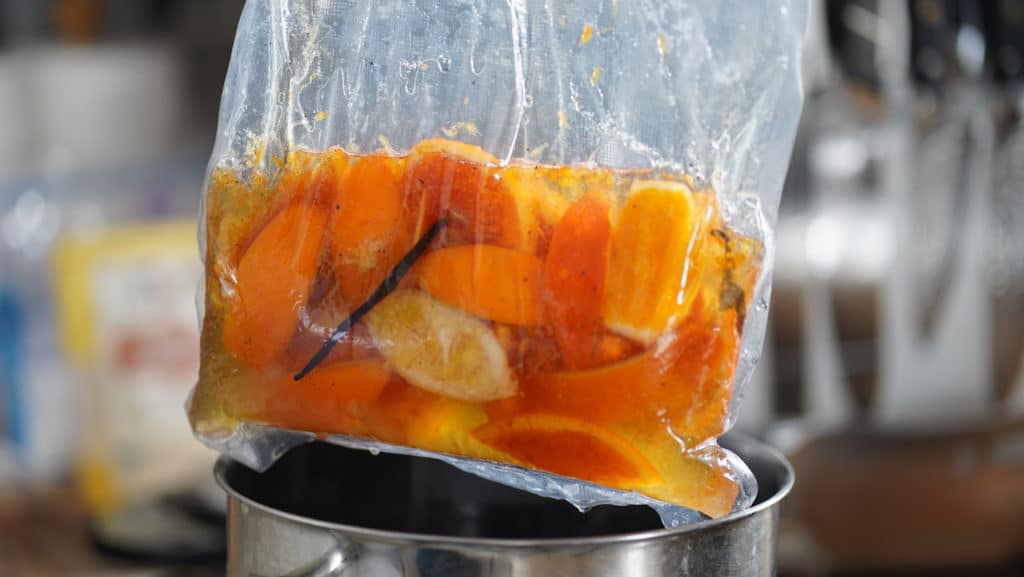
- Place the lemons and sugar in a large vacuum-sealing bag. Seal immediately, as the lemons will otherwise start to release juice and compromise the sealing process—unless you are using a professional-grade vacuum machine.Fill a large pot with water and preheat it on the stove, then turn off the heat. Set your sous-vide circulator to 187°F (86°C). Submerge the sealed bag in the water and cook for 5 hours. About one hour into the cooking process, gently massage the bag to redistribute the sugar. Once cooked, allow the bag to rest at room temperature for 3 hours, then transfer it to the refrigerator.
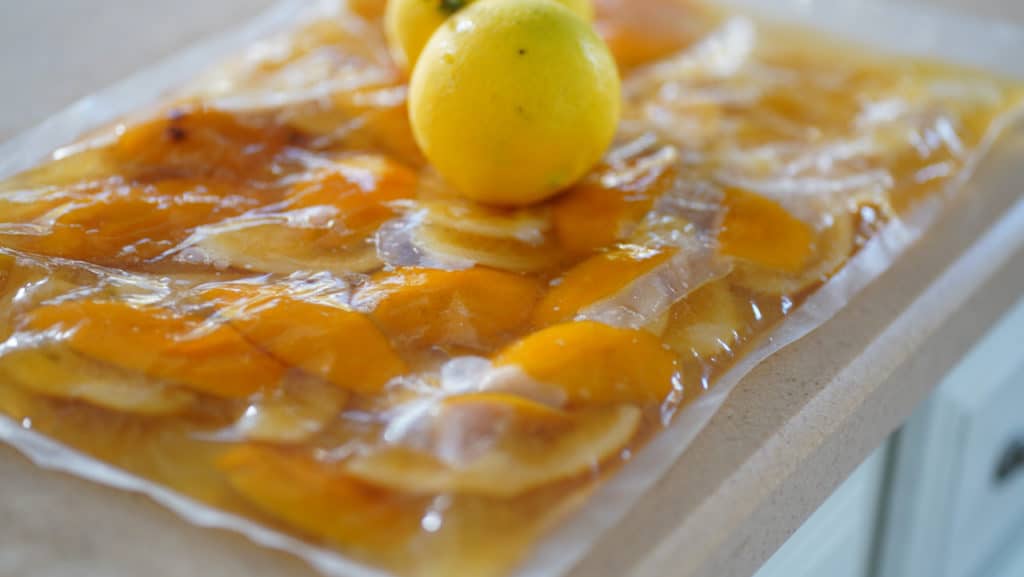

Poached Oranges
- For the cooking and sous-vide method, follow the same protocol as previously described. The oranges, however, require blanching to soften the skin before cooking. To do so, place the wedges in a saucepan, cover with cold water, and add a generous pinch of salt. Bring to a boil, then drain immediately. If desired, repeat the process a second time without adding more salt. Cook at 190.4°F (88°C) for 5 hours.

Candied Lemons or Oranges
- Lemon confit or candied lemons are more concentrated in sugar and firmer in texture than their semi-confit counterparts. They are ideal for use in panettone, king cakes, and chocolate-covered orange peels. The citrus peels can be cut into small sticks (bâtonnet) before being confited.
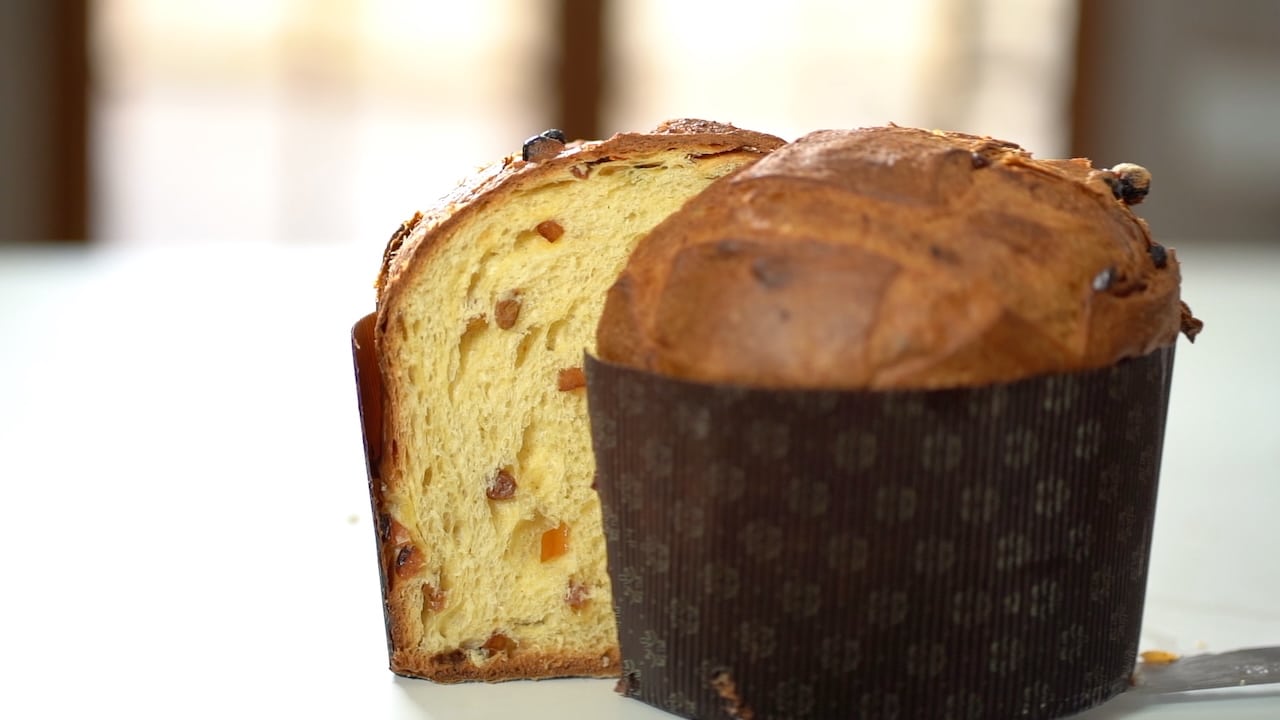
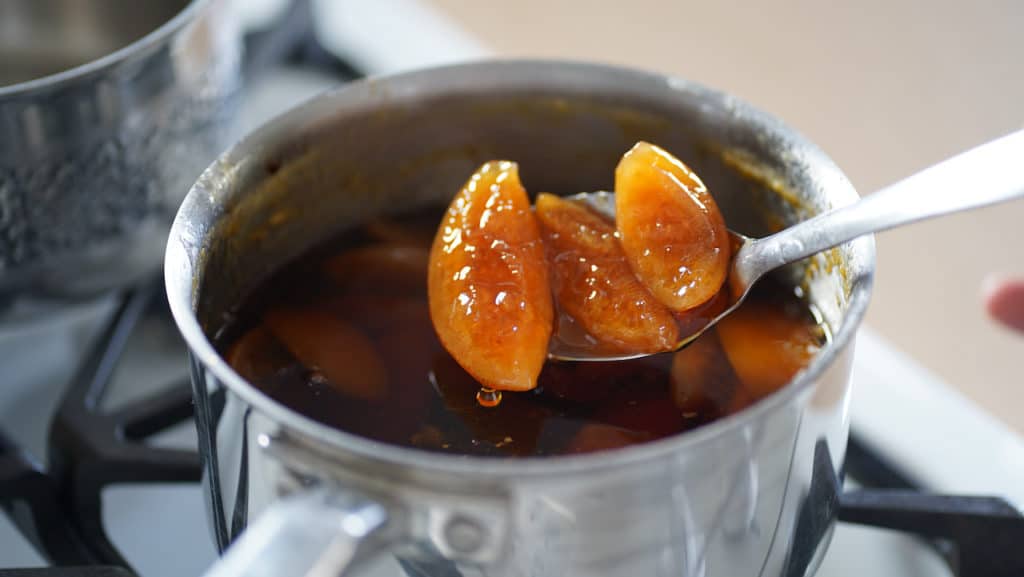
- Combine the lemons, water, and sugar in a large saucepan. Simmer gently over very low heat for about 4 hours, until the lemons are fully candied. A candy thermometer should read 221°F (105°C) at this stage. Leave the lemon confit in the saucepan with its syrup and allow it to cool to room temperature overnight. Transfer the lemon confit along with its syrup into jars for storage.


Storage and Using the Leftover Syrup
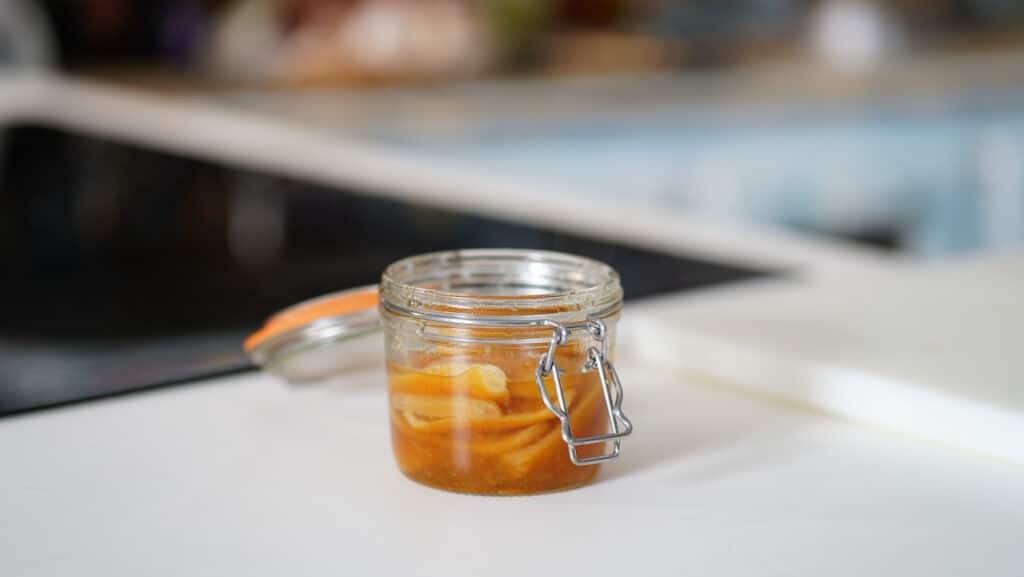
- Poached lemons can be kept for up to 12 months. Once bag is opened, lemons can be re-vacuumed sealed, or canned, or kept in jar for up to 3 months. The candied / confit lemons can be stored in a cool, dry place for up to 12 months or much longer in the freezer.If you opt for vacuum sealing, be sure to drain the lemon slices well before bagging them; refrigerated, they will keep for well over a year. As for the remaining syrup, it's far too precious to waste—brush it over sponge layers for pastries, or shake it into cocktails for a fragrant, sweet-tart lift.

Ready to discover this recipe? You're only 1 step away.
This recipe is only accessible to registered members!
Create your account to access all recipes and content of my website.
Join us now and enjoy more 800 recipes (Mostly French with European Influences, American Classics and Asian fusion)
Already register? Sign in
