
Please note that the full access to this content needs a "Year at the table" subscription: please sign up.
It starts with the flour: pure wheat flour—farine de froment...
This recipe is a protected and only available for paid members. To obtain the full step by step recipe and detailed ingredients list, please sign up.
Preview the recipe
Why the Old-Fashioned Way Tastes Better
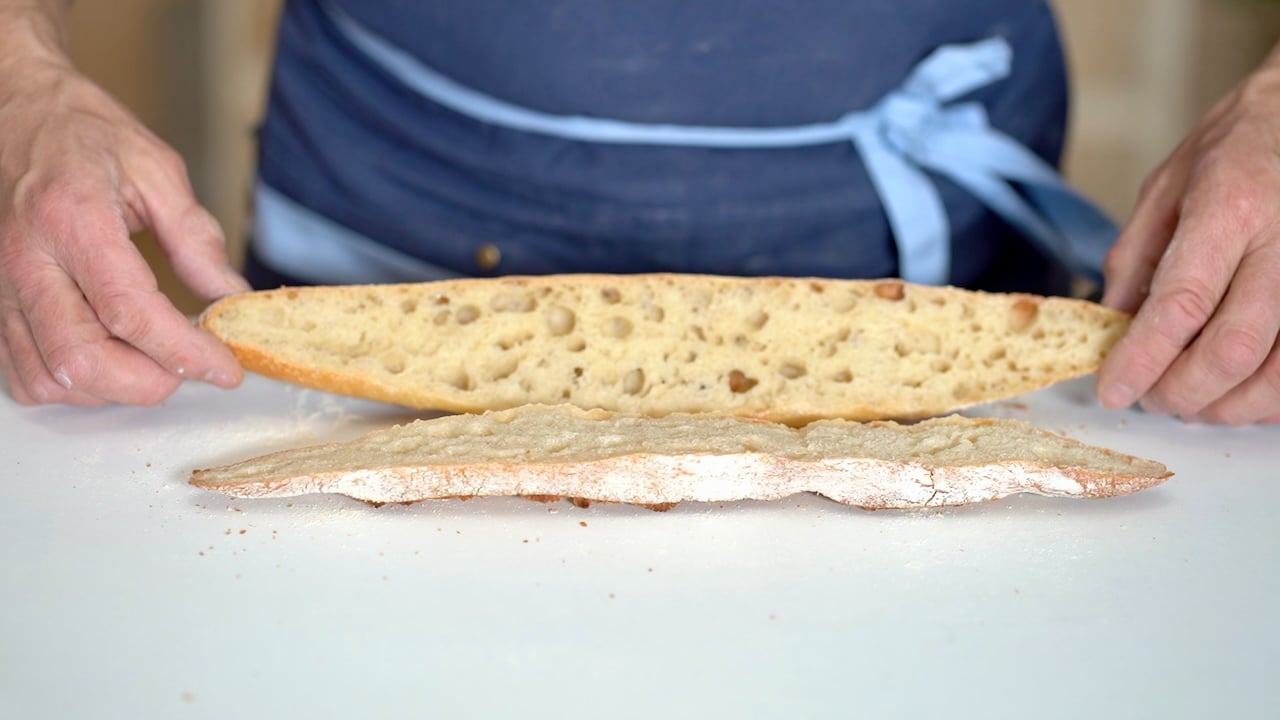
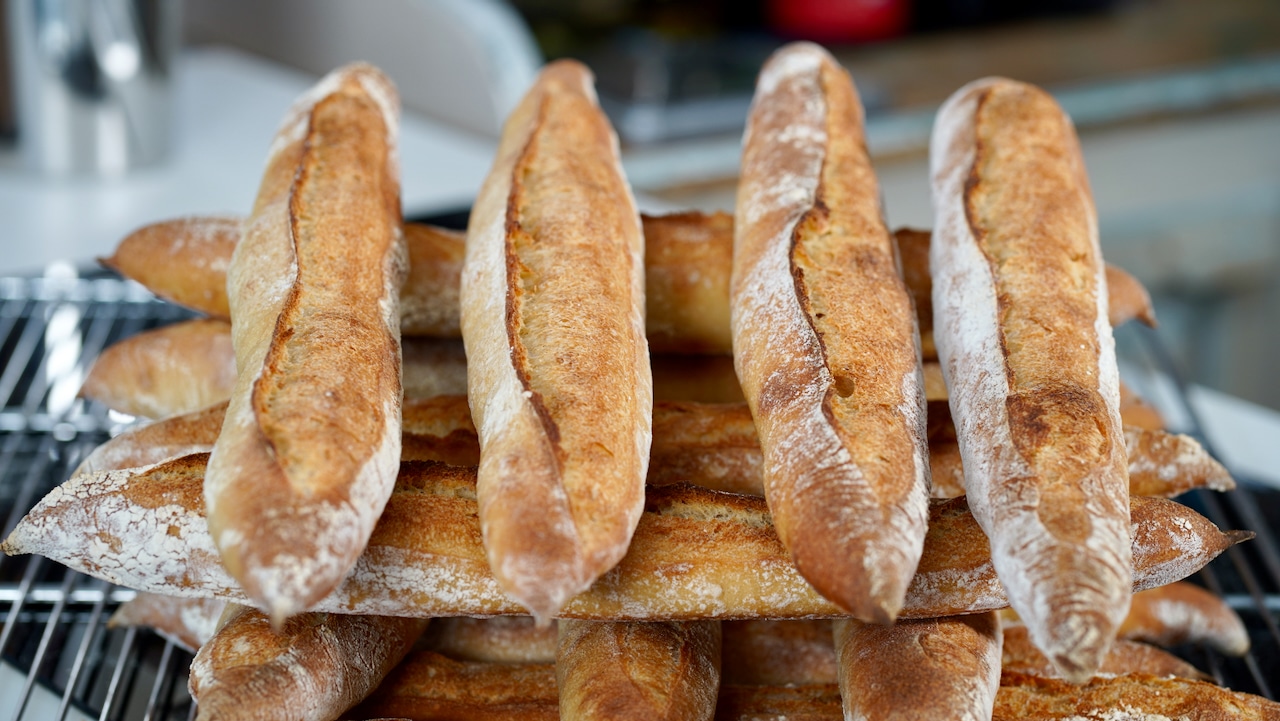
- The first thing you'll notice is this unique, honeycomb-like crumb with a beautiful yellow tint. In France, we call this l'alvéolage du pain. But notice—it's not excessive. I'm not a fan of over-hydrated baguette doughs that often end up with massive holes and a texture that's just too light and airy.I want my baguette to have some substance. I want it to be able to absorb butter, spreads, and jams without them dripping right through. It needs a pleasant chewiness—a baguette you can really sink your teeth into.

What is Traditional Bread Flour
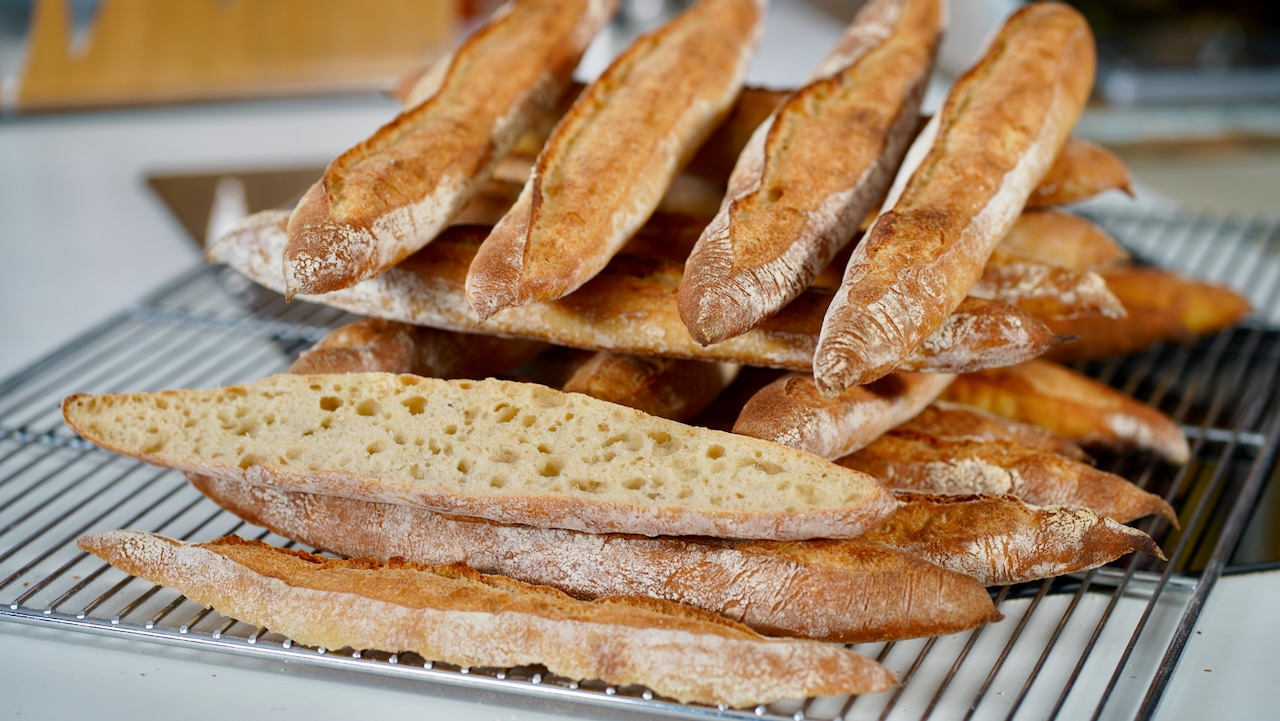
- Traditional French bread flour is specially formulated for crafting authentic French breads using time-honored methods. It contains no added gluten or enhancers such as ascorbic acid. A traditional T55 or T65 flour produces a creamy crumb with beautiful air pockets and a golden, crispy crust—the ideal characteristics of a classic French baguette. This flour typically has a protein content of approximately 10%, a gluten level of 6-7%, and a W value of 200. In the US, a good brand of unbleached all-purpose flour can achieve similar results. My best advise is to look around reputed French bakeries and I mean the one that's got the best online bread reviews not grotesque copycats.

Pro Tips
- This recipe yields ten 400g baguettes or twenty baguettes or flûte scaled at 210g. I would recommend the smaller baguettes for home bakers unless your oven is larger than average. Also, this recipe can be divided by three if using a 7-quart/L stand mixer.
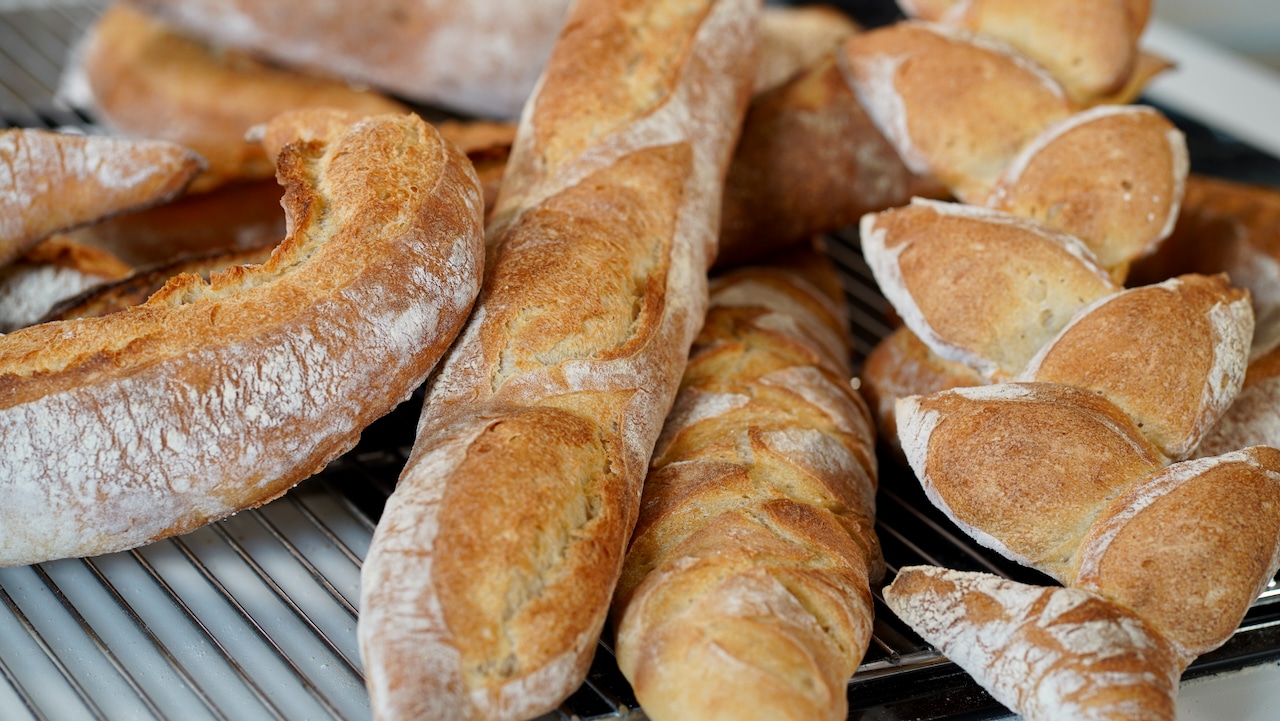
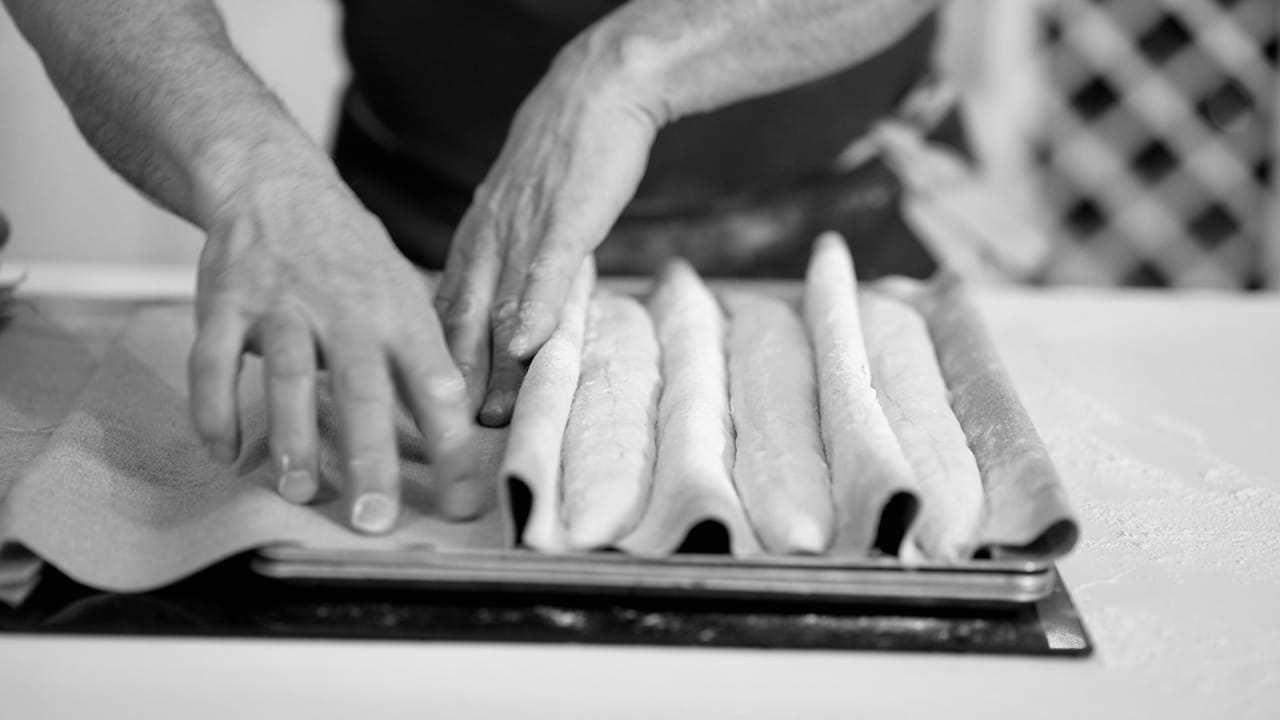
- At home, to better manage the proofing and baking schedule, prepare your bakers couches accordingly. Cut each couche to roughly twice the width of your baking tray—each one should hold four baguettes. Keep in mind that the baguettes will not all be baked at the same time. Instead, plan to bake four baguettes every 45 minutes (allowing 20 minutes for baking and about 20 minutes for the pizza stone to reheat to 250ºC). To prevent the remaining dough from over-proofing while waiting to be baked, the other 16 baguettes should be kept at a cool temperature, around 5 to 10°C. You can store them covered in the refrigerator, or outside if the weather is cold enough.


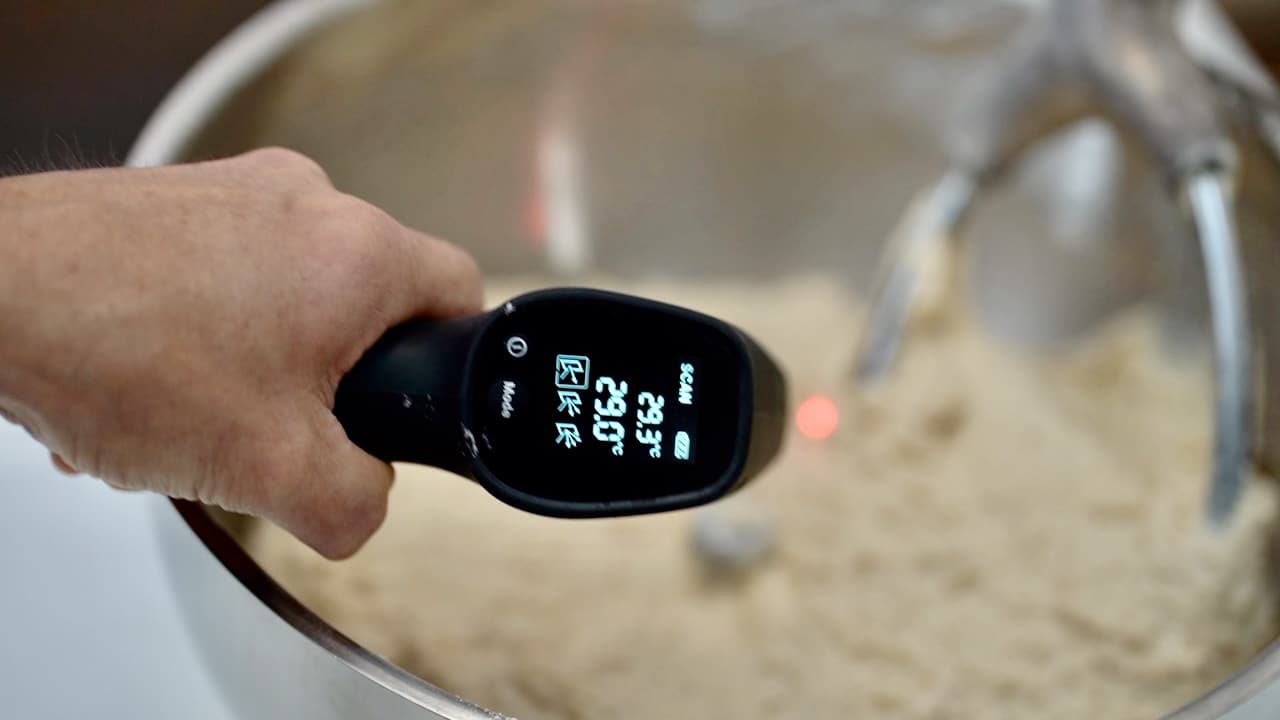
Basic Temperature: 75ºC
- This ancient baguette recipe calls for a desired dough temperature (DDT) that is warmer than most bread recipes: 28–30°C versus the standard 24°C. This higher temperature is intentional, as the method incorporates three specific factors: a slow and short mixing process, a low amount of yeast, and a four-hour bulk fermentation interrupted by a degassing intervention every hour.For example, during winter, if the room temperature and flour are both at 18°C and the friction factor is insignificant (≈1 degree celsius).75-18-18-1= water temp set at: 38/39ºC.Summer: 75-24-24-1= water temp should be set at: 24/25ºC. You also want to lower even further the amount of yeast by 2.

Kneading
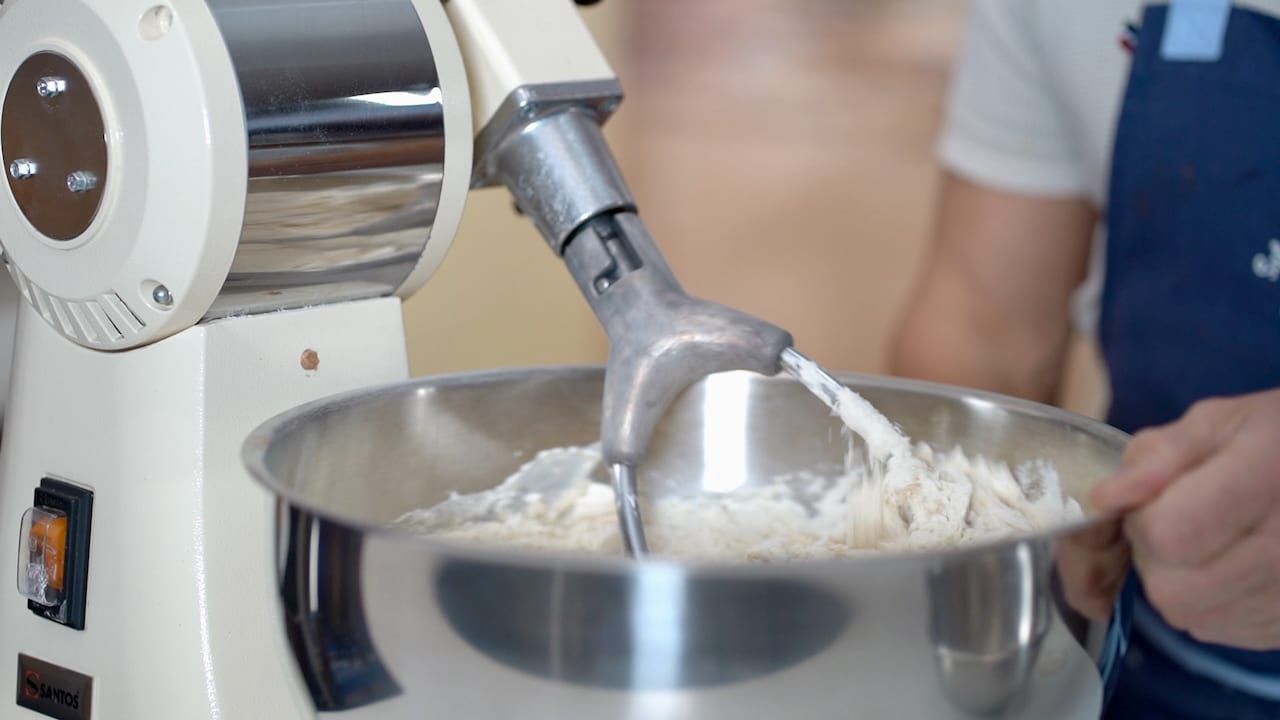
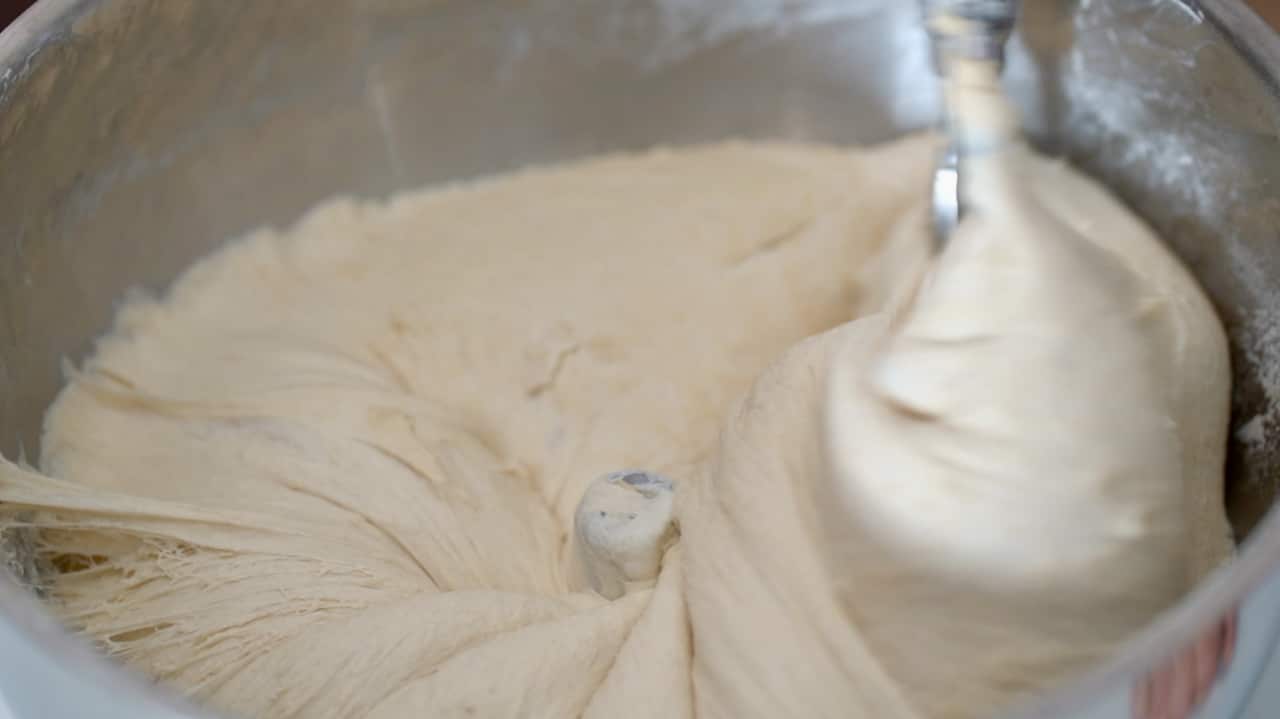
- First, pour the water into the mixing bowl and sprinkle in the fresh yeast. Add the flour and salt, then mix on low speed for 8 to 10 minutes max. Pause the mixer occasionally to scrape down the sides of the bowl and the dough hook.The dough does not need to be mixed beyond this point. We are not aiming for a fully developed dough that passes the 'windowpane test'; instead, we want the dough to be slightly under-mixed. The gluten network will develop during the bulk fermentation.

Bulk Fermentation
- Cover the dough and let it ferment for 4 hours. During this time, the dough must be degassed 3 times (once every hour).
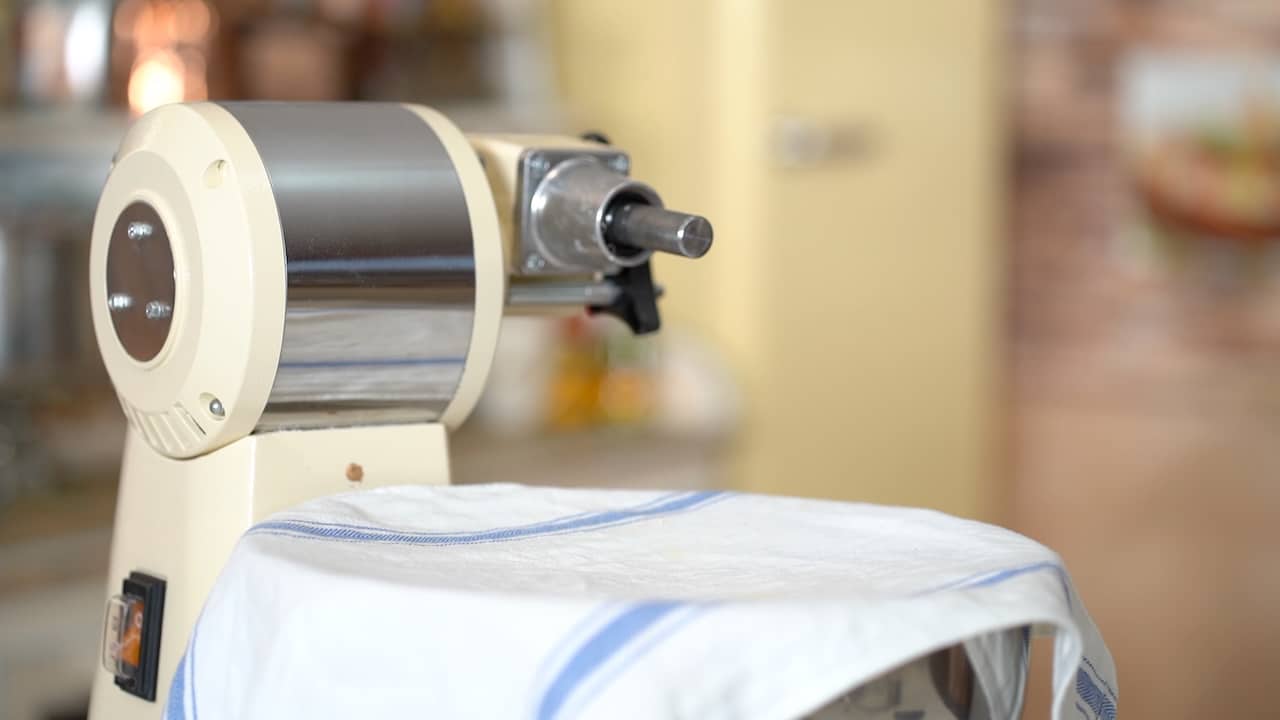
- This bulk fermentation can take place in the mixing bowl; to degas it, simply turn on the mixer briefly each hour, then re-cover the dough.


Dividing Dough
- Flour the work surface and the dough. Use the plastic dough scraper to release it from the edges of the bowl. Gently turn the bowl over (now, the skin is down).
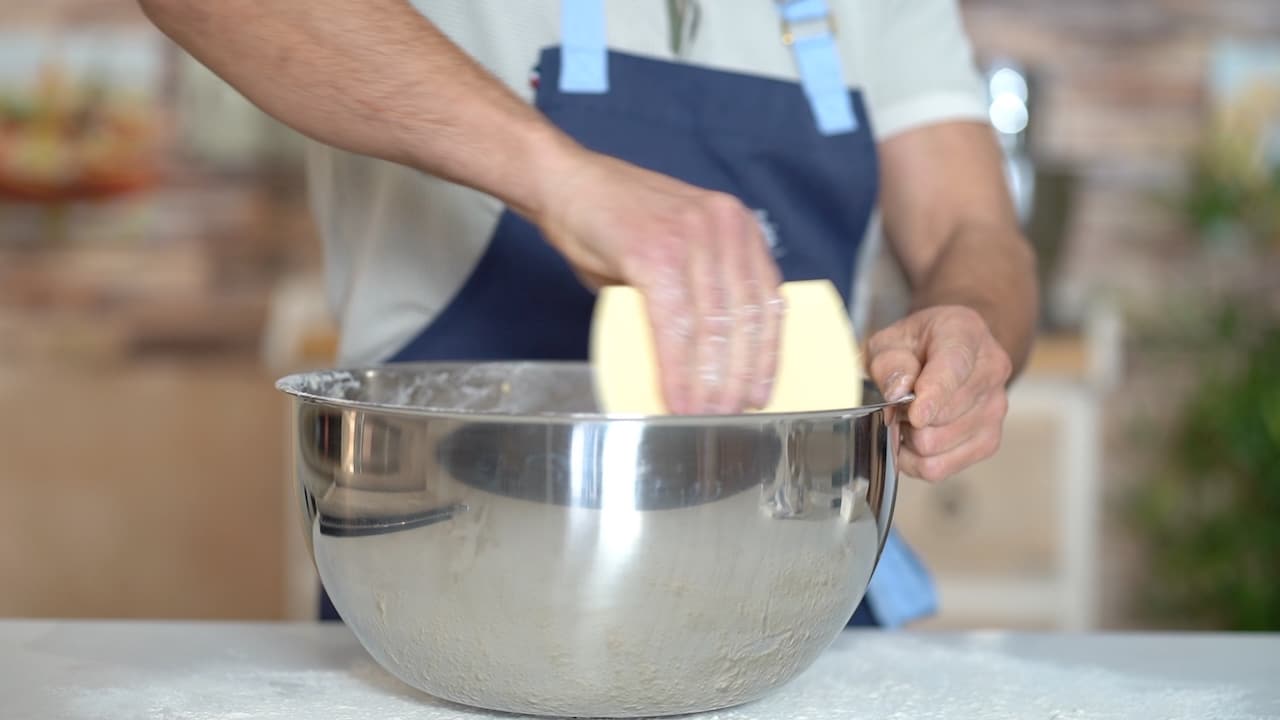
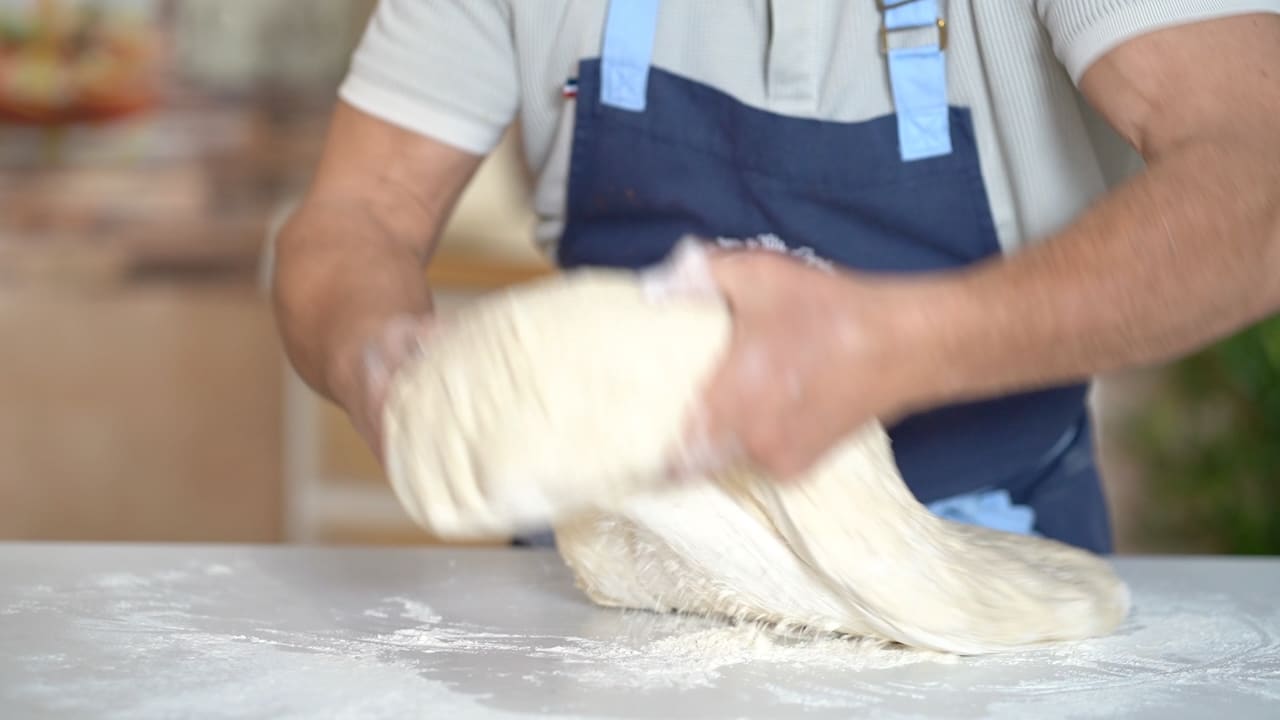
- Reposition the dough (skin side up) into an elongated rectangle.
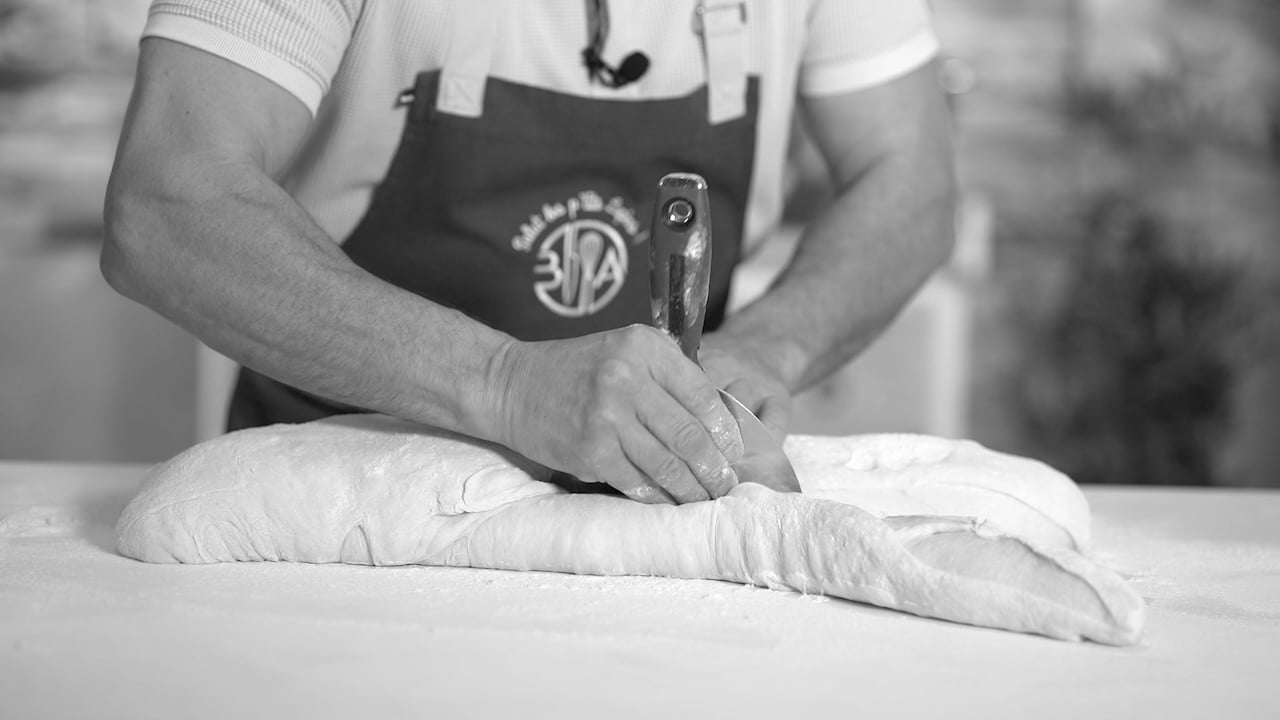
- With the help of the large triangle dough scraper or chef knife, cut the dough lengthwise into three equal potions. This procedure will ease the next portioning step. Flour dough between cuts.
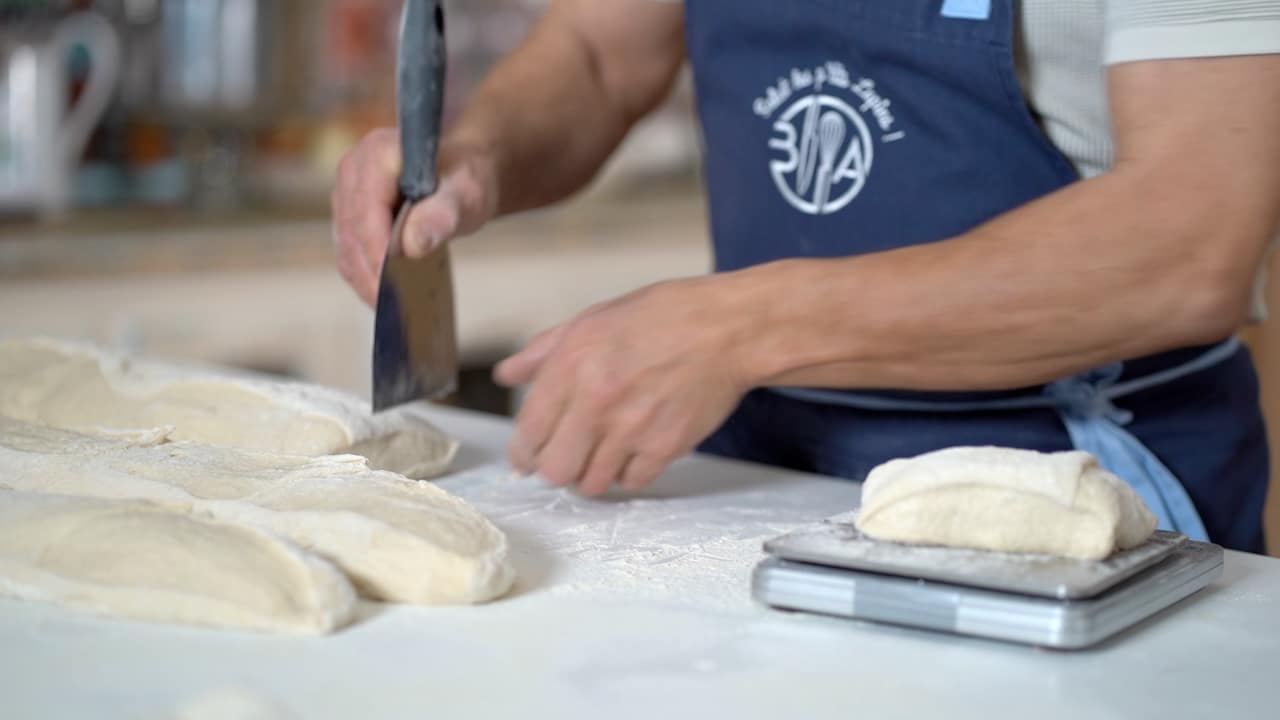
- For bakery-sized baguettes (unless you have a 95L oven with a 22-inch/55cm width pizza stone), divide the dough into ten 400g portions. For half-size baguettes/flûtes (best for home baking), divide it into twenty 210g portions. Keep the pieces in order, arranged left to right in neat rows. This way, the first piece scaled is the first one shaped, ensuring a consistent process from start to finish.


Bunch Rest
- Bench rest is the period during when dough is allowed to relax on the work surface after pre-shaping and before final shaping. Gently deflate each piece skin side down, then shape it into a smooth oval approximately 6-inch/15cm in length. Dust with flour only as necessary, taking care to prevent excess flour from becoming trapped inside the folds.
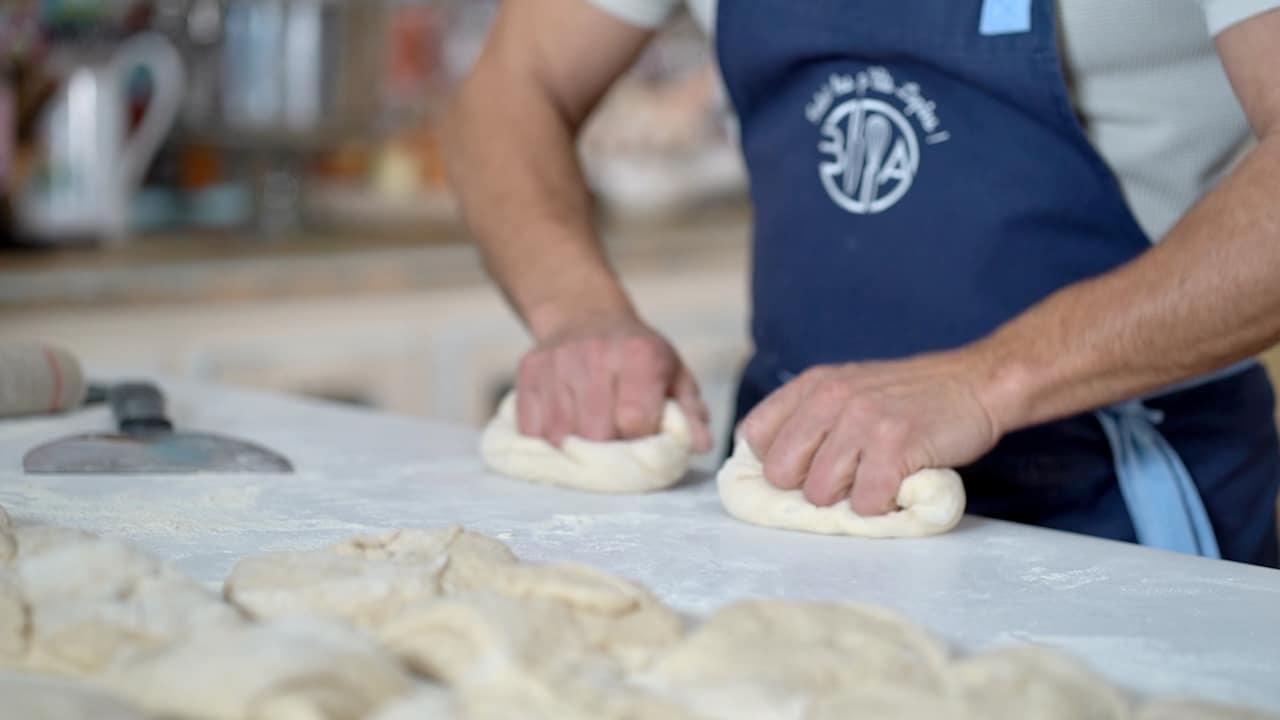
- Cover the pre-shaped dough and let it bench rest for 30 minutes.
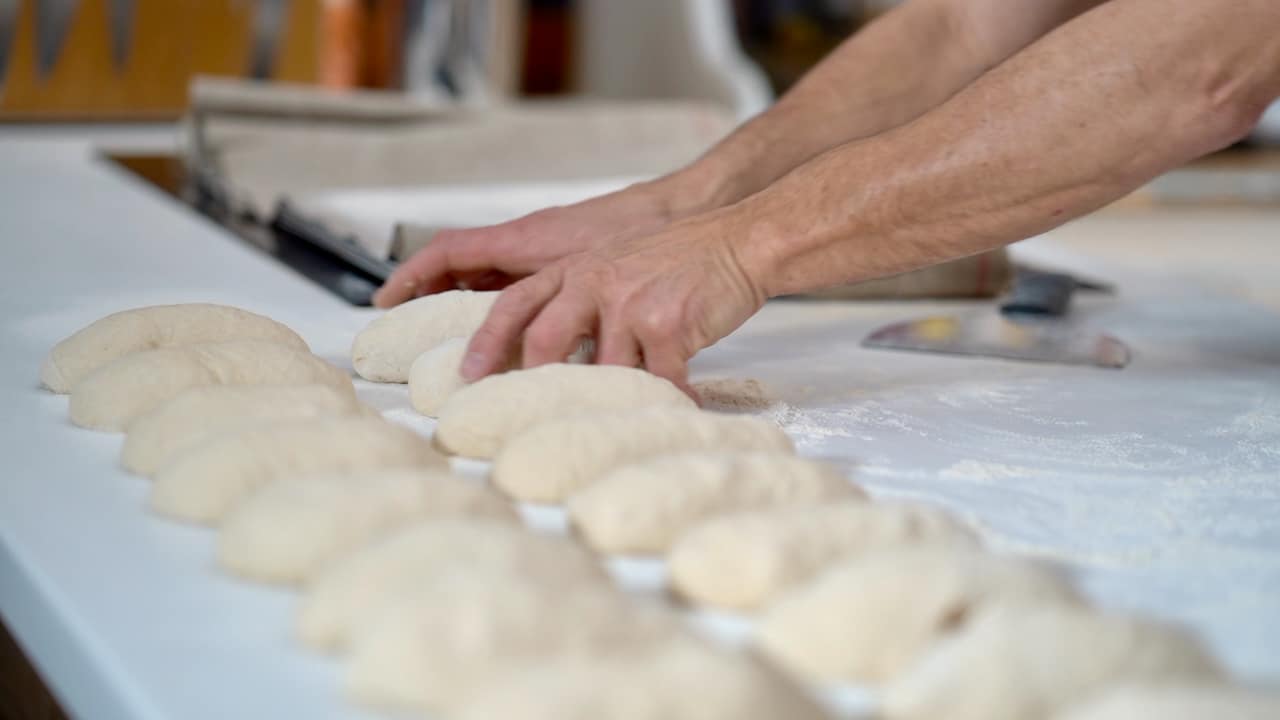


Old-Fashioned Baguette Shaping Technique
- Flour your baker's couche. To shape a baguette properly without damaging its built-up structure, you must first ensure your work surface is spotless. Uncover the rested ovals/batards. Lightly dust the breads, your countertop, and your fingertips with flour. Grab the first shaped batard from the upper left row, gently stretch it, and lay it skin side down. Gently degas the dough using your fingertips.
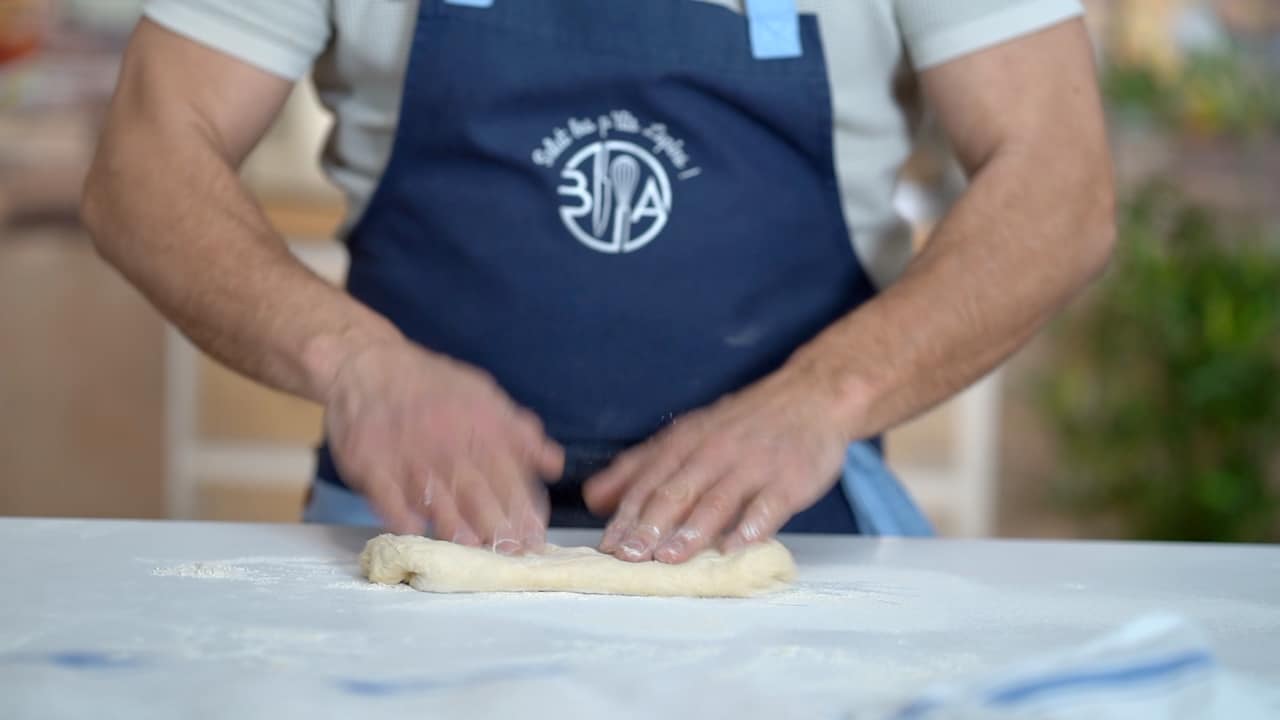
- Fold the upper half over and seal it with the palm of your hand, maintaining a well-proportioned log.
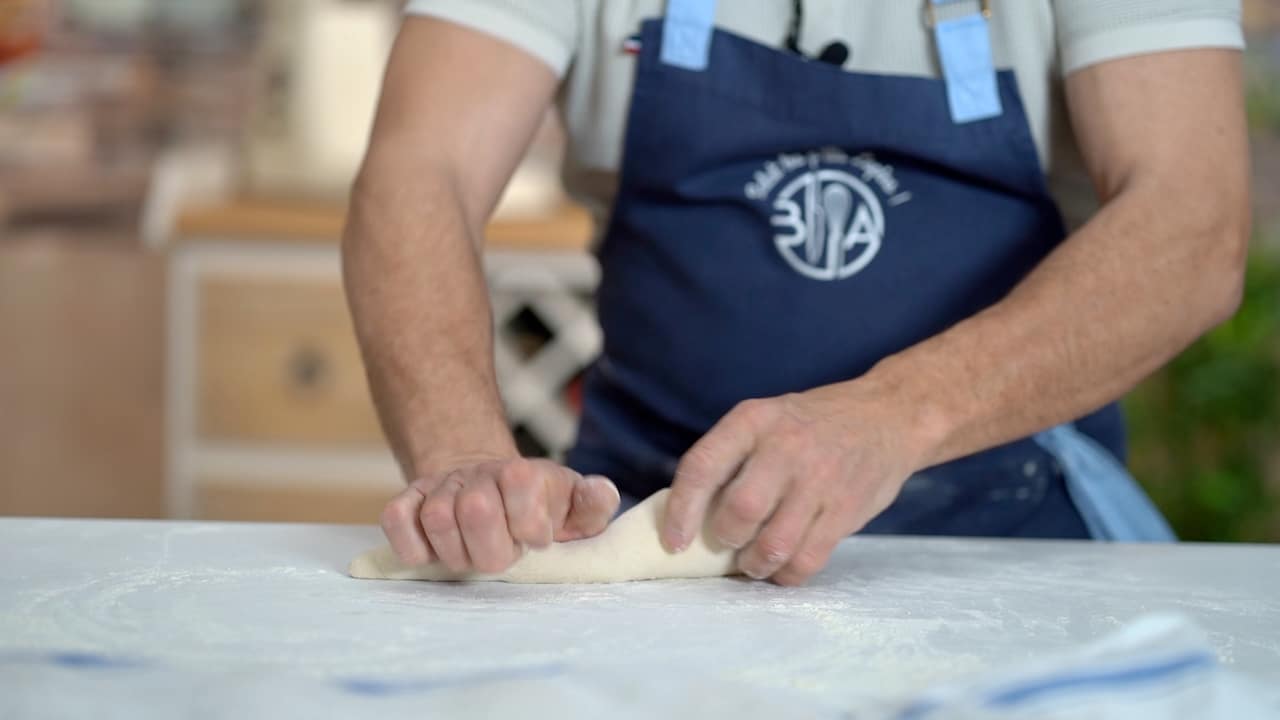
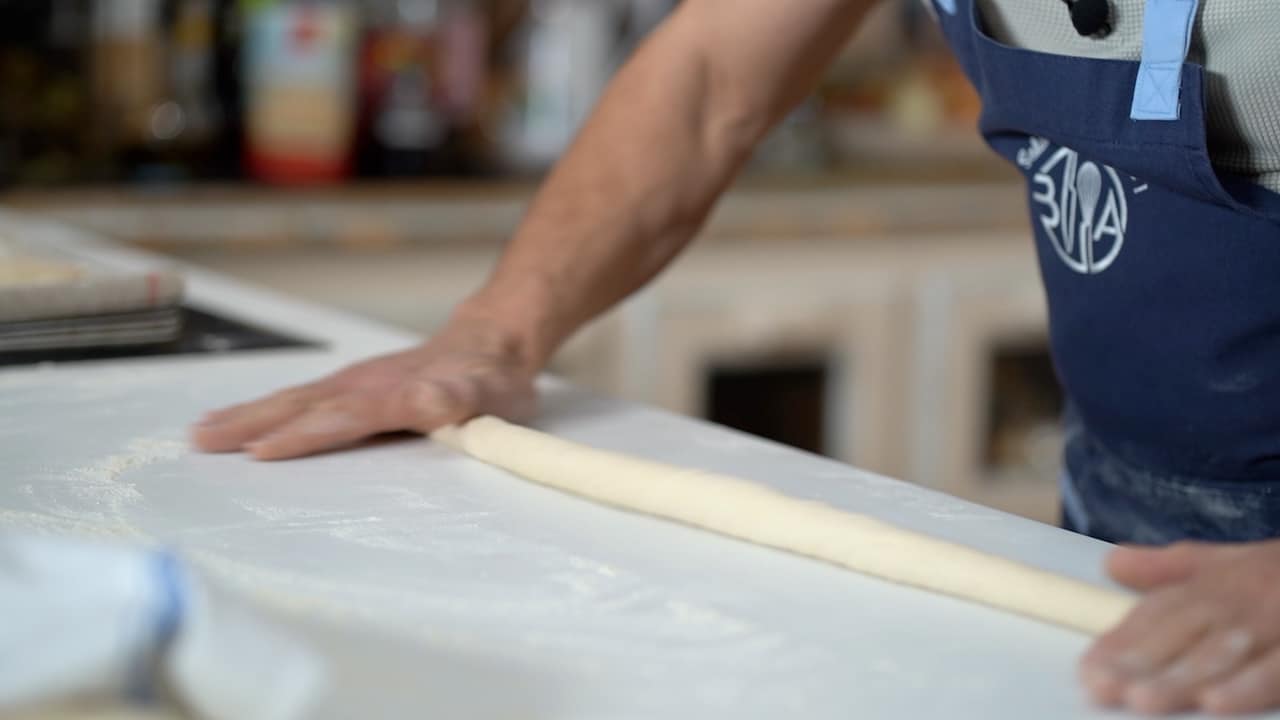
- Repeat once, then stretch and roll it into a 15-inch (38cm) cylinder—about the length of your baking tray/pizza stone.
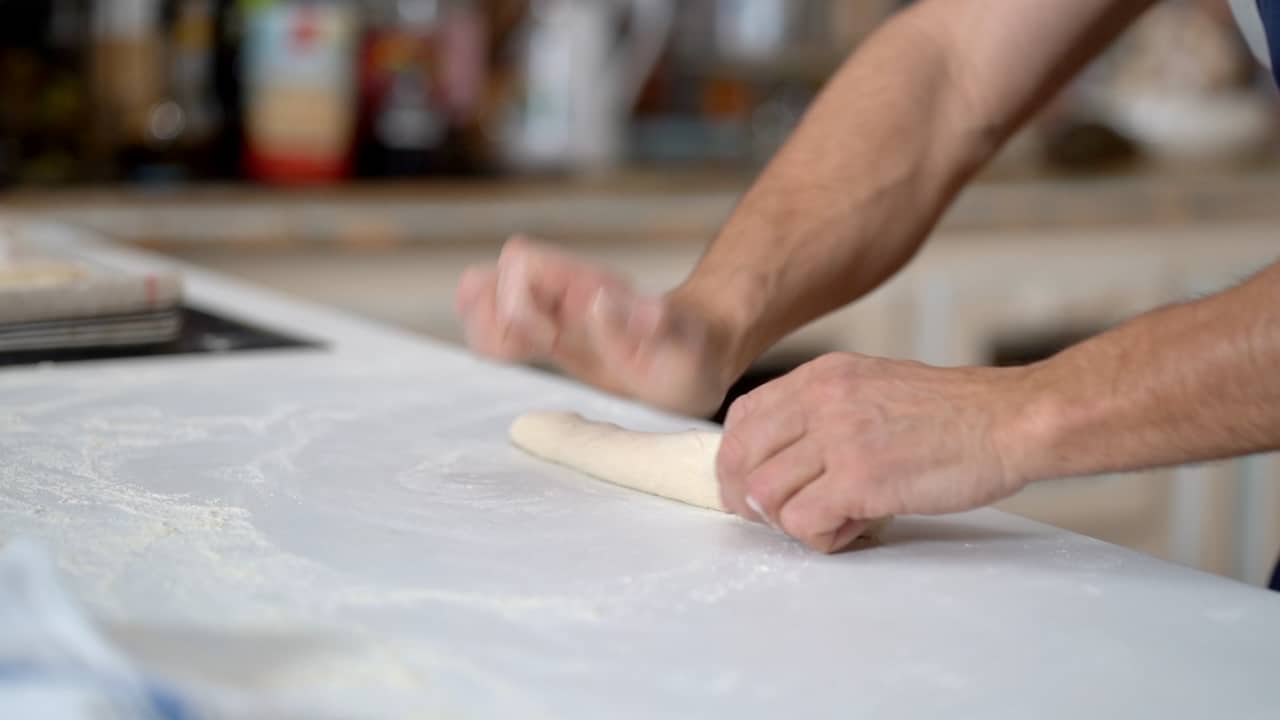
- To create a finish that is both epic and old-fashioned, the baguette ends can be tapered into a pen tip. To do so, swiftly press and roll the ends into sharp points with minimum flour.
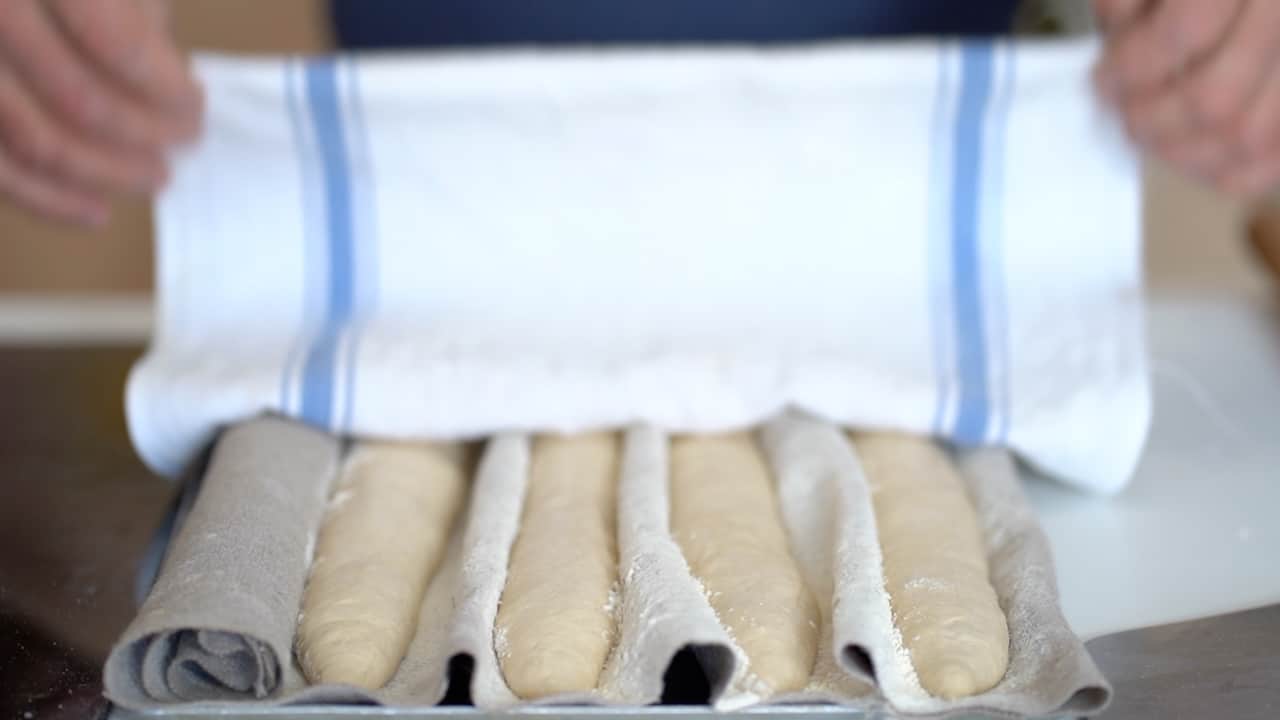
- Arrange 3 baguettes onto the floured couche at approximately 3-inch (7.5 cm) intervals (seam side up for a better development). Lift the empty spaces upward to create a natural barrier, then lay the fourth baguette next to it. Roll up what's left of the couche toward the last bread side. This will allow the baguettes to keep their oblong shape during proofing.


Proofing
- If the weather is dry and warm, cover the baguettes with a lightly moistened towel during the proofing step. If making baguettes at home, keep 16 shaped baguettes (4 trays) in a cool temperature as suggested above, and leave just one tray out (4 baguettes). It will take about 45 minutes to an hour for them to proof.
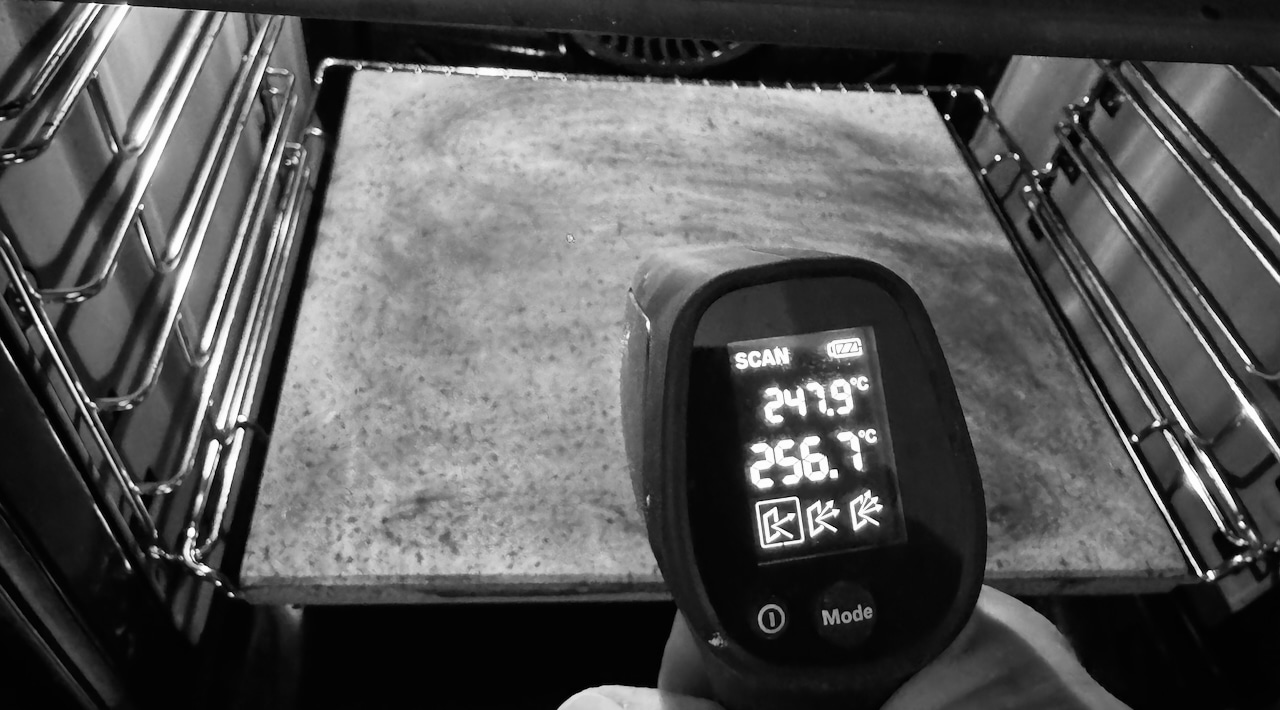
- Preheat your conventional oven to 480ºF/250ºC with the pizza stone positioned on the bottom third of the oven for 45 minutes before baking your first series of 4 baguettes.


Baking
- Lightly dust the top of the proofed baguettes. Using a pizza peel or wooden board, grab the corner of the couche, lift upward, and carefully reverse the bread onto the edge of the peel (skin facing up)...
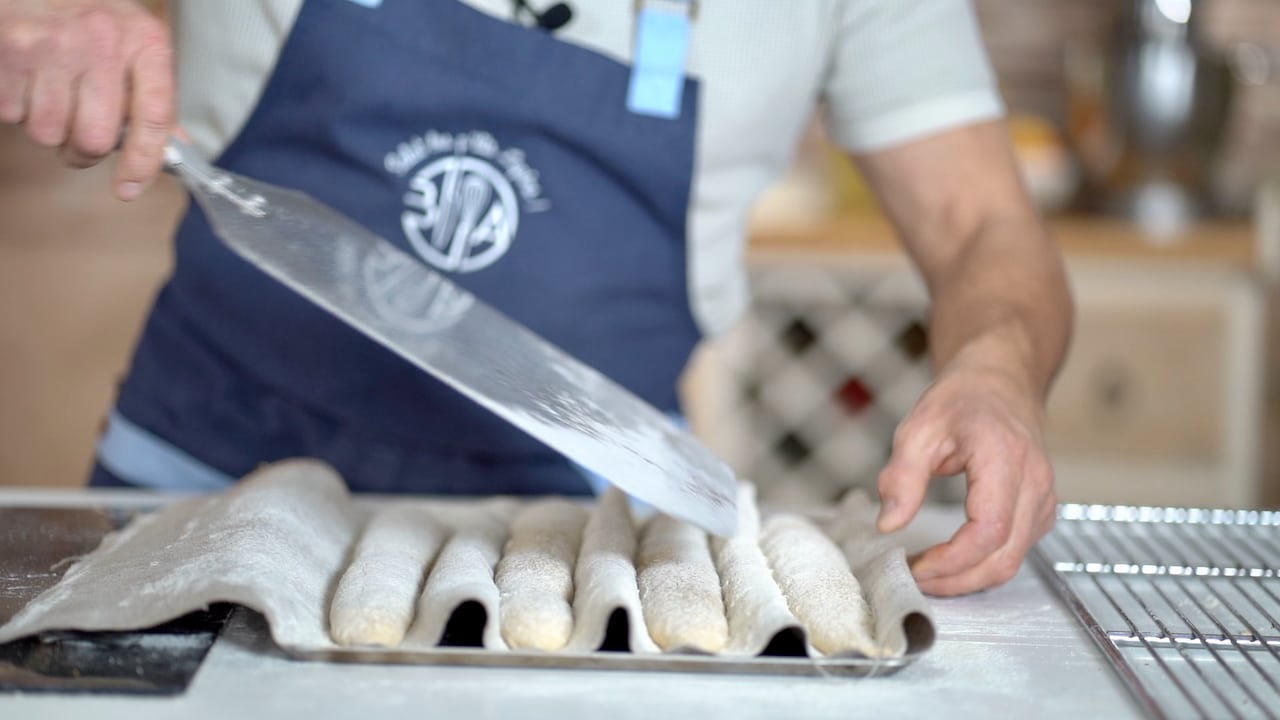
- ... and carefully slide it onto the hot pizza stone (skin facing up).
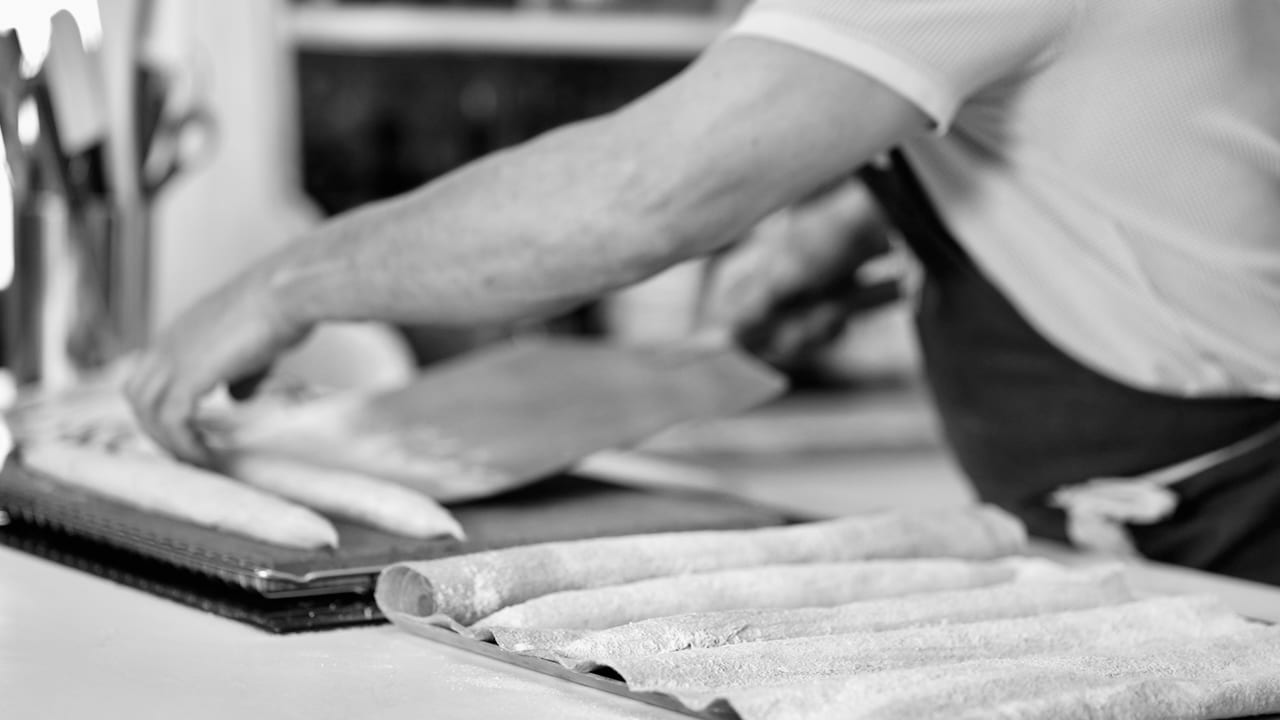
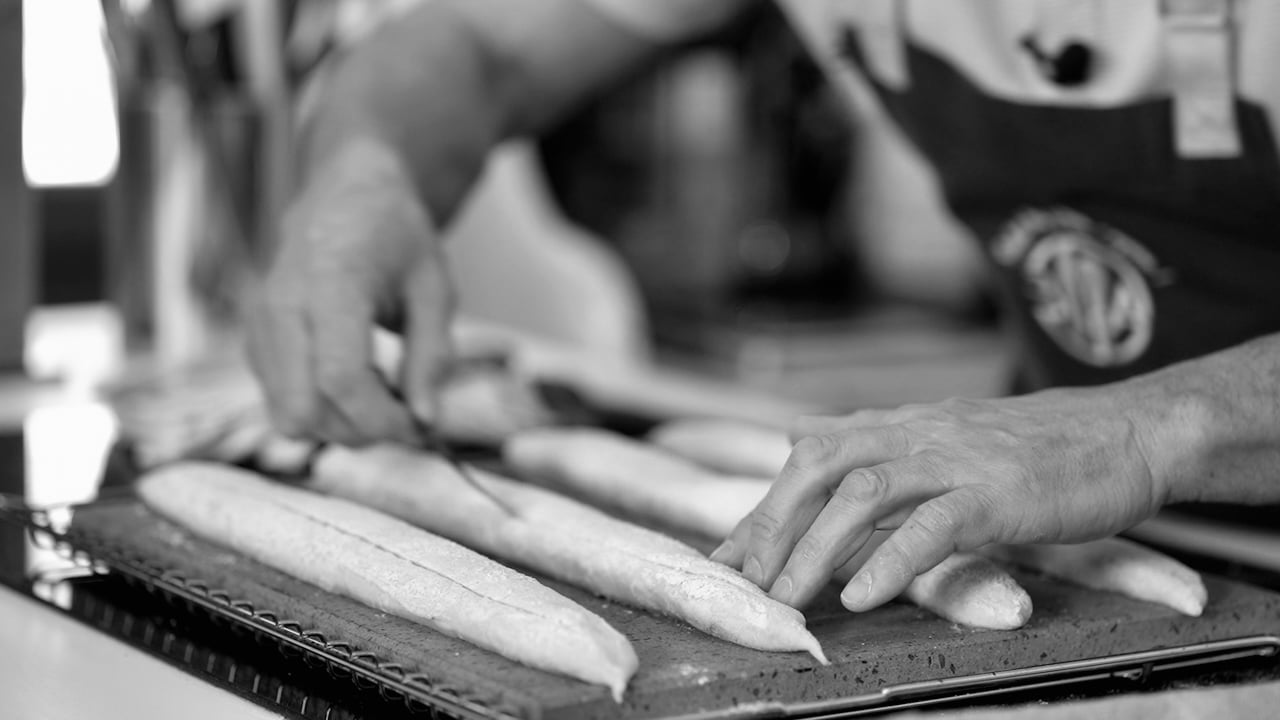
- Score each baguette lengthwise once. Spray water inside the oven, then bake the 4 baguettes for 18 minutes at 465°F/240°C. Carefully open the oven door to let the steam escape, then leave the baguettes in for 2 more minutes.
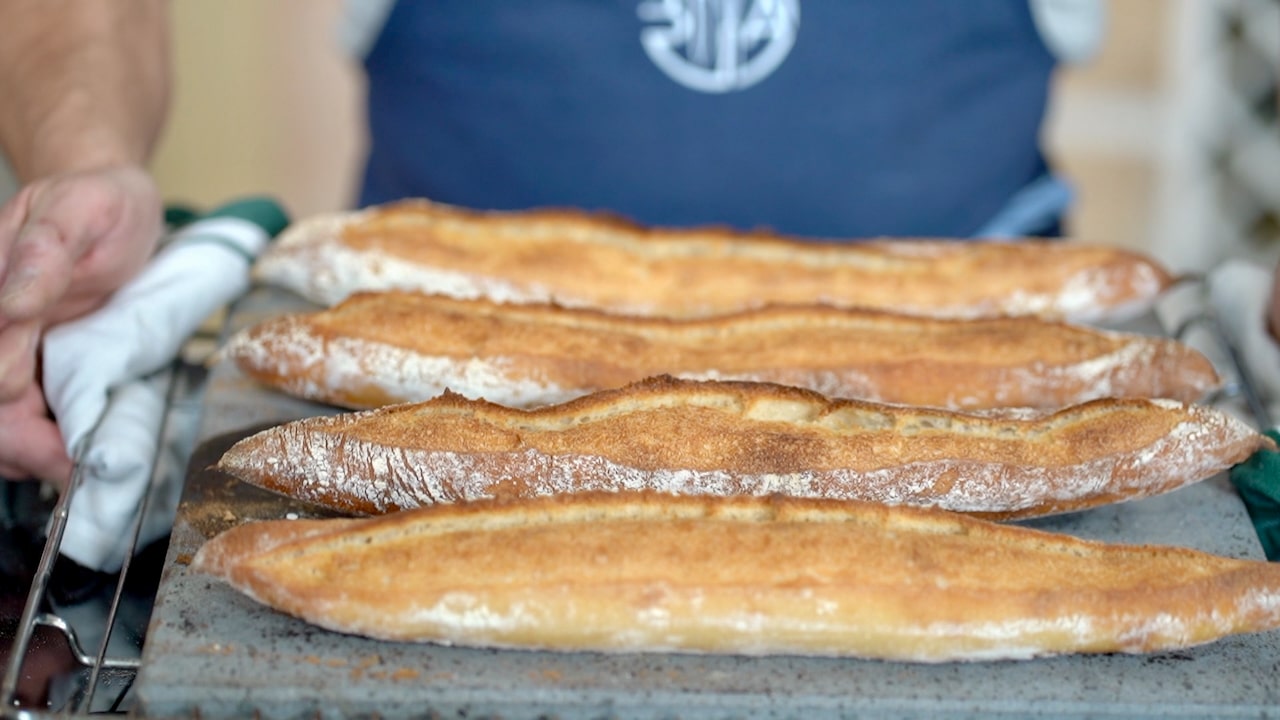
- Transfer them to a wire rack to cool. Immediately, reheat the oven to the same temperature and repeat the same baking process for the remaining baguettes.


How to Store Baguettes
- Baguettes are a type of bread that, due to their narrow shape, dry out faster than other kinds. Therefore, they should ideally be eaten within 24 hours. Note that old-fashioned baguettes and those made with natural leaven will keep longer. However, after a day, reheating them isn't a bad idea.For later events: To enjoy them as crispy as they were on the first day, store them in sealed freezer bags just a few hours after baking—they can be kept this way for up to two months. An hour before serving, place them in a preheated (220ºC) oven, turn it off, and leave them inside for 5 minutes. Let the baguettes rest at room temperature for 30 minutes before eating.

This content is part of the PREMIUM SECTION

This recipe requires a All-content access subscription. The Premium section includes more than 50 essential recipes from French pastry and a special section for mastering artisanal bread.
The Premium section is only accessible with "A year at the table" subscription. Discover it with special first year discount.


