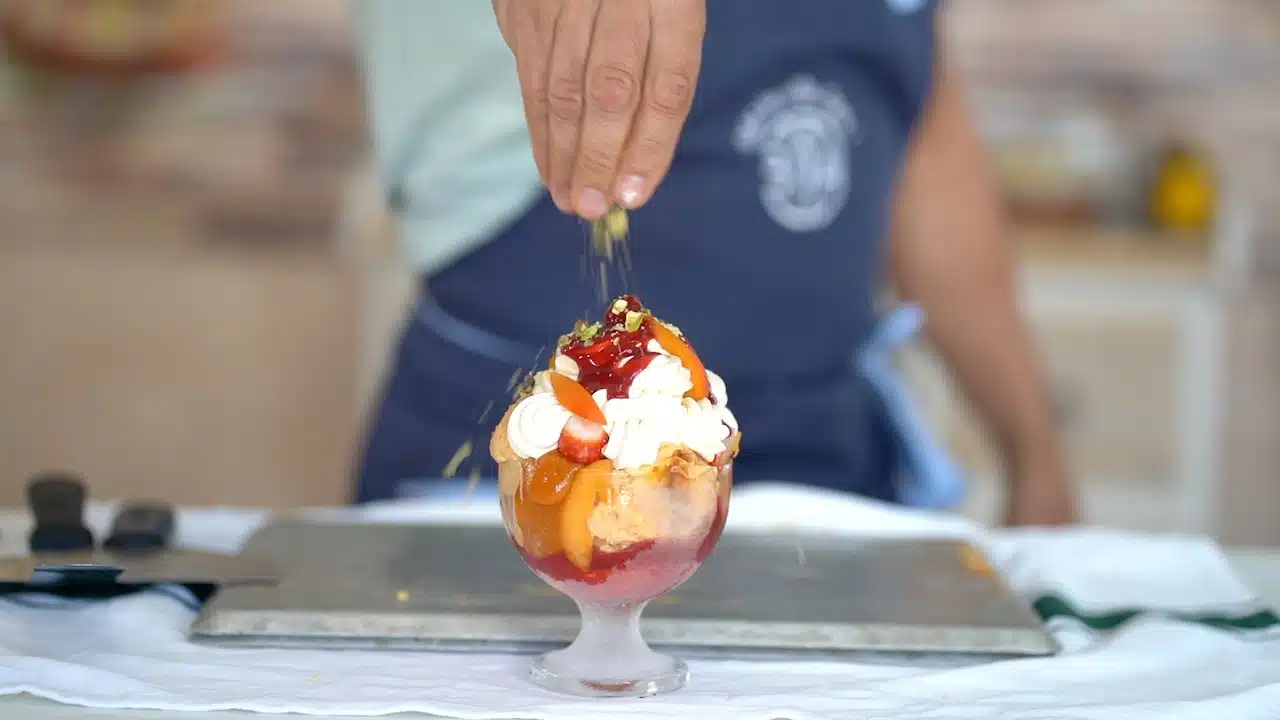
Please note that the full access to this content needs a "Year at the table" subscription: please sign up.
The ethereal magic of meringue
This recipe is a protected and only available for paid members. To obtain the full step by step recipe and detailed ingredients list, please sign up.
Preview the recipe
Before You Start
- Always work with spotless tools and clean egg whites. Any fat or flour dust interfere with the formation of a good foam. Egg whites at room temperature can be beaten to a foam more easily than cold egg whites. However, when making meringue for savory or sweet purpose, the protocol remains the same. As you beat the egg whites (medium speed), they’ll come to room temperature whipping tiny bubbles into the mixture. Foamy is the first stage of beaten egg white. The second stage of egg white beating comes after the foamy stage, with its large, clear bubbles soft peaks stage, the bubbles are smaller, and the color whitens as the beating continues for as long as needed. and when ready, speed up and beat to stiff peaks.
Egg White Stabilizers
- Cream of tartar, is a byproduct of wine and grape juice processing, is an acidic salt that acts as a stabilizer in recipes. The acidity of cream of tartar helps egg whites achieve their full volume potential, and stabilizes them by helping hold in water and air. A few drops of lemon juice or vinegar can be used instead. Dried egg whites is also used by many professionals in the macarons making. To reconstitute one egg white: mix 1.8g dried egg whites with 25g water. Or, add a couple of pinches dried egg whites to the fresh egg whites along with cream of tartar.Salt promotes the coagulation of proteins, which means egg whites have to be beaten longer to unwind the bunched up protein strands and stretch them into the thin films that encase air bubbles and create foam. Though, salt is justified for meringue in savory recipes only.
French Meringue
- French meringue, or basic meringue, is the best known method to home cooks. Pastry chef’s favorite for various cakes and decors, fairy fingers, mushrooms, macarons, cups, pavlova, vacherin, floating island, lemon pie...

- Begin to whip on medium speed, egg whites with cream of tartar and some of the sugar from the recipe. Meanwhile, prep baking trays according to the themes. Line trays with parchment paper (stick parchment with cooking spray). Parchment shall be lightly greased as well. Silicone baking mat can be used as well. When ready, increase mixer speed to high and add remaining sugar gradually. Sugar interacts with the egg white proteins to help stabilize the whipped egg foam. Always add sugar in a stream, slowly at the side of the bowl while the whites are being whipped. Beat until glossy stiff peaks form.

- Stop mixer, sift powdered sugar into the meringue.

- Fold powdered sugar with a rubber spatula


Piping
- Use a 8mm diameter plain pastry tip for most decors.


Baking
- Place meringue in a 195ºF/90ºC fan oven for 90 minutes. Turn oven off, and leave meringue inside oven for another hour.


Storage
- Since meringues are very sensitive to humidity, store in a dry place in sealed containers with a couple of silica gel desiccant packets. Do not refrigerate meringue. If meringue gets soft for any reason, reheat oven to 285ºF/140ºC. When temperature is reached, turn oven off and pop meringue inside. Leave it for 30 min or until meringue feels dry again.


Swiss Meringue
- Swiss meringue is whisked over a bain-marie to warm the egg whites, and then beaten steadily until it cools. This forms a dense, glossy meringue. Most decors made with the French meringue applies for the Swiss. In addition, Swiss meringue is good for buttercream, baked Alaska and marshmallow.
- Over a bain-marie, beat egg whites with sugar and cream of tartar. Whisk swiftly until temperature reaches 135/140ºF/55/60ºC. During that time, make sure that the bottom of the mixing bowl is not in direct contact with the simmering water. Remove from the heat, and beat on high speed until glossy stiff peaks form.


Baking
- The baking time is identical to the French meringue.
Storage
- Same as the French meringue.
Italian Meringue
- Italian meringue is made with boiling sugar syrup. This creates a much more stable soft meringue which is used in various pastries without collapsing. It is safe to use without cooking. Italian meringue is preferred for buttercream, Chiboust cream, mousses, baked Alaska, marshmallow, lemon pie, macarons and other entremet such as the Champagne orchard Le Verger Champenois.
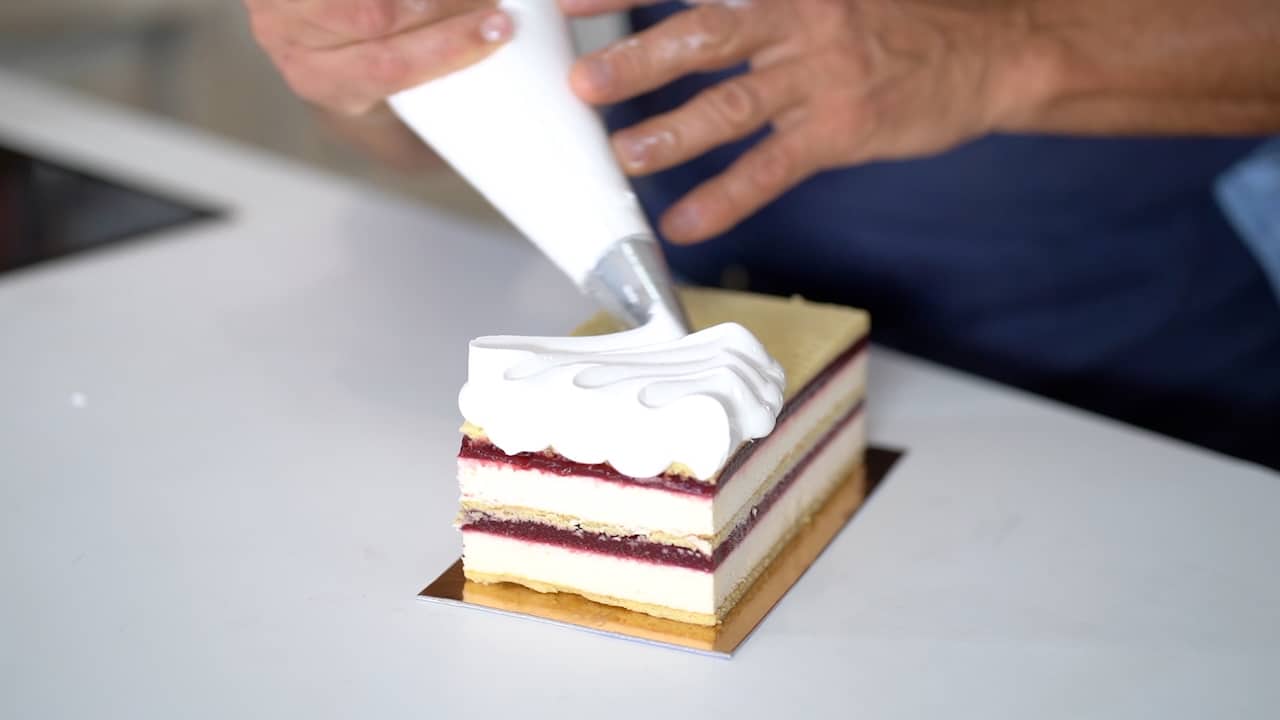
- Beat egg whites with cream of tartar on medium speed. Let it run for as long as needed keeping them to foamy stage.
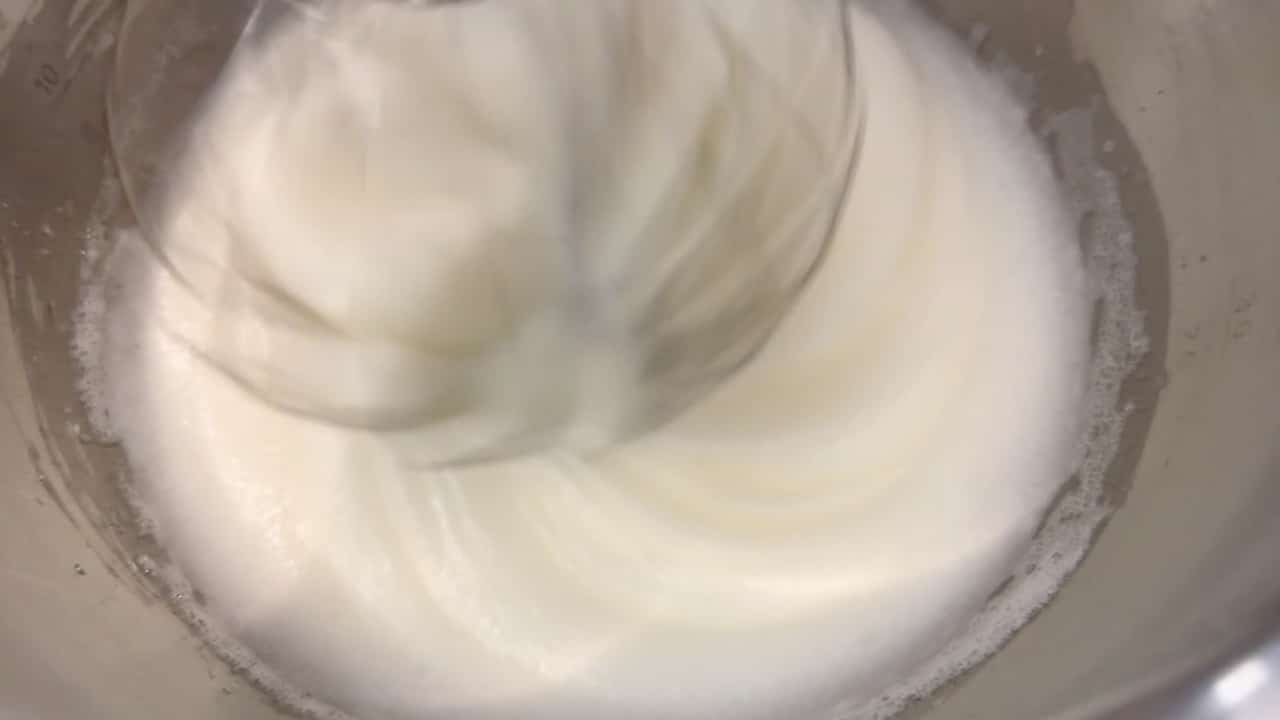
- Meanwhile, place the water and sugar in the small saucepan over medium-high heat. Cover with the lid and bring to a boil. Cook for 2 minutes.

- Remove the lid and continue to cook, without stirring, until the sugar syrup reaches 245-250ºF/118-121ºC (the firm ball stage). The purpose of covering the pan at the beginning is to prevent crystallization.

- To stop the cooking, carefully transfer the saucepan to a prepared water bath (a larger bowl or pan filled with a few inches of tap water). Let it sit for a few seconds until the bubbling subsides.

- Pour hot syrup in thin stream into the foamy egg whites while mixer is running. Increase mixer speed to high and continue beating until glossy stiff peaks form.

- The meringue has reached its full potential when you hear the meringue flapping against the sides of the mixing bowl. Lower mixer speed and continue mixing until ready to use.


Storage
- Italian meringue has excellent freezing properties. You can freeze leftover meringue for later use, such as folding into fruit mousses or incorporating into Chantilly cream to lighten it.


This content is part of the PREMIUM SECTION

This recipe requires a All-content access subscription. The Premium section includes more than 50 essential recipes from French pastry and a special section for mastering artisanal bread.
The Premium section is only accessible with "A year at the table" subscription. Discover it with special first year discount.