
Please note that the full access to this content needs a "Year at the table" subscription: please sign up.
Taming the wild soul of sourdough for panettone
This recipe is a protected and only available for paid members. To obtain the full step by step recipe and detailed ingredients list, please sign up.
Preview the recipe
The Myth Behind Lievito Madre
- The myth behind the lievito madre is what builds the reputation of the panettone. Lievito madre is a natural leaven that is refreshed many times. Every Italian chef has their own well-kept secret and protocol for making the perfect panettone. As opposed to the leaven needed for bread, the levain for a brioche-like dough is milder, yet powerful. Some claim their lievito madre is the best because it is old—80 years or more. It is certainly a wild yeast culture that has been maintained over time and needs care, but as I love to say, everything has to start somewhere. Making a leaven from scratch is without a doubt a living, discovery-filled experience. Three things to consider are: the ingredients, the process, and luck.
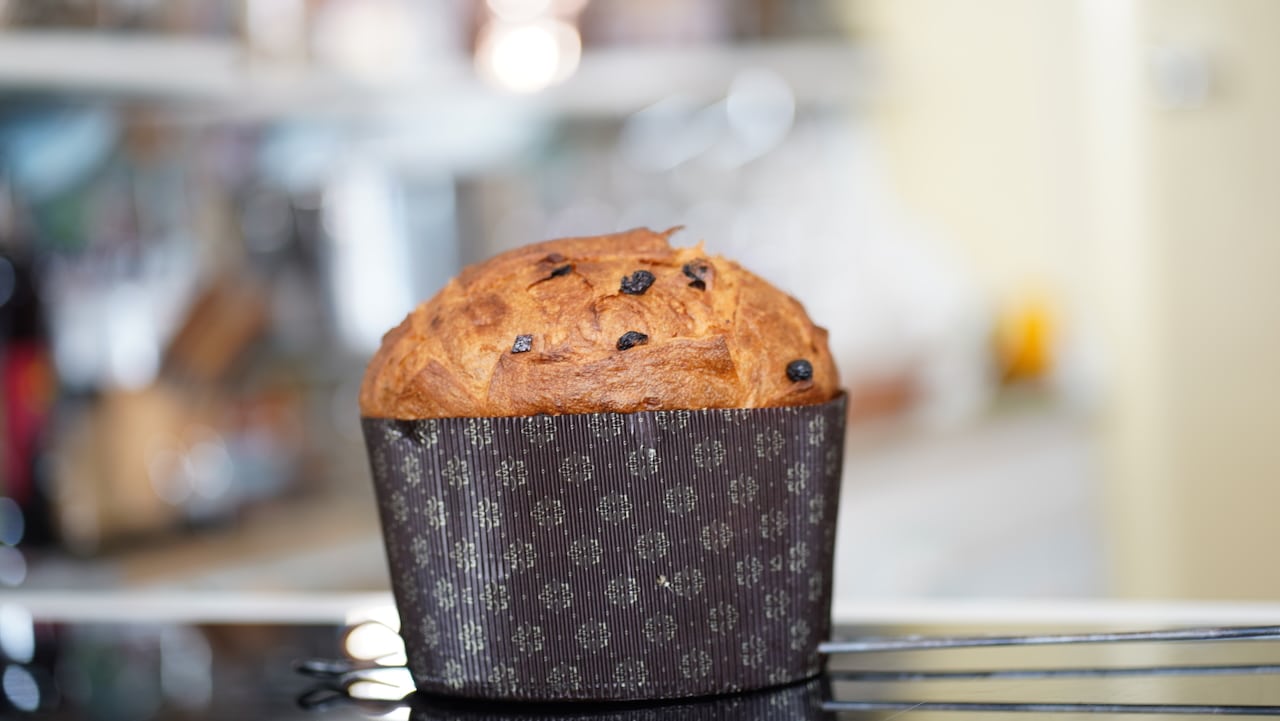

Natural Starter For Bread
- The first and most fundamental step in traditional panettone making is achieving a less acidic starter. To do this, take a portion of your ready and refreshed natural starter from your daily bread production. Now, the magic begins.
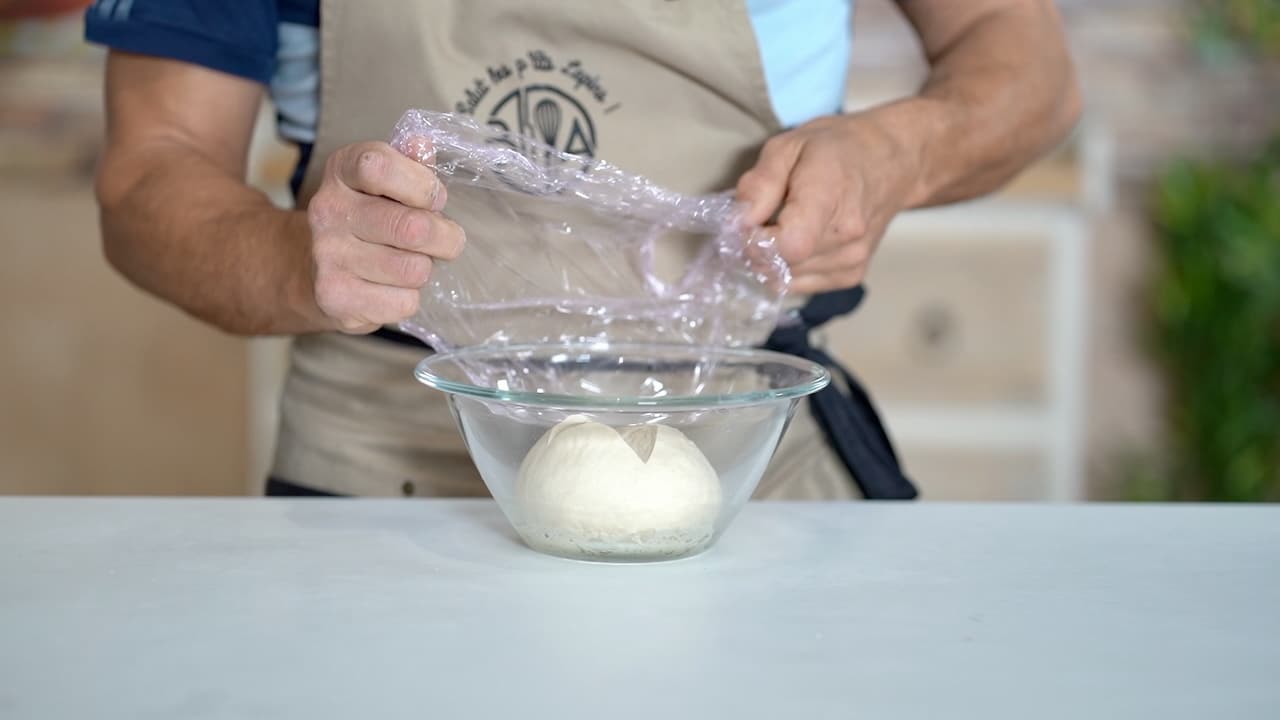

Lievito Madre
- Make 2 days before mixing the panettone dough. This is the first step to lower the acidity of the lievito madre.
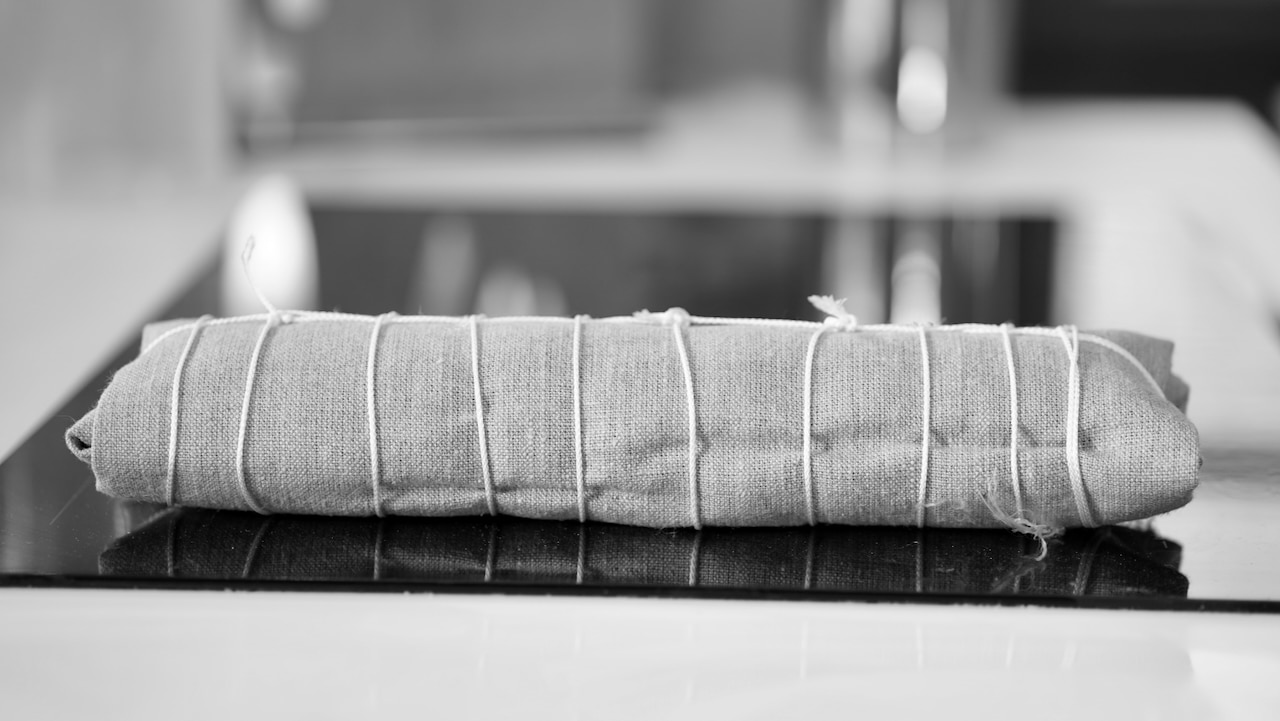

Lievito Madre Mixing Process
- This process changes the classic hydration of so called hard natural levain from about 50% to a stiffer dough by using approximately 10% less water. Because the dough becomes very stiff, you will need to strengthen it by giving it multiple passes through a sturdy pasta machine or, ideally, a dough sheeter. But it is definitely doable at home dealing with reasonable quantity.
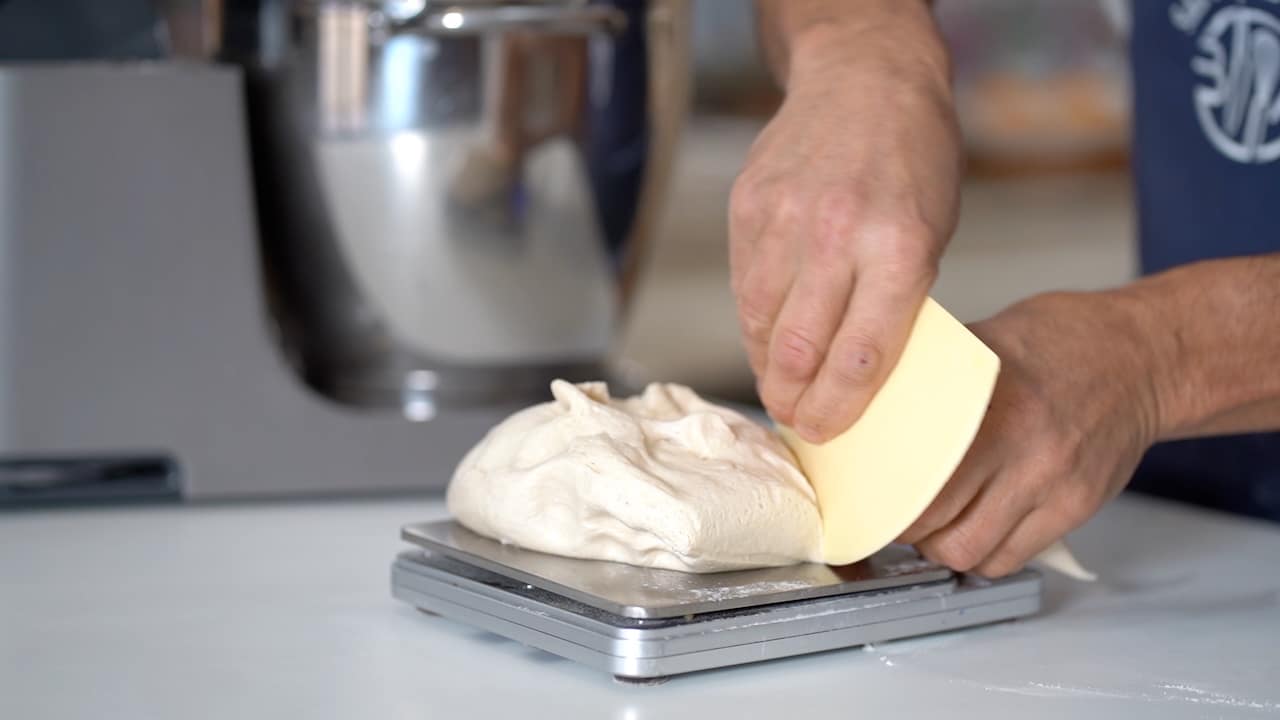
- Scale the natural starter you need. Cut into pieces and add it to the mixing bowl.
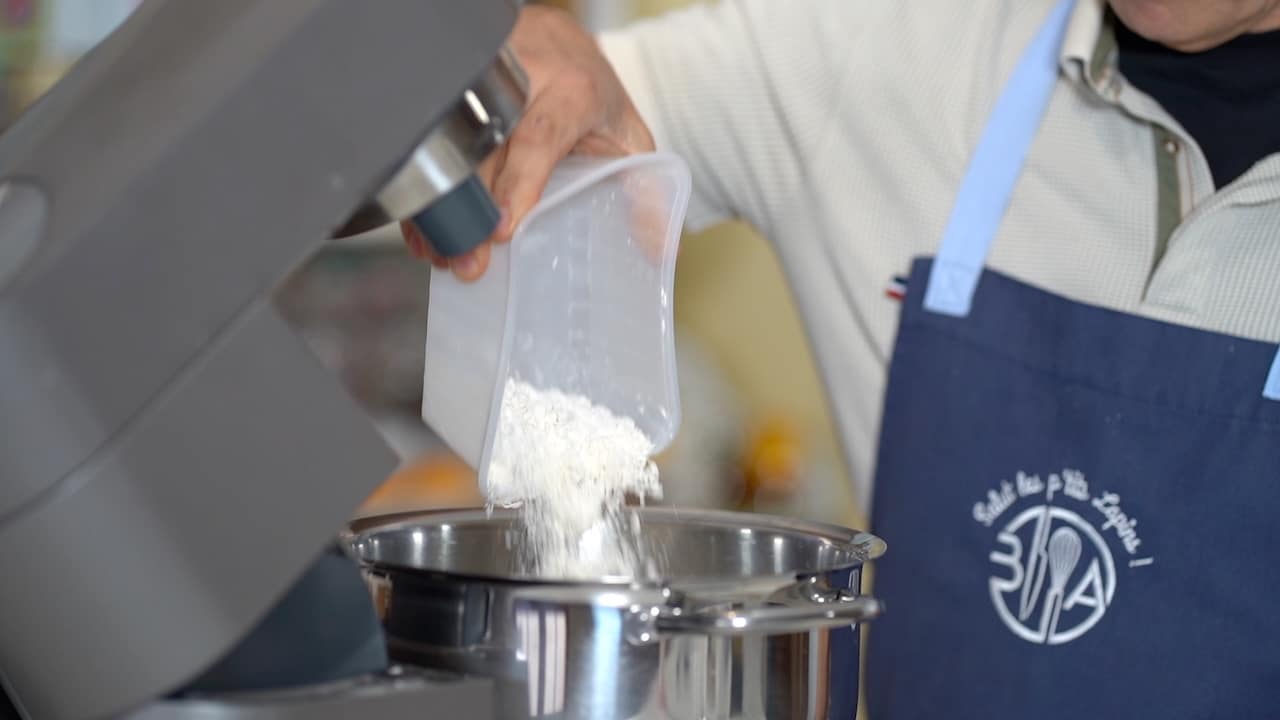
- Add water and flour.
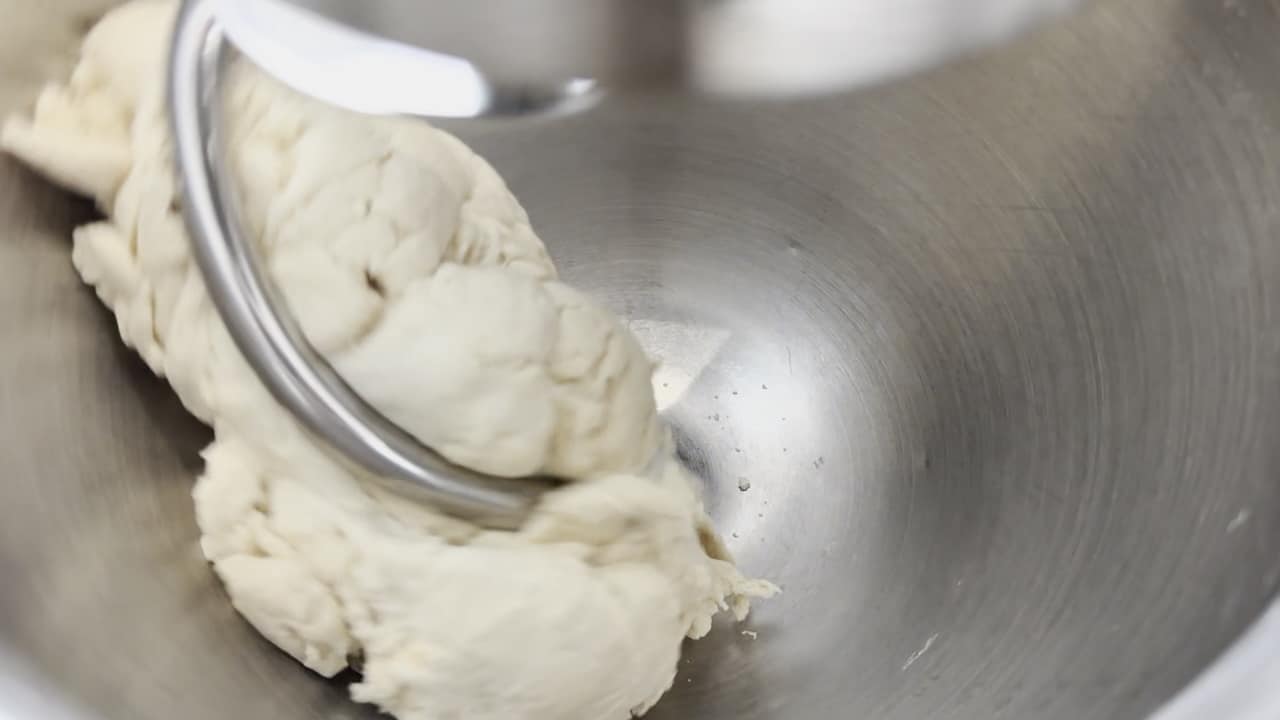
- Mix for 6 minutes on medium-low speed.
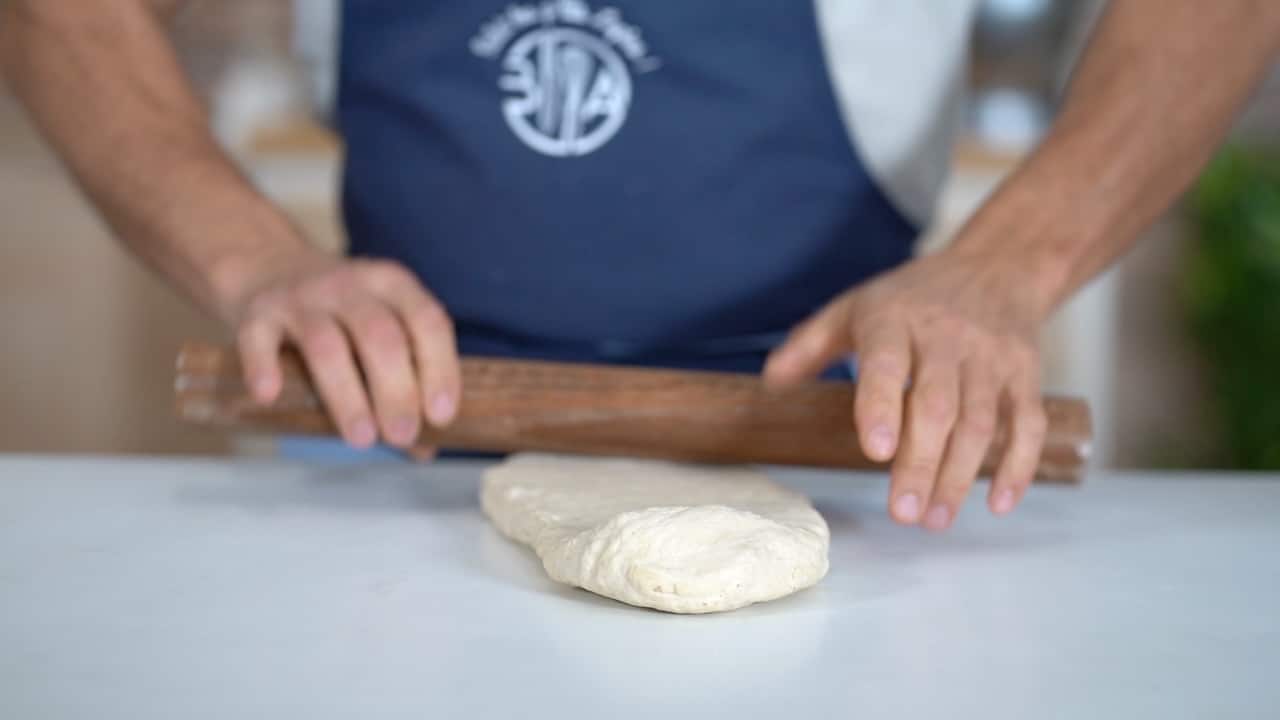
- Roll out the dough with a rolling pin before passing it through the pasta machine.
- Set the pasta machine to the widest setting.
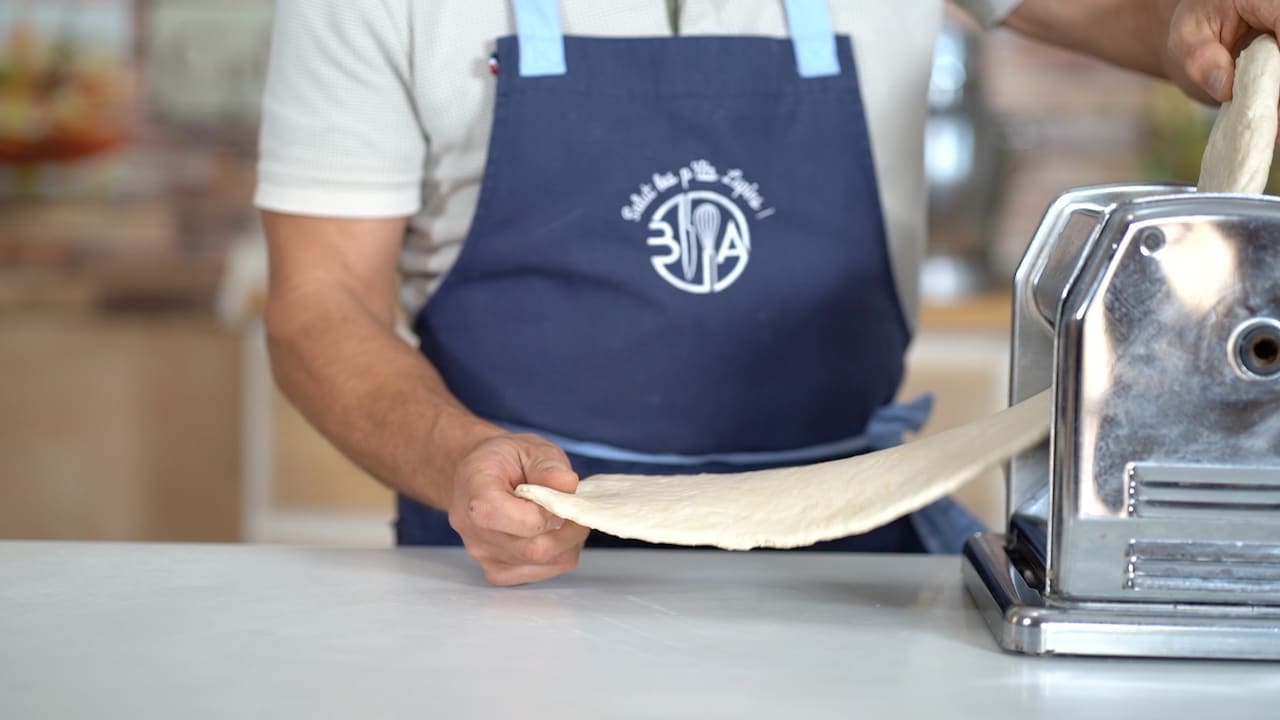
- Pass the dough through the rollers until it is thin enough for the first fold, dusting lightly with flour if needed.
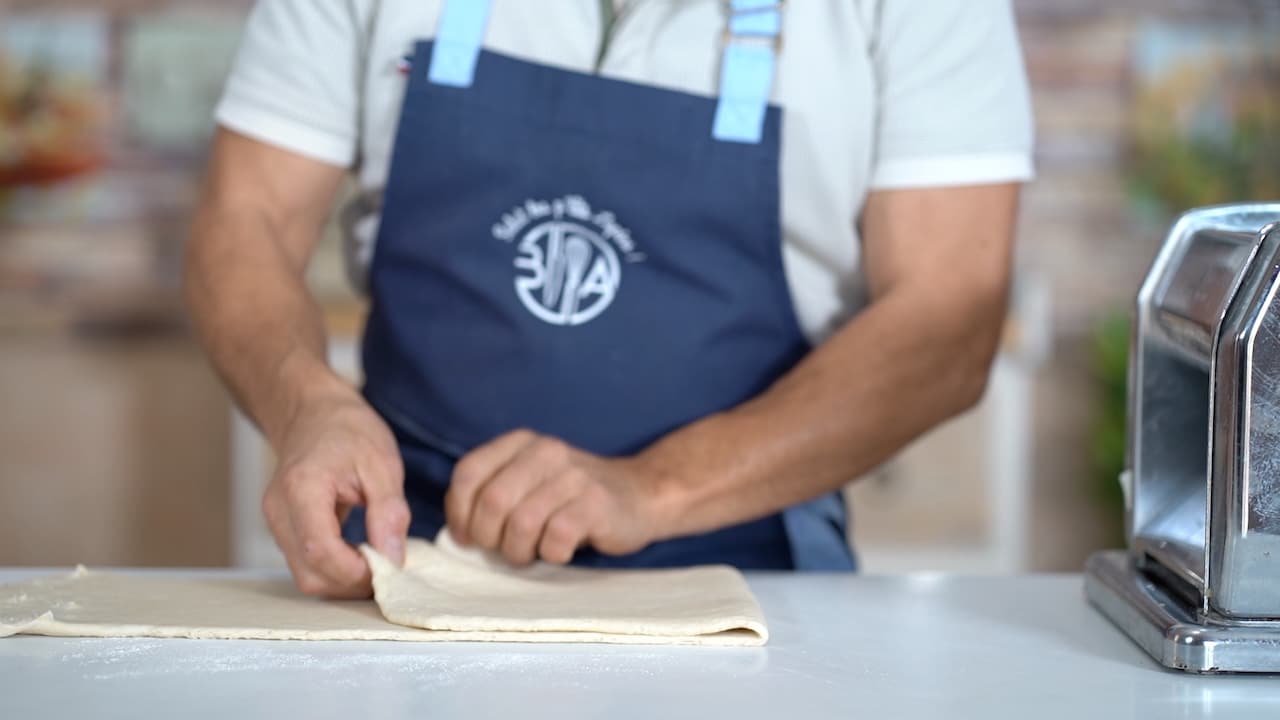
- Give the first single fold (tours simple). Repeat twice until it becomes smooth and gains strength.
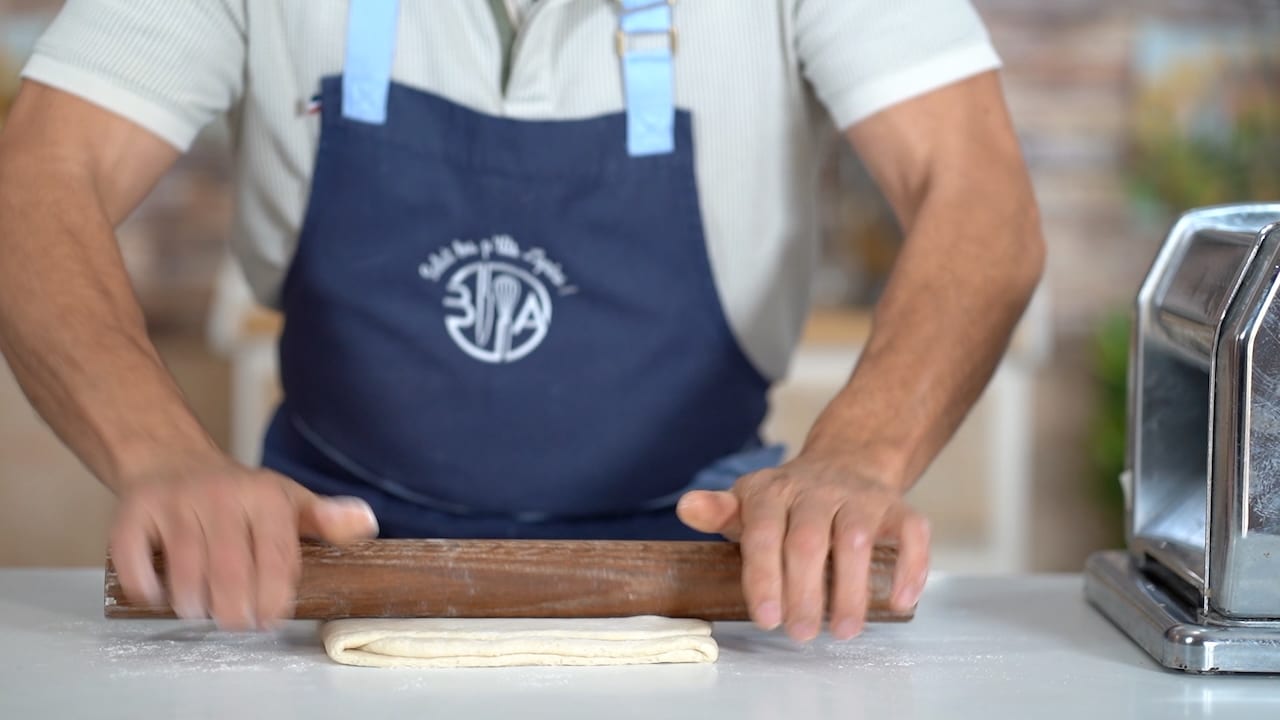
- Roll the dough into a 12x18-inch (30x45 cm) rectangle, using no extra flour.
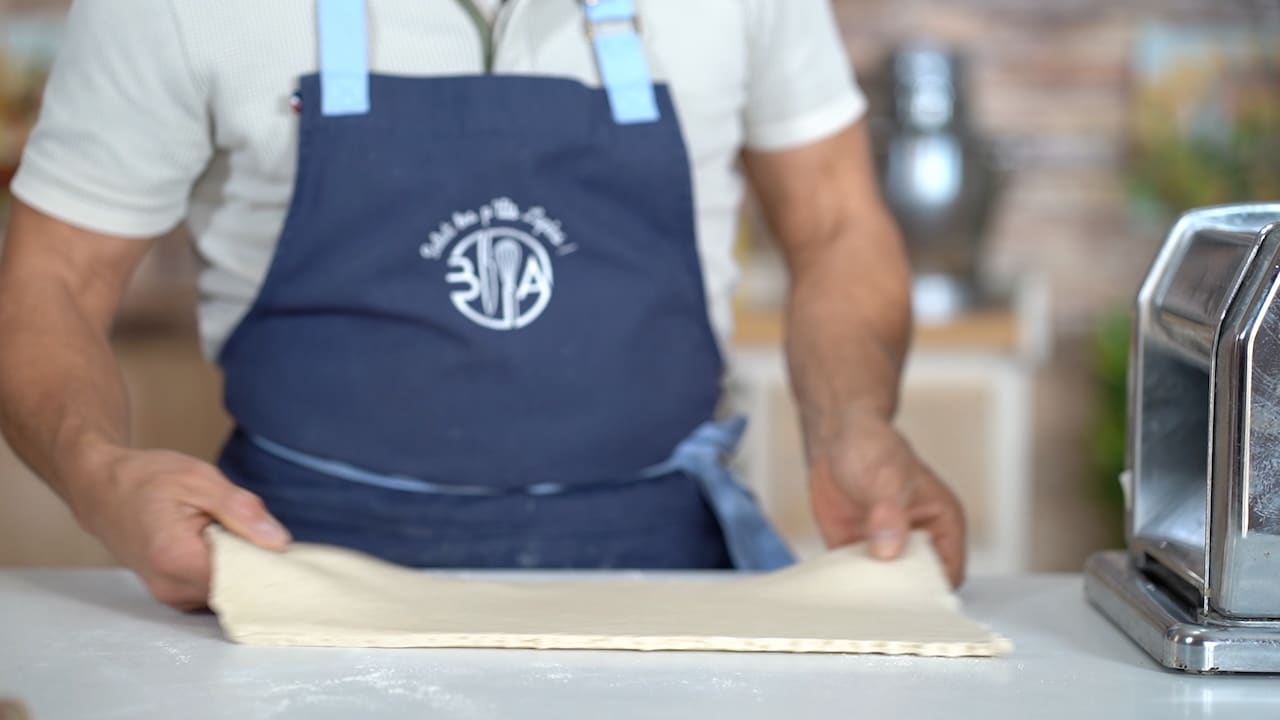
- Tightly roll the dough into a cylinder, starting from the top and working down to the bottom.
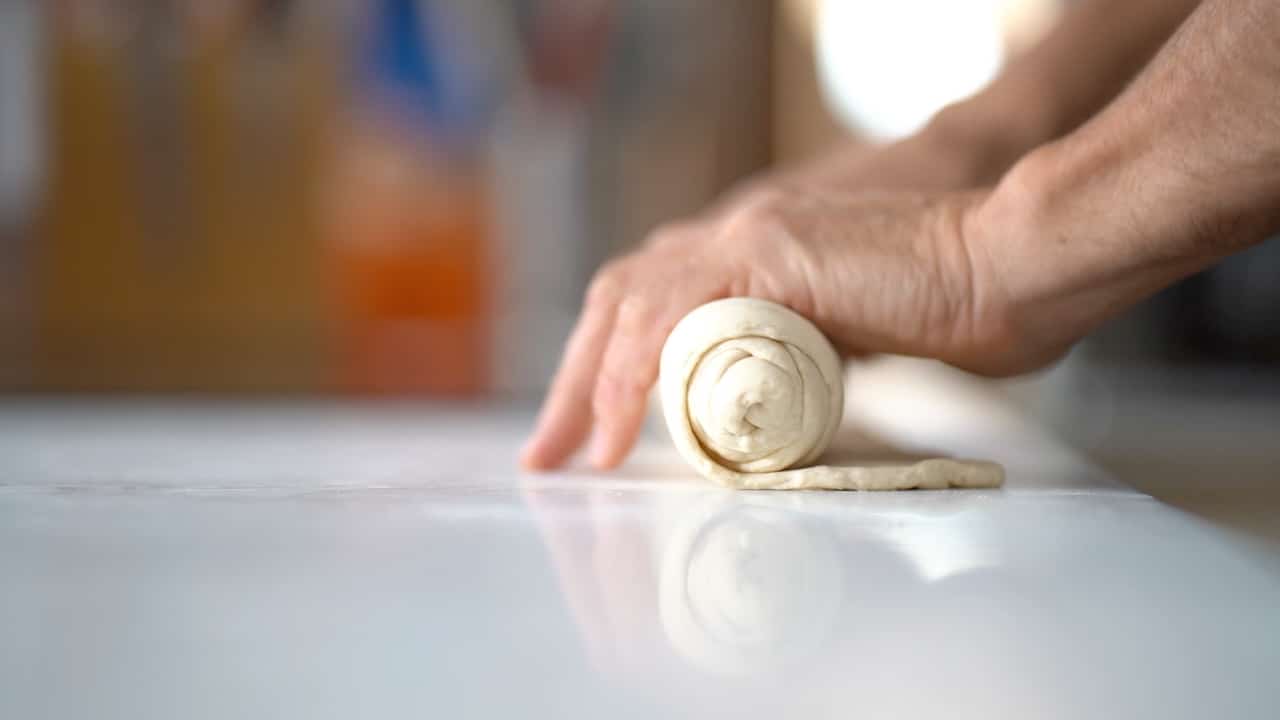
- Wrap the dough log tightly in multiple layers of plastic wrap.
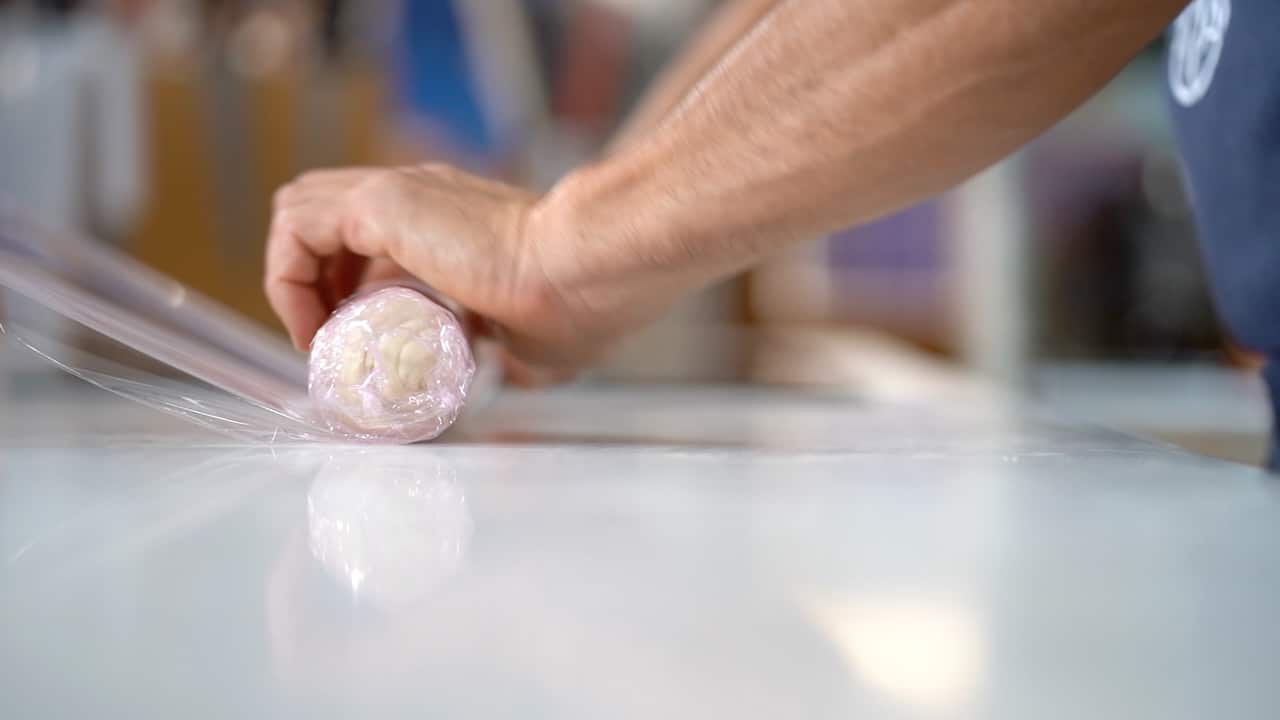
- Repeat the wrapping process, starting from the opposite end this time.
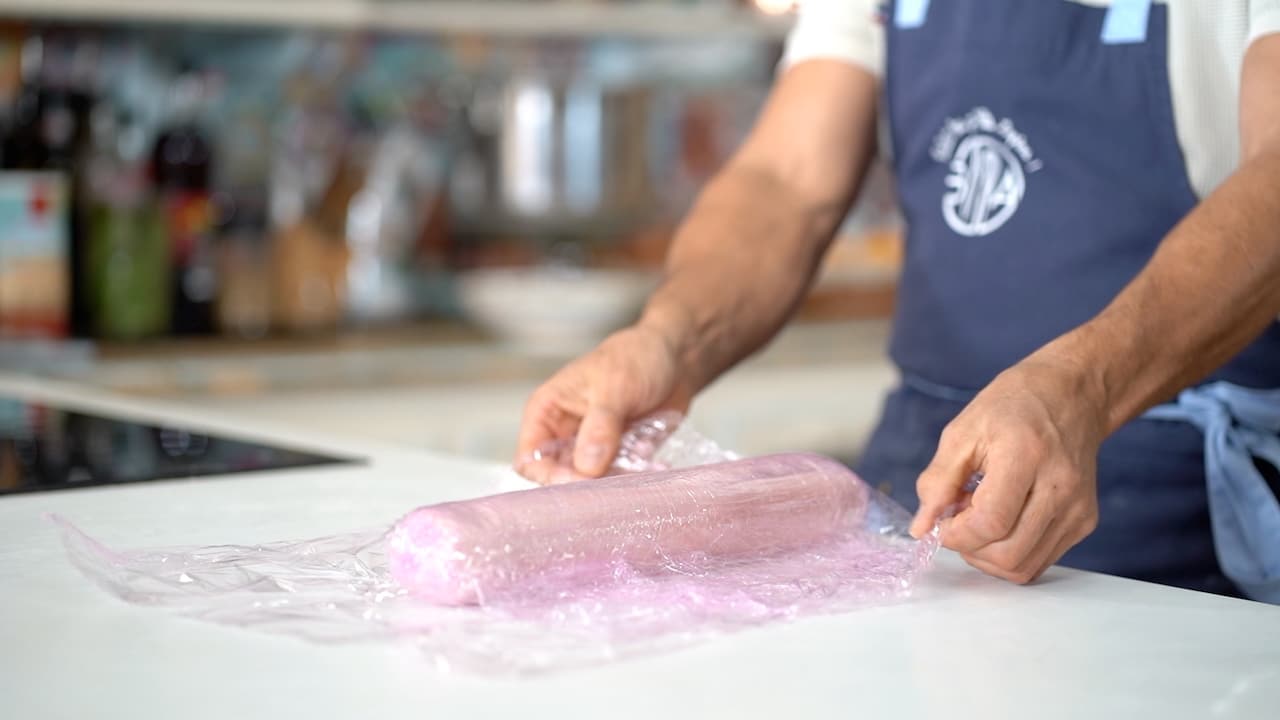
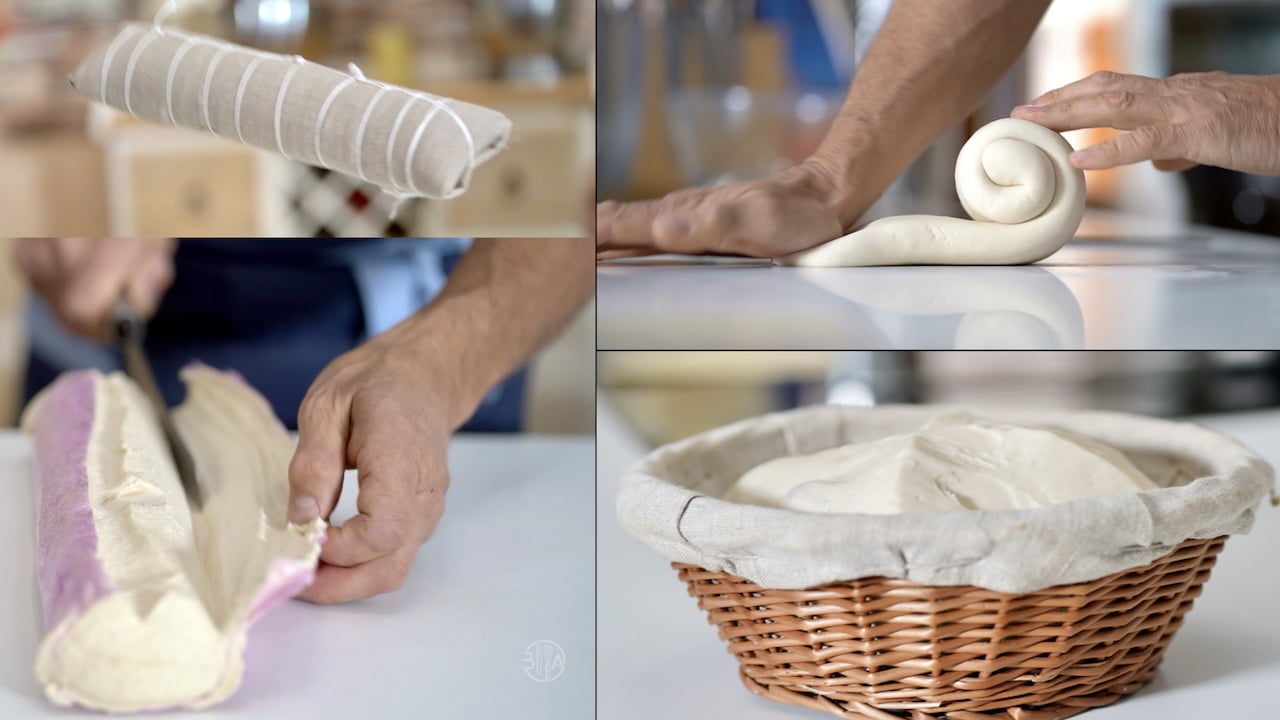
- Now, wrap the well-sealed levain—in a baker's couche or a clean kitchen apron.
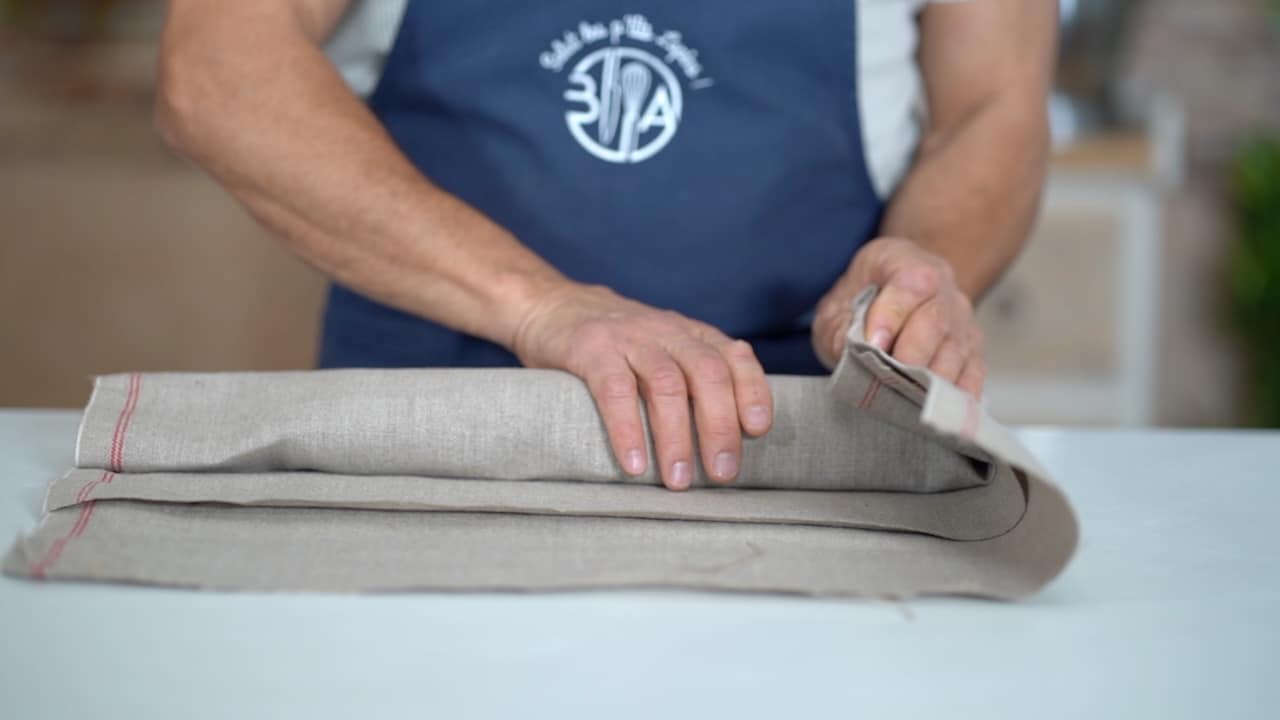
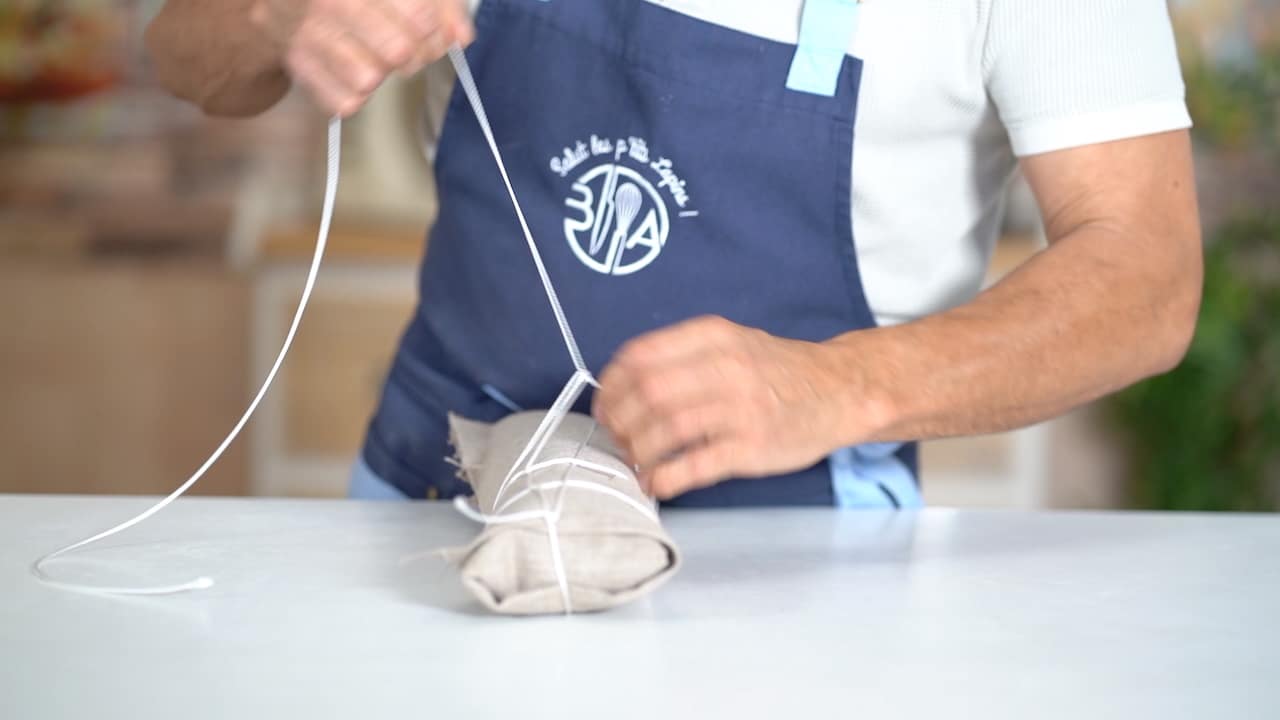
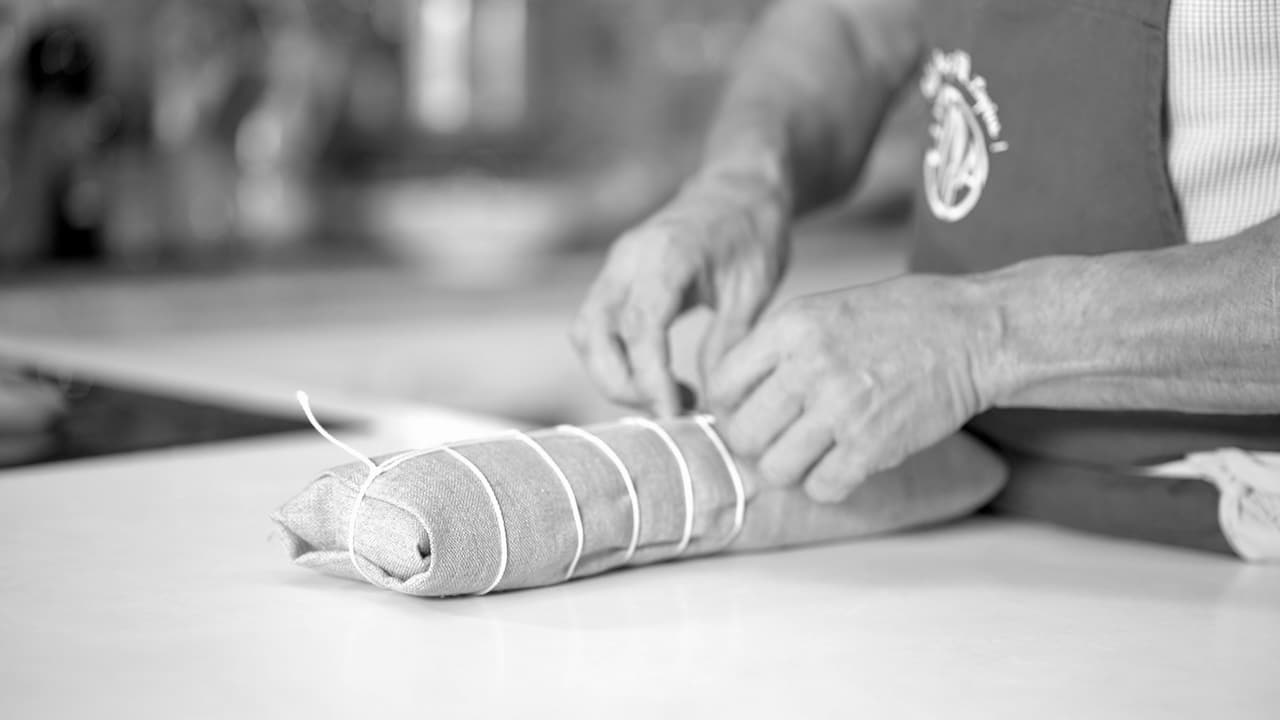
- Tie a loop to secure the log. Tie the entire package with jute rope, but not too tightly, similar to how you would truss a roast with butcher's twine.
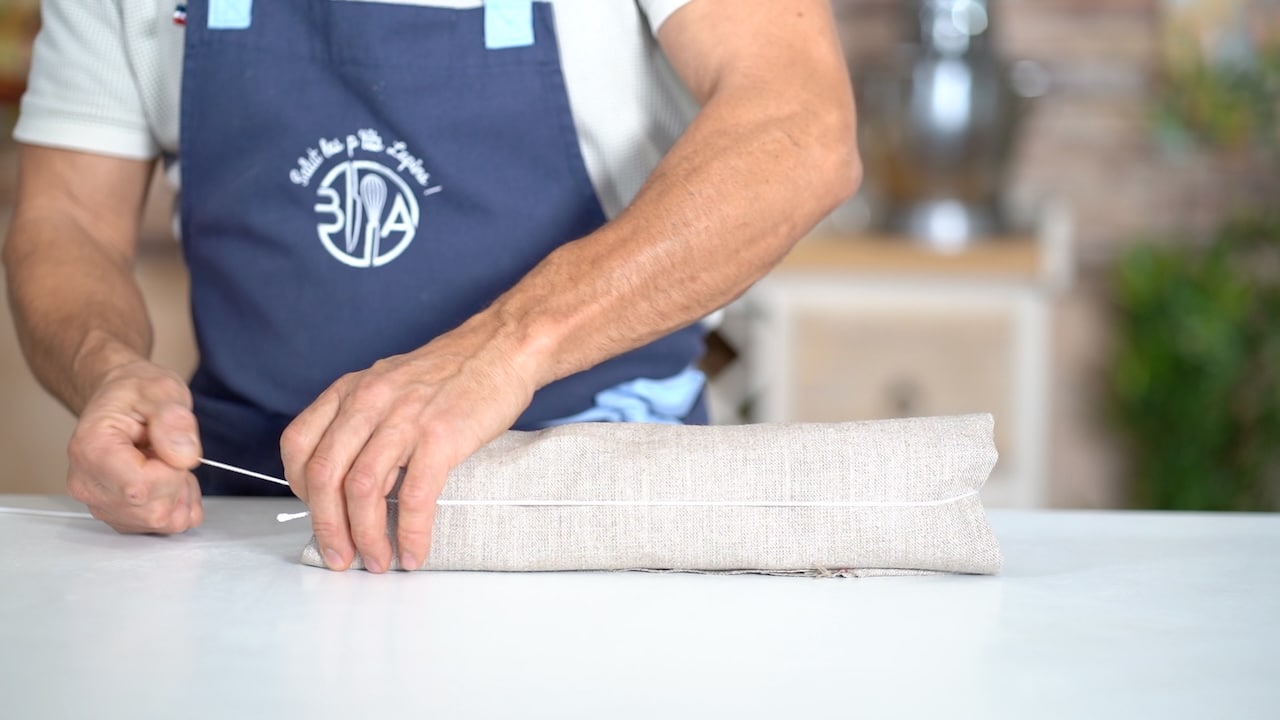
- The step of sealing the lievito madre prevents its natural bacteria from blooming excessively, as oppose to the process in sourdough bread making. After the required time, the well-wrapped package is ready to "implode," which is the desired goal. This process lowers the leaven's sourness without compromising its strength. In panettone making, both a mild leaven and maximum strength are essential.


Lievito Madre Fermentation
- The lievito madre is now ready for its first slow fermentation. The primary method is to ferment it at 18°C/64°F for 14-16 hours. Alternatively, you can use a two-step method: first, leave it at room temperature for 3 hours, then refrigerate it for 10 hours. Before the next refreshment, allow it to warm up at room temperature for 1 hour.
- On the day you mix the panettone...
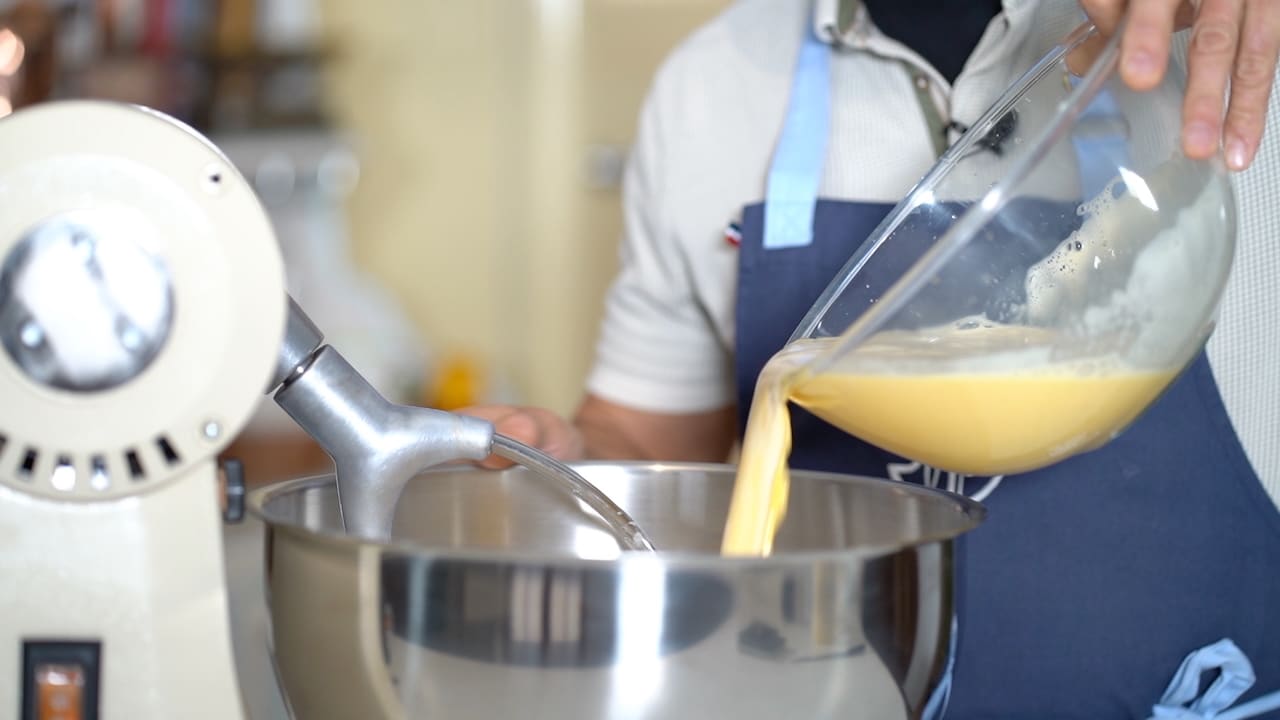


At 6 am / Bagnetto Lievito Madre
- It has now beautifully bloomed. Undo the rope and unwrap the baker's couche to free the slowly fermented dough.
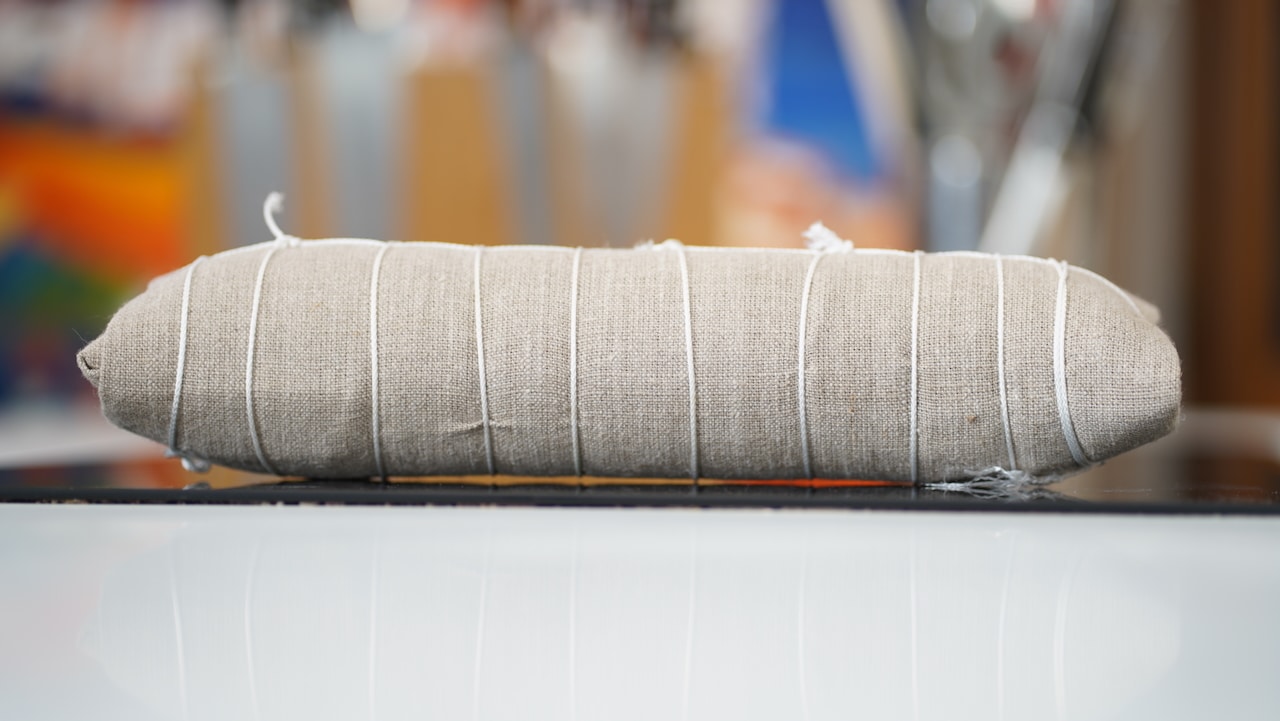
- As you can see, the pressure from the gas released during fermentation has pierced the plastic wrap. That's normal. Using a serrated knife, cut off both ends of the dough cylinder.
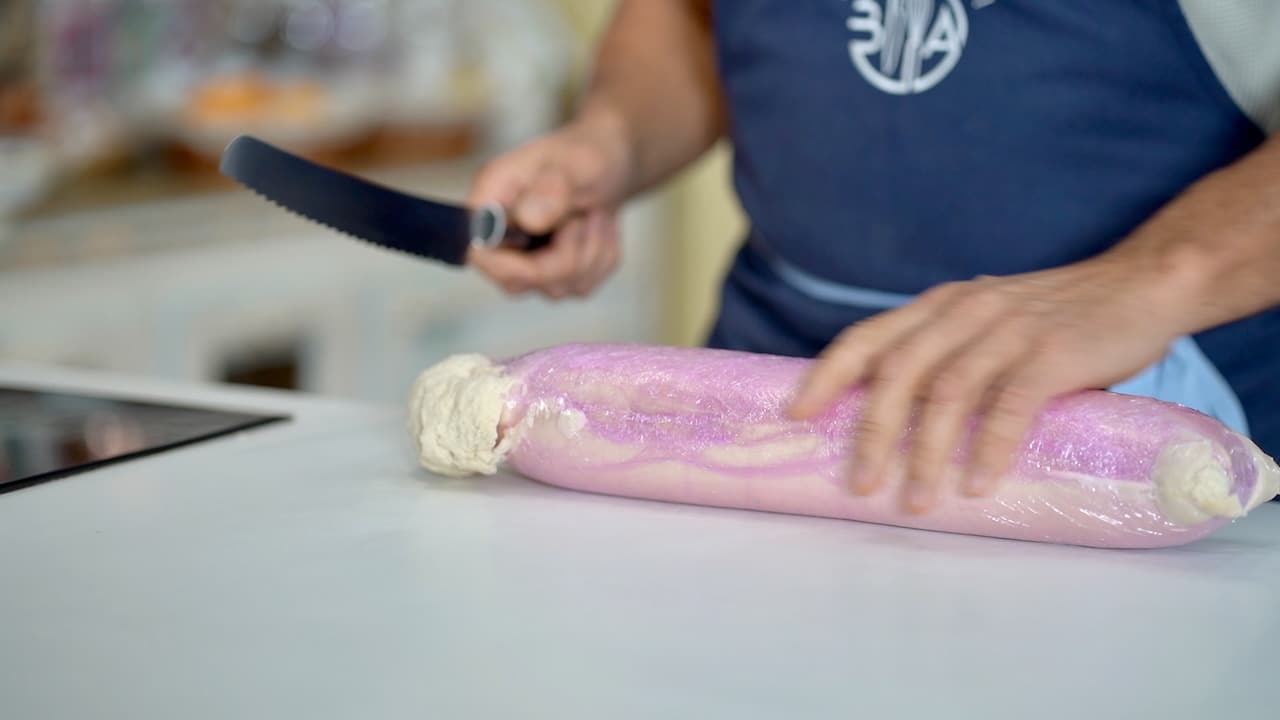
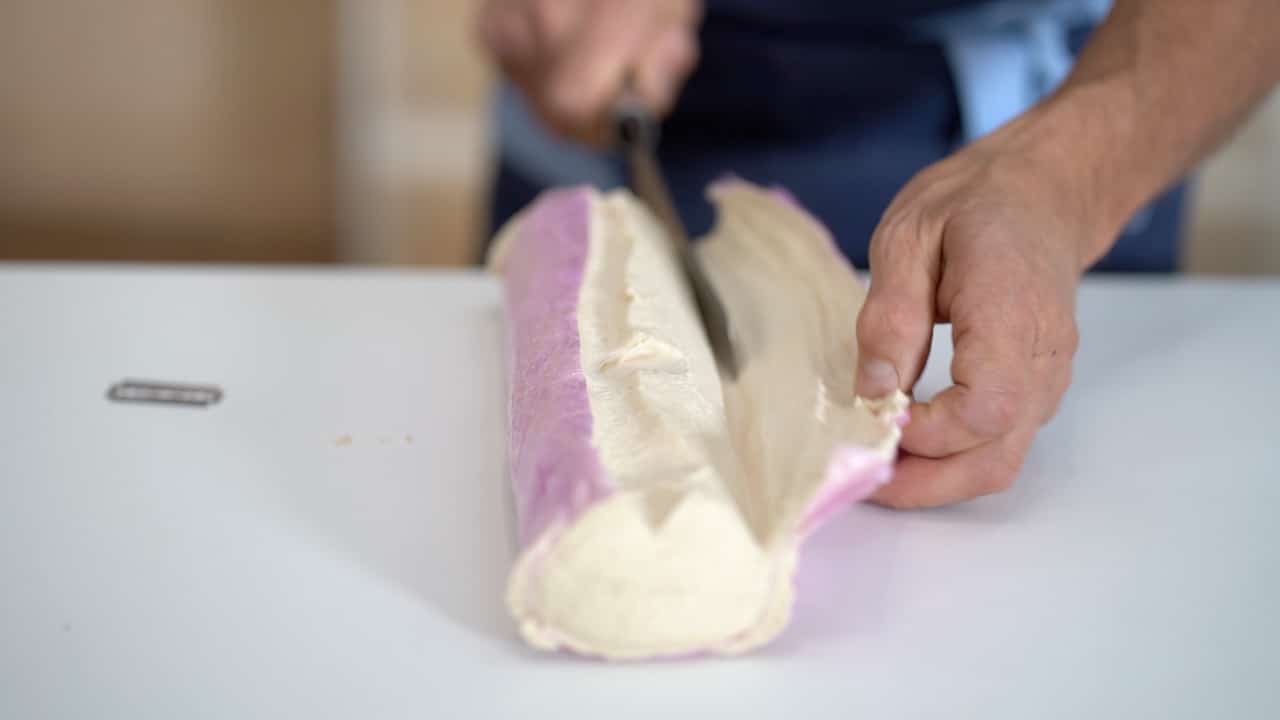
- With a cutter, score the plastic wrap with a single incision along its length to open it. To unwrap the dough, peel off the outer skin following the curve. Save only the dough that is not in direct contact with the envelope. Avoid scraping it too much.
- Divide the dough log into thick slices. Add the lukewarm spring water in the large bowl and swirl in sugar. Soak dough slices in the liquid for 10 minutes. The soaking process rebalances the microflora, reduces acidity, and stabilizes the yeast. The bagnetto does not need to be renewed daily, but only when your lievito madre becomes sufficiently sour, reaching an acidity of ≈3.5 on a pH meter.
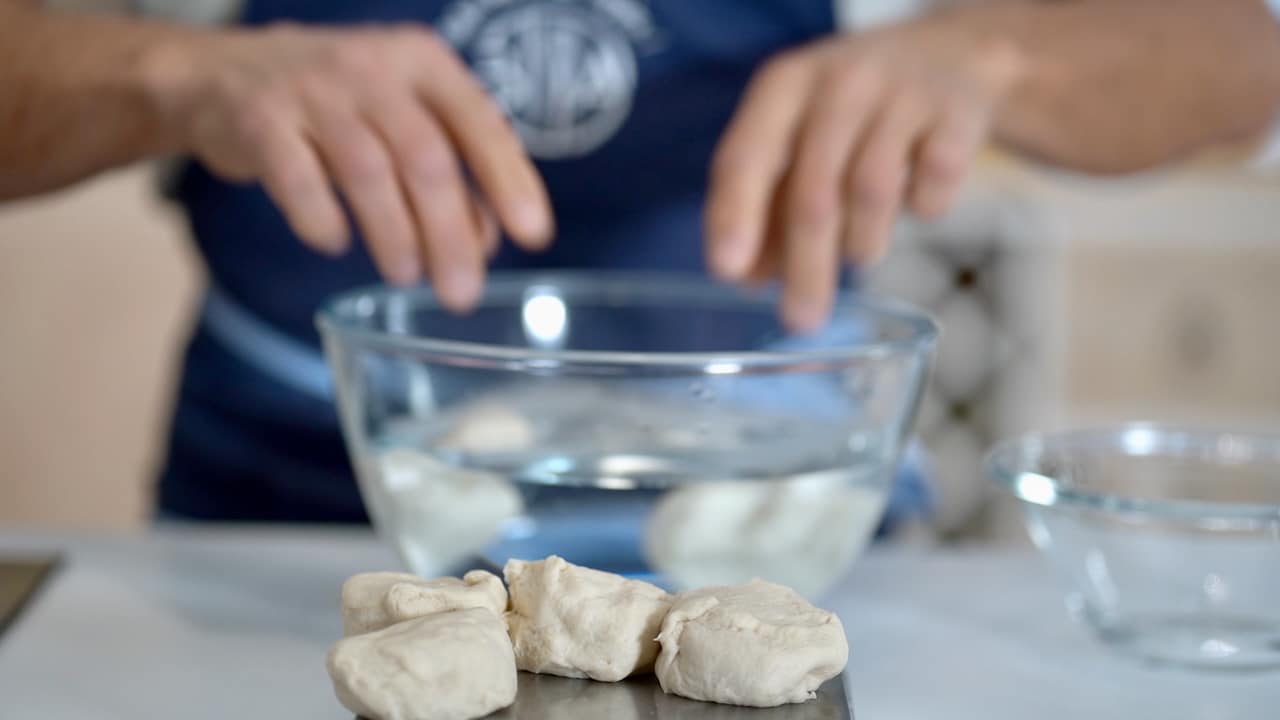
- Drain and squeeze out excess water.
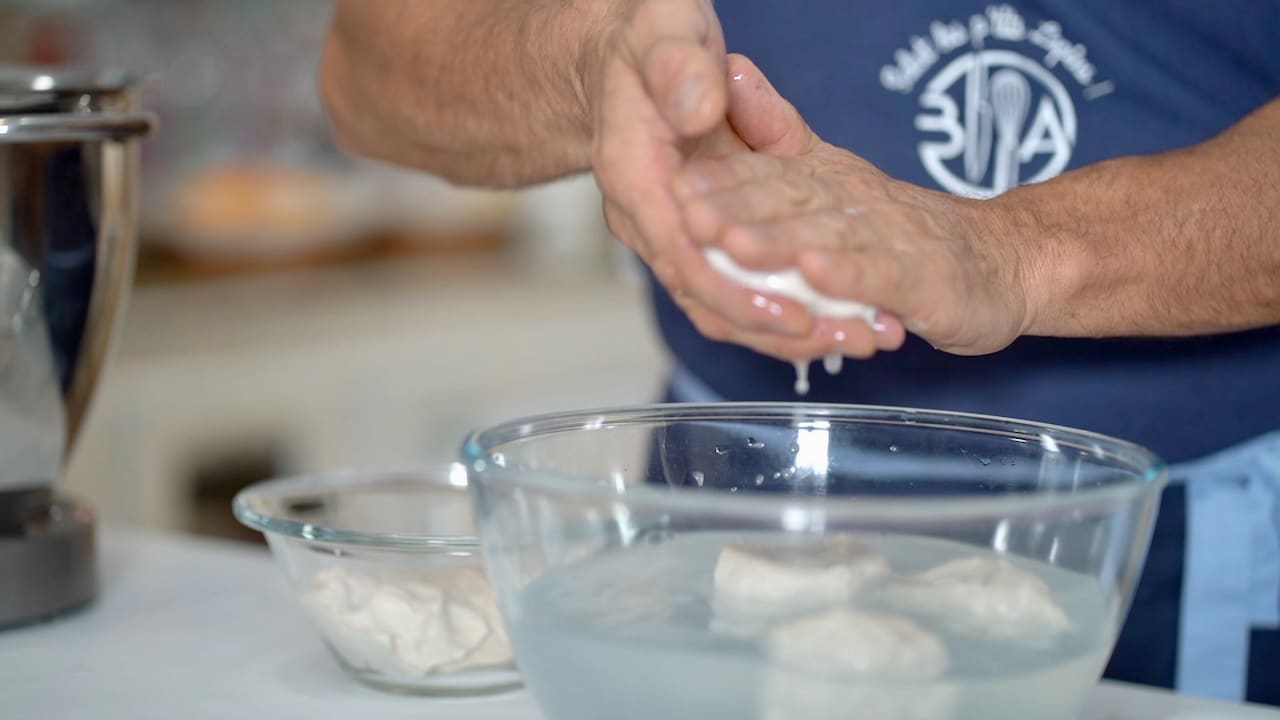


*First Refresh
- If you plan to produce panettone every day, you will need to double the recipe from the first refresh. Once refreshed, the dough should be divided, laminated and rolled into two tight cylinders. Then coil each log into a tight spiral (like an escargot/snail). Set the second dough coil aside and immerse it in a bucket filled with room-temperature spring water. The next day, refresh it twice as suggested below to continue your daily production of panettone.
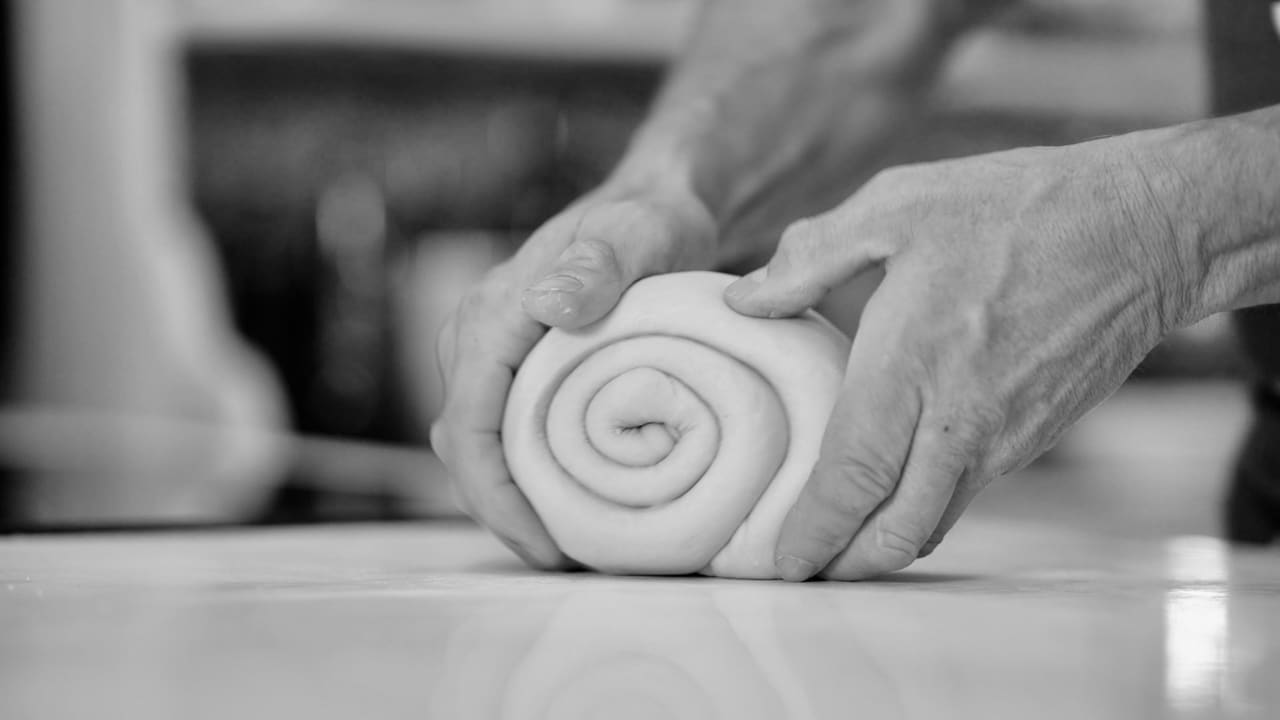

At 6:30 am: First Refresh / Primo Fresco
- Mix all ingredients until just combined. The dough is very stiff; it's normal.
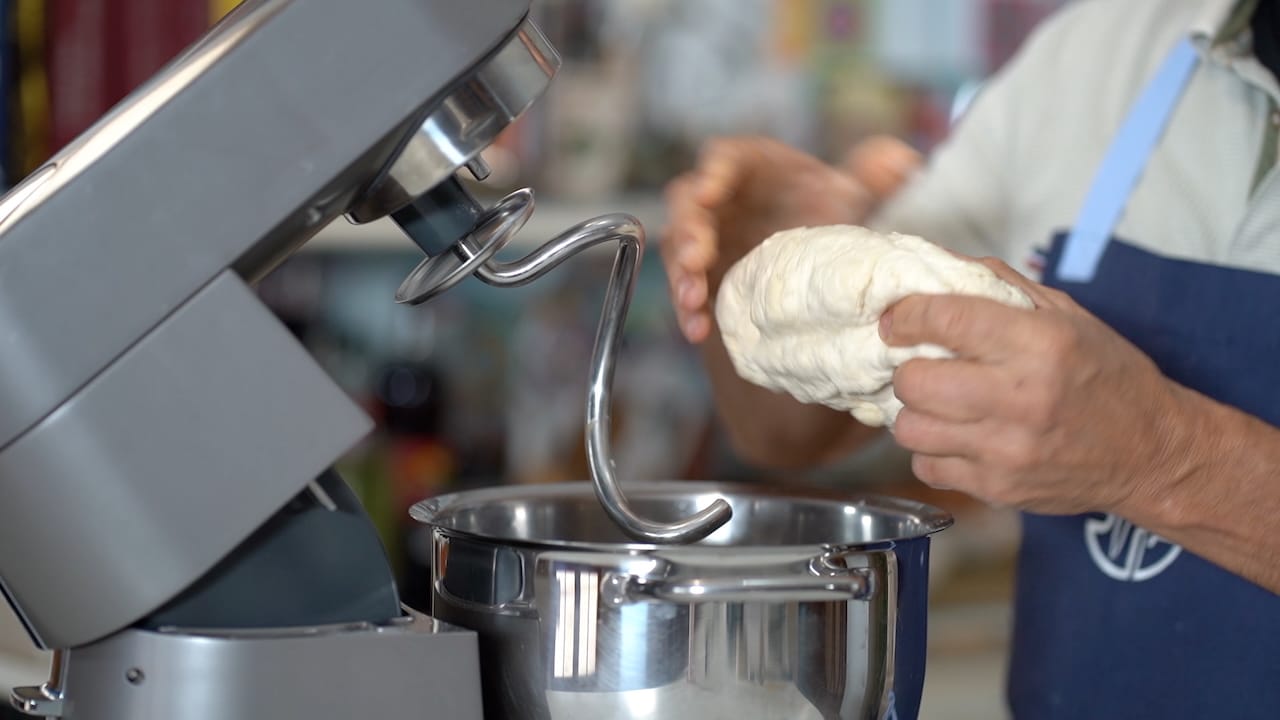
- To ease the laminating process, cover the dough and let it rest for 5-10 minutes. Then flatten dough with the rolling pin.
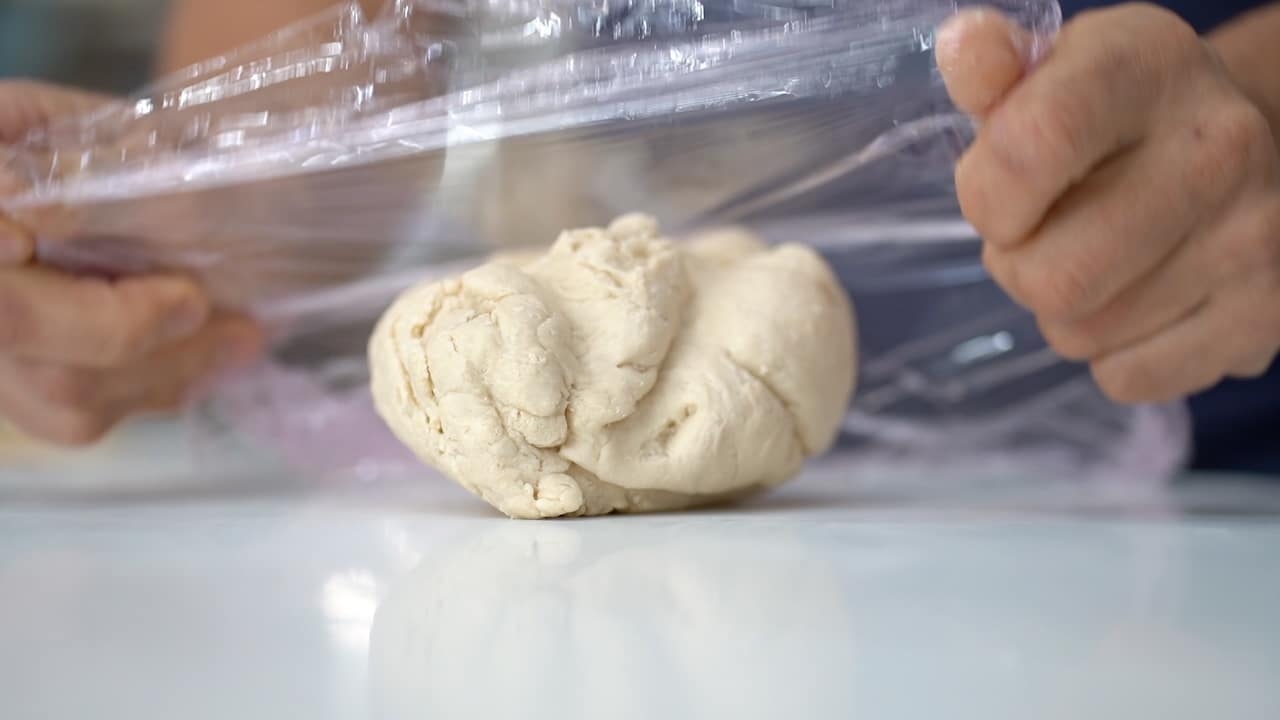
- Laminate the dough using the pasta maker or dough sheeter, as done in the previous steps. Roll sheet of dough into a tight cylinder.
- Flatten it with the rolling pin.
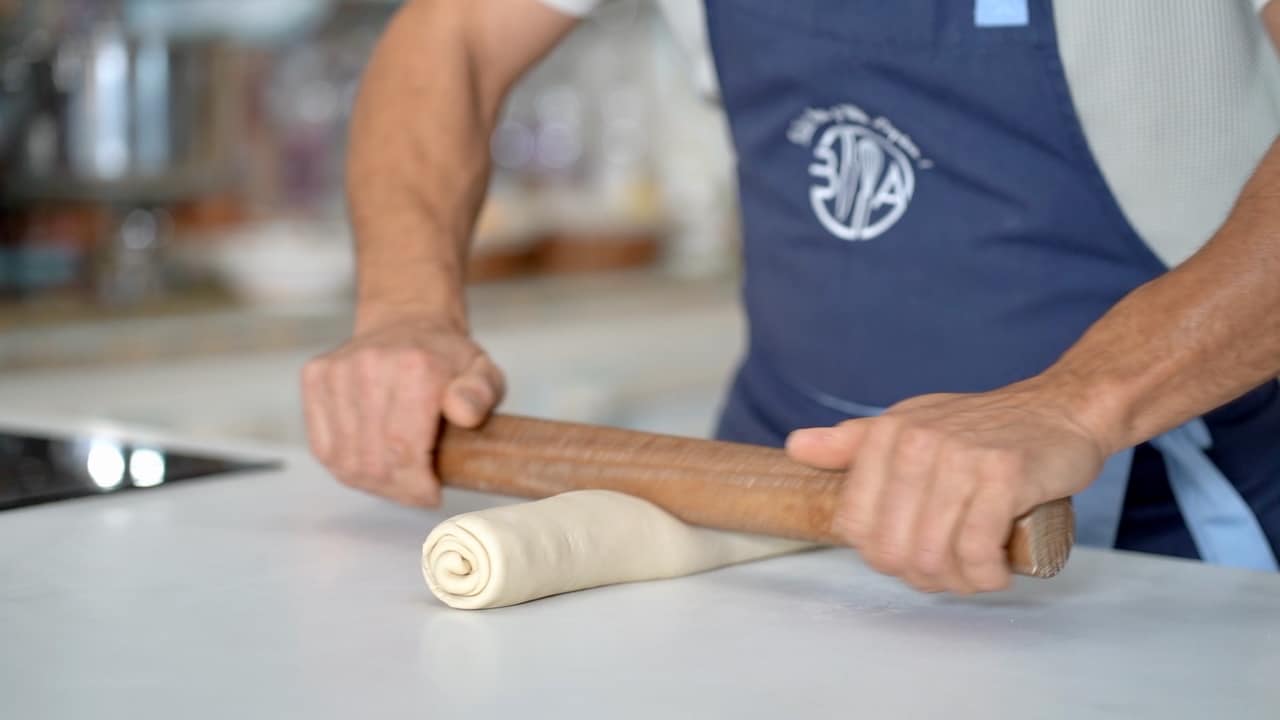
- Then roll into a tight coil (escargot).
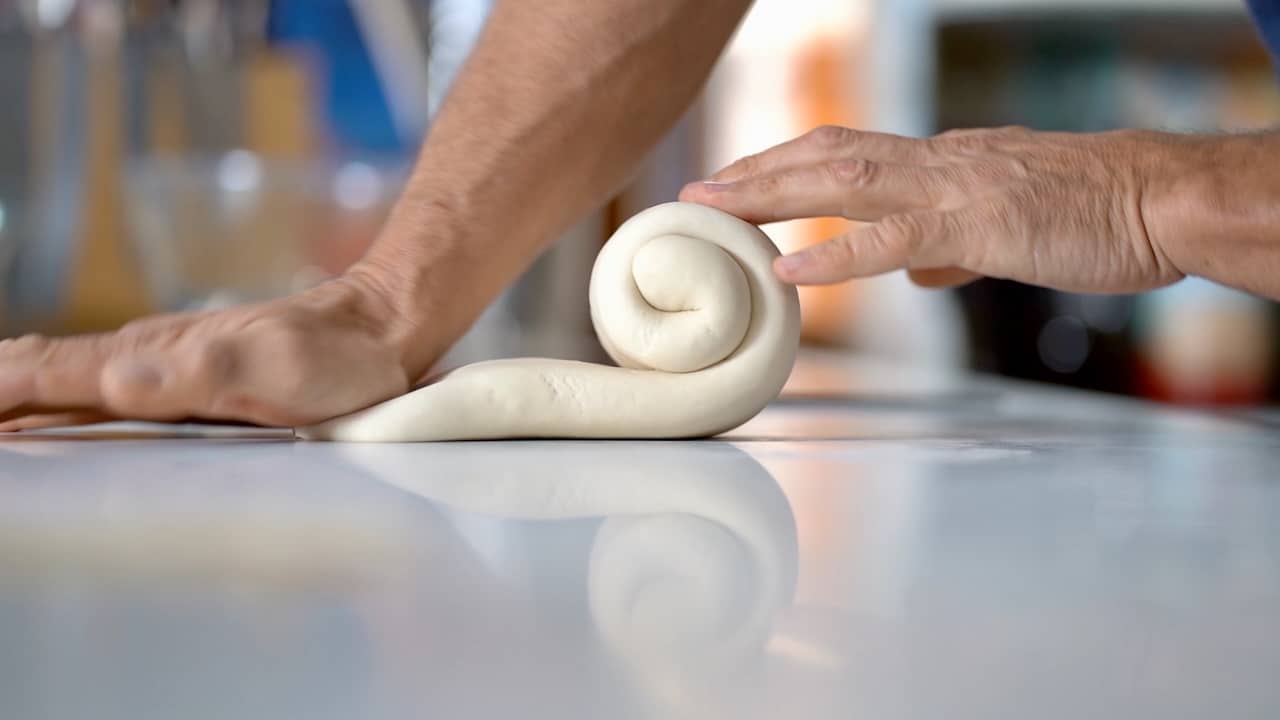
- Score the top with a serrated knife in a crisscross pattern.
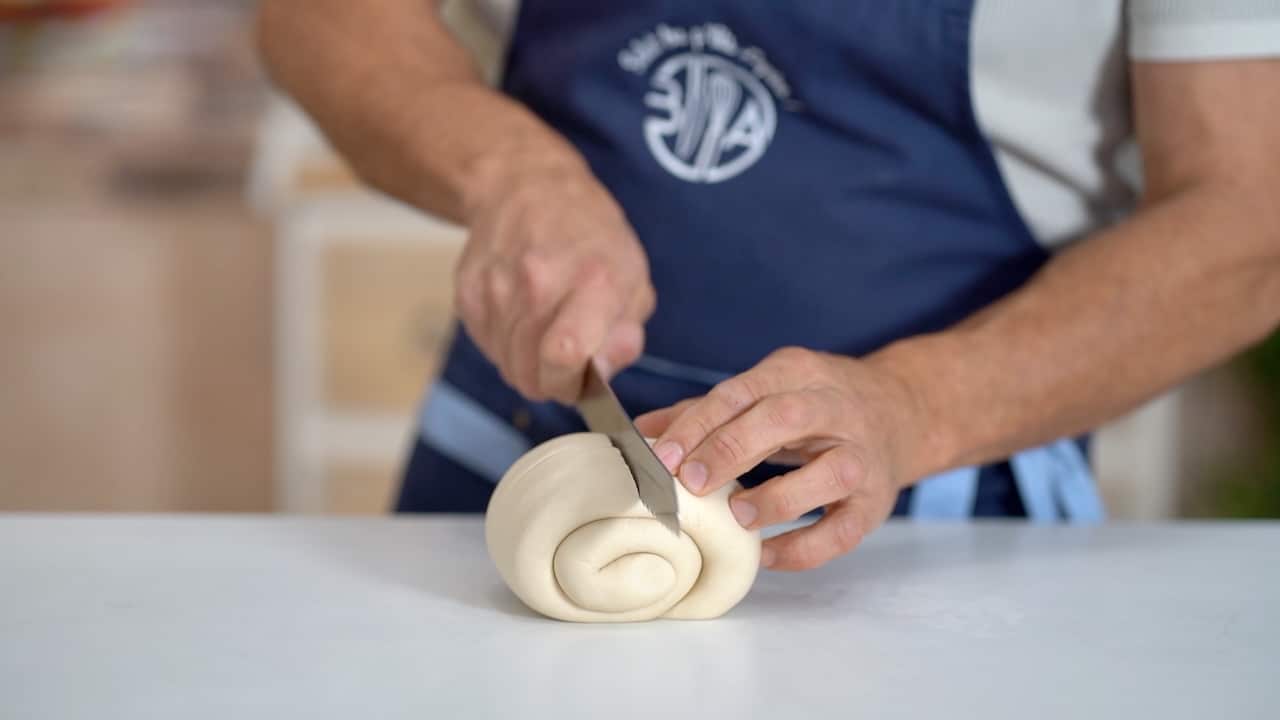
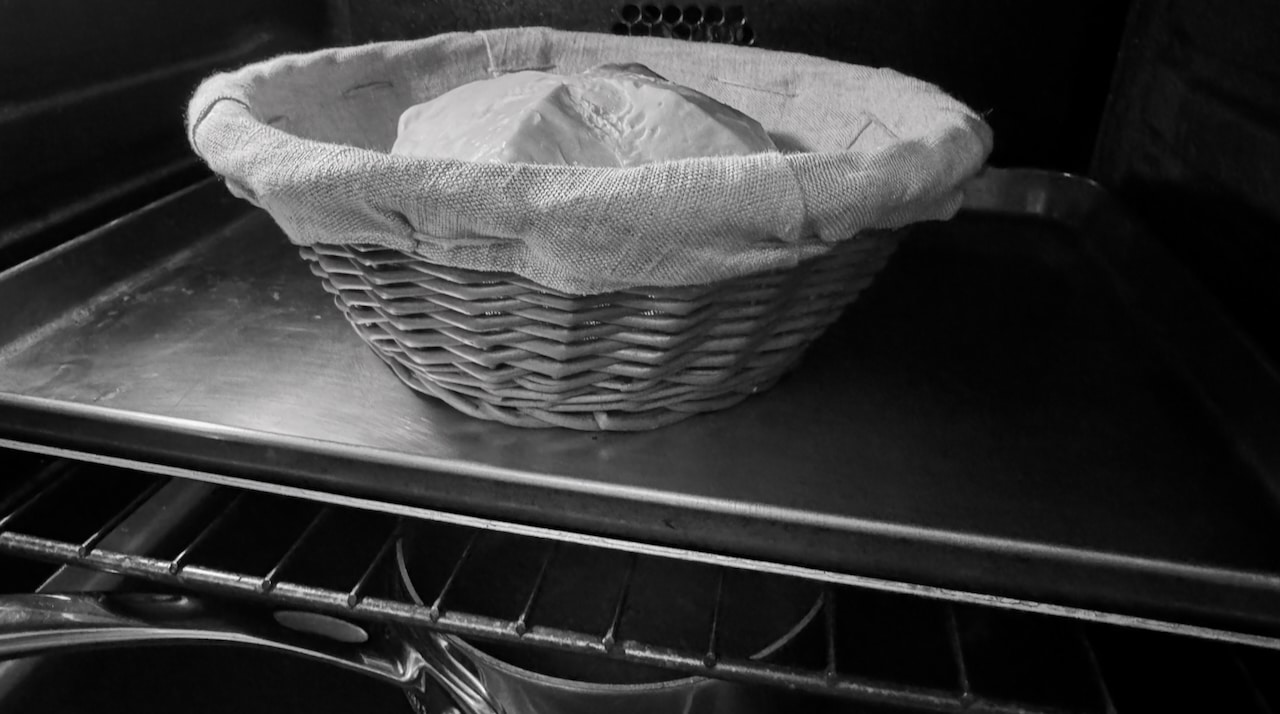
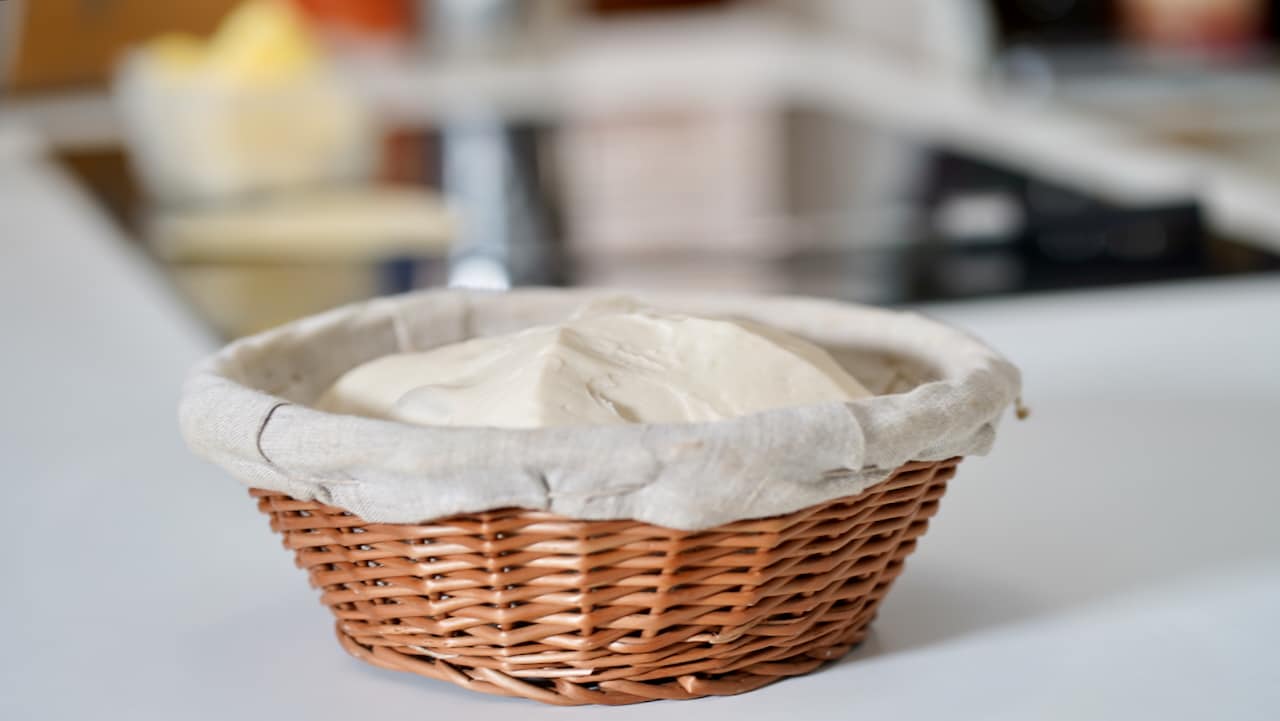
- Open the scored dough ball and place it in an unfloured banneton and proof it uncovered in a warm ≈82ºF/28ºC, and humid environment (approximately 80%) for 3½ to 4 hours.
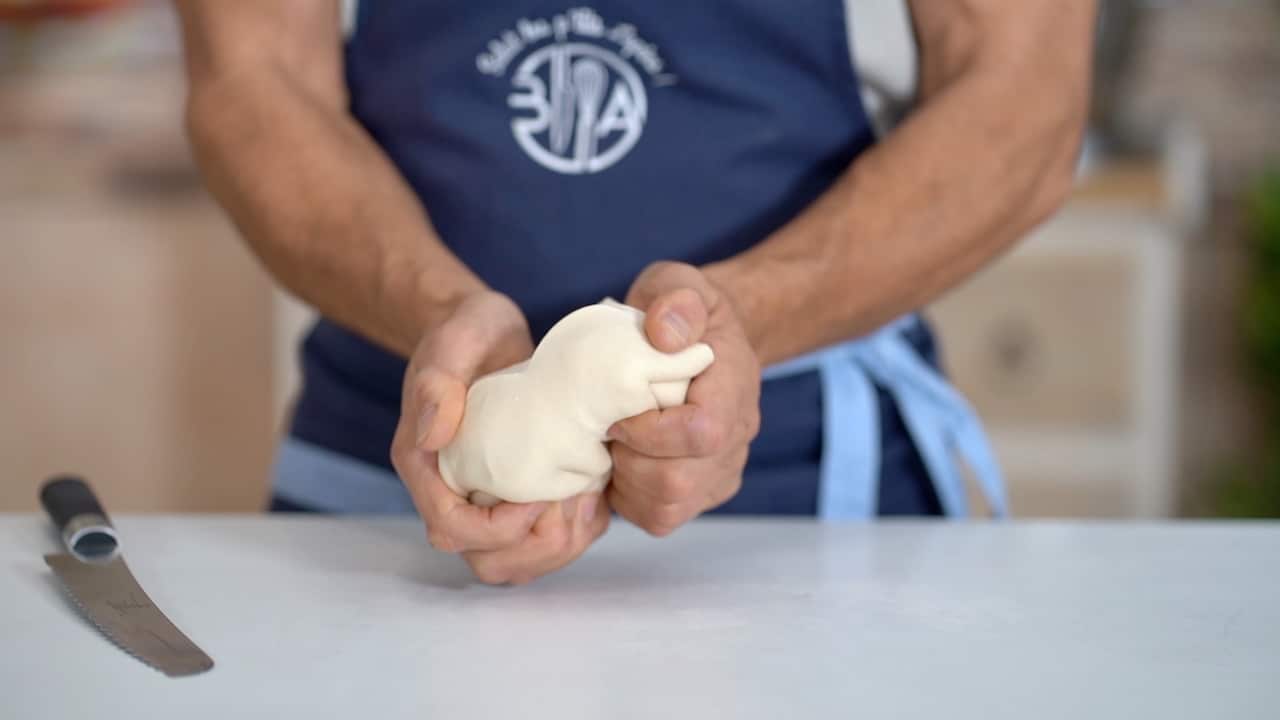
- If you don't have a proofing box, you can create a warm environment in your oven. Place a saucepan of boiling water in the oven and let it sit for 15 minutes. Remove the saucepan, wait 5 minutes for the temperature to stabilize, and then place your starter inside. You may need to refresh once the hot water halfway through the proofing time.


At 10:30 am: Second Refresh / Secondo Fresco
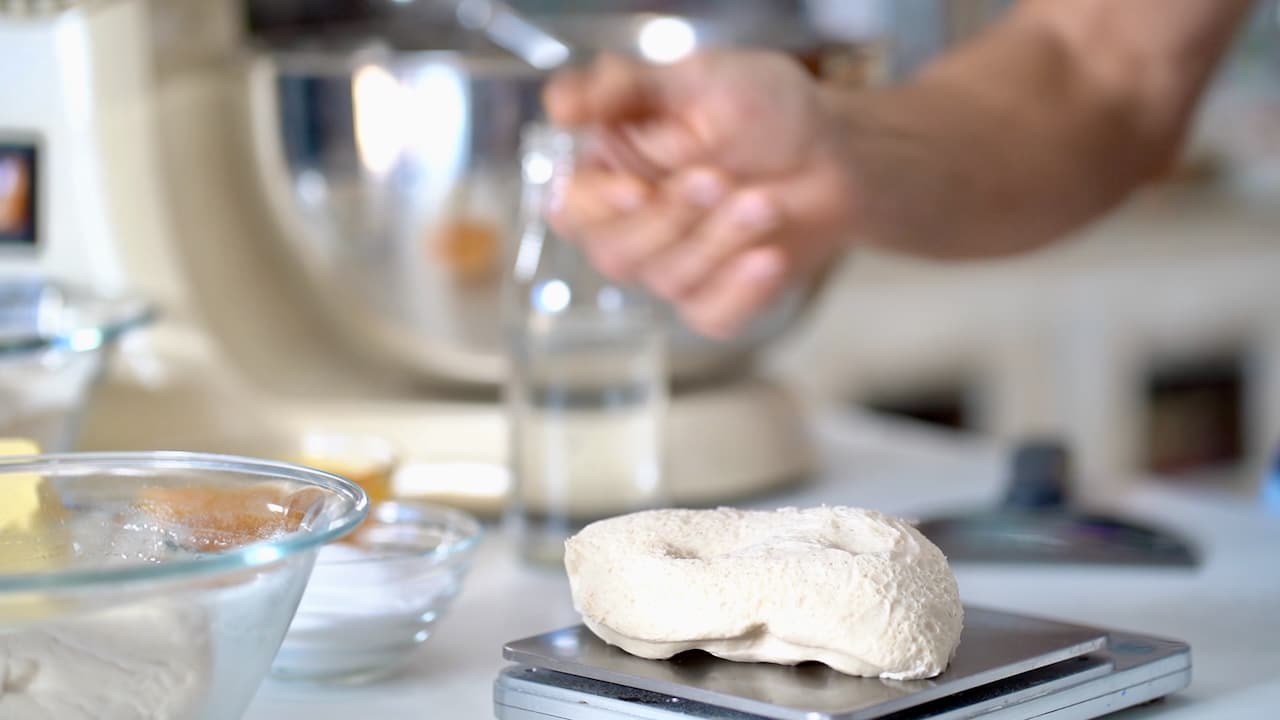
- Take the required portion of the proofed primo fresco starter for the second refresh. Repeat all previous steps exactly.

At 2 pm / Lievito Madre is Ready
- Lievito madre is ready when its pH reaches approximately 4.1 to 4.2. The acidity or alkalinity of a solution on a logarithmic scale on which 7 is neutral, lower values are more acid (bread ≈pH 3.5) and higher values more alkaline. Your natural leaven is now ready to be incorporated into the panettone dough.


This content is part of the PREMIUM SECTION

This recipe requires a All-content access subscription. The Premium section includes more than 50 essential recipes from French pastry and a special section for mastering artisanal bread.
The Premium section is only accessible with "A year at the table" subscription. Discover it with special first year discount.


