
Please note that the full access to this content needs a "Year at the table" subscription: please sign up.
Flaky
This recipe is a protected and only available for paid members. To obtain the full step by step recipe and detailed ingredients list, please sign up.
Preview the recipe
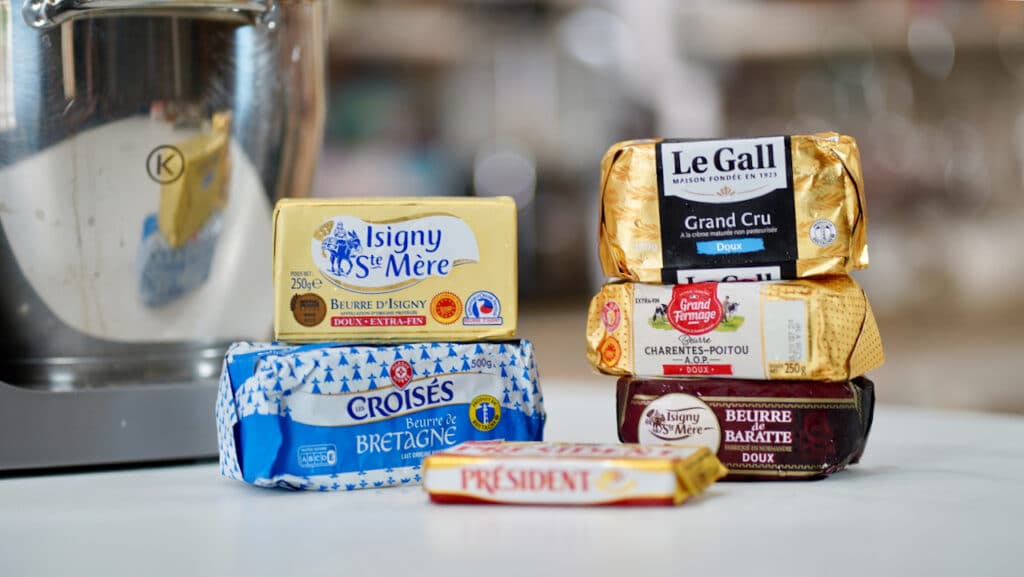
Which Butter To Use?
- One key ingredient that can truly elevate your baking goods is European style butter. This type of butter is a favorite among chefs for its high butter fat percentage, which typically hovers around 82 percent. In comparison, basic butter tends to have a lower butter fat content and a higher water content. The higher butter fat content in European style butter not only contributes to a richer taste but also results in a softer texture that is perfect for baking and cooking. Puff pastry laminating process is achieved by giving 5 or 6 single turns (folds), or 3 single turn and one double turn. Puff pastry has about 729 layers of folded dough. These layers of butter make the dough rise in the oven during baking. The butter turns into steam and pushes up the layers of dough, thus creating a puff.

Puff Pastry Tips
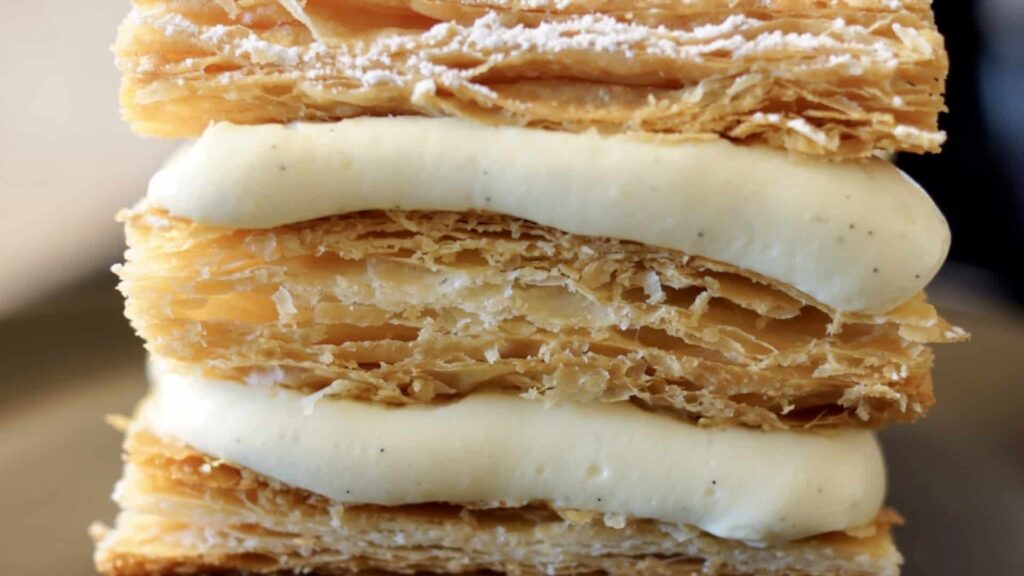
- When it comes to making puff pastry, getting the right thickness is crucial to ensure a perfectly crispy and flaky result. One common mistake that can lead to underdone pastry is making the sheets too thick and skipping the requested resting time. To prevent this issue, it is essential to re-roll pastry sheets after resting the refrigerator for a couple of hours or longer. Do likewise if pastry sheets have previously been frozen. Prick the pastry sheets with a dough docker or a fork. Pricking the pastry sheets serves several purposes. Firstly, it helps prevent the formation of air pockets between the layers of dough. When these pockets expand during baking, they can cause the pastry to puff unevenly or even collapse in some areas. By pricking the pastry with a dough docker, you create small vents that allow steam to escape and help the pastry bake more evenly. Secondly, pricking the pastry helps to prevent it from rising too much during baking. When puff pastry is in the oven, the layers of butter between the dough create steam, which causes the pastry to rise and form its characteristic flaky texture. However, if the pastry is too thick and not pricked, it may rise excessively and become undercooked in the center.

Detrempe/Dough
- Ingredients for puff pastry.
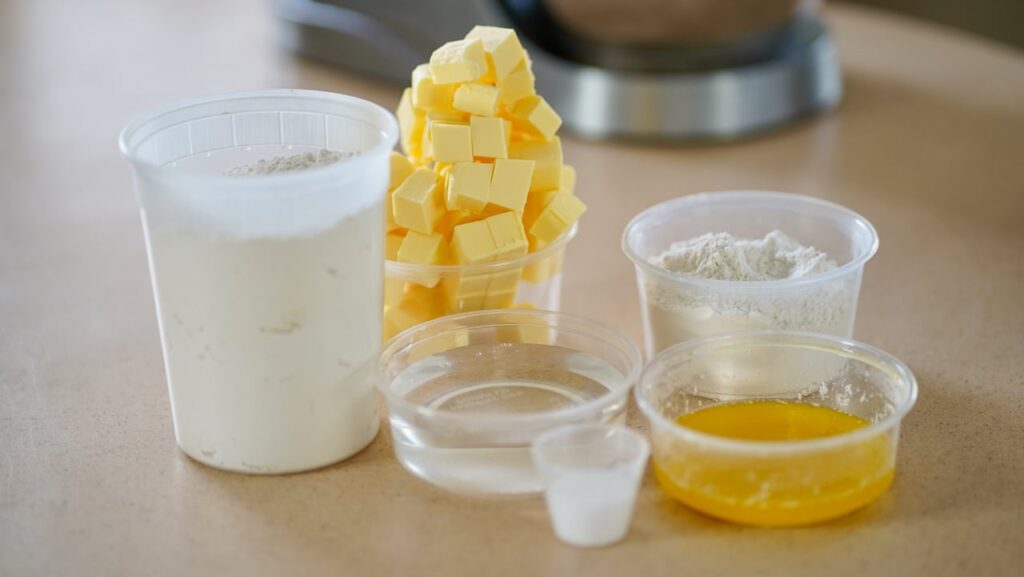
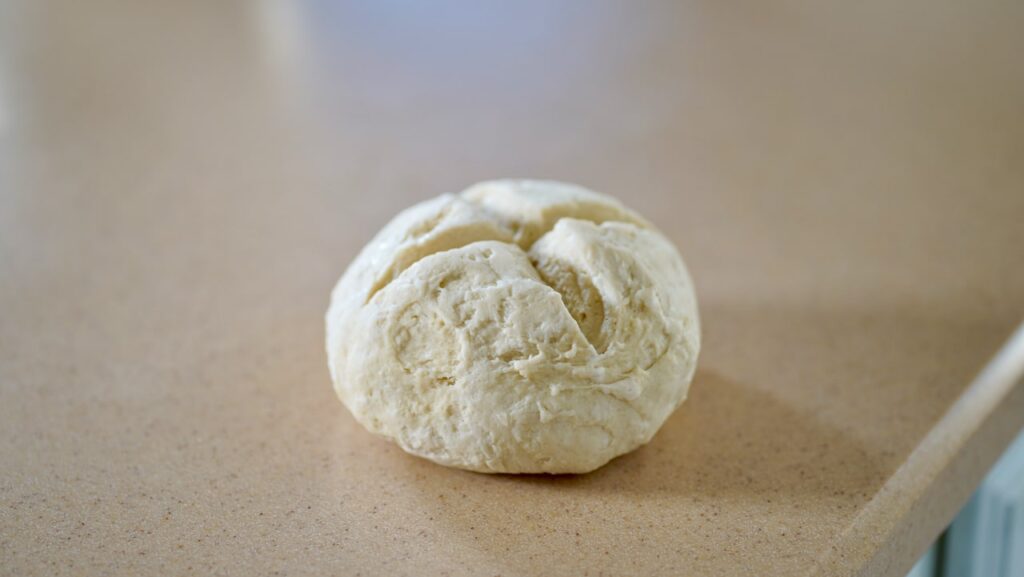
- *Vinegar prevents from dough to oxidate. Mix all ingredients together until just combined. Roll dough out into a 8X11 inch/20X28 cm rectangle (roll it out inside a large freezer bag. Refrigerate overnight to rest.


Butter Block
- In the stand mixer fitted with the paddle attachment, mix butter with flour until it comes together – do not overwork. Same as the détrempe, roll butter flour mixture out into a 8X11 inch/20X28 cm slab sandwiched in 2 sheets of parchment paper. Refrigerate the butter block overnight.

Lamination / Folding
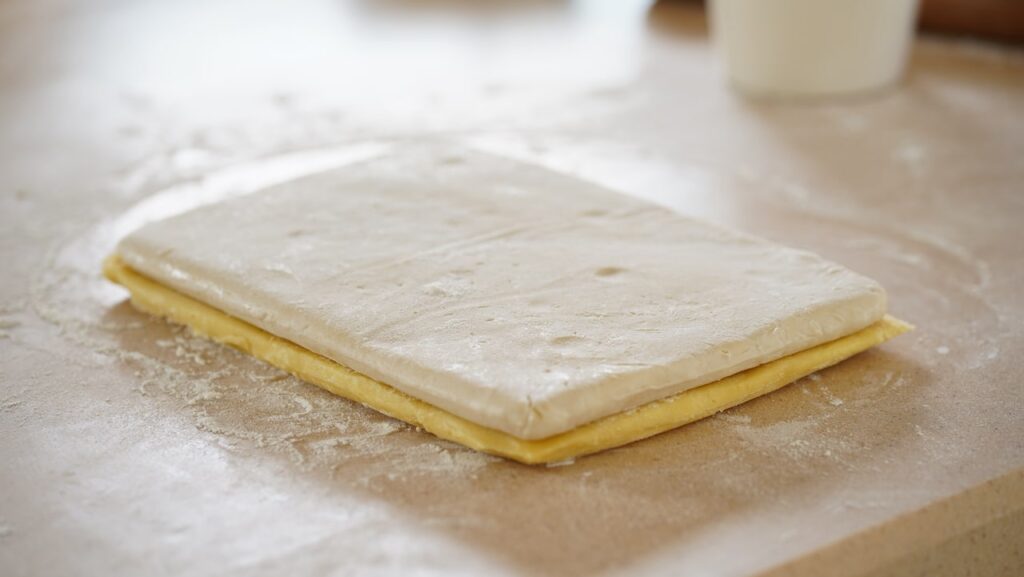
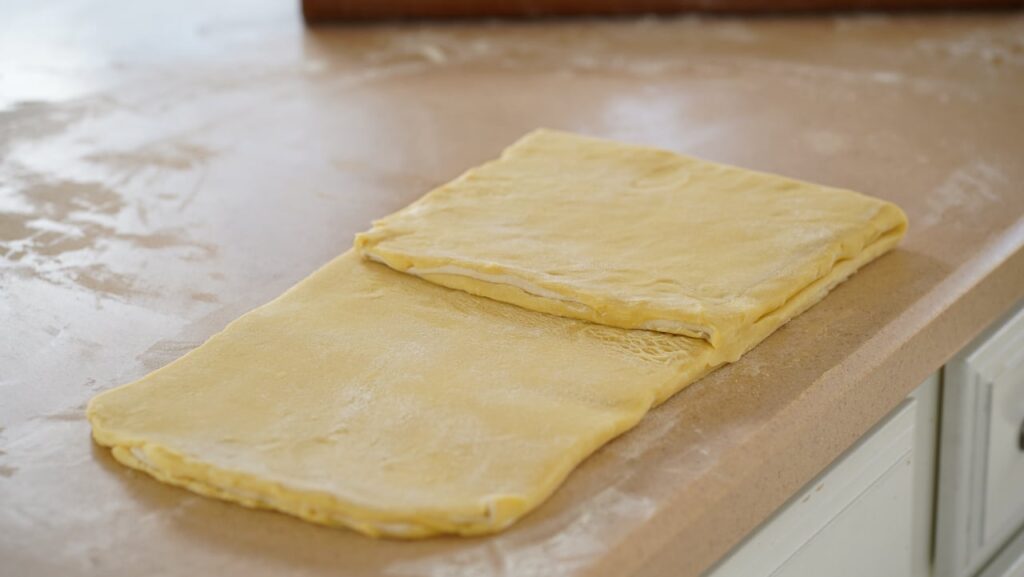
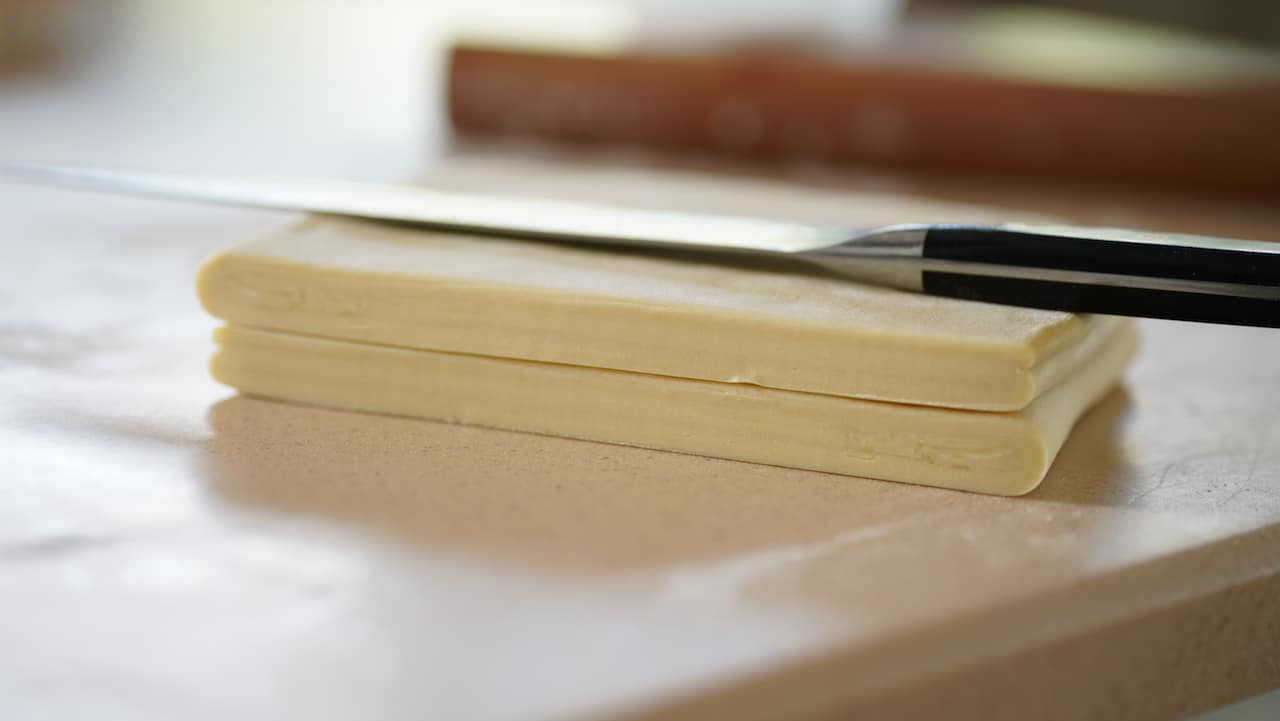
- Leave butter block out for 5 min or wait until the butter block is at the same consistency than the dough; neither too firm nor soft. Flour work surface generously. Place dough on top of the butter block. Roll out into a 9.5X24 inch/24X60cm rectangle. Move dough around occasionally to ensure it isn’t sticking to the countertop (after the first roll, it does not stick at all). Fold into thirds (single turn/tour simple), dust off any excess flour before folding. Make a 90 degrees turn, flatten out dough (paton) into a 9X13-inch/23X33cm slab. Wrap in plastic film and refrigerate for 2 hours. Leave dough out for 10 minutes to soften up before rolling it out again. Repeat this step 4 more times and refrigerate overnight. After the fifth (last fold/turn), square off dough by trimming off both ends. Place pieces of pastry and readjust paton accordingly. The puff pastry is now completed. Flatten out pastry a bit and divide into 2 portions, wrap up in plastic film and refrigerate overnight.

Lamination Using Dough Sheeter / Laminoir
- In the professional environment, dough sheeter makes pastry chefs life way easier. All doughs are rolled out mechanically into desired thickness in no time. For the puff pastry, give 2 single turns in the row. Refrigerate 2 hours, repeat until done.


Puff Pastry Sheets
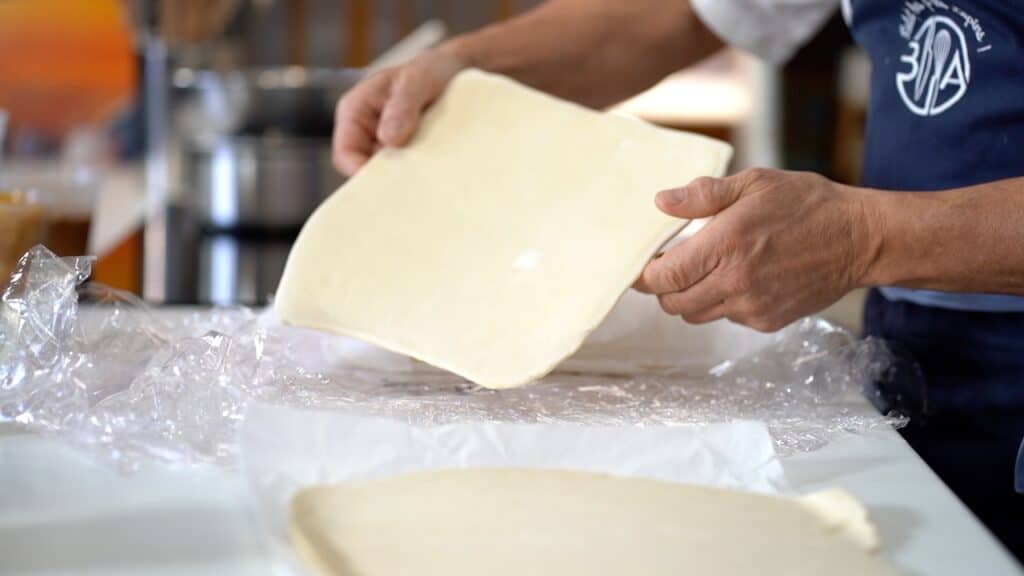
- Roll out each portion into a 14.5X19.5 inch/37X50 cm and prick. Lay pastry over a large sheet tray and refrigerate for 30 min to rest. Trim off into a 13X18 inch/33X46 cm sheet or leave it as is (it can be trimmed and readjusted once baked as well). Freeze pastry sheet until ready to bake.

Storage
- Once you have prepared your puff pastry dough, you have the option to refrigerate it for up to 5 days or freeze it for several months. If you choose to freeze your puff pastry, it is important to roll out the pastry into sheets before freezing and prick it using a dough docker. This way, you can easily grab a sheet from the freezer whenever you need it, much like the pre-rolled puff pastry sheets available in the grocery store freezer section. Prior to use, let pastry thaw overnight in the refrigerator.


Baking
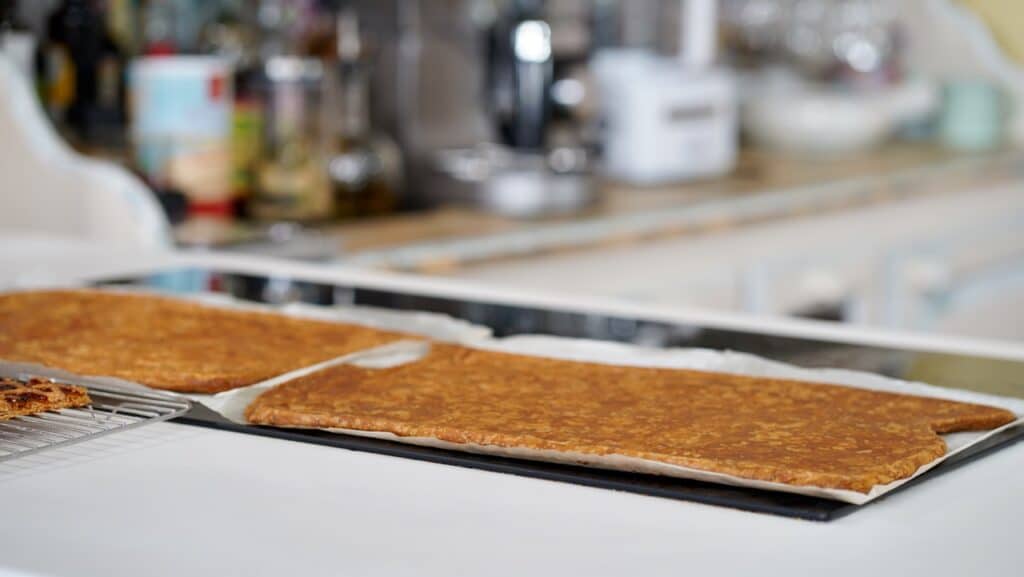
- Preheat fan oven to 350ºF/180ºC. For a more even rise, place a sheet of parchment paper and a baking tray on top of your pastry as well. Bake for 30 minutes. Remove the baking tray and parchment – put back in th oven and continue baking for 10 minutes more.

This content is part of the PREMIUM SECTION

This recipe requires a All-content access subscription. The Premium section includes more than 50 essential recipes from French pastry and a special section for mastering artisanal bread.
The Premium section is only accessible with "A year at the table" subscription. Discover it with special first year discount.


