
Please note that the full access to this content needs a subscription: please sign up.
Taste of Italy
This recipe is a protected and only available for paid members. To obtain the full step by step recipe and detailed ingredients list, please sign up.
Preview the recipe
Pasta Dough
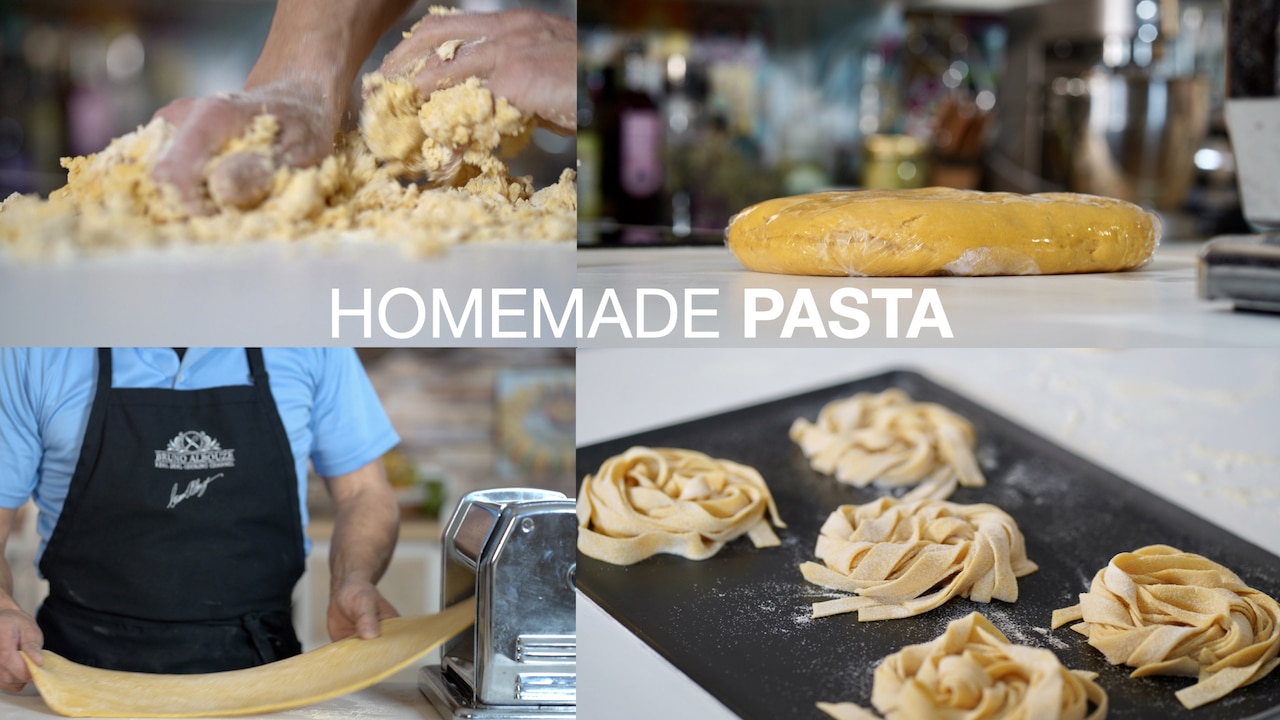
- In a tall, narrow container, combine the eggs, egg yolks, salt, and olive oil. Blend thoroughly with an immersion blender until smooth.Place the flour(s) in a large bowl and make a well in the center. Pour the blended liquid into the well. Using your fingers, gradually incorporate the flour into the liquid until just combined.Turn the dough out onto a clean work surface and knead for about one minute, just until it forms a firm, cohesive ball. Stop at this point. The dough must remain firm; do not add extra liquid.Wrap the dough tightly in plastic wrap and let it rest at room temperature for at least 30 minutes before proceeding. This resting/transpiring period relaxes the gluten, reducing the dough's elasticity and making it much easier to roll out.
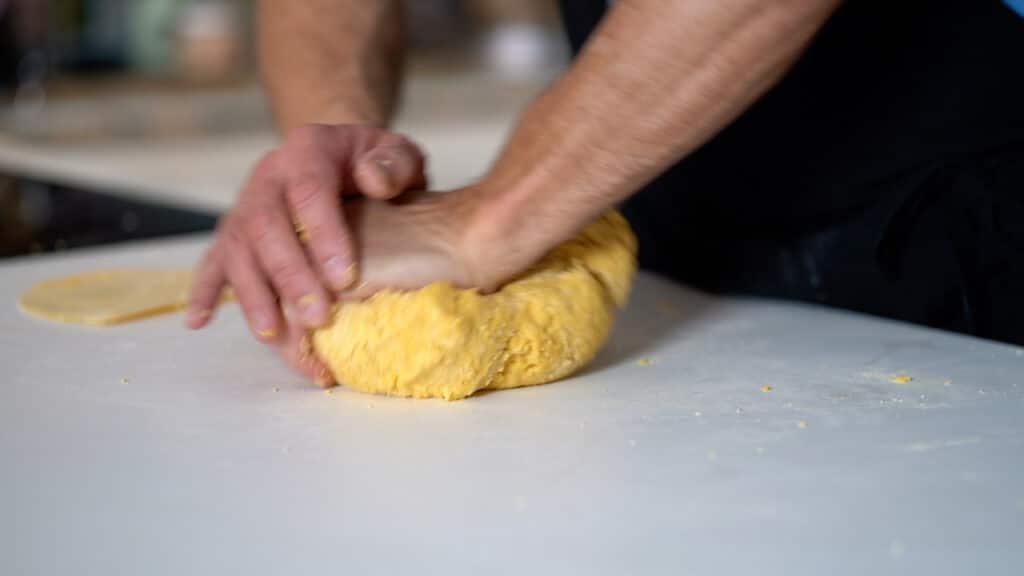

Pasta Lamination Step
- This step is crucial as it develops the dough's strength. Lightly flour your work surface and the dough. Flatten the dough and cut it in half so that each piece will fit the pasta roller's widest setting. Lightly dust the pieces with semolina flour. Set your pasta machine or roller attachment to its widest thickness. Roll each piece of dough through, gradually reducing the setting (making it thinner) with each subsequent pass until you reach your desired thickness.

- Stop rolling when the dough's length has approximately tripled. Next, using a technique similar to folding croissant dough, give the dough 3 to 4 tour simple folds (roll, fold, turn). This process will make the dough smoother and more cohesive. Wrap the pasta dough tightly in plastic wrap and refrigerate for up to 4 days. It will be ready to use after resting in the refrigerator for at least one hour.
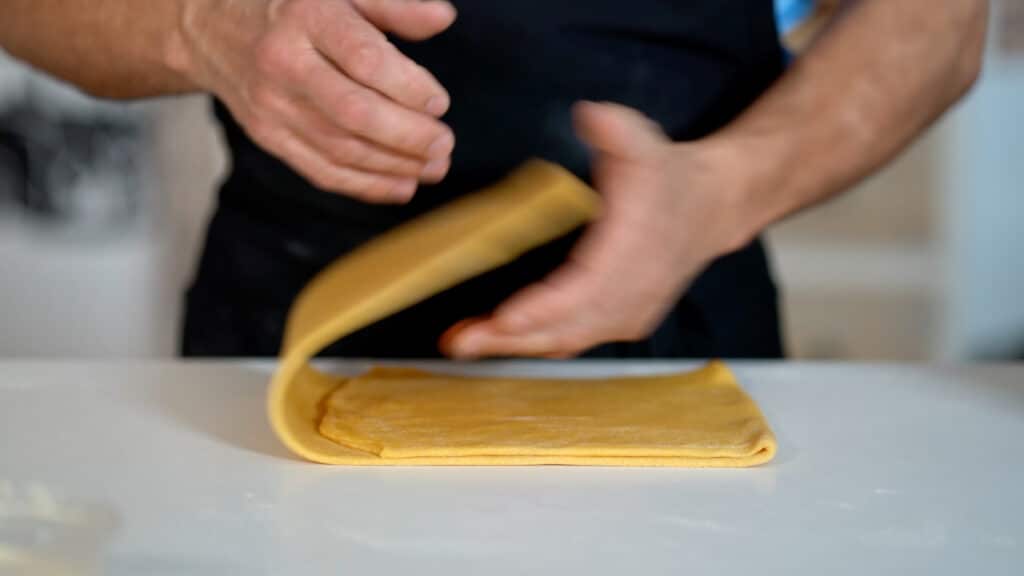


Making Pasta
- Lightly dust the dough with semolina flour and flatten it slightly with a rolling pin to fit the widest setting of your pasta machine. Adjust the machine to gradually decrease the thickness with each pass, rolling the dough through until it is smooth. When the dough sheet becomes very long, you may want to cut it in half for easier handling. Continue rolling until you reach setting number 3 (approximately 2mm thickness), dusting the dough and your work surface with flour as needed to prevent sticking.
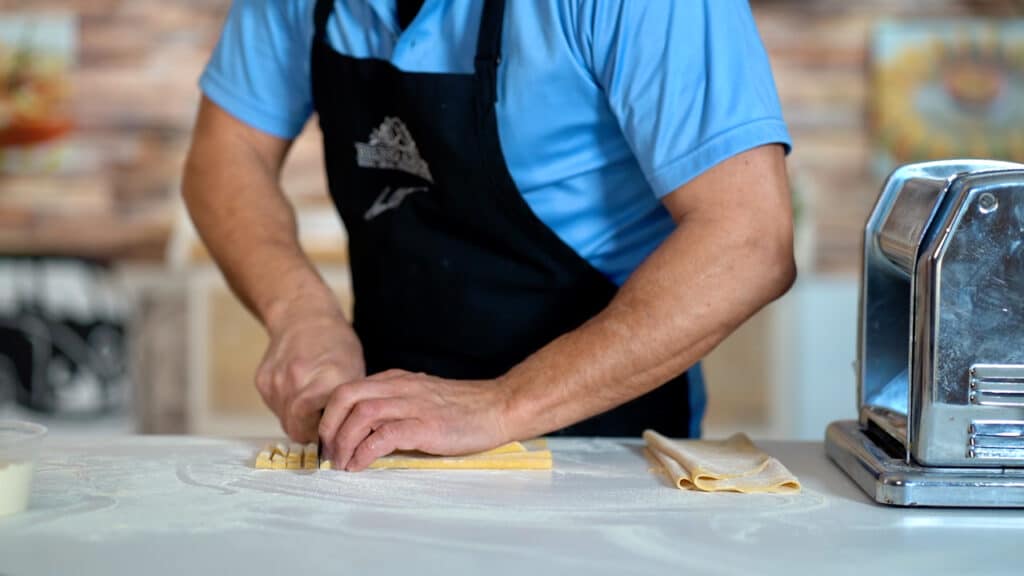

Cutting Pasta
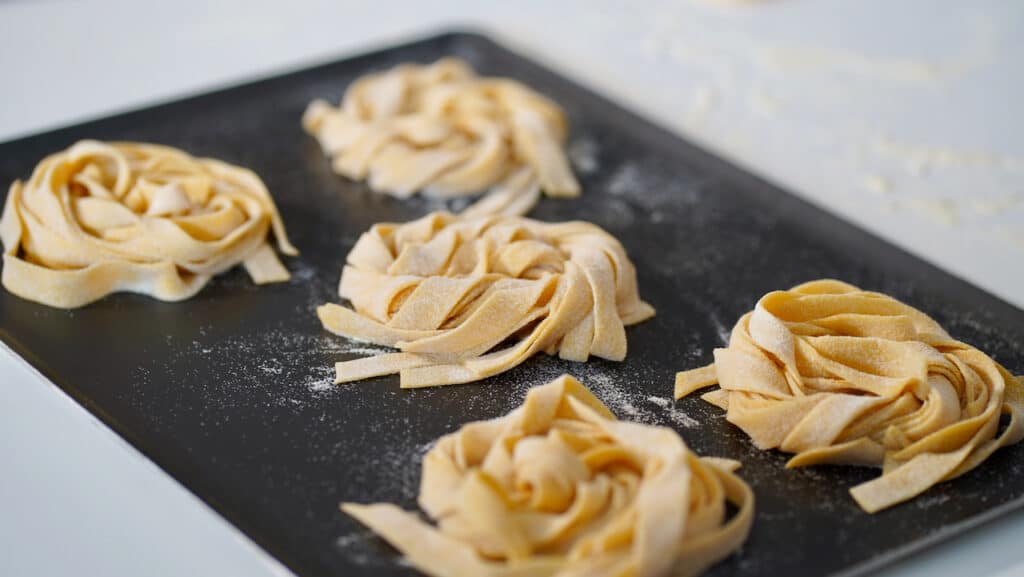
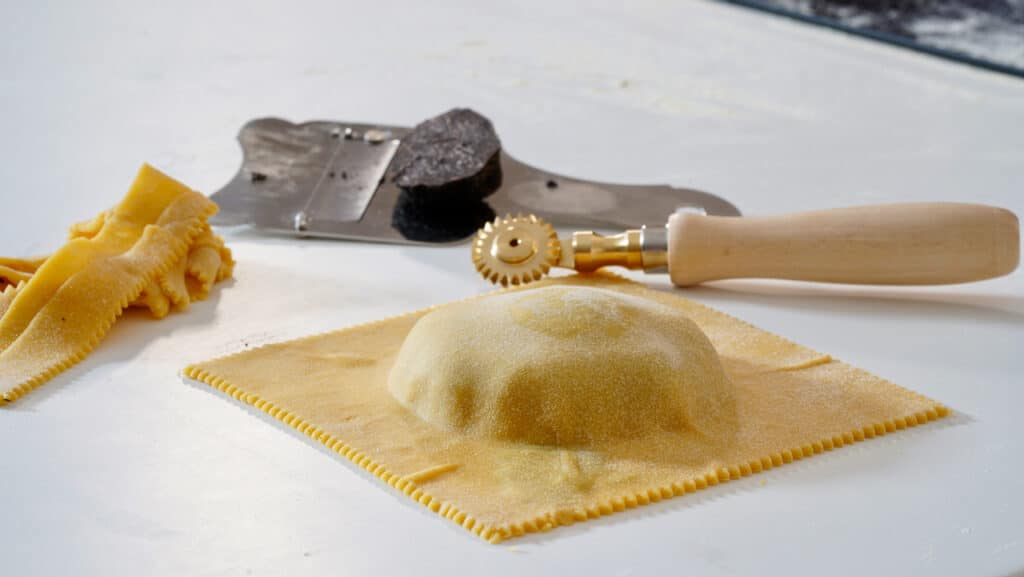
- For lasagna: With a long, sharp knife, cut the pasta sheet into two pieces, each measuring approximately 7.5 x 4 inches (19 x 10 cm).For tagliatelle: Create two sheets, each about 7.5 x 14 inches (19 x 35 cm). Cut these sheets into strips ¼ inch (0.6 cm) wide.For pappardelle: Use the same size sheets as for tagliatelle, but cut them into wider strips of about 1 inch (2.5 cm).
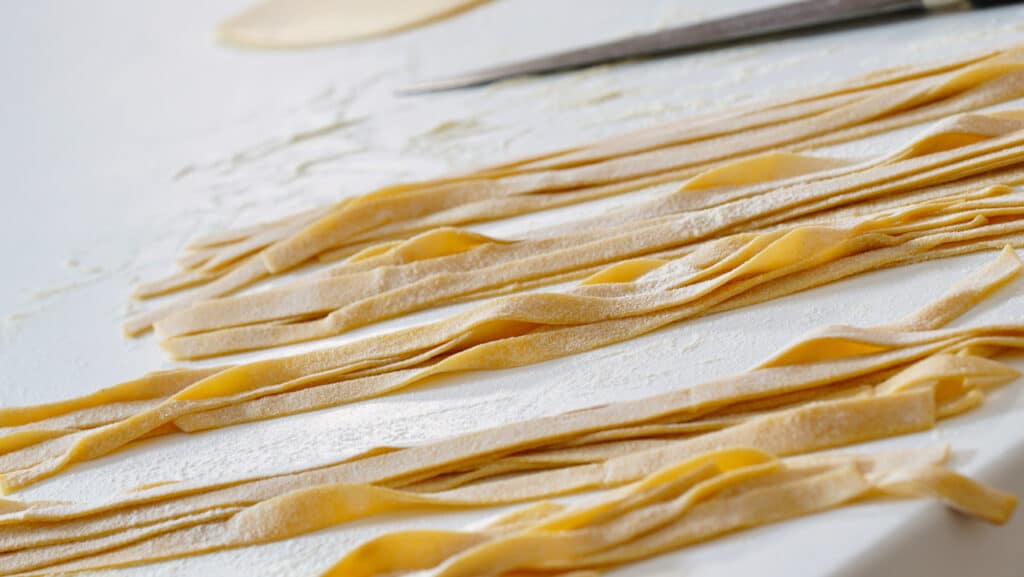

To Store Pasta
- Freezing Pasta Dough: Wrap the dough tightly in plastic wrap and place it in an airtight container or freezer bag. It will keep for up to 3 months. Thaw overnight in the refrigerator before using.Freezing Noodles: Let the noodles air-dry for about one hour. Transfer them to a freezer-safe bag or airtight container, and freeze. The noodles will keep for several months. To cook, place the frozen noodles directly into boiling water.Drying Fresh Pasta: Lay the strands in a single layer on a baking sheet or pasta drying rack. Allow them to dry completely, which can take up to 12–24 hours depending on humidity. Once fully dehydrated, store the pasta in a sealed container in your pantry for up to six months.

Cooking Pasta
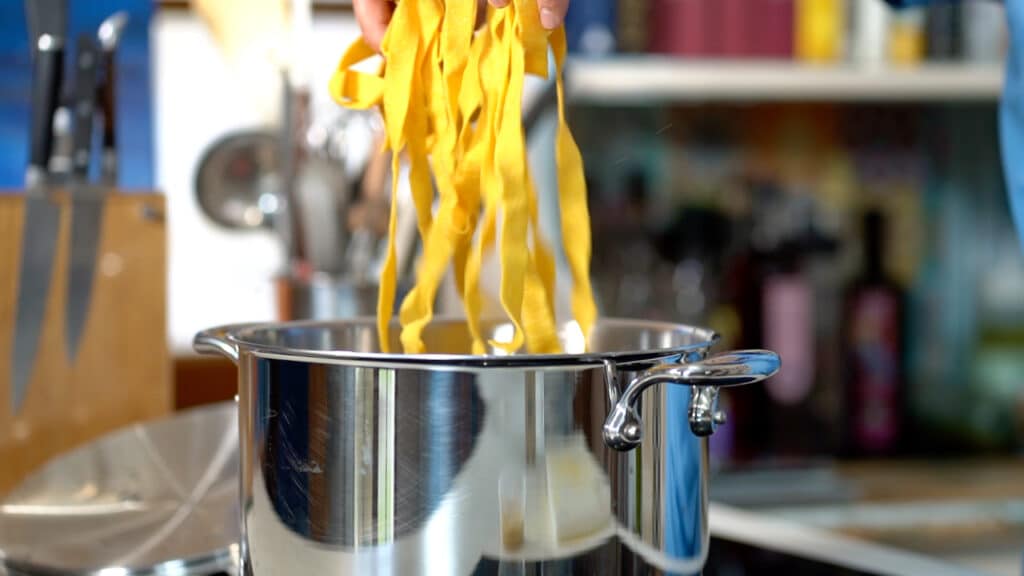
- To cook fresh pasta, fill a large pot halfway with water. Bring it to a rolling boil and salt the water generously. Fresh pasta cooks much faster than dried—typically 4 to 6 minutes, compared to the 10–14 minutes often required for dried varieties. Cook the fresh pasta until al dente, which will take about 5 minutes. Drain the pasta, then toss it with a little olive oil to prevent sticking, or finish cooking it directly in your favorite sauce for 1–2 minutes to allow the pasta to absorb the sauce.


Ready to discover this recipe? You're only 1 step away.
This recipe is only accessible to registered members!
Create your account to access all recipes and content of my website.
Join us now and enjoy more 800 recipes (Mostly French with European Influences, American Classics and Asian fusion)
Already register? Sign in


Appetizers
Beetroot Red Cabbage Mango Salad

Free Recipes
How To Prepare Red Cabbage Raw


Free Recipes
Apple Pie Traybake

Cakes
Olive Oil Chocolate Cake

Desserts
Spicy Chocolate Bar

Entrees
Deboning A Poularde Leg
Free Recipes
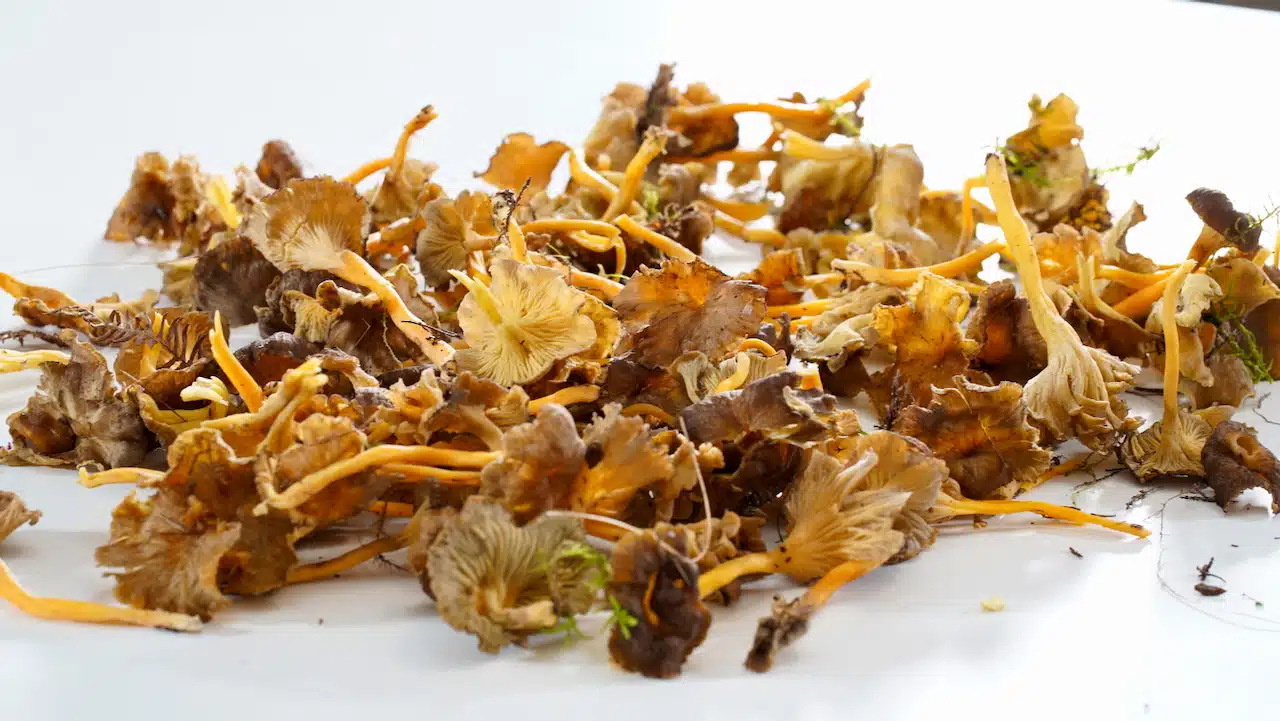
Chanterelle

Bread
Panettone Perdu

Free Recipes
Mustard Fig Spread

Free Recipes
Poularde Demi-Glace
