
Please note that the full access to this content needs a subscription: please sign up.
Created in the 17th century
This recipe is a protected and only available for paid members. To obtain the full step by step recipe and detailed ingredients list, please sign up.
Preview the recipe
Copper vs Silicone Molds
- Copper canelé molds are indeed renowned for their ability to create that perfect brown crust, thanks to their excellent heat conductivity. Aluminum molds are a more budget-friendly option that still deliver decent results.
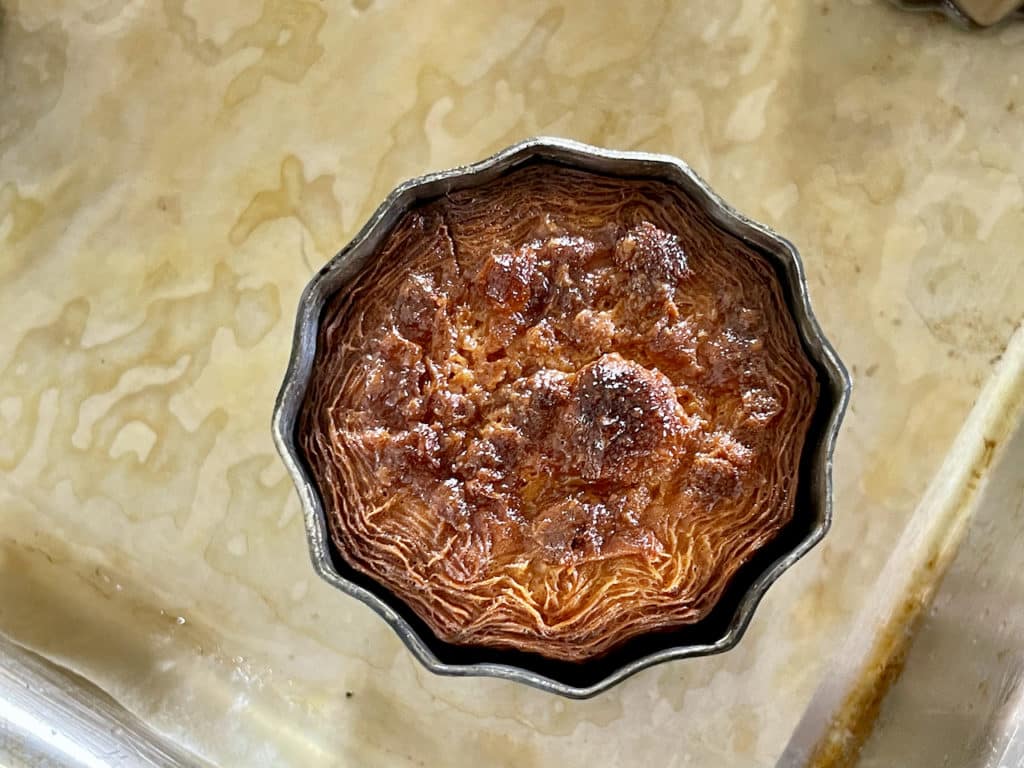
- Nonstick molds are also efficient, but silicone molds can pose challenges due to their lack of heat conductivity and the spacing between cavities. However, some professionals achieve great results with silicone molds by using powerful convection ovens.


Beeswax Benefits
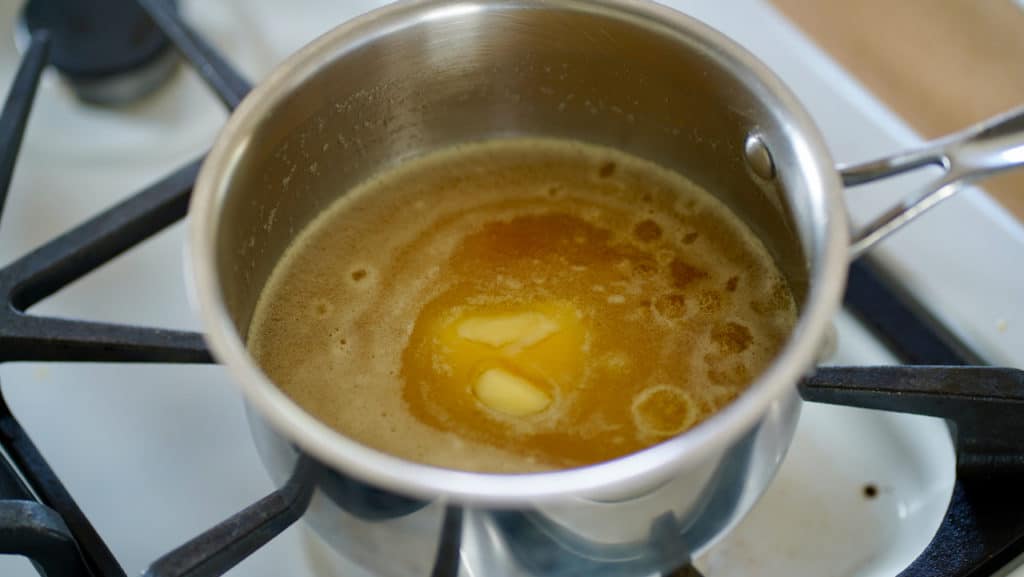
- Avoid greasing canelé molds with beeswax only. Instead, grease them with a mixture of melted beeswax and butter. Another greasing method also works: use both softened butter and cooking spray. Beeswax must be slowly melted in a small saucepan with butter. Do not microwave beeswax. Fill each warm mold to the top with the hot beeswax mixture. Reheat the mixture if necessary. Flip the mold immediately to drain. Protect your hands with gloves during this procedure. If the coating happens to be too thick, do not hesitate to heat the molds upside down to drain excess wax. Chill the greased molds until ready to fill.

Canelé Batter
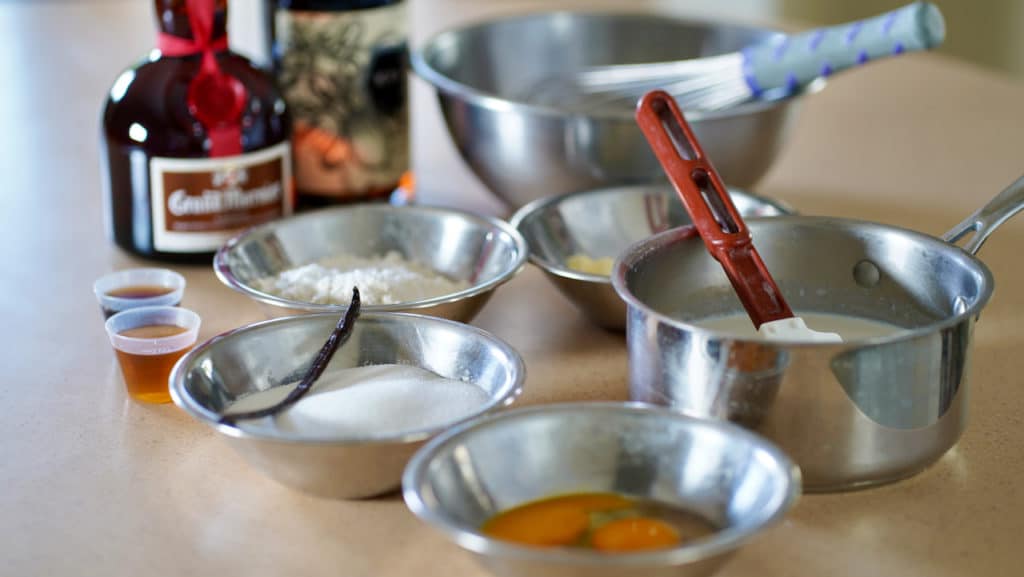
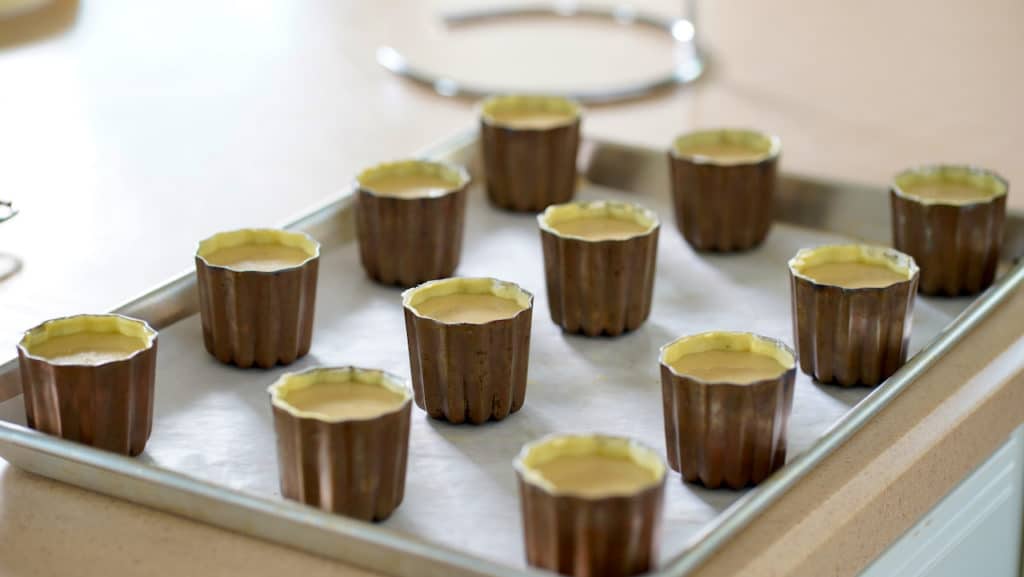
- Cut the vanilla bean lengthwise and scrape the seeds out. Put the vanilla seeds and pod into the milk, and bring to a boil. Turn off the heat, and add the butter. Meanwhile, in a large bowl, combine the flour, sugar, and eggs. When the milk reaches 185°F/85°C, whisk in the flour-sugar mixture. Add the alcohol. Refrigerate the batter for 12 hours to rest before baking. Pass the batter through a sieve. Rinse and save the vanilla pod for your homemade vanilla sugar. Leave the batter out for about 2 hours or longer before baking. Fill the greased molds with batter, leaving 0.20 inch (0.5 cm) from the top.

Baking
- Preheat a fan oven to 400°F (200°C). Put the canelés in the oven and bake for 10 minutes. Lower the oven temperature to 350°F (175°C), and continue baking for 45 minutes more. Remove the canelés from the oven and allow them to rest for 5 minutes before unmolding. To unmold the canelés, simply turn the molds over and gently tap them to release the pastries. Let the canelés cool on a wire rack.


Storage
- Canelés are best enjoyed within 6 hours of being baked to savor their crispiness. Place freshly baked canelés in the freezer for 6 hours to harden, then vacuum-seal them. Store the pastries in the freezer for up to 6 months. An hour before serving, put the frozen canelés in the oven for 6 minutes. Remove them from the oven, and leave the canelés out for 10 minutes. Enjoy them within 5 hours.
How To Clean Canelé Molds
- Only silicone molds can be thrown in the dishwasher. Copper and aluminum molds should not be washed with detergent; simply wipe them with a dry cloth or paper towel while they are still warm after each use. As a last resort, molds can be cleaned by immersing them in boiling water with a couple of drops of soap for 20 minutes or so. Finish cleaning under running water with a non-abrasive tool, rinse, and dry thoroughly.


Ready to discover this recipe? You're only 1 step away.
This recipe is only accessible to registered members!
Create your account to access all recipes and content of my website.
Join us now and enjoy more 800 recipes (Mostly French with European Influences, American Classics and Asian fusion)
Already register? Sign in
