
Please note that the full access to this content needs a "Year at the table" subscription: please sign up.
The final result is a baguette of profound character...
This recipe is a protected and only available for paid members. To obtain the full step by step recipe and detailed ingredients list, please sign up.
Preview the recipe
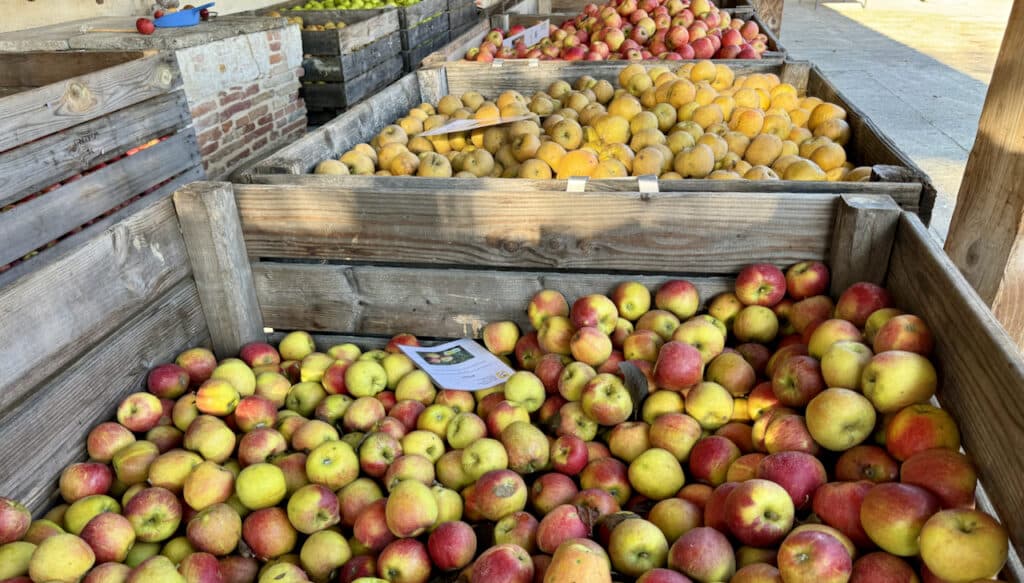
What Apple Cider to Use
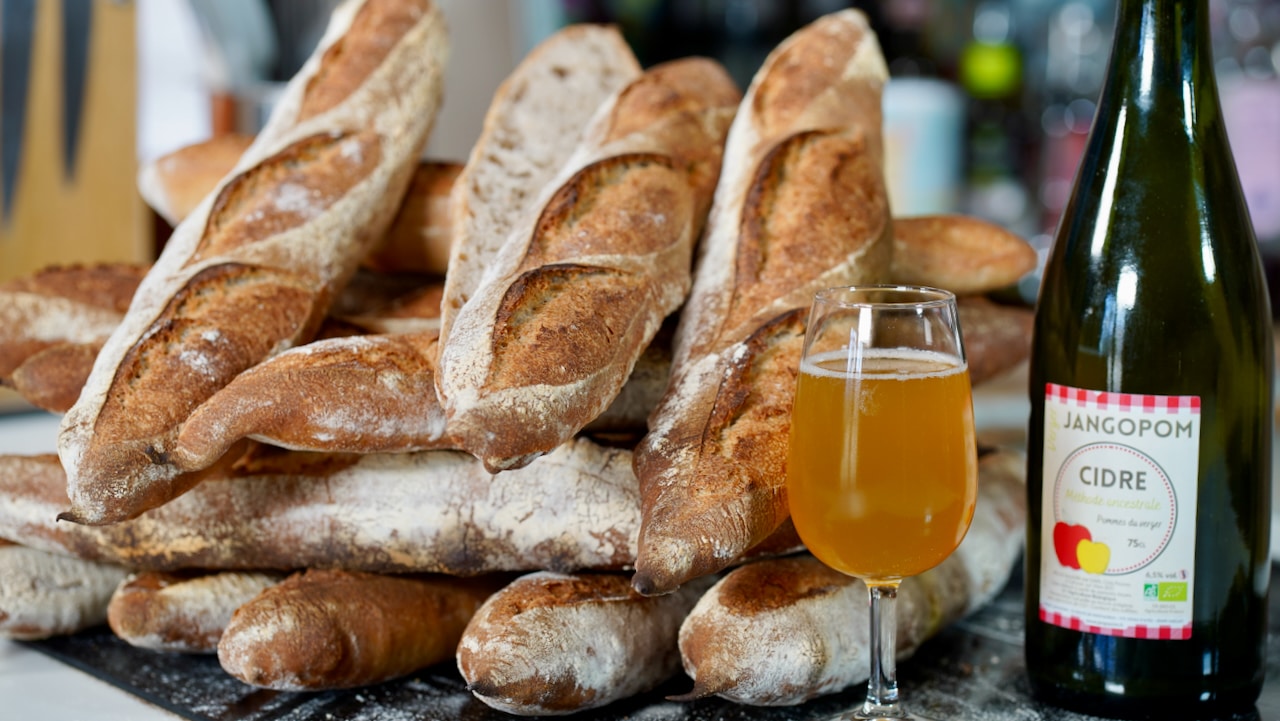
- French apple cider, or cidre, is different from the non-alcoholic apple cider common in the US and Canada. It is an alcoholic (around 5% ABV), sparkling beverage made from specific varieties of cider apples. Le Cidre de Bretagne (Breton Cider) is a particularly famous type, hailing from the Brittany region and extending down to the South of France. However, for this bread recipe, it is important to use an unpasteurized apple cider with no added sugar. This kind is often labeled as being made using the méthode ancestrale. Unpasteurized cider is essential because it retains the nutrients and microorganisms necessary to develop a liquid starter. I found an excellent cider in Gaillac, in the Occitanie region.If it is unavailable, freshly extracted apple juice from a juicer will do the trick. However, the fruit juice will have to undergo fermentation, just like making your natural starter from scratch.

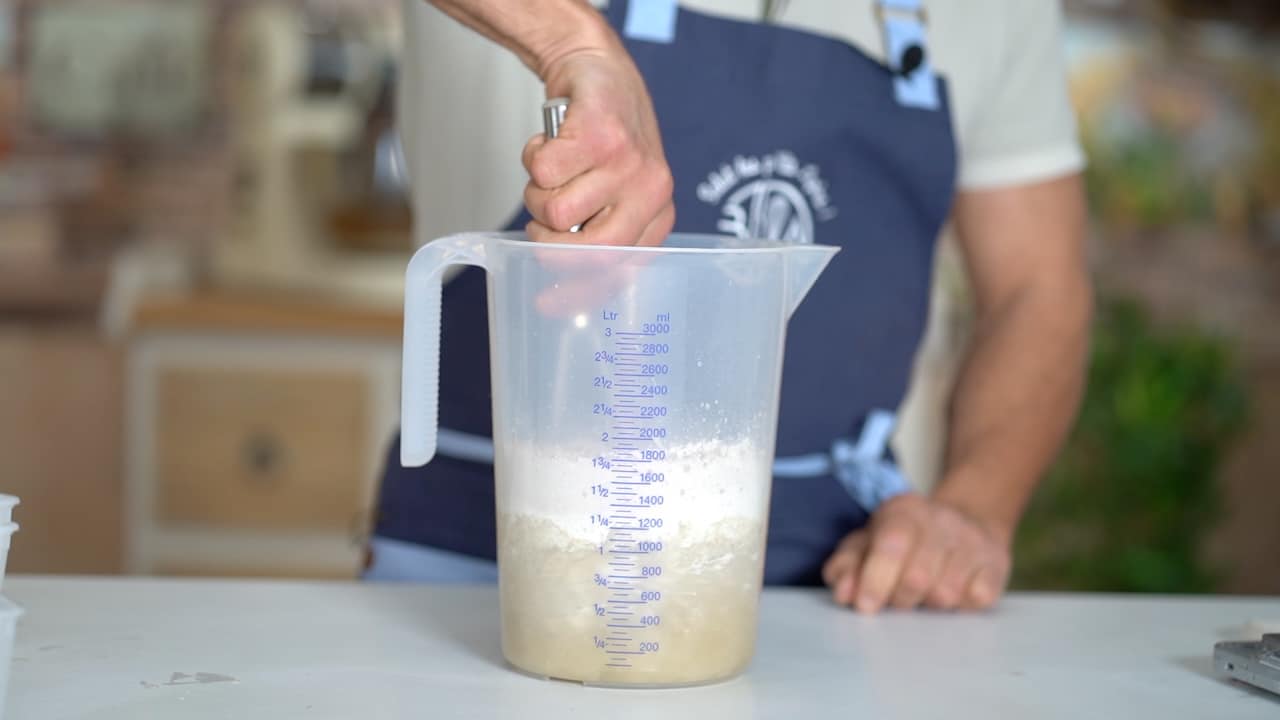
Liquid Starter (Poolish)
- *The liquid for the starter can be made using apple cider only, or 70% apple cider and 30% spring water. In a measuring jug, whisk together the cider and fresh yeast. Double the amount of yeast in the cold season when your room temperature is around 19–20°C. Add the flours and mix until it forms a pasty mixture. Cover the poolish and let it ferment for 12 to 14 hours at room temperature (22-25ºC), until the mixture has tripled in volume and live bubbles appear on the surface.

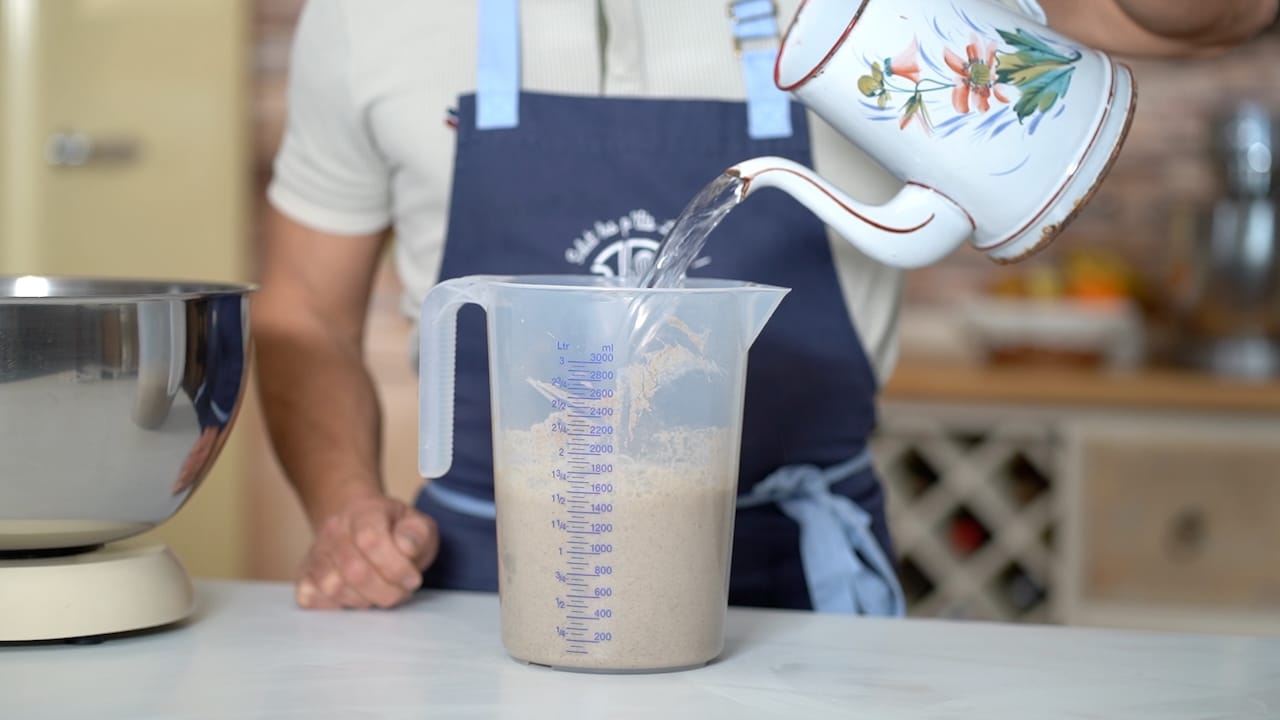
Kneading
- To release the poolish easily, pour the water into the bubbly poolish.
- Add it to the mixing bowl along with the fresh yeast and the flour. Mix on low speed for 2 minutes until it comes together.
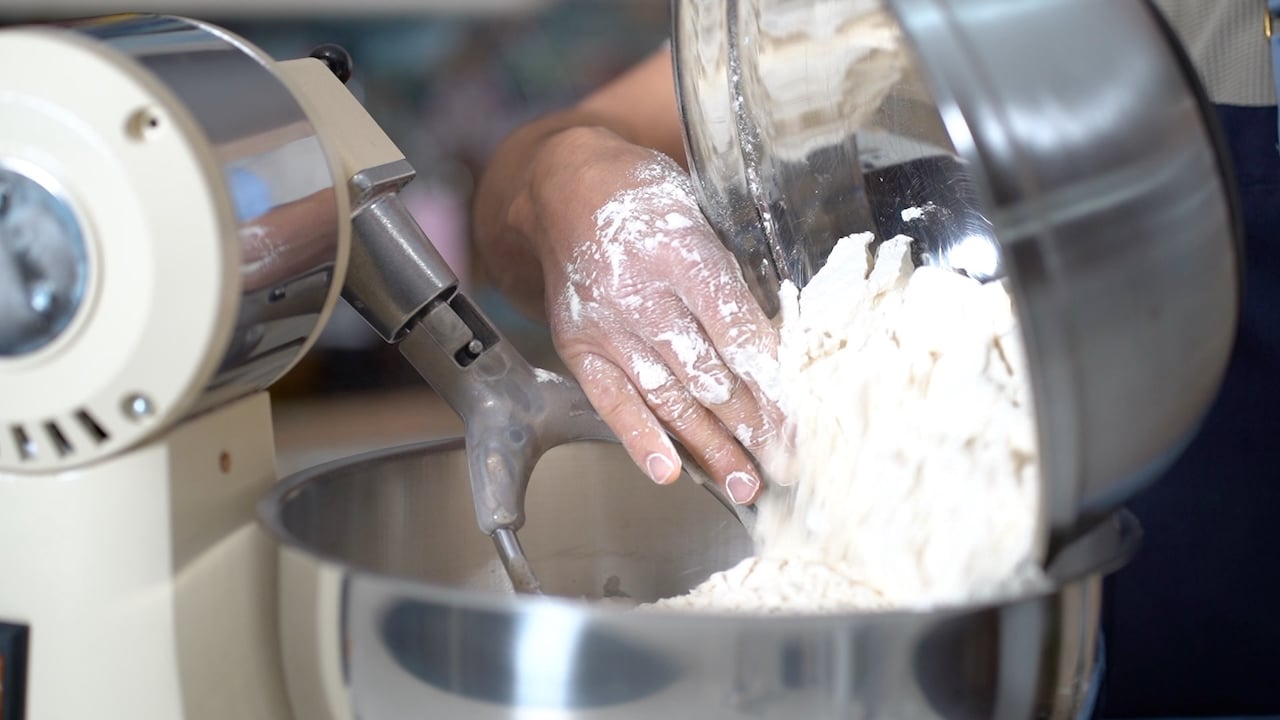
- Add the salt and knead for another 25 minutes on low speed. Alternatively, mix for 5 minutes on low and 8-10 minutes on medium speed.
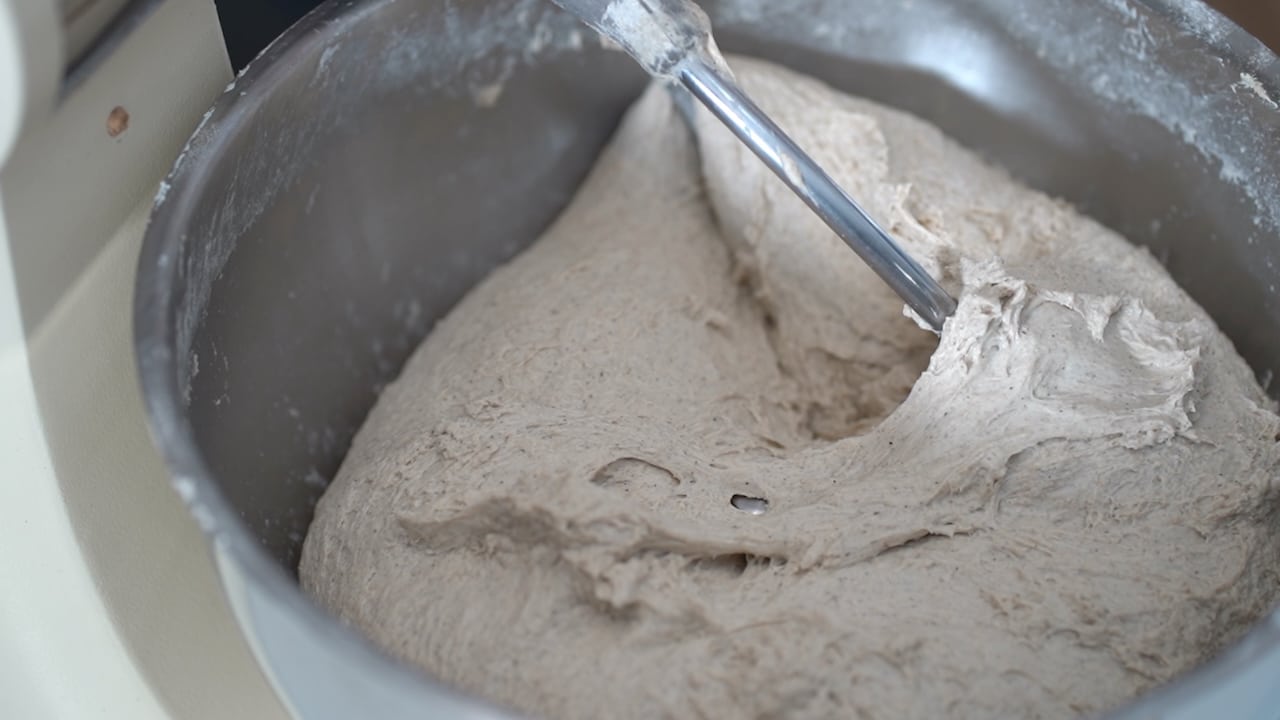


Windowpane Test
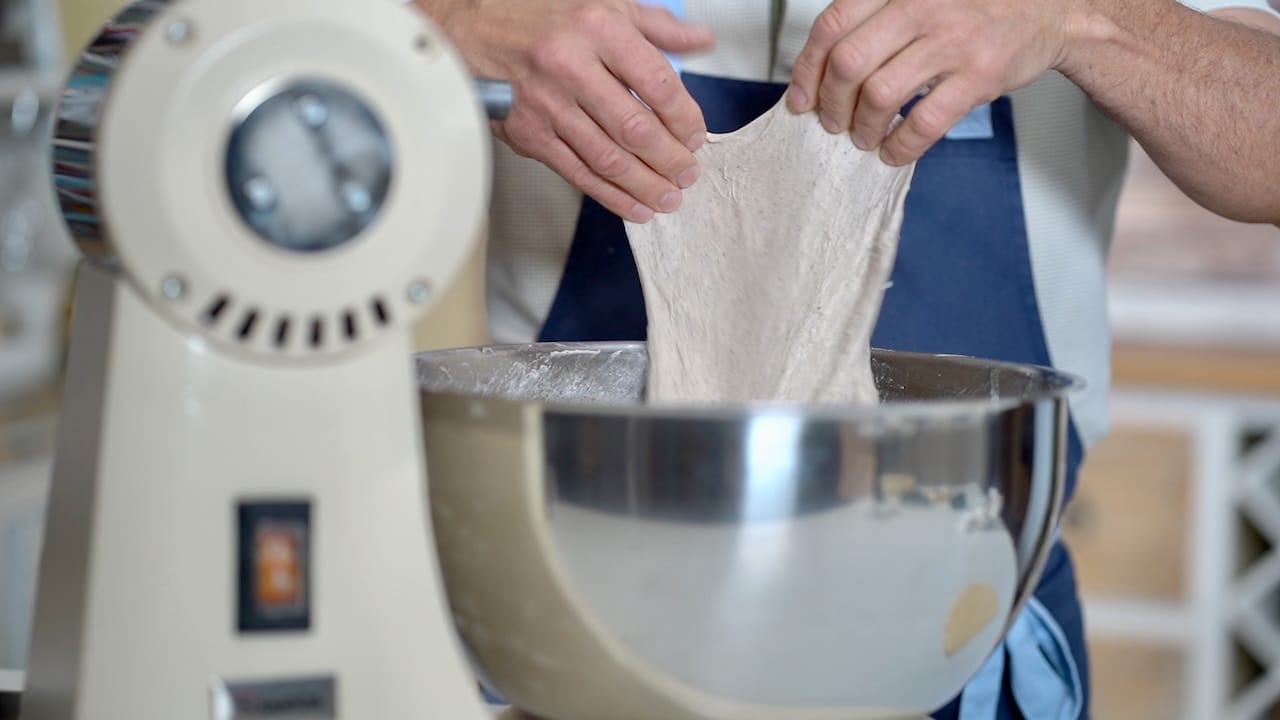
- Grab some dough, as you pull, the dough in the center will become thinner and thinner until at some point it tears. The point where the break occurs tells you just how developed your dough is, and whether or not you should continue to knead it. After mixing, the internal temperature should reach 24-25ºC.

Bulk Fermentation
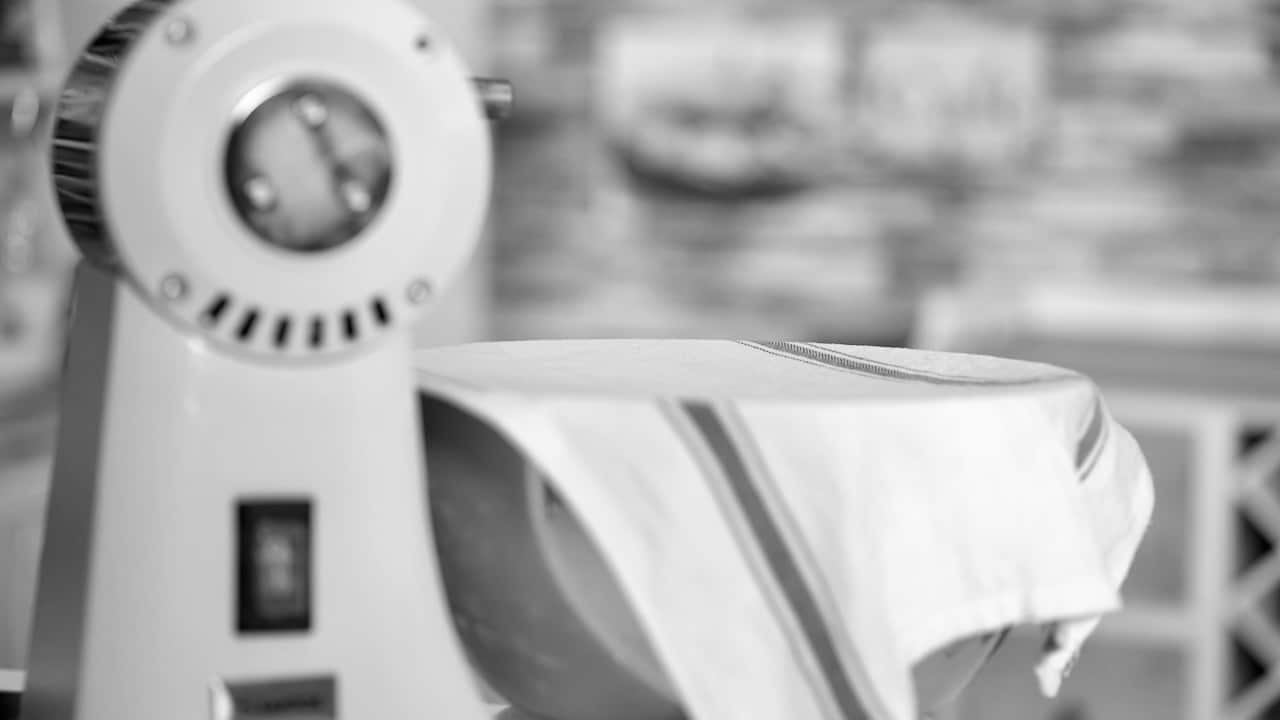
- Since the overnight liquid starter has already done much to develop the dough's aroma and texture, the subsequent bulk fermentation time is reduced to just 90 minutes.

Pro Tips
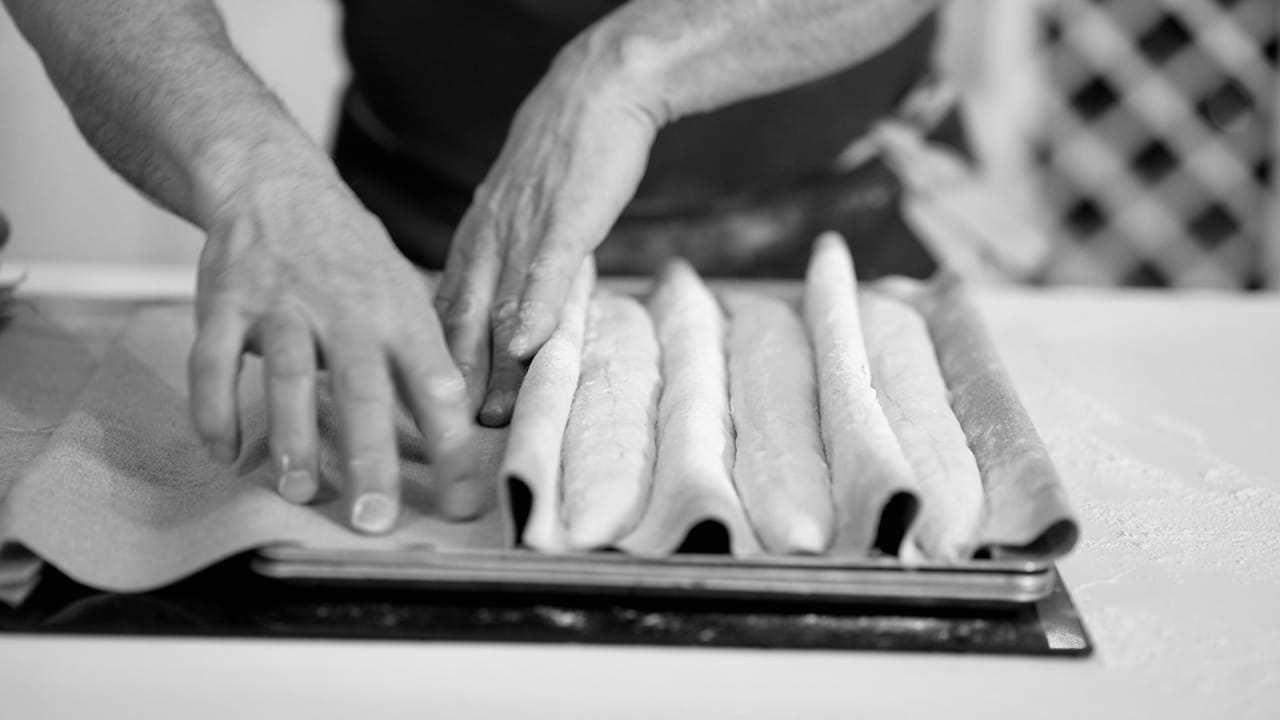
- At home, to better manage the proofing and baking schedule, prepare your bakers couches accordingly. Cut each couche to roughly twice the width of your baking tray—each one should hold four baguettes. Keep in mind that the baguettes will not all be baked at the same time. Instead, plan to bake four baguettes every 45 minutes (allowing 20 minutes for baking and about 20 minutes for the pizza stone to reheat to 250ºC). To prevent the remaining dough from over-proofing while waiting to be baked, the other 16 baguettes should be kept at a cool temperature, around 5 to 10°C. You can store them covered in the refrigerator, or outside if the weather is cold enough. If the dough has over-proofed, you can rapidly slow the fermentation process by placing the baguettes in the refrigerator for up to an hour, or in the freezer for 20 minutes.

Dividing Dough
- Dust your work surface and dough with flour. In order to quickly release the dough from the mixing bowl, run down your plastic dough scraper all around the edges to take it off. Flip the bowl and lightly dust dough with flour. Do not deflate it.
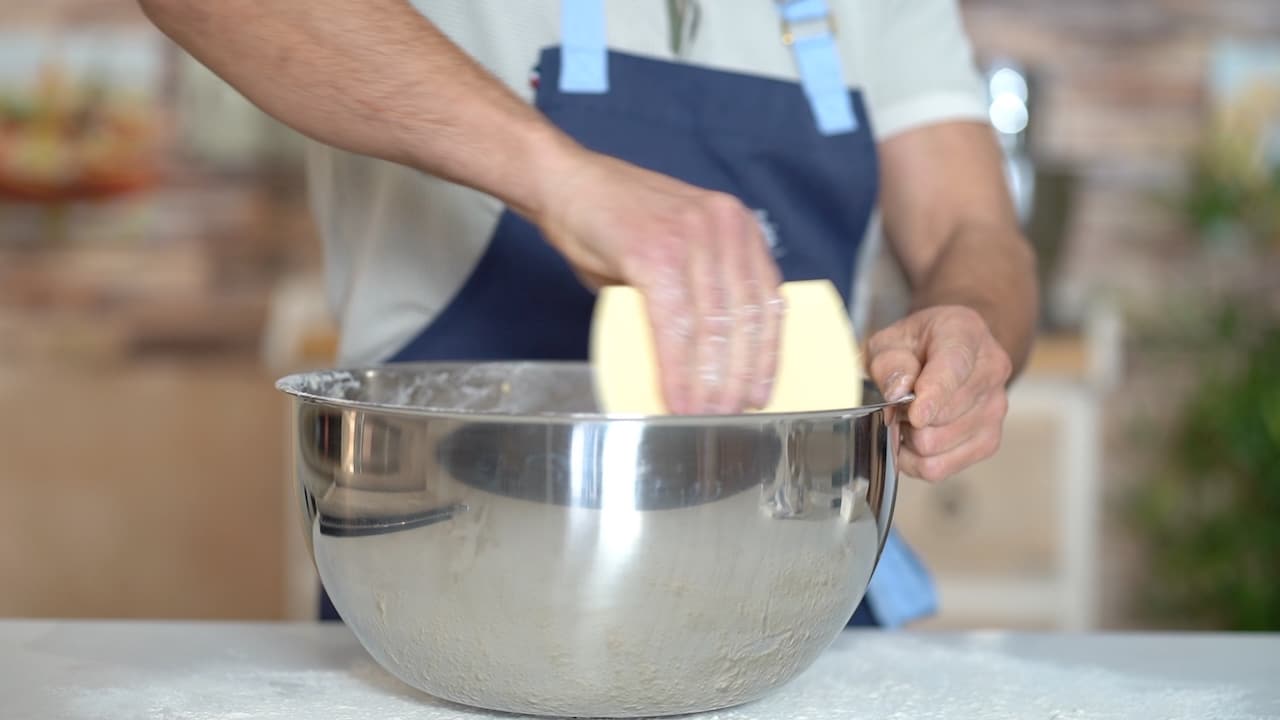
- Just reverse dough so that the skin is now facing up, and to ease the following portioning step, form an elongated rectangle.
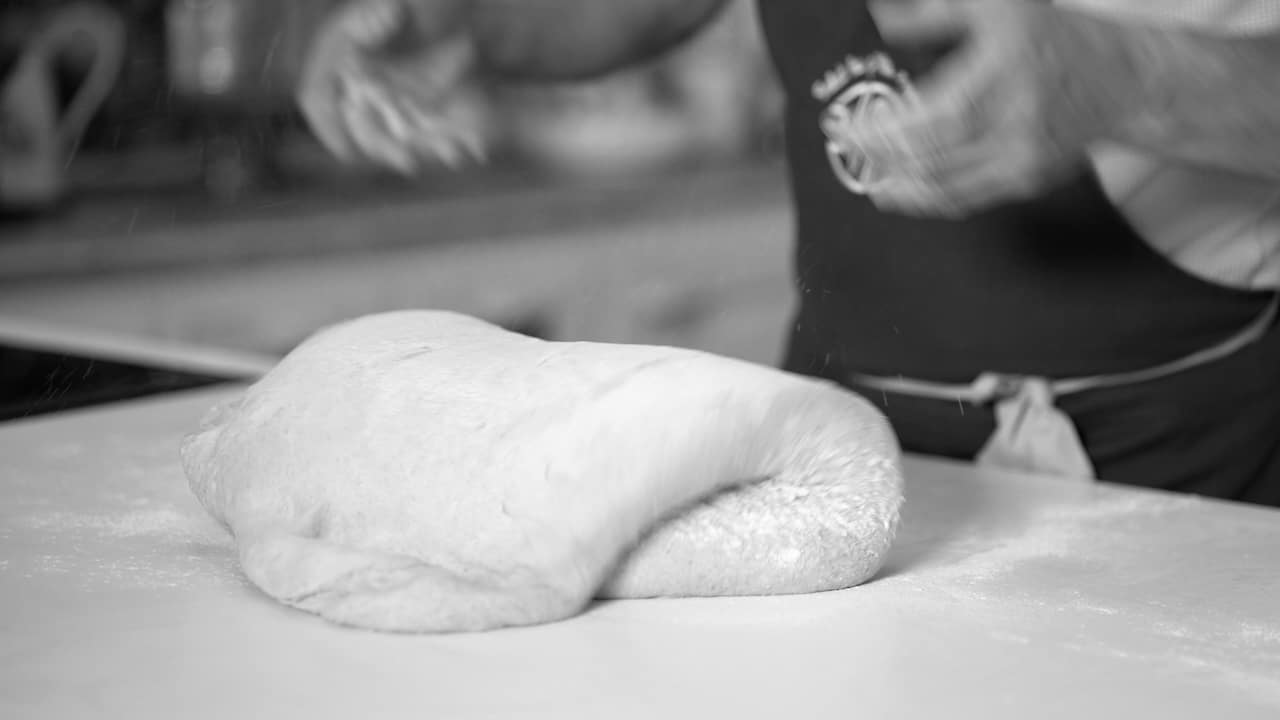
- With the help of the large triangle dough scraper or chef knife, cut the dough lengthwise into three equal portions. This procedure will ease the next portioning step. Flour dough between cuts.
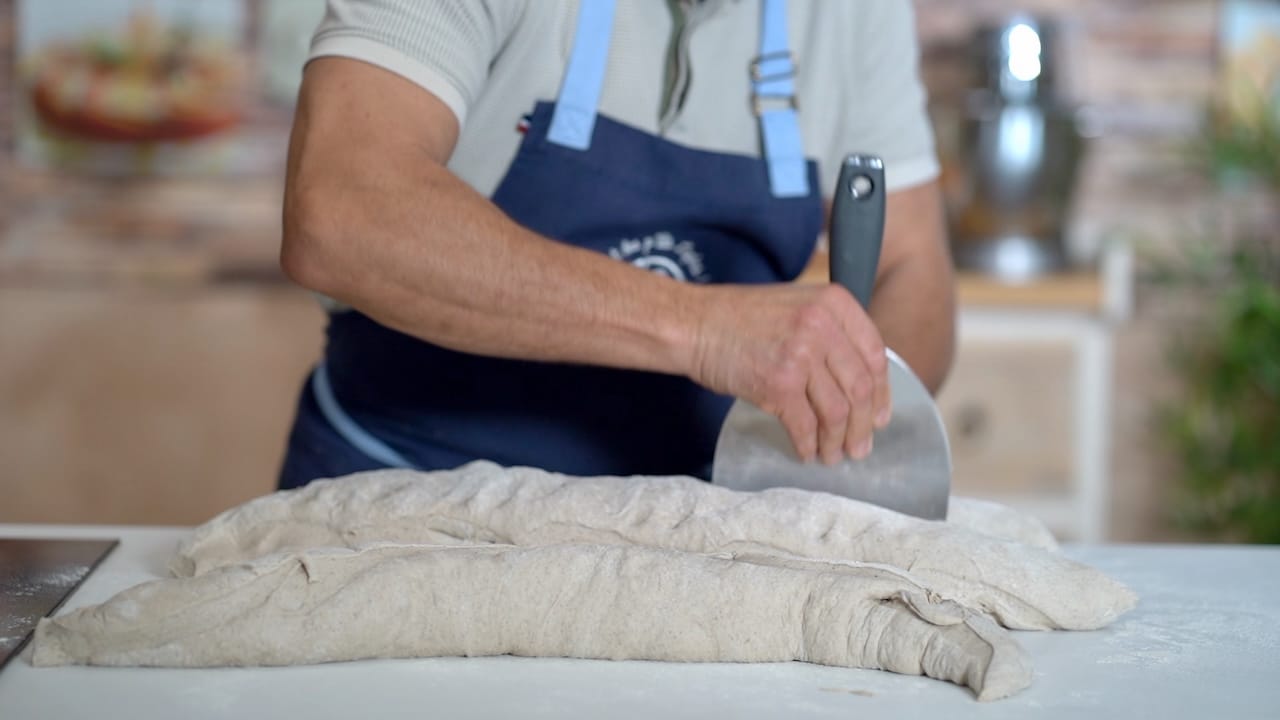
- At home, divide the dough into twenty 250g portions. If you are working in a professional environment, divide it into fourteen 350g portions instead.
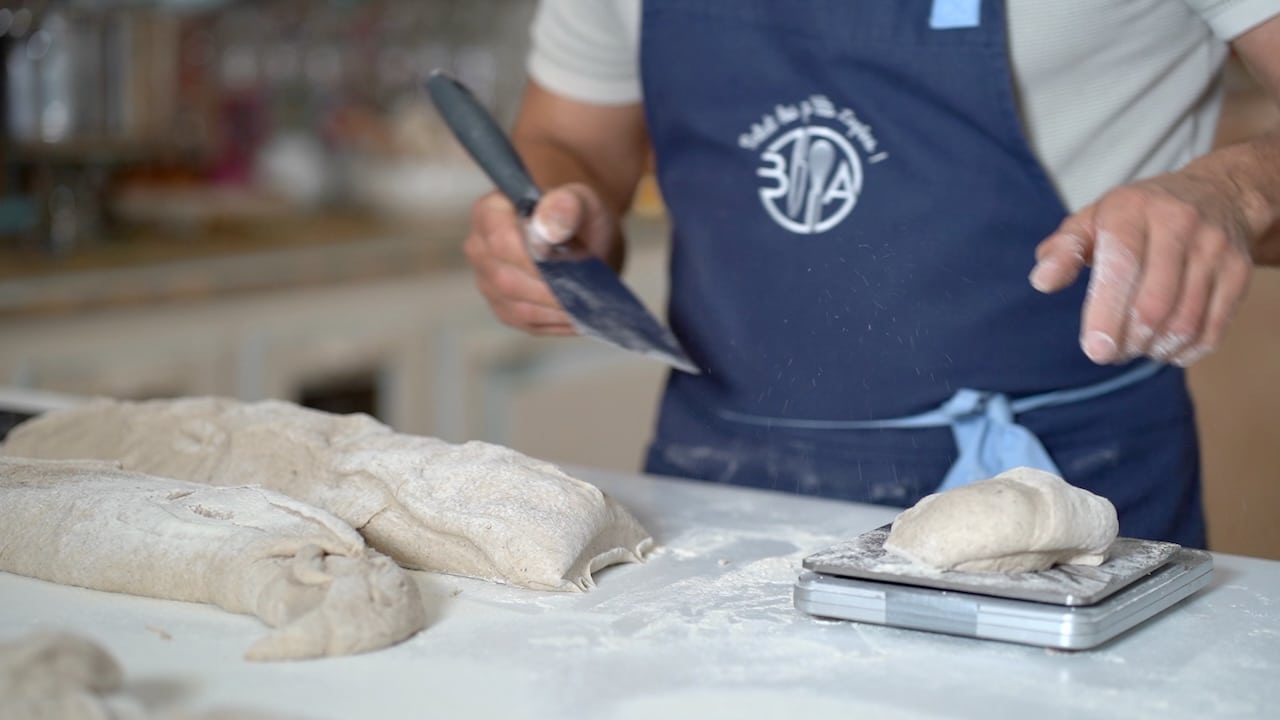
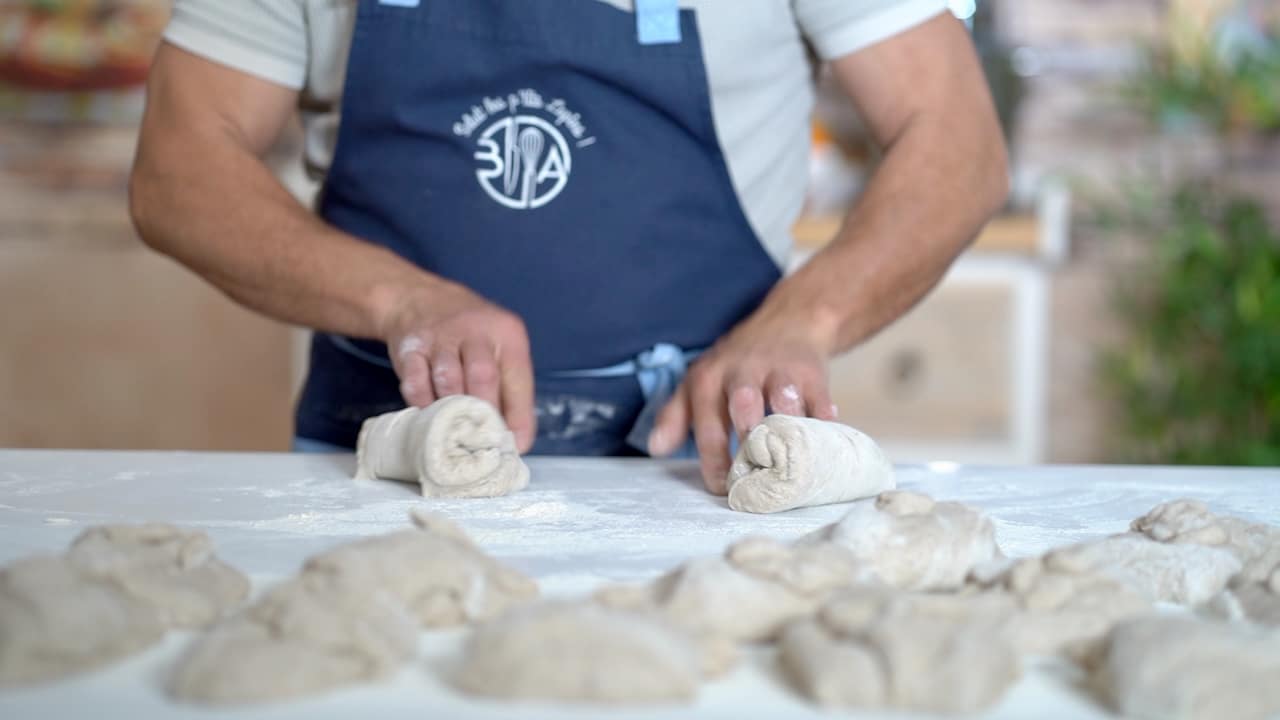
- Gently deflate each piece and form them into oval shape keeping the original skin facing up. Arrange dough in order and in rows from left to right.


Bunch Rest
- Bench rest is the period when bread dough is allowed to relax on the work surface after pre-shaping and before final shaping. This short resting time helps the dough settle and become easier to shape without tearing. Cover and let rest for 25 minutes.

Shaping Baguette
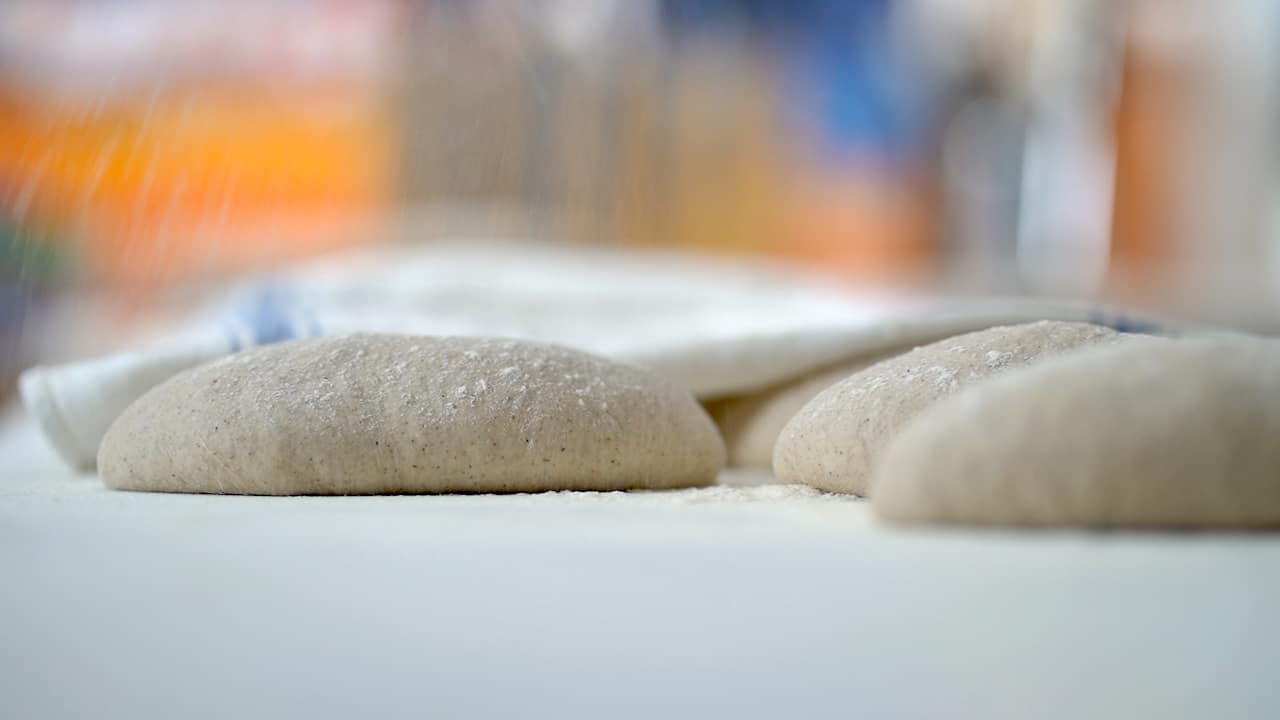
- Flour your baker's couche. To shape a baguette properly without damaging its built-up structure, you must first ensure your work surface is spotless. Uncover the rested ovals/batards. Lightly dust the breads, your countertop, and your fingertips with flour. Grab the first shaped batard from the upper left row, gently stretch it, and lay it skin side down. Gently degas the dough using your fingertips.
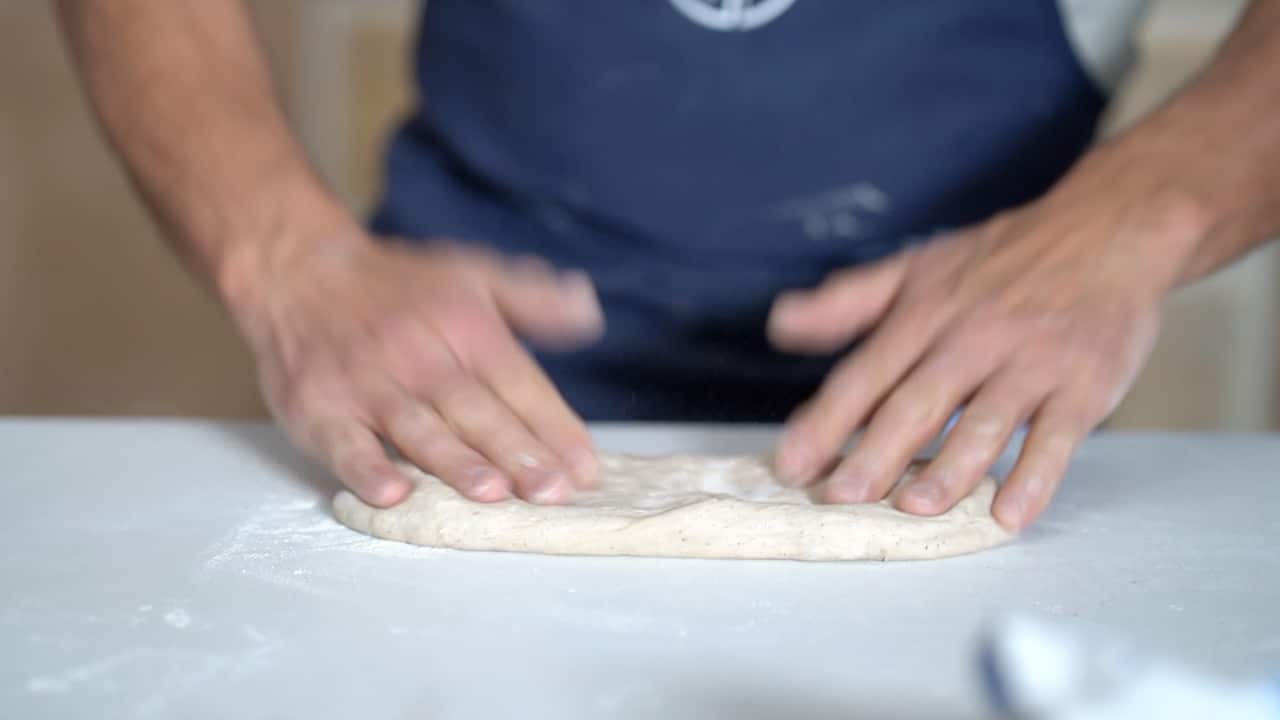
- Fold the upper half over and seal it with the palm of your hand, maintaining a well-proportioned log.
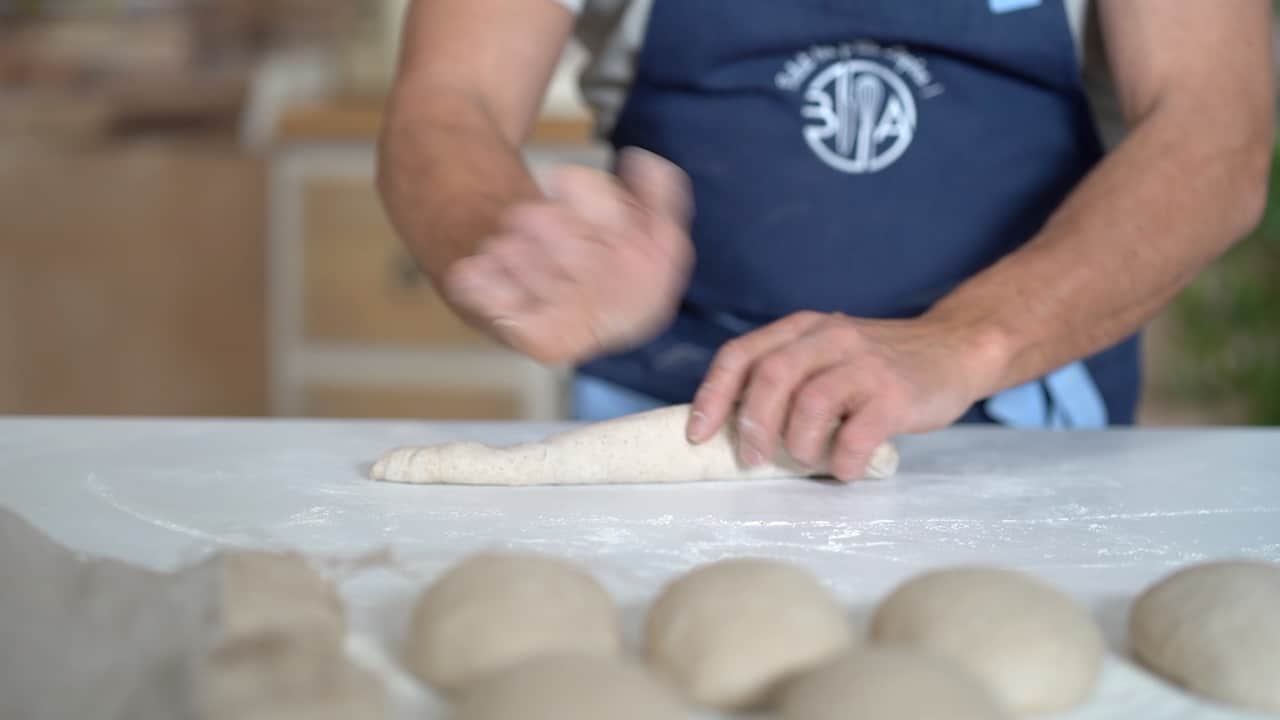
- This is another baguette-shaping technique worth trying. Instead of repeating the previous folding step, try this: using both hands, fold the bottom edge of the dough up toward the middle.
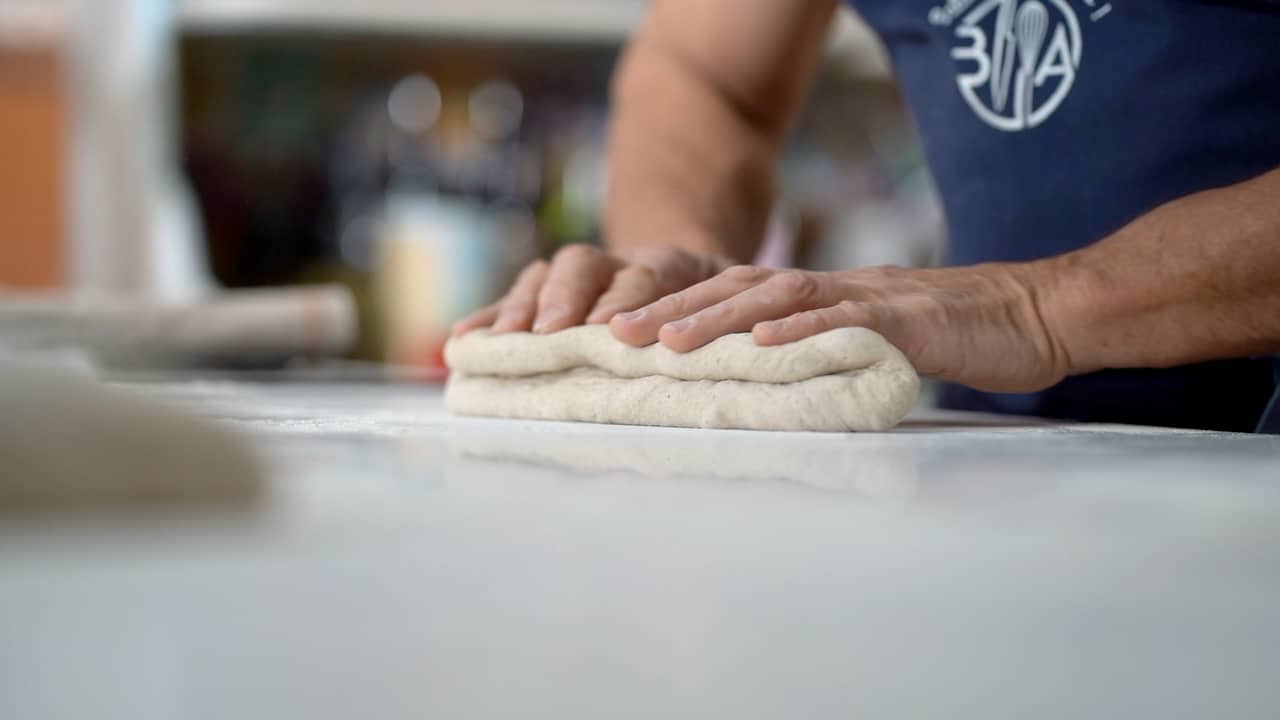
- Then lastly fold again the upper half over and seal it. Finish shaping by stretching and rolling it into a 15-inch (38cm) cylinder—about the length of your baking tray/pizza stone.
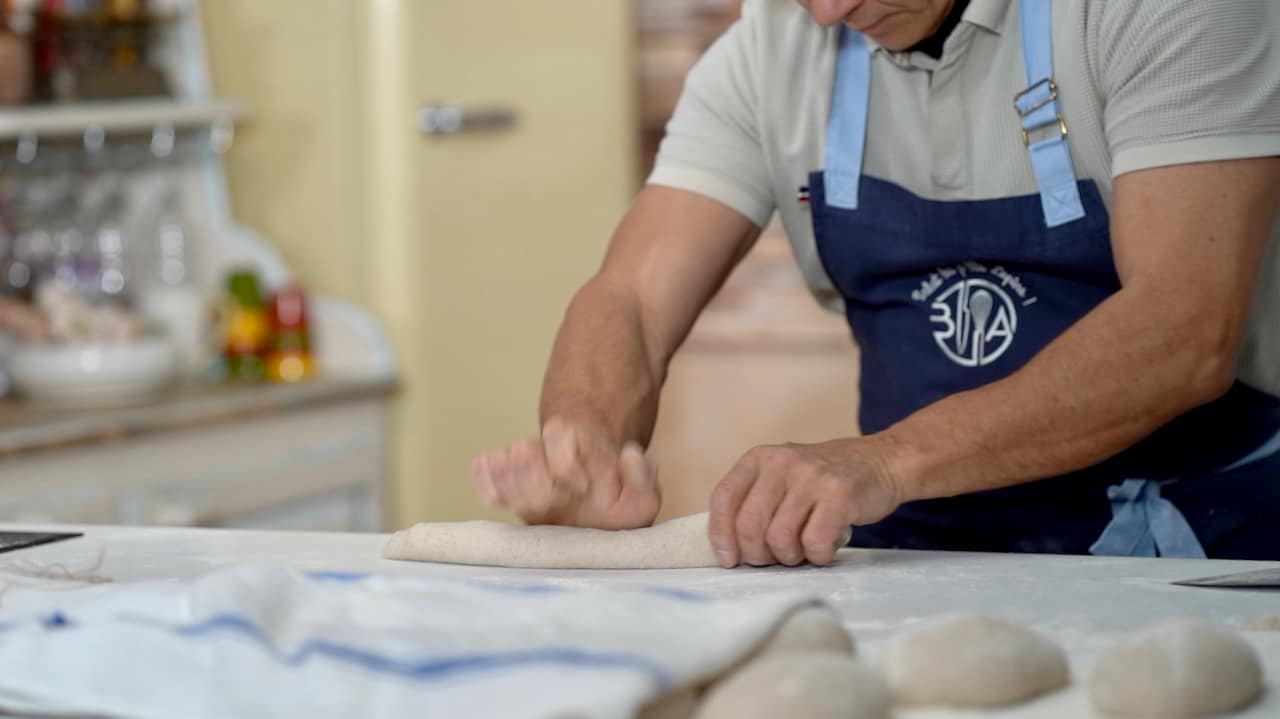
- To create a finish that is both epic and old-fashioned, the baguette ends can be tapered into a pen tip. To do so, swiftly press and roll the ends into sharp points with minimum flour.
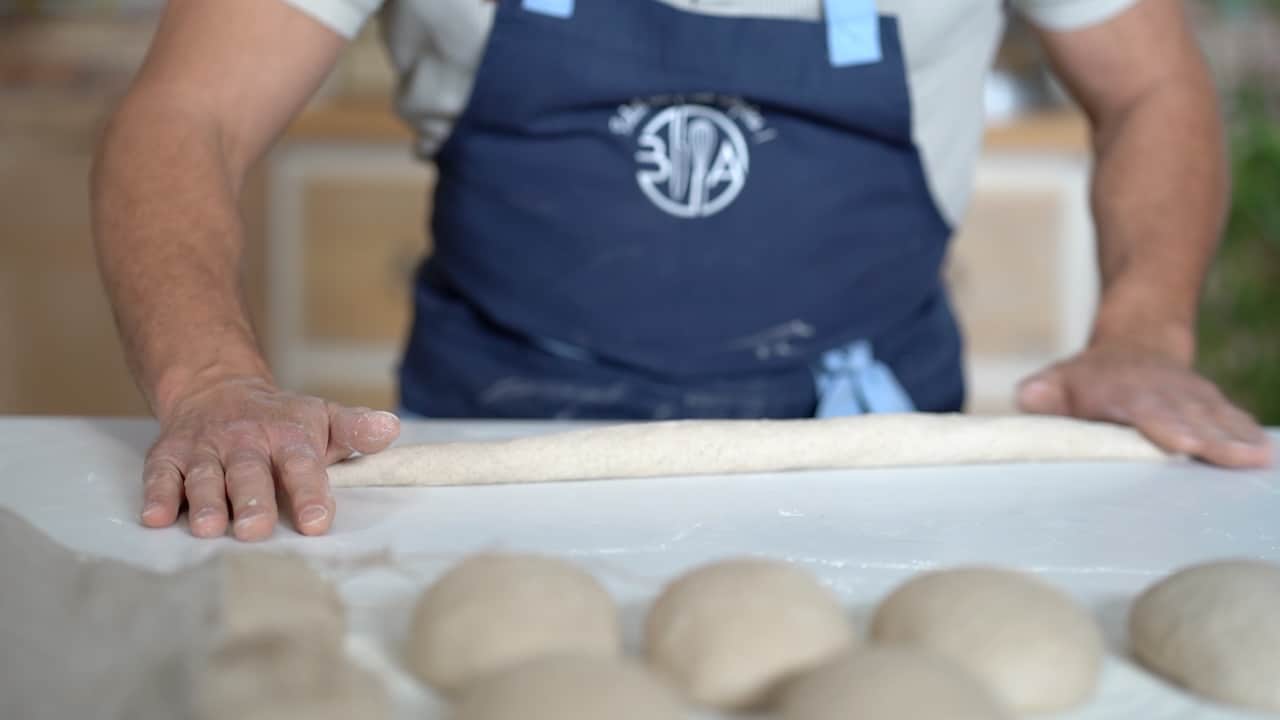
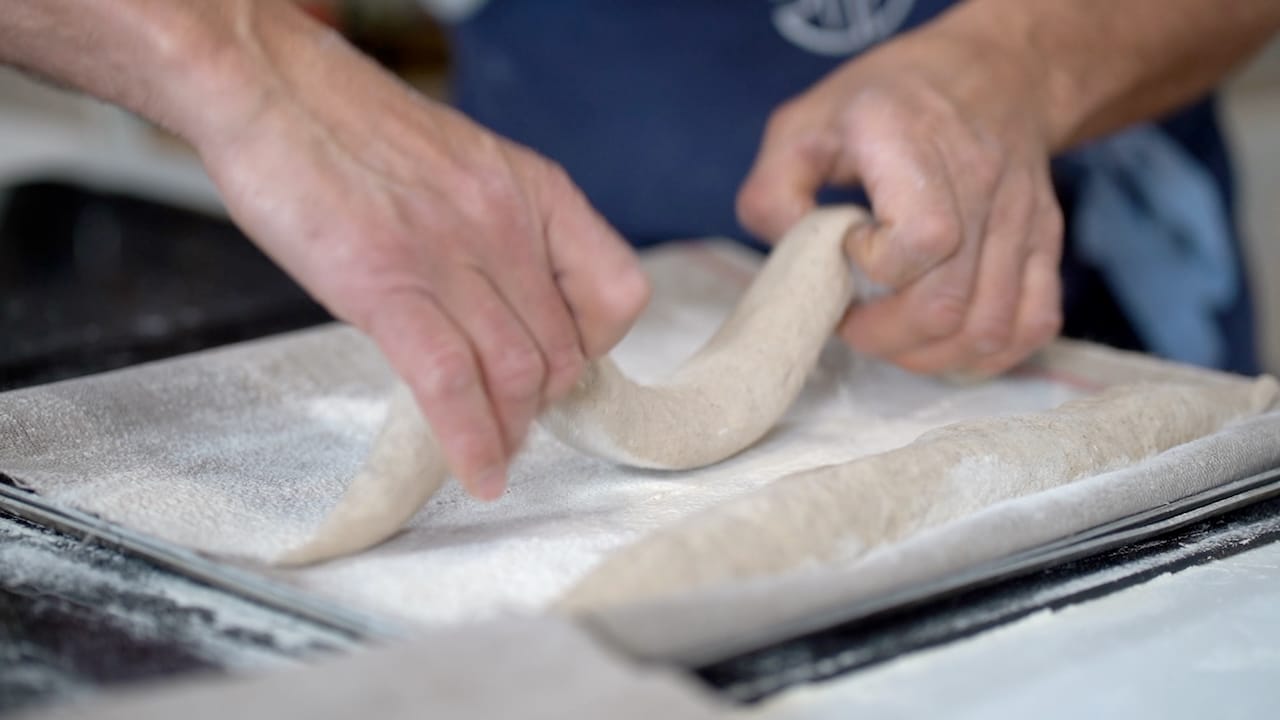
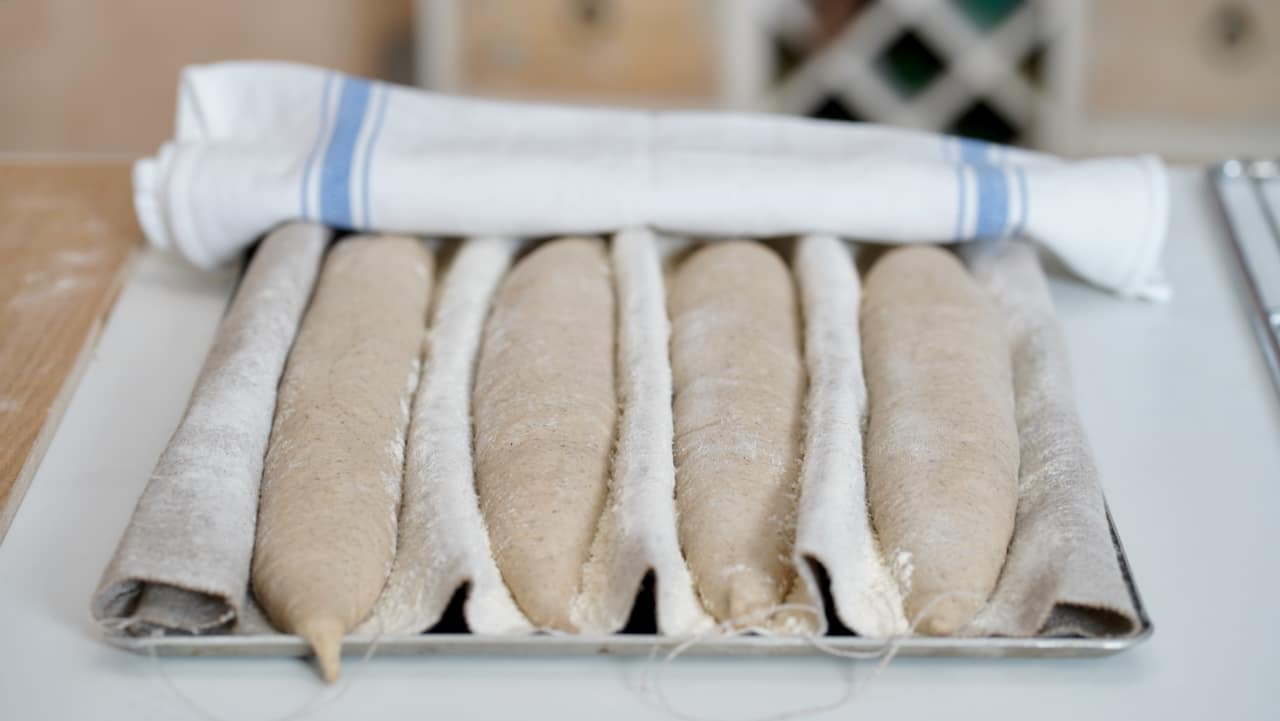
- Arrange 3 baguettes onto the floured couche at approximately 3-inch (7.5 cm) intervals (seam side up for a better development). Lift the empty spaces upward to create a natural barrier, then lay the fourth baguette next to it. Roll up what's left of the couche toward the last bread side. This will allow the baguettes to keep their oblong shape during proofing.


Proofing
- If the weather is dry and warm, cover the baguettes with a lightly moistened towel during the proofing step. If making baguettes at home, keep 16 shaped baguettes (4 trays) in a cool temperature as suggested above, and leave just one tray out (4 baguettes). It will take about 90 minutes to proof.

Baking
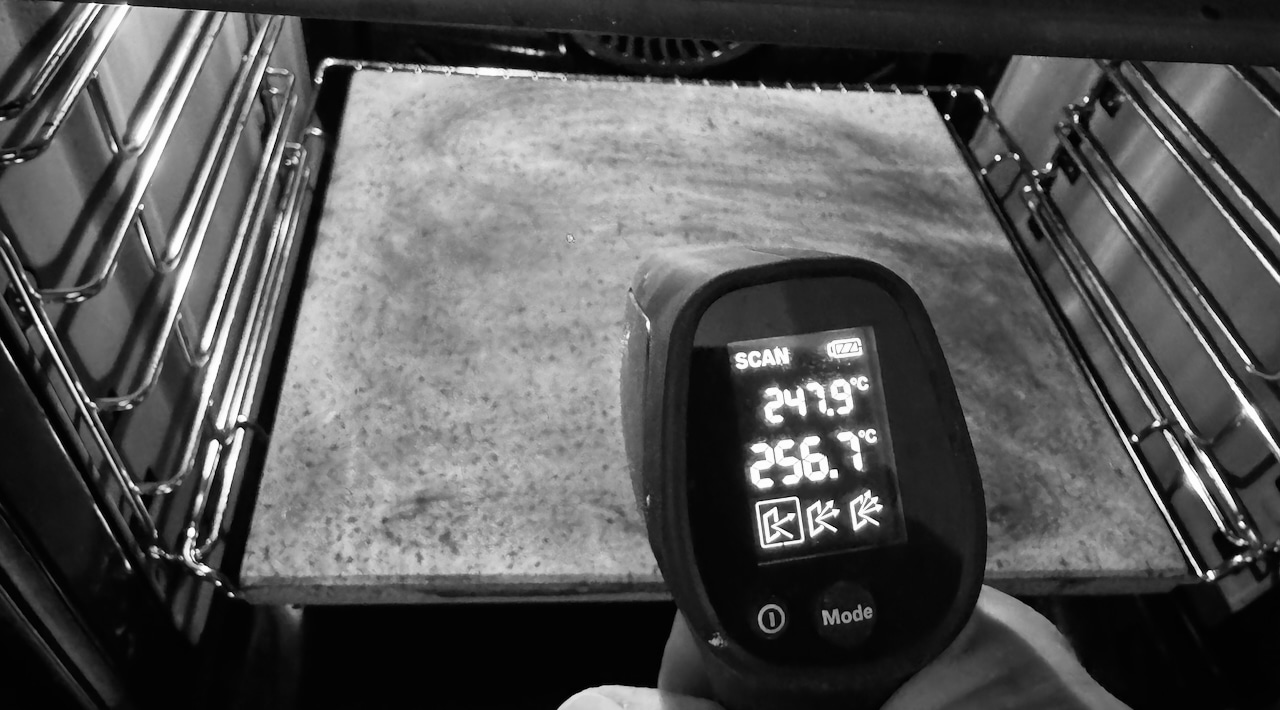
- Preheat your conventional oven to 480ºF/250ºC with the pizza stone positioned on the bottom third of the oven for 45 minutes before baking your first series of 4 baguettes.
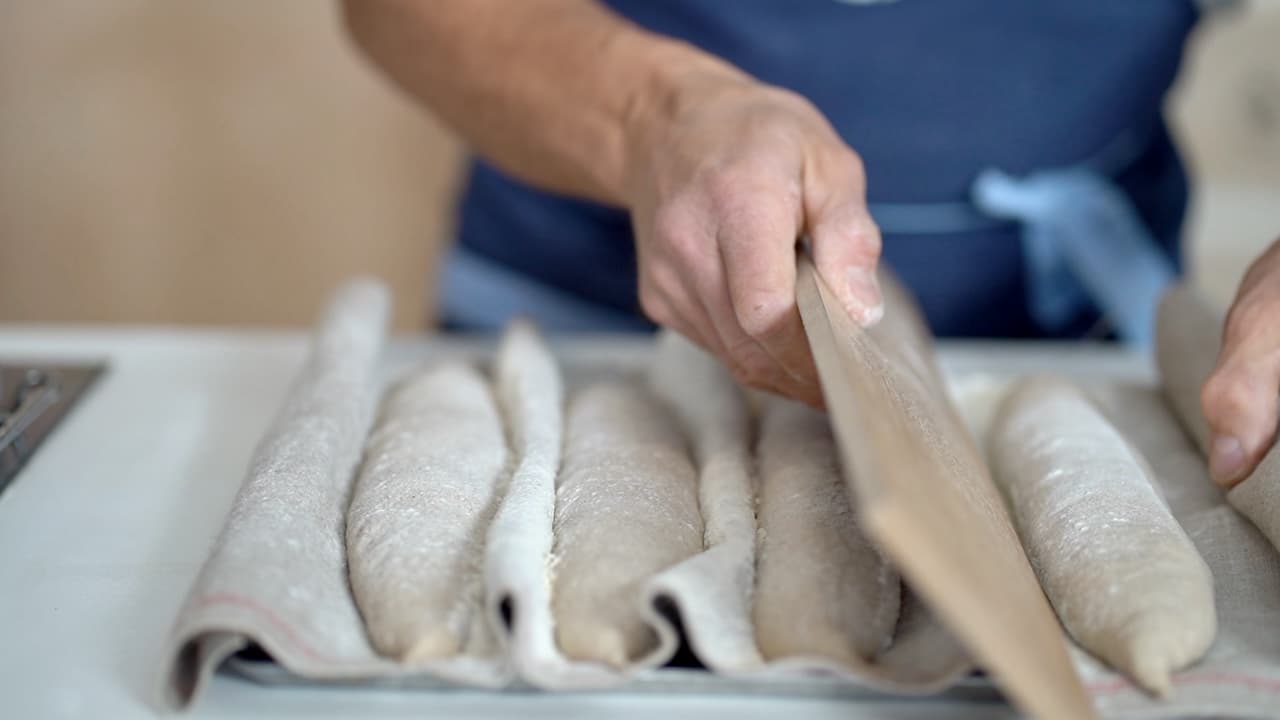
- Lightly dust the top of the proofed baguettes. Using a pizza peel or wooden board, grab the corner of the couche, lift upward, and carefully reverse the bread onto the edge of the peel (skin facing up)...
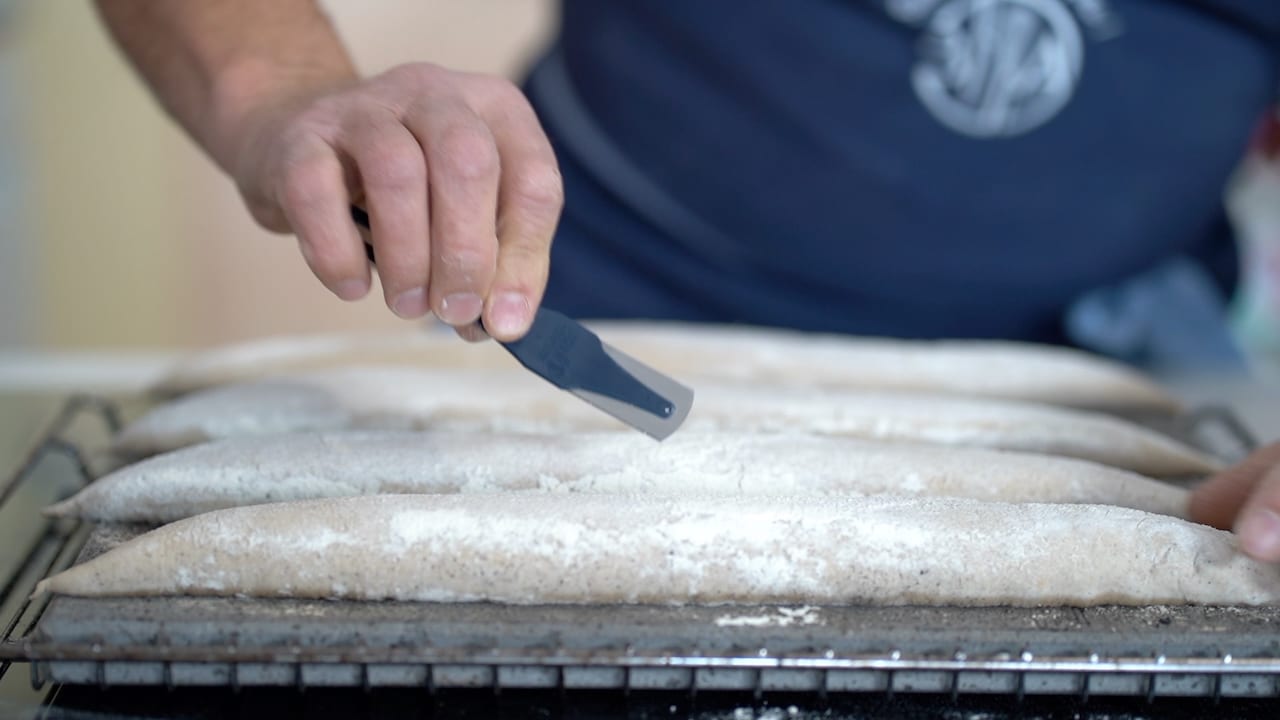
- Score each baguette 3 times, and always score bread by holding your razor blade horizontally from either side. Use the angle of the blade to cut just the surface, not too deep. Spray water inside the oven to create steam, then bake the 4 baguettes for 18 minutes at 465°F/240°C. Turn the oven off. Carefully open the oven door to let the steam escape, then leave the baguettes in for 2 more minutes.
- Transfer them to a wire rack to cool.
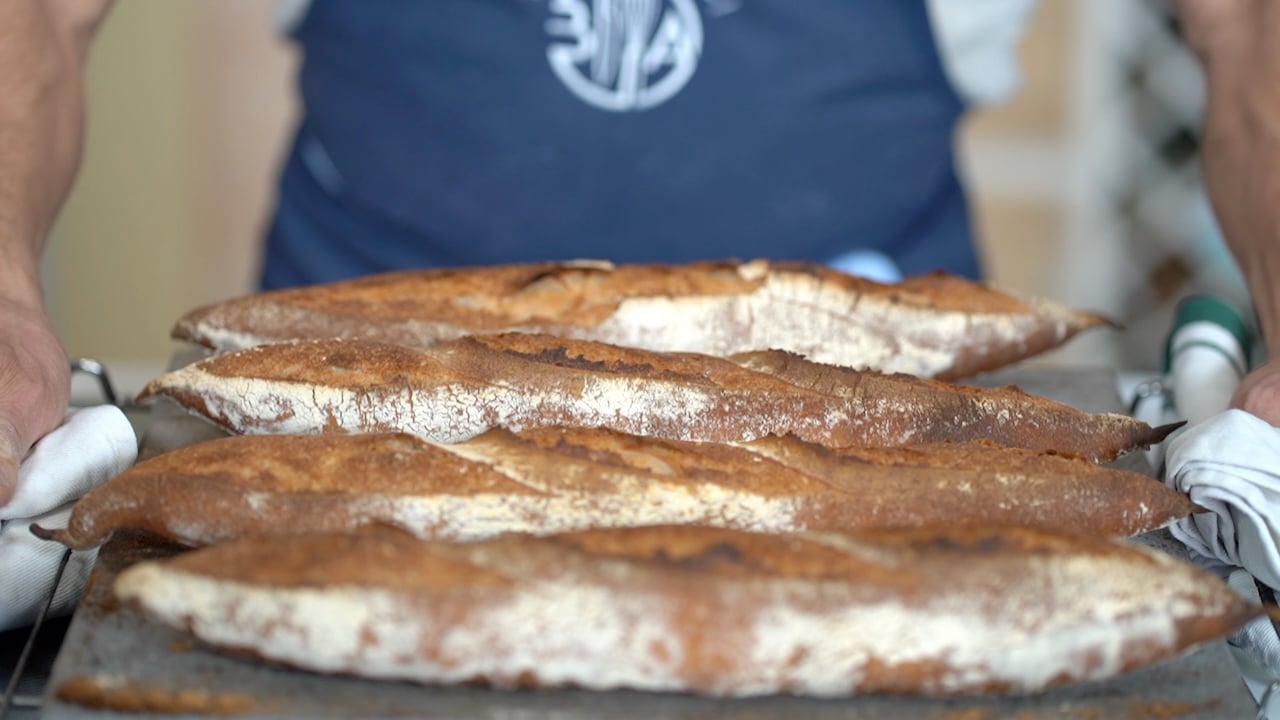
- Immediately, reheat the oven to the same temperature and repeat the same baking process for the remaining baguettes.
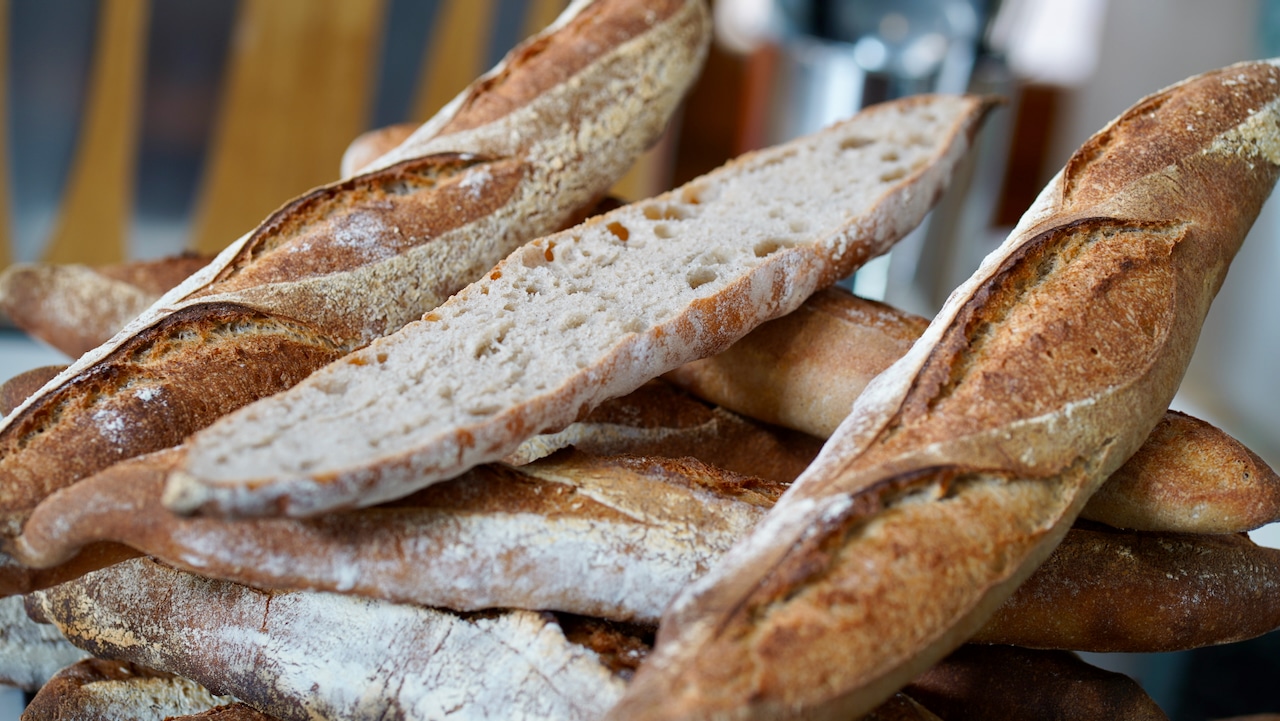


How To Store Baguettes
- Baguettes are a type of bread that, due to their narrow shape, dry out faster than other kinds. Therefore, they should ideally be eaten within 24 hours. Note that old-fashioned baguettes and those made with natural leaven will keep longer. However, after a day, reheating them isn't a bad idea.For later events: To enjoy them as crispy as they were on the first day, store them in sealed freezer bags just a few hours after baking—they can be kept this way for up to two months. An hour before serving, place them in a preheated (220ºC) oven, turn it off, and leave them inside for 5 minutes. Let the baguettes rest at room temperature for 30 minutes before eating.

This content is part of the PREMIUM SECTION

This recipe requires a All-content access subscription. The Premium section includes more than 50 essential recipes from French pastry and a special section for mastering artisanal bread.
The Premium section is only accessible with "A year at the table" subscription. Discover it with special first year discount.


