
Please note that the full access to this content needs a "Year at the table" subscription: please sign up.
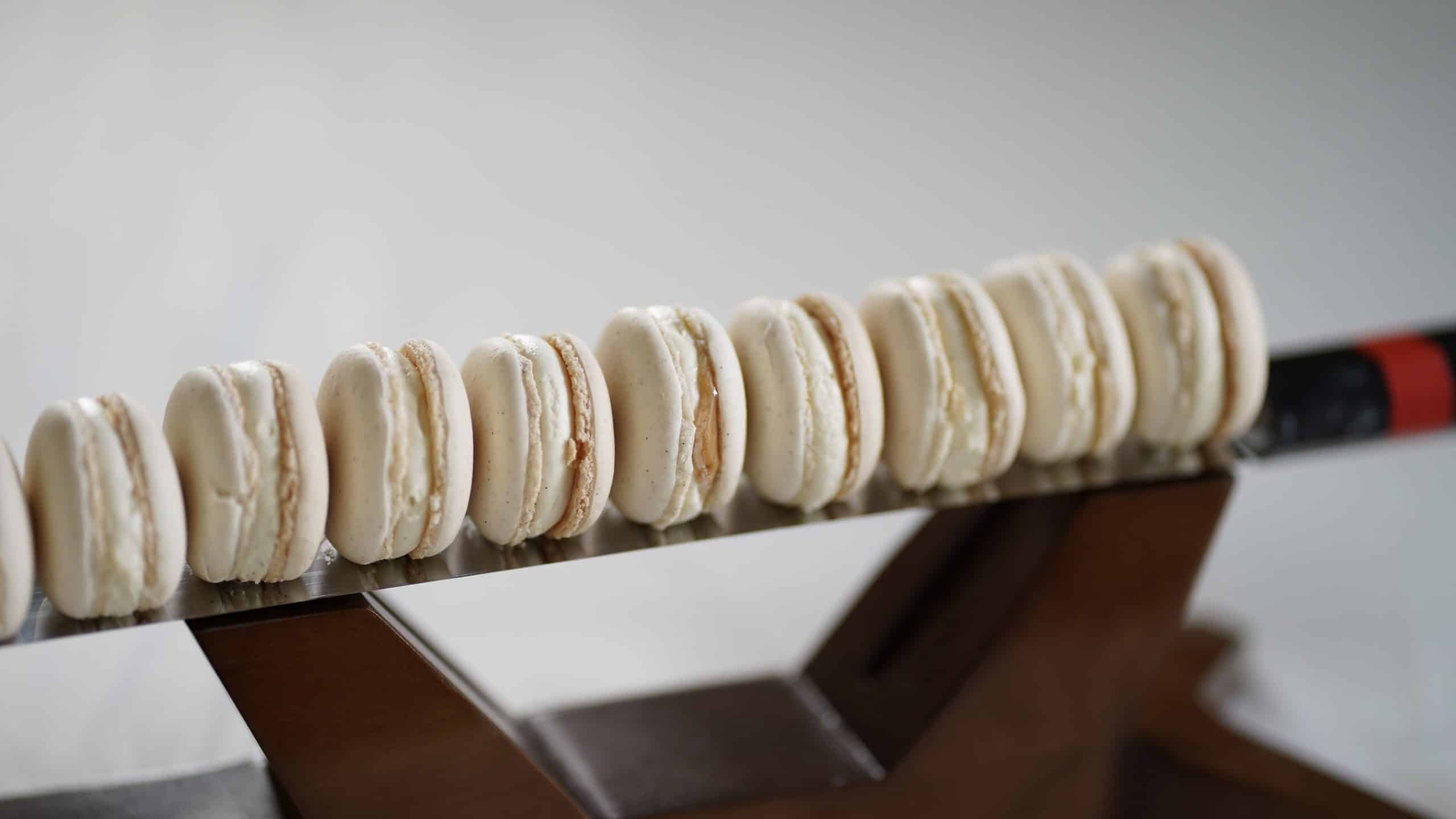
Vanilla’s delicate, aromatic note perfectly complements the rich, caramelized sweetness of dulce de leche!
This recipe is a protected and only available for paid members. To obtain the full step by step recipe and detailed ingredients list, please sign up.
Preview the recipe
- Macarons can be achieved using 3 types of meringue: the French, the Swiss and the Italian.
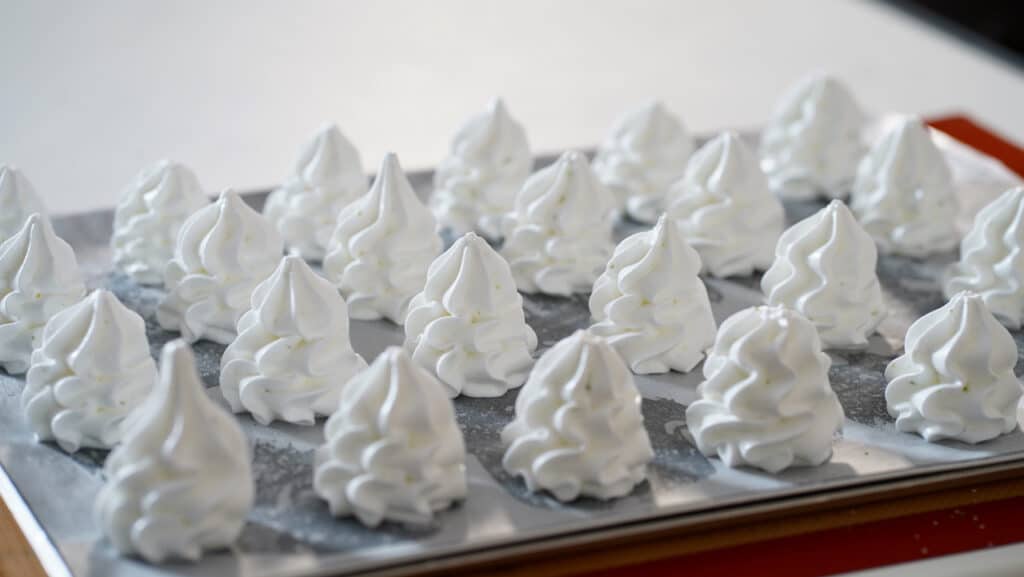

Macarons (French Meringue)
- Starts out with a French meringue called ''aux blancs monté'' when egg whites are whipped with sugar until they reach stiff peaks. The dry ingredients, almond meal and powdered sugar blended together (tant pour tant) is then folded into the meringue to form a batter. When learning to make macarons, most people begin with the French method, it is pretty straightforward and minus the risk to burn yourself with the boiling syrup. However, the macaronage process can be tricky since the meringue isn’t very stable. The French method is used by Lenôtre institution in Paris.
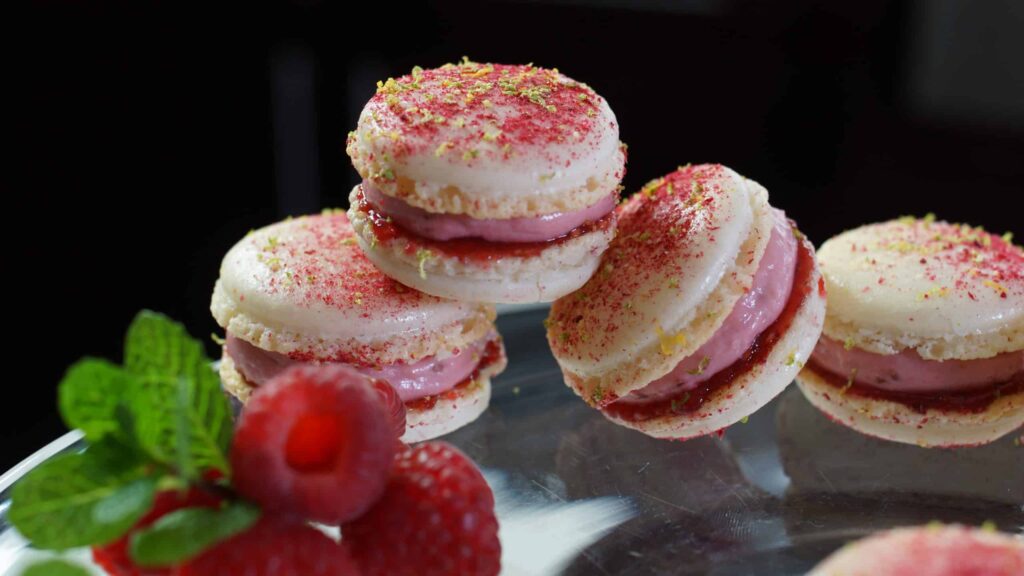

Macarons (Swiss Meringue)
- The egg whites and sugar are whipped and heated up to 140ºF/60ºC in a bain marie first and finished beaten to stiff peaks. The Swiss meringue method is stable, a great compromise between the French and the Italian meringue. However, more challenging to produce when larger quantities become the norm.
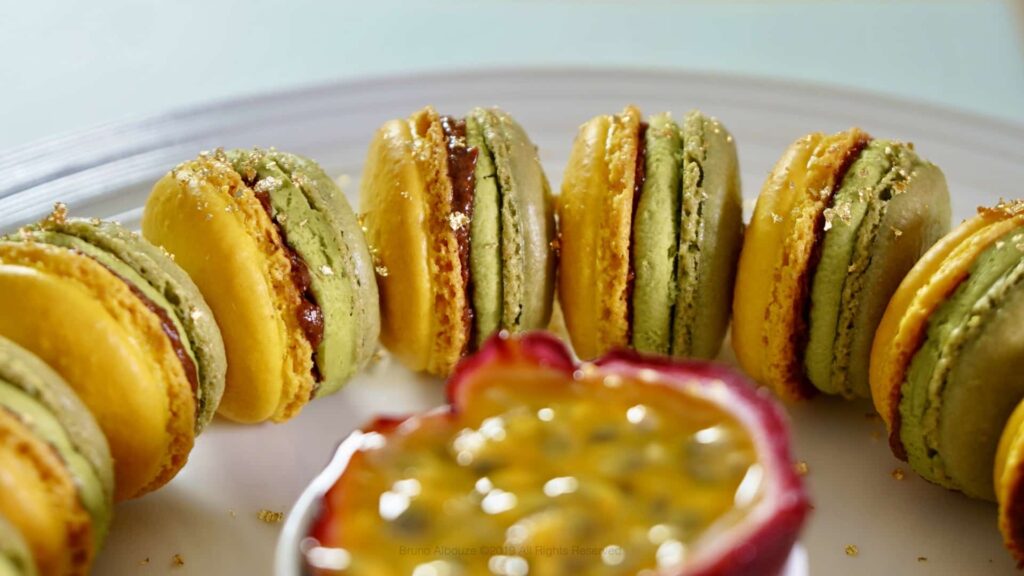

Macarons (Italian Meringue)
- Italian meringue, where boiling sugar syrup is poured slowly into the egg whites, cooking them as they whip. This results in a more stable meringue. Many pastry chefs use this method for its consistent results. Although this process does require extra steps, the stable meringue makes the macaronage process less random. The Italian meringue method macaron is used by Ladurée in Paris and Pierre Hermé...
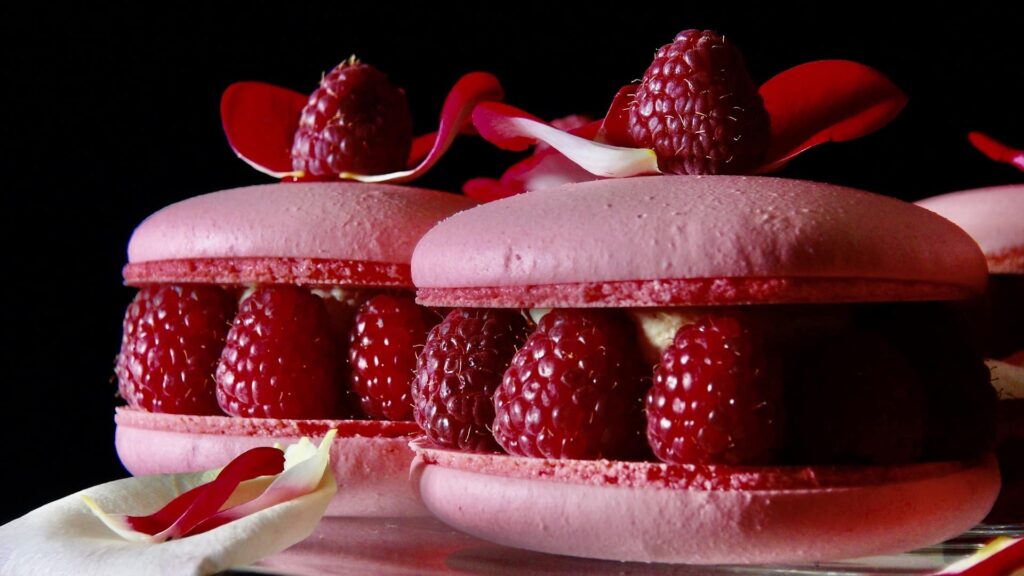

Tips
Egg Whites
- Before you start macarons, the hygrometry should be around 50%. Utensils and mixing bowl should be spotless. A little trace of yolk in the egg whites, oil or flour may comprise the outcome of the meringue. From freshly cracked eggs or older, both work just fine. Egg whites can be kept refrigerated for up to 3 weeks or stored in the freezer for months. Pierre Hermé suggests that a ratio of 1 to 1 fresh and old egg whites is the ideal scenario. A few grams of egg whites powder is often added to the meringue; a useful enhancer.
Flavorings
- Yet, the less humidity in the macaron batter the better. Vanilla is best from a freshly grated bean or vanilla powder. Avoid cheap vanilla extract. Vanilla is optional in macaron shells anyway as the filling takes over. Food colorings should be water based, professional grade and into powder or gel. Absolutely avoid cheap watery food coloring.
Baking Instructions
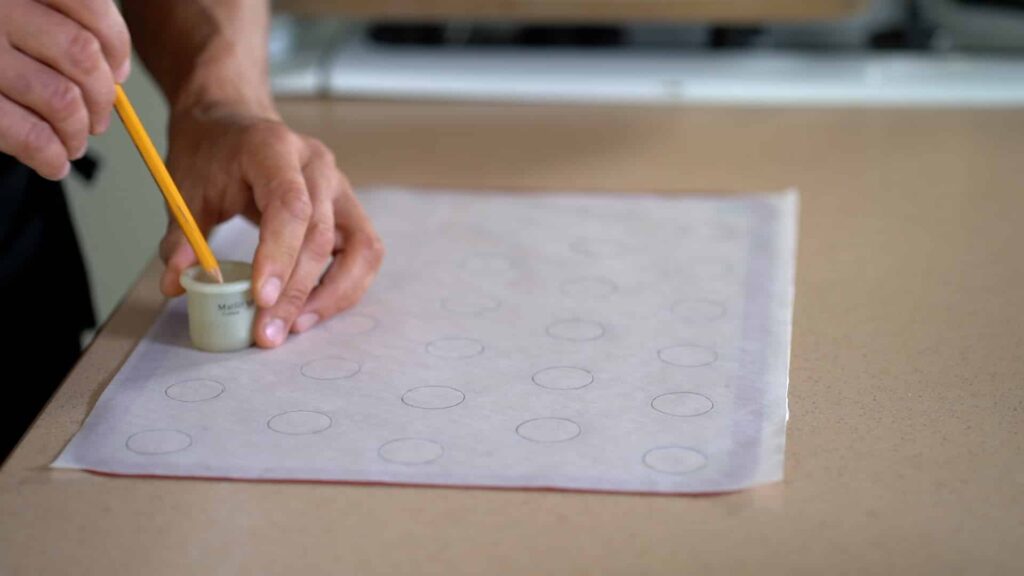
- In professional kitchens, macarons are baked in batches using powerful fan ovens. At home, bake one tray at a time. Macarons can be piped out onto baking mat or parchment paper. Though parchment paper offers more consistent results if using conventional/baking position oven. If using fan oven, both silicone baking mat and parchment work. If using parchment paper, draw 30 number – 1.2 inch/3 cm circles. Make 4X30 = 120 ea. Flip parchment before using so the ink is never in contact with the food. Lightly greased baking tray and parchments with oil or cooking spray. Wipe out excess fat with paper towel.

Almond Mixture
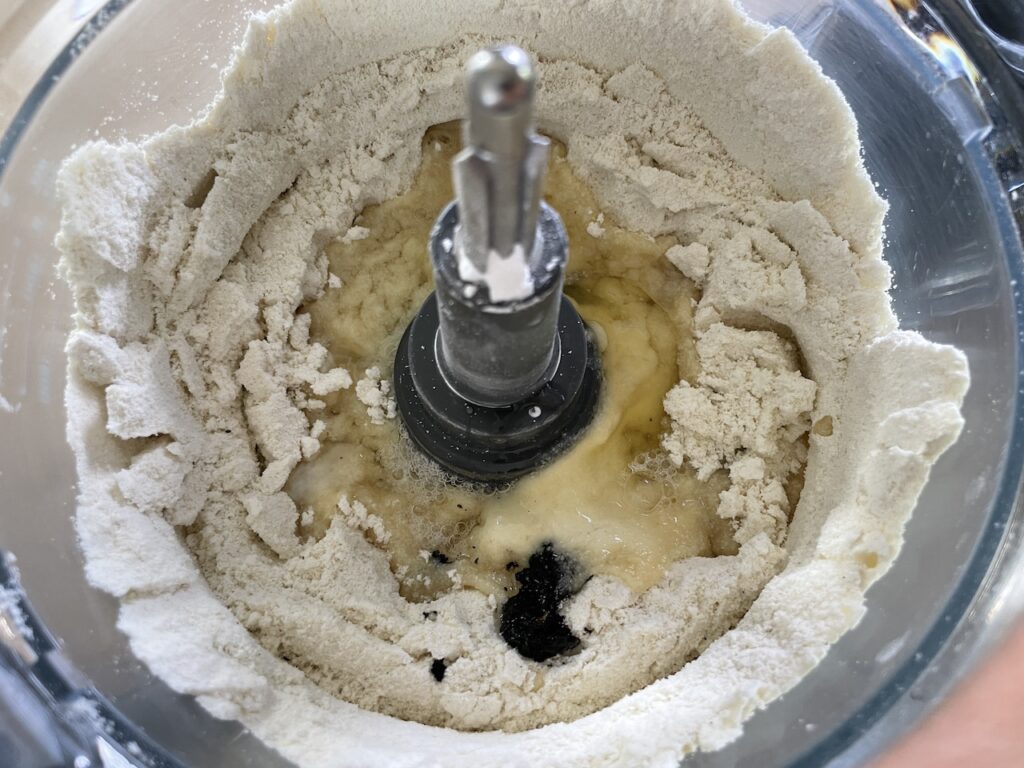
- In the food processor, turn almond meal and powdered sugar into fine powder. This is called tant pour tant. Tant pour tant is a mixture of equal amounts of blanched almond meal and powdered sugar. It can be made in advance and used for cookies, crust, financier, almond cream etc.. Add egg whites and vanilla and turn into paste. Transfer mixture to a large pastry bowl.

Italian Meringue
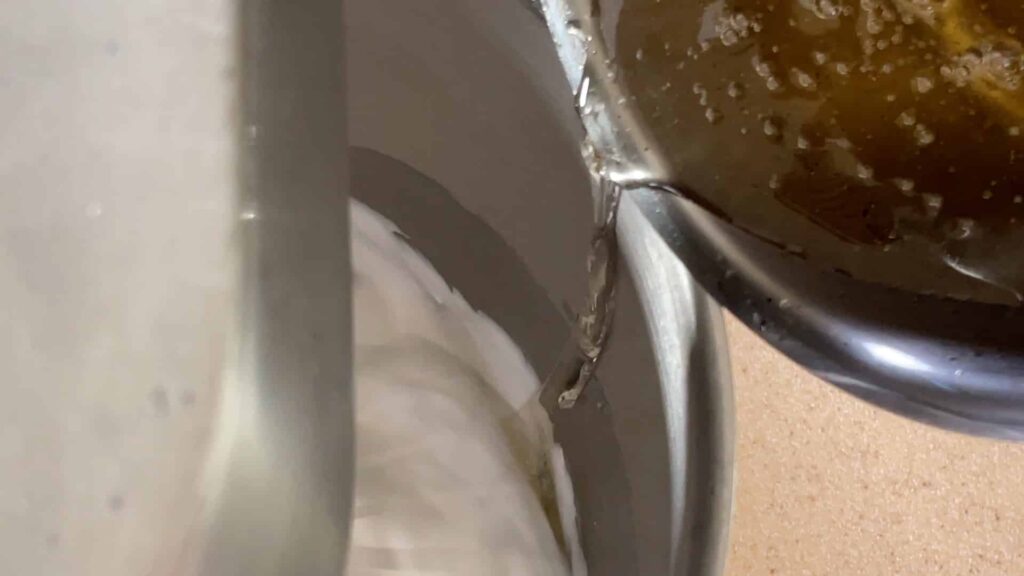
- Meanwhile, cook sugar and water to 245/118ºF, (firm ball stage/gros boulé). When mixer is still running on medium speed, pour hot syrup in thin stream. Set mixer speed on high until stiff peaks form. Fold a third of the meringue into the almond-sugar paste mixture and fold in remaining meringue. The following folding step is called ‘’macaronage’’.

Macaronage
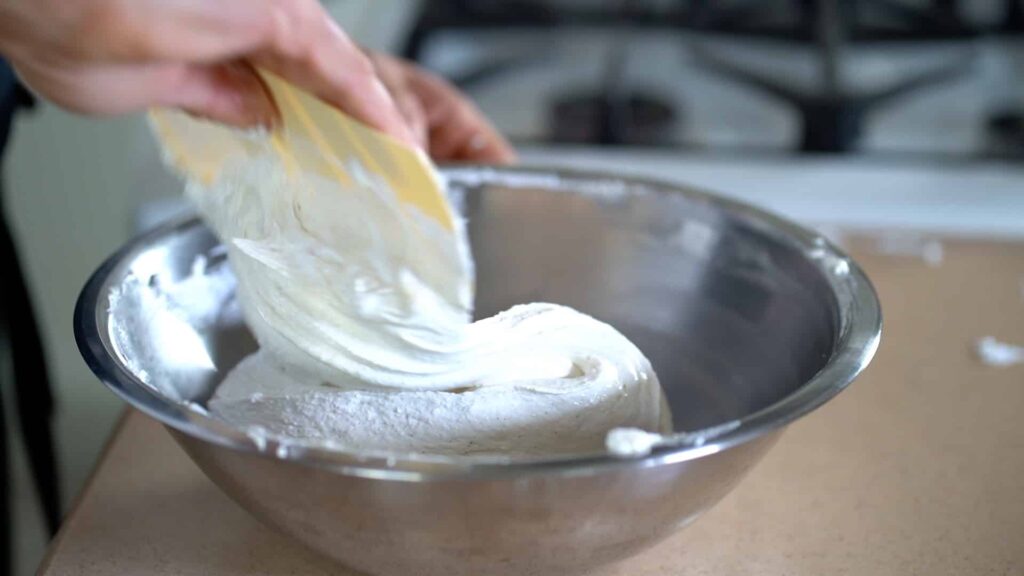
- Macaronage is the stage where the batter is worked until smooth, shiny and flowing. Use a plastic dough scraper for better handling.

Piping
- Pipe out 120 macarons. Tap baking tray over the counter a couple times (it removes unwanted air bubbles and it evens shells out). Leave macarons to dry out for at least 30 minutes; a thin film will form allowing macarons to get their feet. Baked macaron shells should measure ≈1.7 inch/4.3 cm in diameter.
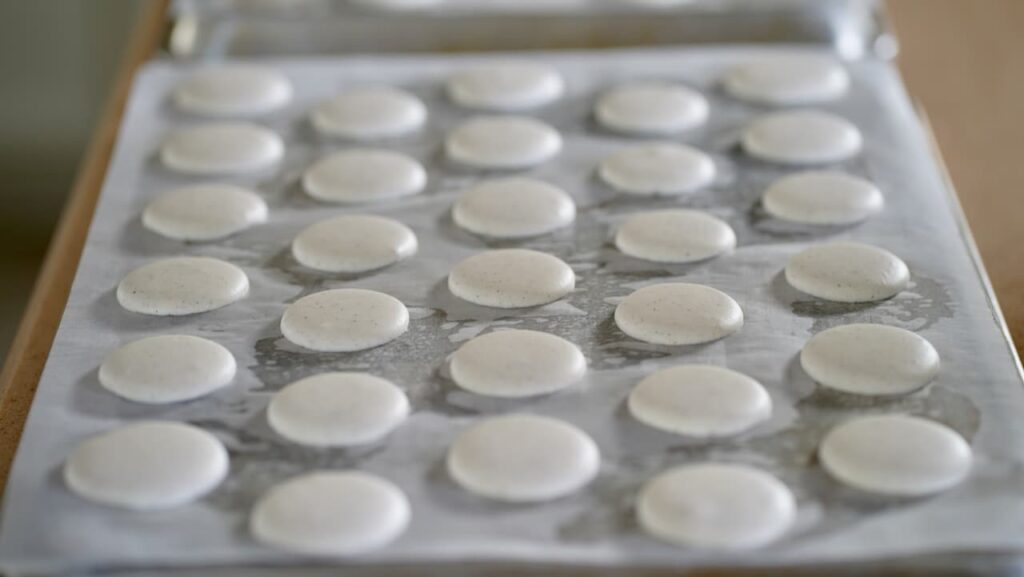

Baking
- If using conventional oven, bake one tray at a time at 335ºF/170ºC for about 13/14 minutes. Let cool completely before removing macaron shells from parchment. In using convection oven, bake macarons for about 10-12 minute at 325ºF/160ºC. Let cool.
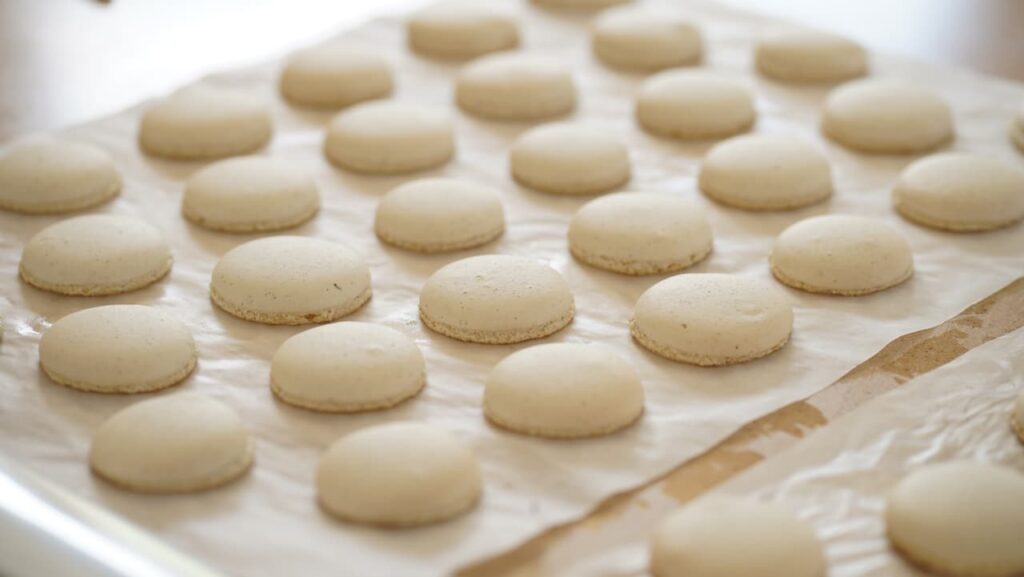

Macaron Shells Storage
- Once the shells have cooled then arrange macarons upright into 1/4 size baking trays or appropriate containers lined with a piece of parchment paper. Cover and refrigerate or freeze until ready to be filled.
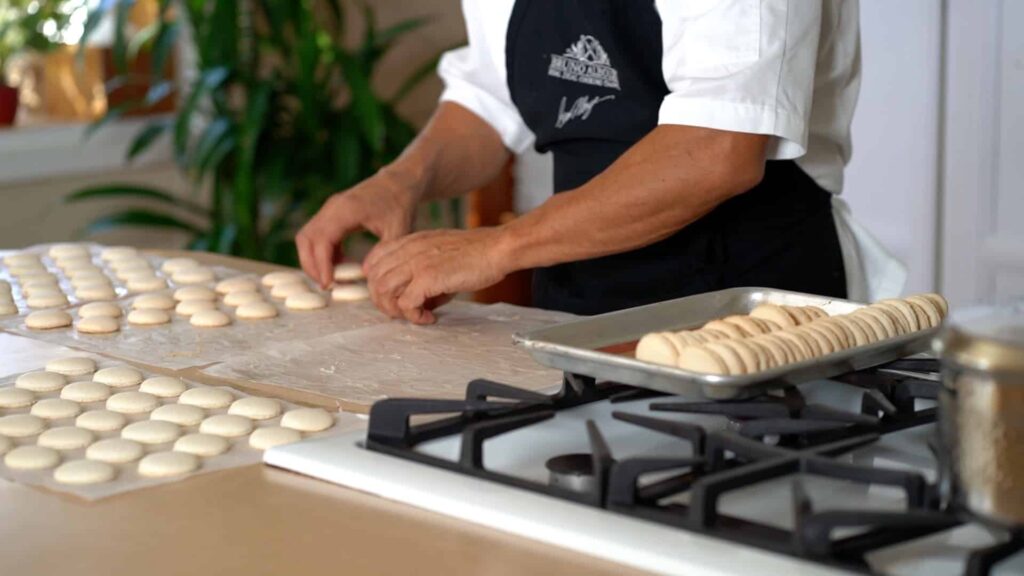

Almond Filling (Ganache Montée)
- Soak gelatin in cold water to soften, and drain. Meanwhile, bring heavy cream to a boil. Add the chocolate, wait a couple of minutes and mix using an immersion blender. Add gelatin and almond paste and mix. Add remaining chilled heavy cream and blend well. Refrigerate overnight.

Dulce De Leche (optional)
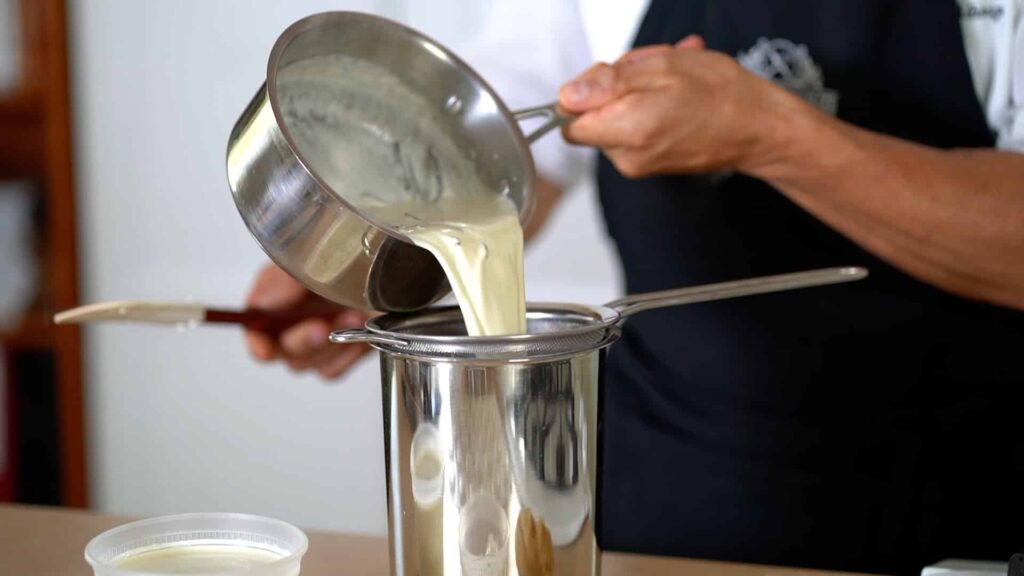
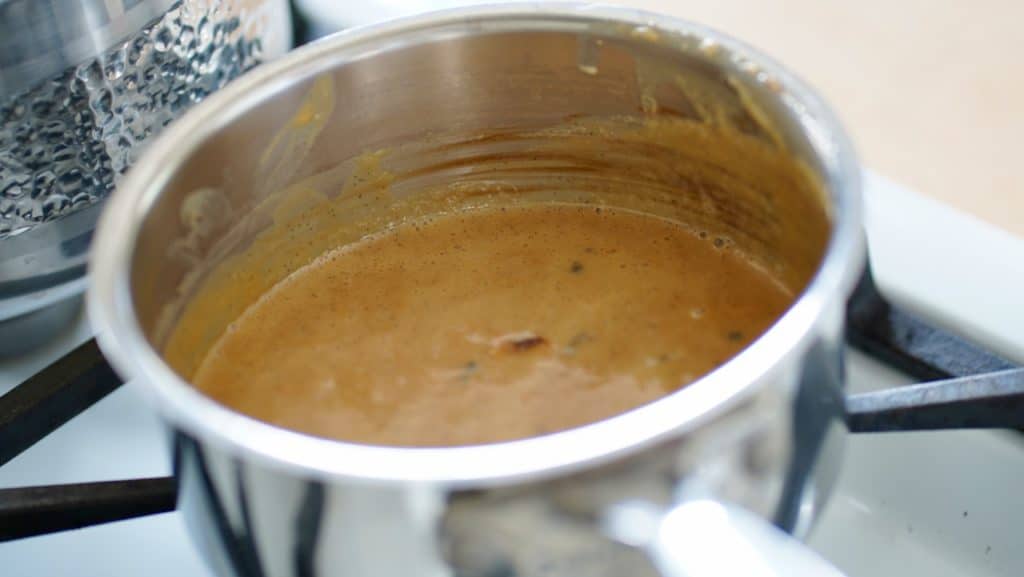
- Place condensed milk can (do not poke) in a saucepan. Cover with water to the top and bring to boil. Cook on low heat for 3 hours; cool. In a small saucepan, heat up caramelized condensed milk with salt to 140ºF/60ºC. Remove from the heat, transfer mixture to a narrow container – add butter and mix with an immersion blender. Use at room temperature. Dulce de leche can be kept refrigerated for weeks.

Macarons Assembly
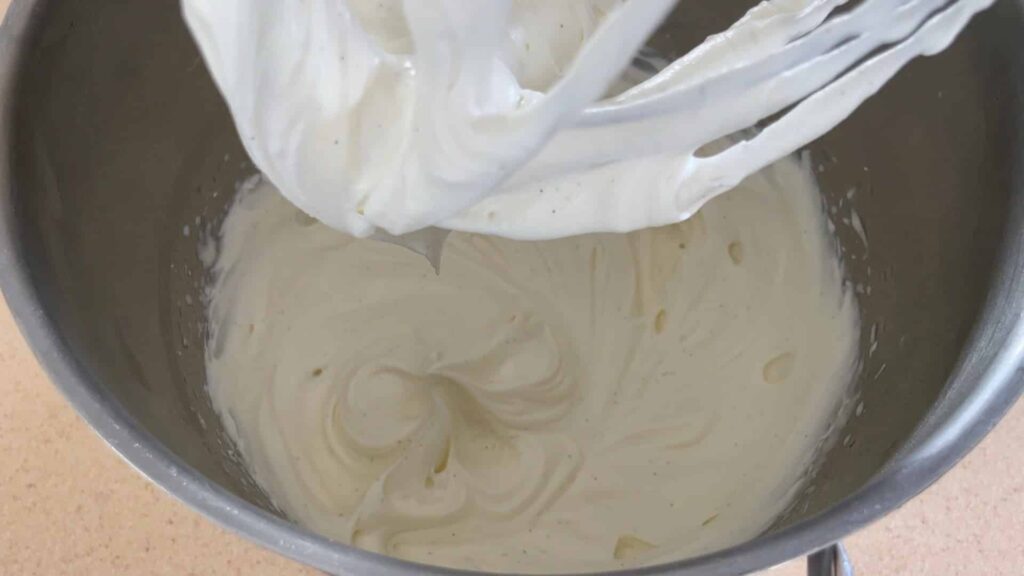
- Whip almond filling on medium-high speed until medium firm peaks form.
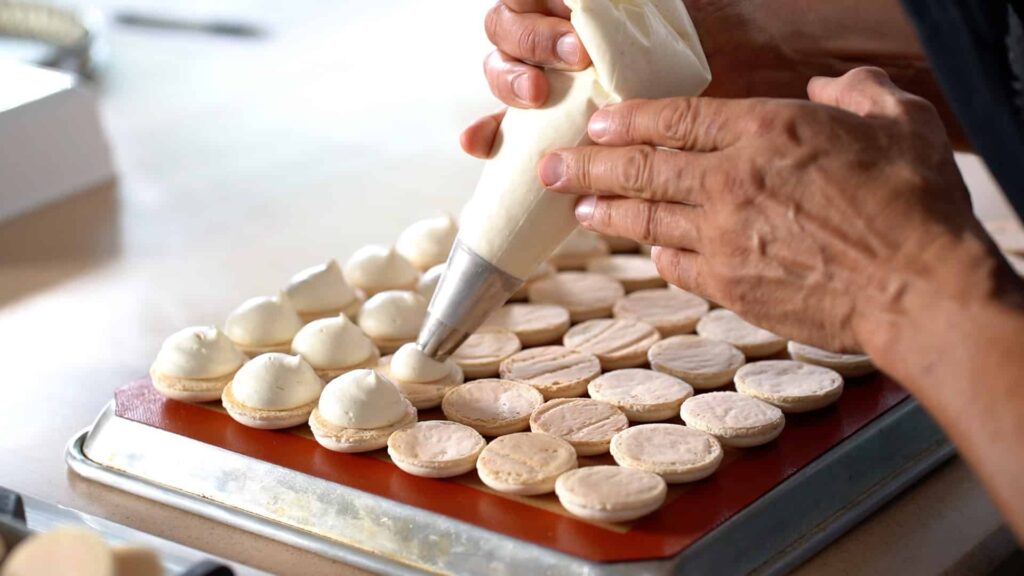
- A finished macaron weighs approximately 22g. Pipe almond filling on the flat side of the macaron, enclosing it with another macaron over top (add a dot of dulce de leche prior to enclosure). Save leftover fillings for later use.


Storage
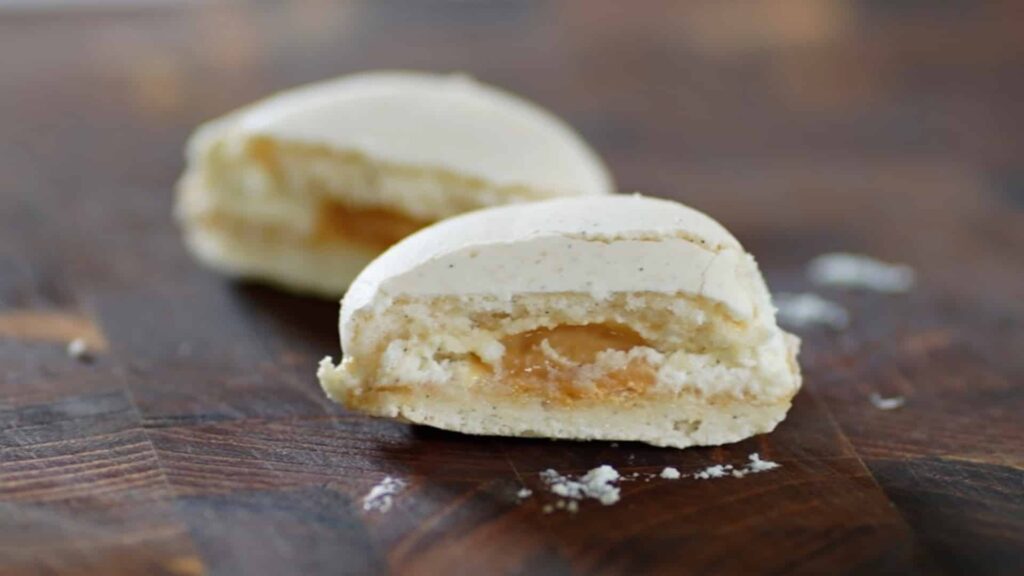
- Macarons need to mature overnight (or ideally 24 hours) in the fridge before being eaten. To freeze macarons, arrange macarons in tray and freezer (do not cover). After 6 hours or so, arrange frozen macarons upright into appropriate containers, seal and freeze for up to 3 months.

This content is part of the PREMIUM SECTION

This recipe requires a All-content access subscription. The Premium section includes more than 50 essential recipes from French pastry and a special section for mastering artisanal bread.
The Premium section is only accessible with "A year at the table" subscription. Discover it with special first year discount.