Ingredients
Method
Praliné / Caramelized Hazelnut Spread
- Praliné can be made with 100% hazelnut. Toast nuts in a 350ºF (180ºC) oven for about 10 min. Cook sugar to amber caramel stage (without water). Toss in nuts, turn heat off and transfer onto a silicone baking mat to cool. In a running food processor, blend the room temperature caramelized nuts with a pinch of salt until it turns into paste. Save leftovers praliné for later use.
Praliné Crunch
- Chop chocolate and carefully microwave it with butter (temperature should not exceed 86ºF (30ºC). Mix with the room temperature praliné along with the corn flakes. Spread crunchy praliné mixture in a baking tray lined with silicone mat or parchment paper. Caramel rulers are a must for this type of confectionery; it makes things perfectly squared and clean.
Gianduja (Praliné + Chocolate)
- Spread gianduja evenly over the crunchy praliné, tap over the countertop and cool. Gianduja should not be refrigerated but rather kept in cool and low humidity storage ≈ 60/65ºF (16/18ºC). In warm days and households environment though, it can be refrigerated to set. Run a spatula around the edges of the tray and flip to unmold. At this juncture both sides of the slab can be coated with a thin layer of tempered dark chocolate to strengthen the slab. Let set and cut into 32 bite size portions.
Dipping Chocolate
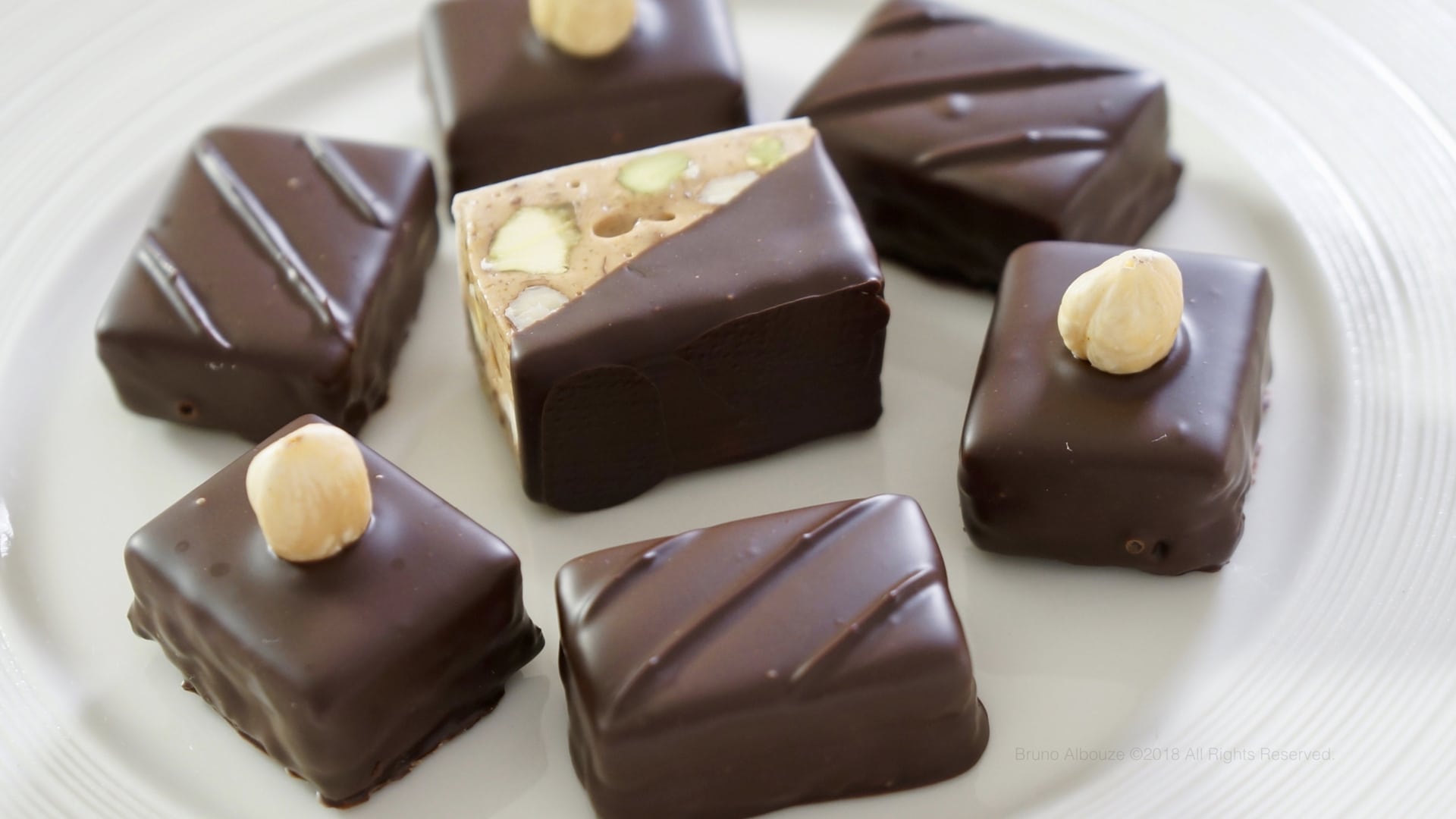
- Use a large amount of dark chocolate couverture for tempering, not only it will remain tempered longer but it makes the job easier. Once done, leftover of chocolate can be spread onto a baking tray lined with silicone mat, chilled to set and broken into pieces for later use. Couverture chocolate is a very high-quality chocolate that contains a higher percentage of cocoa butter ≈ 35% than baking or eating chocolate. This additional cocoa butter, combined with proper tempering, gives the chocolate more viscosity and sheen, a firmer "snap" when broken. Extra cocoa butter can always being added to the chocolate as well. Melt chocolate over water bath (bain-marie) on low heat to ≈ 122ºF (50ºC). Chill to drop temp to 77/79ºF (25/26ºC) and rewarm to 84/86ºF (30/31ºC). Hot water should not touch the bottom of the bowl – wipe off bottom each time when removing bowl from water bath. Chocolate worse enemy is water and heat!. Use a 3 tooth chocolate fork. Ready to be enrobed bonbon should not be refrigerated prior dipping or the chocolate will set too fast, creating a thicker coating and dull aspect. So, leave them out 30 min prior dipping or so – best room temperature ≈ 64/68ºF (18/20ºC). Drop one candy at the time into the tempered dark chocolate; crunchy side up and flip over into the chocolate once and quicly, remove excess dripping chocolate and lay over a clean silicone mat or an acetate plastic sheet, wait about 5 sec and mark with the fork or top with a nut. Maintain chocolate temperature by doing a quick rewarm over water bath every so often. Like most confectioneries, chocolate candies are best stored between 57/61ºF (14/16ºC) and low humidity for about 3 months. Though, for household uses the refrigerator remains an option during warm days. Just leave chocolate candies out for about 30 min before eating. Enjoy!