Ingredients
Equipment
Method
- Learn all about croissant dough here: Best Butter Croissant.

Cronut Dough
- In a large bowl, whisk together the flours, sugar, salt, and instant yeast. (If using fresh yeast, crumble it and add it with the liquid ingredients in the next step.) Transfer the dry ingredients to the bowl of a stand mixer fitted with the dough hook. Mix on low speed until just combined. Increase the speed to medium and knead for about 7 minutes, until the dough is smooth, elastic, and pulls away cleanly from the sides of the bowl. Scrape down the bowl as needed. The final dough temperature should be 75–80°F (24–27°C). Shape the dough into a tight, smooth ball. Place it in a lightly oiled bowl, cover with a damp cloth or plastic wrap, and let rise in a warm place (75–85°F / 24–29°C) for about 90 minutes, or until roughly doubled in size.Gently degas the dough and turn it out onto a lightly floured work surface. Shape it into a tight oval, flatten it slightly, and cover it with plastic wrap. Freeze the dough for 15 minutes, then flip it over and freeze for another 15 minutes. The dough can now be refrigerated for 1 to 12 hours before beginning lamination.
Folding Process
- First Single Turn: Roll the chilled dough into a 7 x 22-inch (18 x 55 cm) rectangle. Spread the softened butter evenly over the entire surface. Perform a letter fold: fold the bottom third up and the top third down over it. This completes the first turn, creating 7 layers. Gently flatten the dough block, cover it, and refrigerate for 30 minutes to relax the gluten.Second Single Turn: Place the chilled dough on a lightly floured surface, orienting the seam sides to 12 o'clock and 6 o'clock. Roll it out again into a 7 x 22-inch (18 x 55 cm) rectangle. Brush off any excess flour and perform a second letter fold. This is the second turn, creating 19 layers. Cover and chill for 30 minutes.Third Single Turn: Repeat the process from the second turn: roll the dough into a 7 x 22-inch (18 x 55 cm) rectangle, brush off excess flour, and perform a final letter fold. This is the third turn, creating 55 layers. Wrap the dough tightly and chill for 20 minutes.Shaping and Final: RestRoll the dough out slightly to even the layers, then refrigerate for 1 hour. Finally, roll the dough into a precise final rectangle measuring 16 x 8.5 x 0.5 inches (42 x 22 x 1.25 cm). Wrap it tightly and refrigerate for 12 hours max.
Cutting Cronut
- Cut the dough into 3.5-inch (9cm) diameter rounds. Use a 1.2-inch (3cm) cutter to punch out the center hole from each round. Place the cronuts on a tray lined with a silicone mat. Save the scraps for another use.
Storing The Dough Before Frying
- At this point, cronuts can be stored in the freezer for up to a week. The day you plan to fry them, let them thaw overnight in the refrigerator. Then, let them proof for an hour before frying according to the directions below.
Proofing
- Loosely cover the cronuts with plastic wrap and let them proof for about 90 minutes, until they reach a height of 1.4 inches (3.5 cm). For easier handling, chill the proofed cronuts for 30 minutes before frying.
Lemon Glaze
- Mix lemon juice with the powdered sugar.
Frying Cronut
- Heat oil to 375°F (190°C). Carefully lower the proofed cronuts into the hot oil, frying only 2-3 at a time to avoid crowding. Fry for 1.5 - 2 minutes per side, until deep golden brown and puffed.Using a slotted spoon or spider, transfer the fried cronuts to a wire rack set over a baking sheet (or onto paper towels) to drain. This allows excess oil to drip off and keeps the bottoms from getting soggy.

Glazing
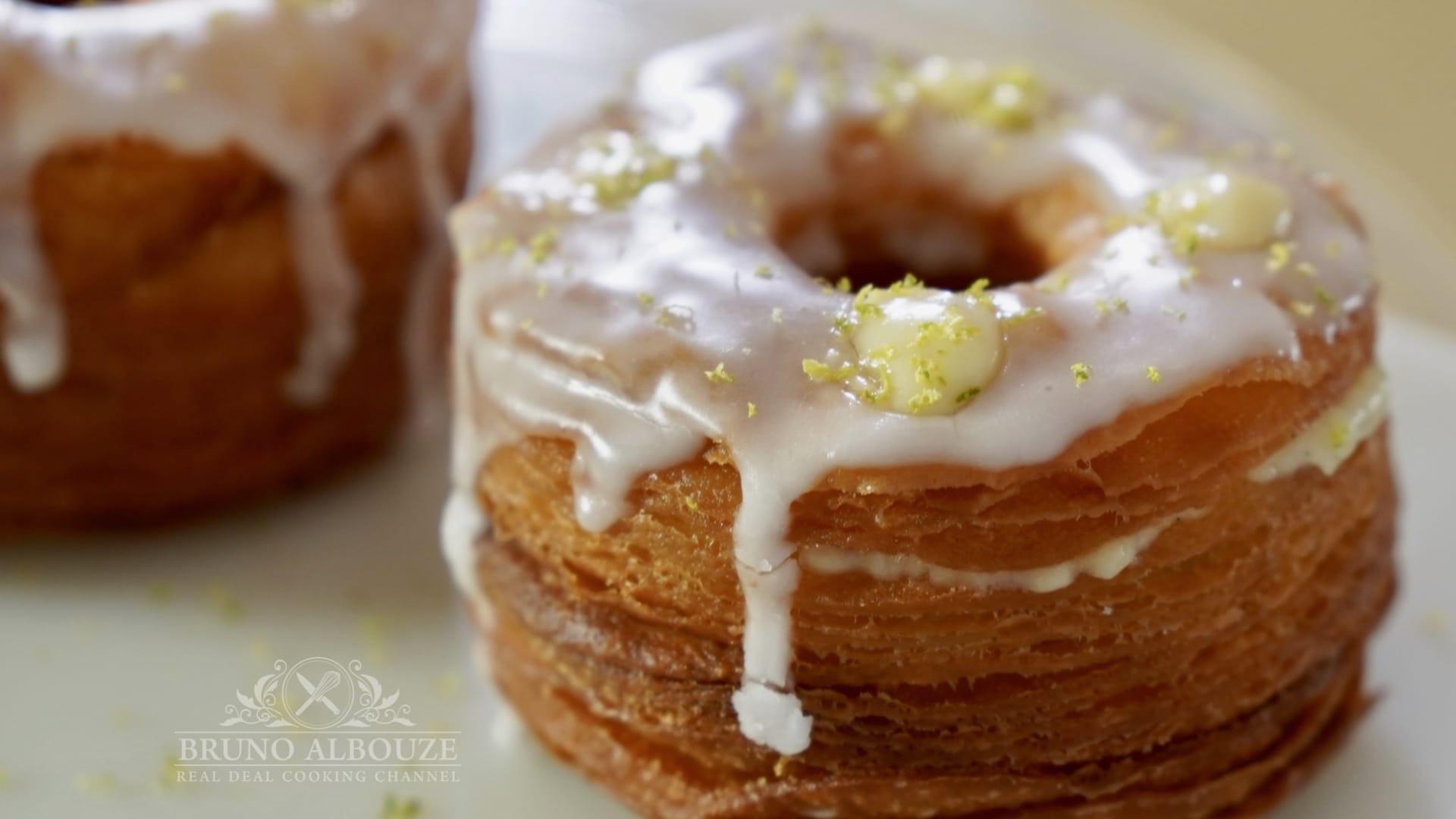
- While the cronuts are still warm, dip the top of each one into the glaze, allowing the excess to drip off. Let the glaze set completely.
- Once the cronuts are completely cooled, fill them with custard using a piping bag. Insert the tip into the side or through the center hole and pipe until you feel a slight resistance. For the best experience, garnish with a bit of citrus zest if desired. Cronuts are best enjoyed within three hours of frying.